1 free read left. Create a free account for unlimited reading + AI research.
Create free accountArticle International Journal of Games and Social Impact
1 free read left. Create a free account for unlimited reading + AI research.
Create free accountArticleInternational Journal of Games and Social Impact
Players tend to value 'playersexual' systems, where any character can be romanced, while also wanting characters with fixed sexualities of their own.
Christine Tomlinson's study examines how players perceive romance design in the Dragon Age series and Baldur's Gate 3, with the central claim that player attitudes toward in-game love are internally contradictory. Players tend to value agency and "playersexual" systems, in which any character can be romanced regardless of orientation, because these allow them to pursue relationships freely. Yet the same players often want characters who feel realistic, including characters with fixed sexualities of their own, a desire that partly undercuts the control playersexual designs promise. The work draws on a grounded-theory, qualitative approach that combines roughly 657 hours of Dragon Age gameplay and 217 hours of Baldur's Gate 3 with observation of online forums over periods of eight to 24 months.
The analysis contrasts playersexual designs, such as those in Dragon Age II and Baldur's Gate 3, with fixed-orientation approaches found in Dragon Age: Origins and Inquisition. Perceptions of realism, the study finds, depend less on a character's sexuality than on personality, character growth, and narrative development. Players remain divided on whether playersexuality broadens inclusivity or flattens LGBTQ representation. Evidence here is largely qualitative, drawing on forum-style excerpts and secondary sources rather than quantitative measurement.
Player responses reveal a clear tension between agency and realism. Fixed, emotionally developed characters receive praise, while some players find Baldur's Gate 3's aggressive romance pursuit and sparse inter-character interactions uncomfortable or hollow compared with the fuller companion relationships many felt Dragon Age: Inquisition offered. The study concludes that no consensus exists about what players want, as preferences split between playersexual options, which can let players avoid queer-coded romance, and locked romances, which may feel more authentic but limit choice.
The study's closing argument is that romance, as the principal vehicle for LGBTQ+ and diverse representation in games, may be too narrow a channel. The author proposes that broader inclusion across game content, illustrated by Baldur's Gate 3, could better satisfy players' simultaneous desires for realism and fantasy. Although grounded in substantial scholarship on game narrative, agency, and queer representation, this proposal is offered as a model rather than a tested finding.
Each row is a game or company this document names, each column a document, oldest first. A mark means that document names it. Select a row to see those documents.
International Journal of Games and Social Impact · 2026
International Journal of Games and Social Impact · 2026
International Journal of Games and Social Impact · 2026
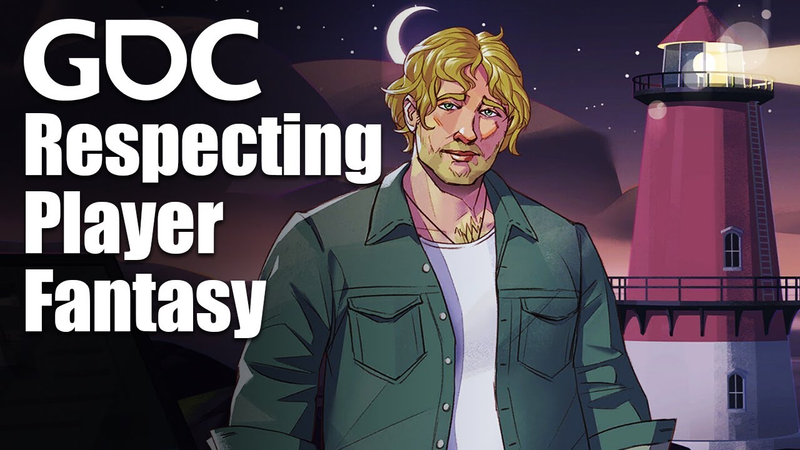
Game Developers Conference · 2023