1 free read left. Create a free account for unlimited reading + AI research.
Create free accountReport gamevironments
1 free read left. Create a free account for unlimited reading + AI research.
Create free accountReportgamevironments
Christine Tomlinson's 2024 article in Gamevironments argues that role-playing games and games featuring religion are effective classroom tools for examining bias, representation, player behaviour, and ethical decision-making. Drawing on roughly six years of social science teaching across 18 course offerings, the author contends that these games can foster critical thinking and engagement, and that the approach works even with short curated video clips rather than full playthroughs. Student data are reported only in aggregate, and the work is grounded primarily in the instructor's own courses.
A central finding concerns students' assumptions about gamers. Students consistently underestimated the average age of players, guessing roughly 16 to 22 when the actual average is about 33, and they underestimated the share of women players, who make up about 48 percent. Students also tended to assume that players behave destructively, whereas research cited in the work suggests that many role-playing game players make prosocial, responsibility-driven choices. The author argues that confronting these assumptions through discussion and gameplay is an effective way to prompt reflection on morality, player behaviour, and representation.
The scope extends to narrative-focused role-playing titles such as the Mass Effect and Dragon Age series and Fallout: New Vegas, which are used to explore structural barriers in the games industry, the depiction of religion, and morally complex worldbuilding. Student discussions reportedly connect these topics to sociological theory, with students expressing surprise at industry sexism while recognizing it as consistent with entrenched societal stereotypes. The evidence for these outcomes is largely qualitative and instructor-observed rather than systematic empirical data, a limitation the analysis itself acknowledges. The closing bibliography spans gaming culture, toxicity, gender and race representation, and religion in games.
Each row is a game or company this document names, each column a document, oldest first. A mark means that document names it. Select a row to see those documents.
gamevironments · 2026
gamevironments · 2026
gamevironments · 2026
gamevironments · 2026
gamevironments · 2026

gamevironments · 2025

gamevironments · 2025

gamevironments · 2025

gamevironments · 2025

gamevironments · 2025

gamevironments · 2025
gamevironments · 2025



Breda University of Applied Sciences · 2026
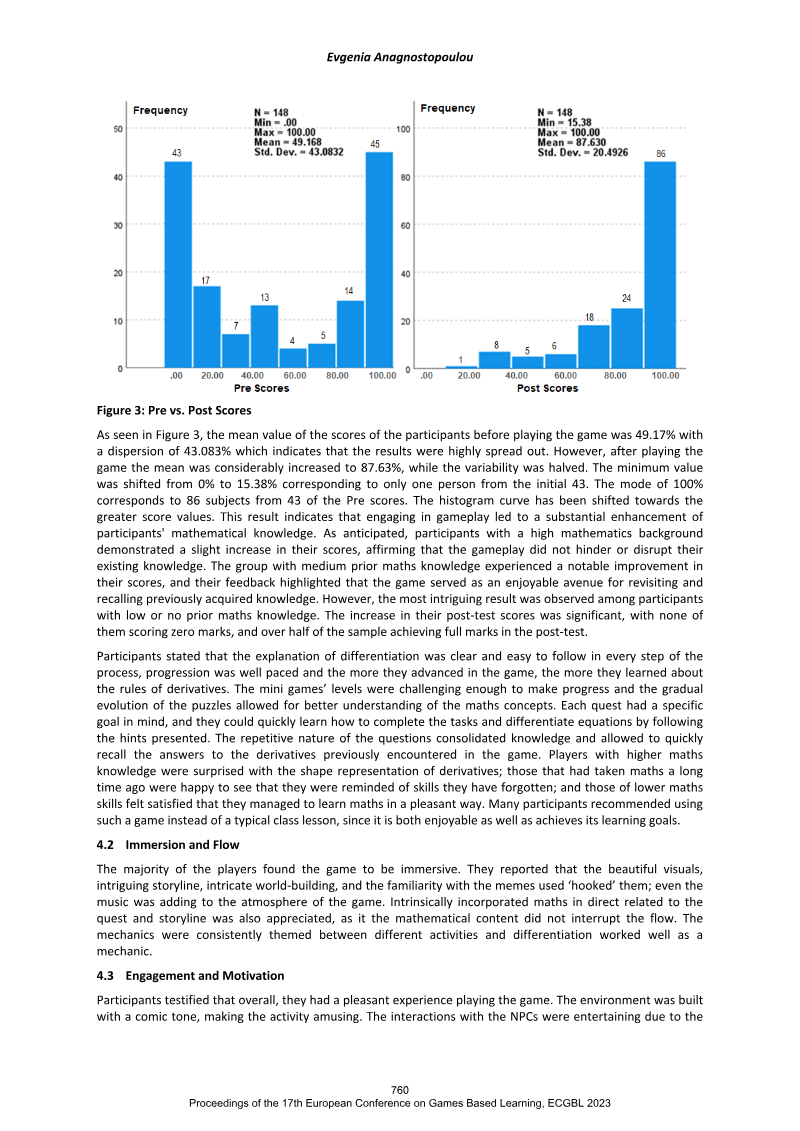
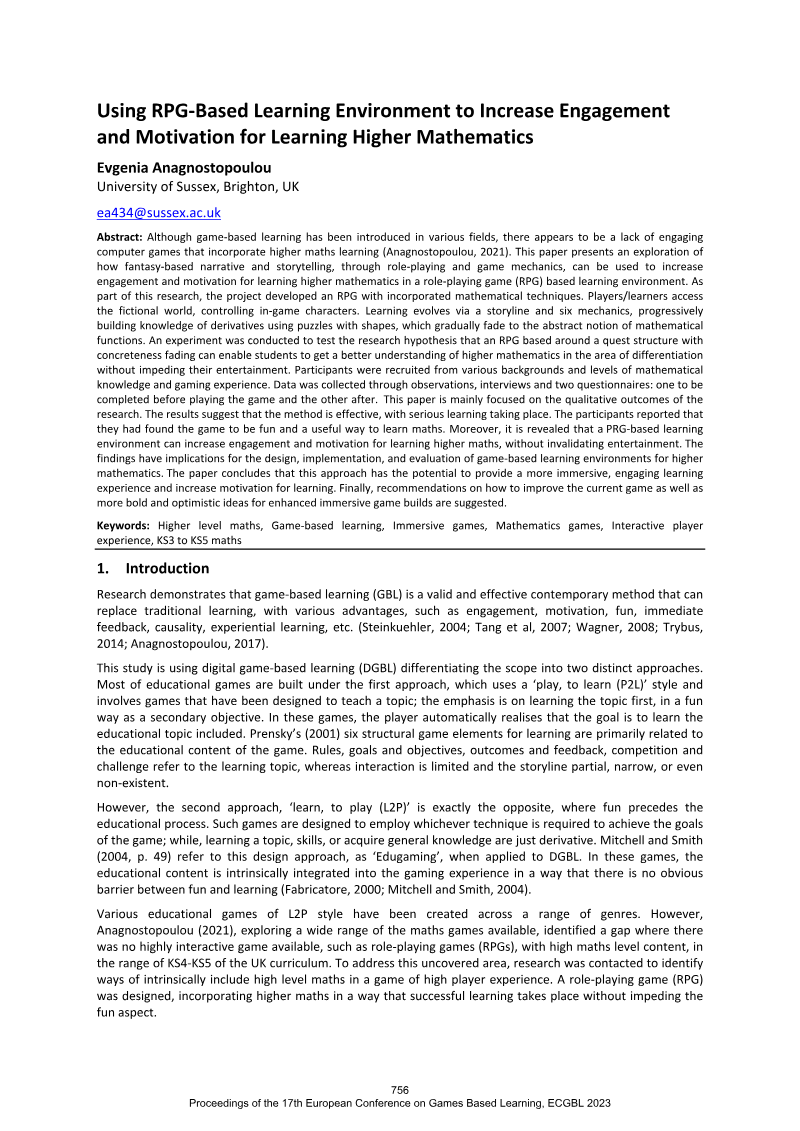
European Conference on Games Based Learning (ECGBL) · 2023
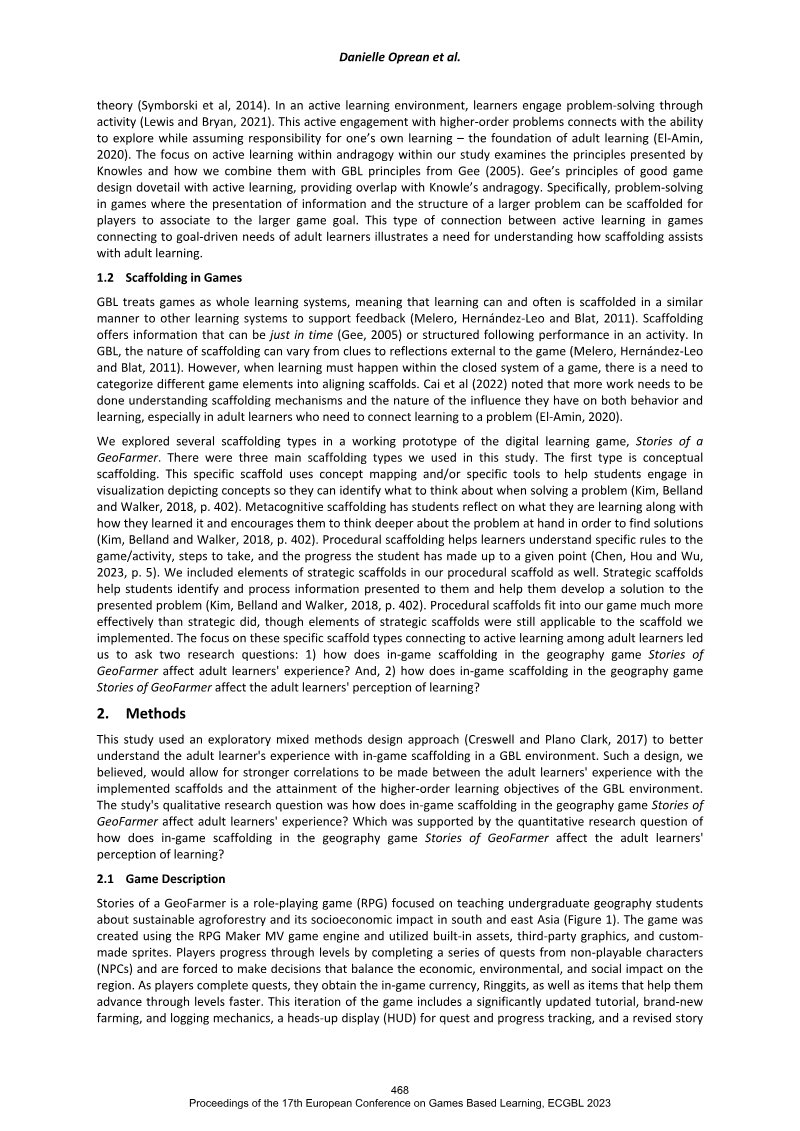
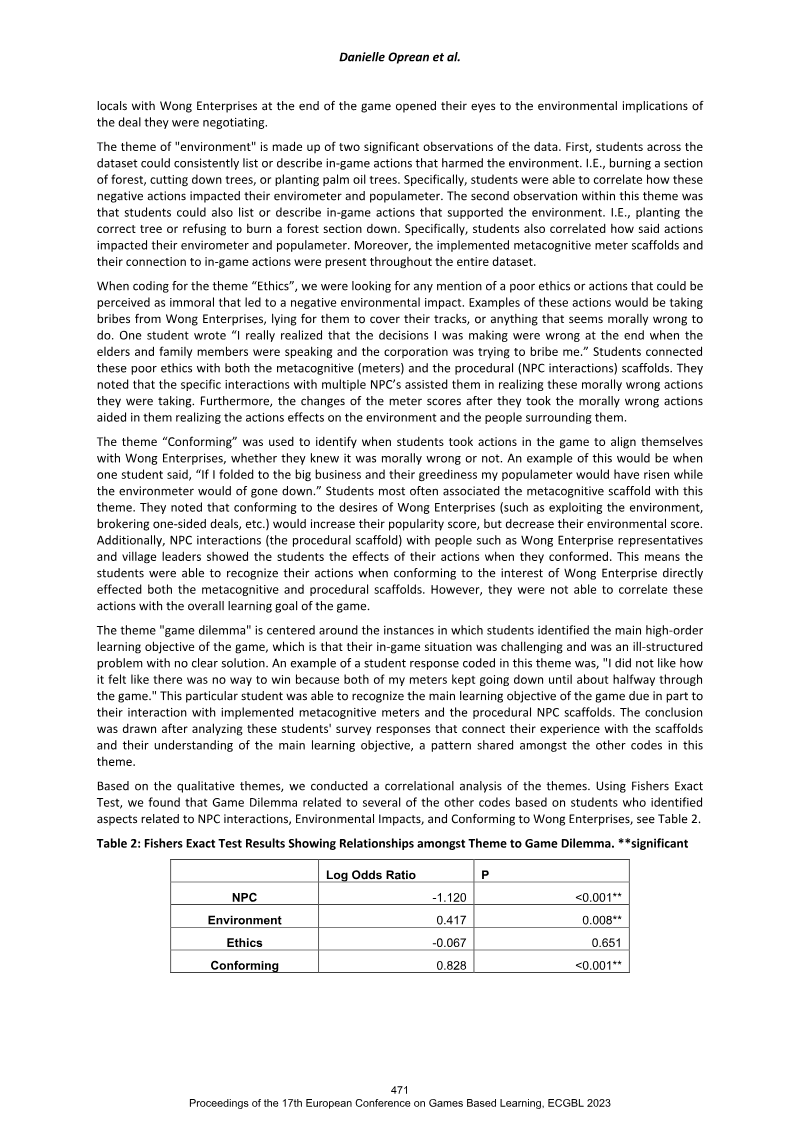
European Conference on Games Based Learning (ECGBL) · 2023