1 free read left. Create a free account for unlimited reading + AI research.
Create free accountWhitepaper International Journal of Games and Social Impact
1 free read left. Create a free account for unlimited reading + AI research.
Create free accountWhitepaperInternational Journal of Games and Social Impact
"Designing With Ambiguity" argues that game jams can be deliberately designed as equitable, participatory spaces rather than treated as neutral events whose inclusiveness is judged only by their outcomes. Drawing on inclusive, pluriversal, and transversal design frameworks, the paper contends that the critical decisions shaping inclusion occur upstream: who is invited, what roles participants occupy, and whose values are foregrounded. It positions these lenses as ethical and theoretical tools for reimagining jams as relational, empowering, and co-creative, in contrast to the technocentric and commercial paradigms that dominate much of the field.
The study rests on a retrospective, design-based research approach applied to a pilot and four subsequent Cultural Game Jams (2023–2025) with youth aged 16 to 25 across European cultural heritage sites. Operating within a quadruple-helix ecosystem of cultural institutions, creative industries, universities, and young people, the authors used iterative redesign to respond to what they observed. The pilot, a six-hour session with 40 participants, produced cognitive overload and favoured already-confident participants, which prompted a shift toward longer, more dialogic formats. Later iterations grew from one to seven days and from 40 to 61 participants.
The most substantial finding is that inclusion moved from an add-on, such as accessibility features, to a fundamental reconfiguration of jam structure, roles, and culture. Youth feedback drove changes including simpler design kits, quiet zones, and a Youth Advisory Board that became co-organizers and facilitators, and multi-week "slow jam" formats spanning three countries. Youth Advisory Boards increased international diversity but narrowed local participation when jams moved into educational settings, revealing tensions that the authors treat as central to the practice rather than as failures. The paper concludes that equity is an ongoing, context-dependent practice requiring time, reflexivity, and shared control. Its limitations include the absence of formal outcome evaluation and limited representation of marginalised and Indigenous participants.

International Journal of Games and Social Impact · 2026

International Journal of Games and Social Impact · 2026

International Journal of Games and Social Impact · 2026

International Journal of Games and Social Impact · 2026

International Journal of Games and Social Impact · 2026

International Journal of Games and Social Impact · 2026

International Journal of Games and Social Impact · 2026

International Journal of Games and Social Impact · 2026
International Journal of Games and Social Impact · 2025
International Journal of Games and Social Impact · 2025
International Journal of Games and Social Impact · 2025

International Journal of Games and Social Impact · 2025
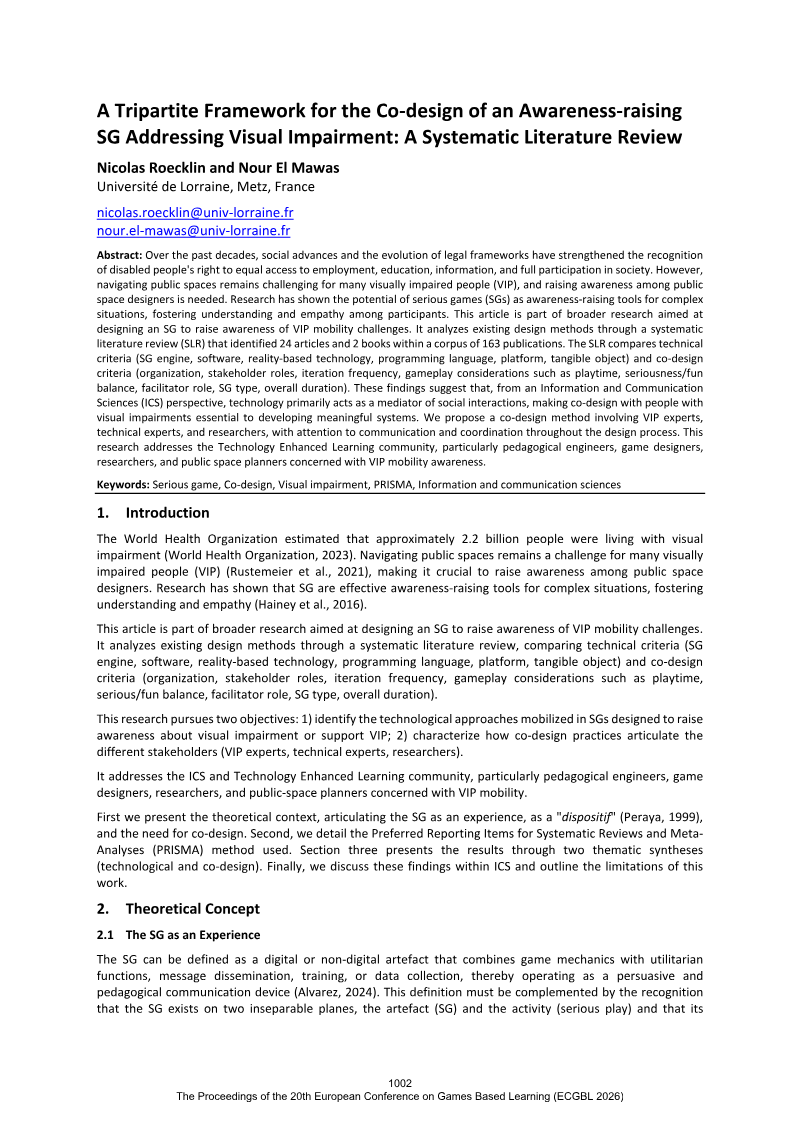
European Conference on Games Based Learning (ECGBL) · 2026
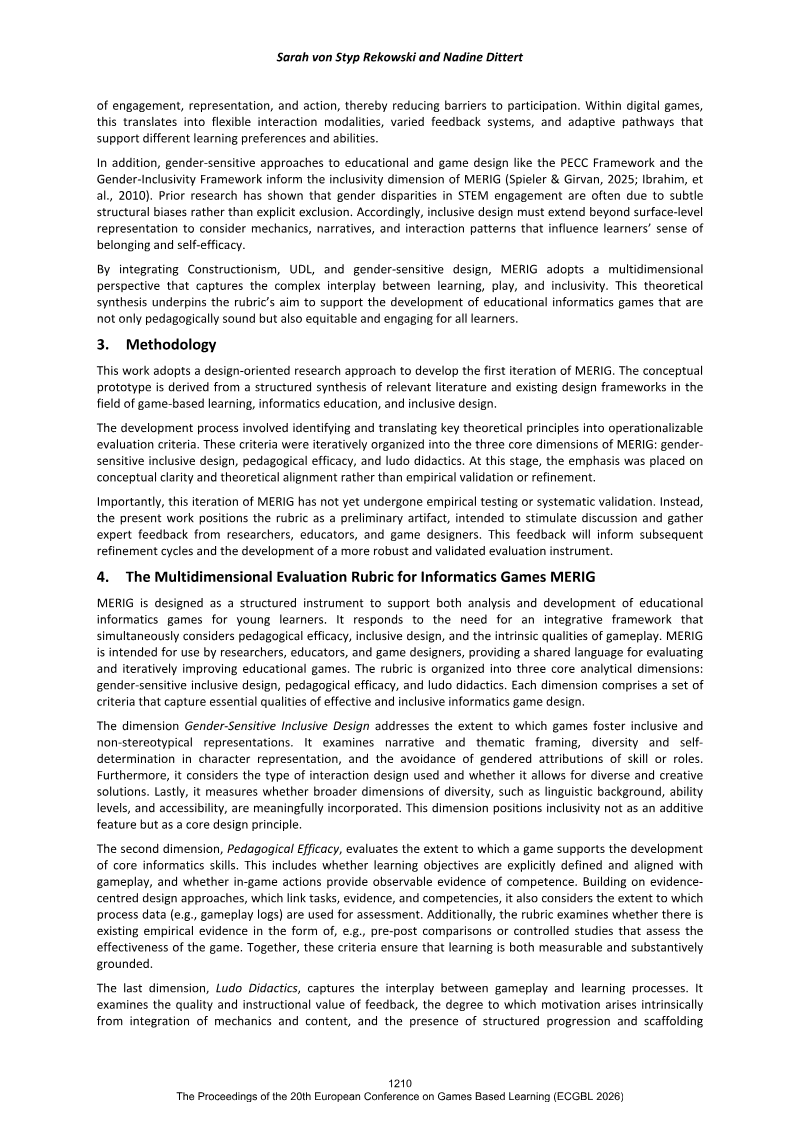
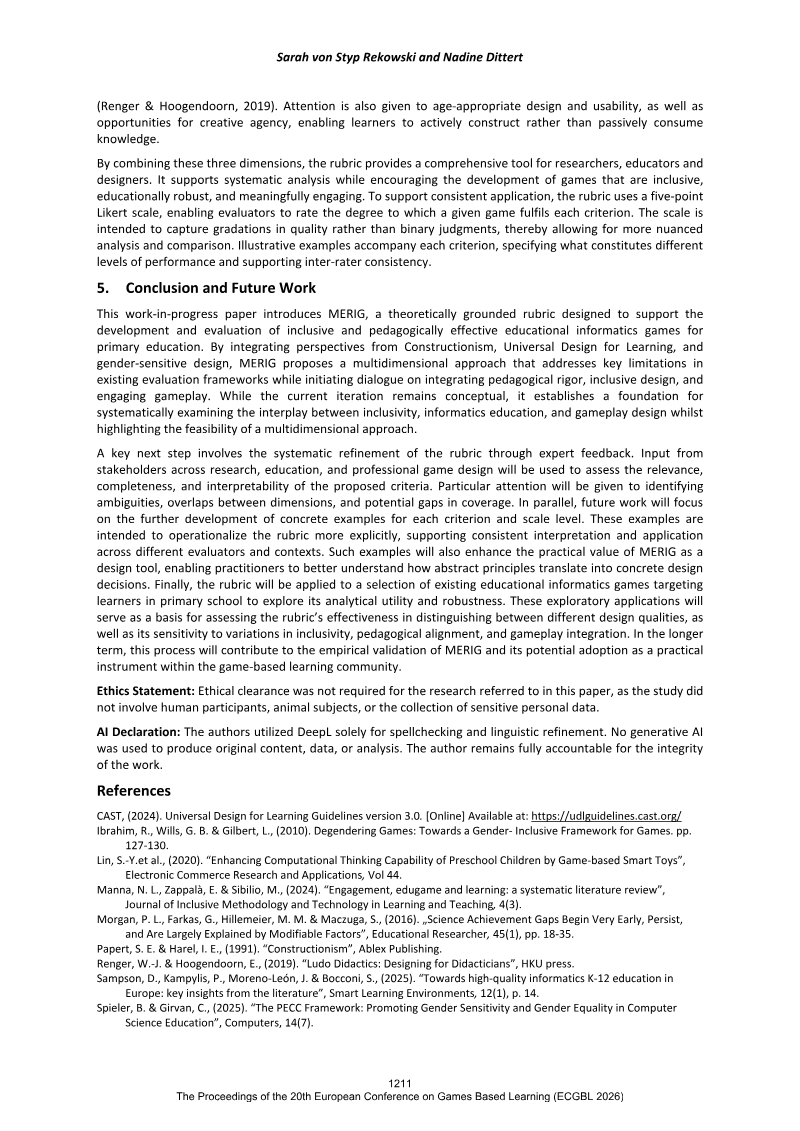
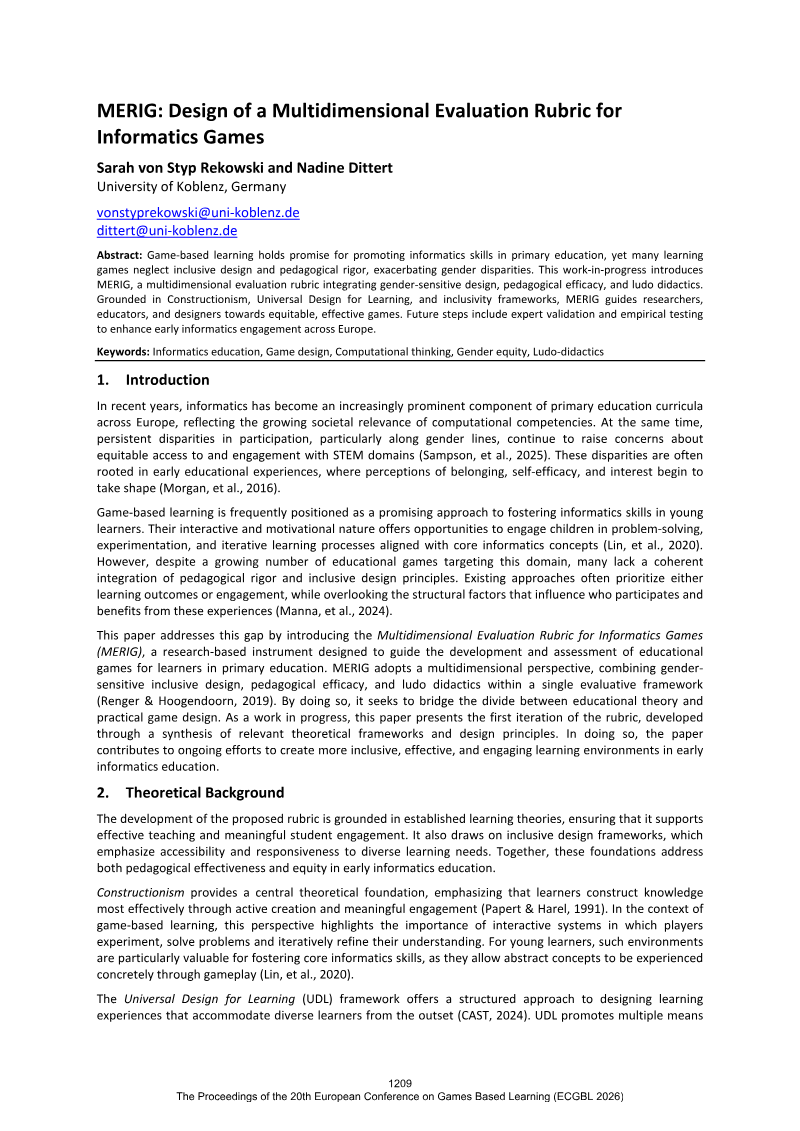
European Conference on Games Based Learning (ECGBL) · 2026
European Conference on Games Based Learning (ECGBL) · 2026