1 free read left. Create a free account for unlimited reading + AI research.
Create free accountWhitepaper DiGRA
1 free read left. Create a free account for unlimited reading + AI research.
Create free accountWhitepaperDiGRA
Distilling the key insights…
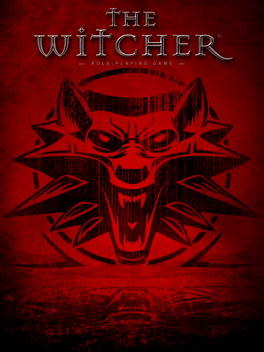
Danielle Kleinerman's paper, presented at DiGRA 2022, argues that the choices offered in narrative-driven videogames often reinforce dominant ideological structures, leaving players closer to spectators than free agents despite the appearance of meaningful agency. Using The Witcher III: Wild Hunt as a reflexive case study, the author frames the inquiry through semiotics, narratology, and ludology, situating the medium within a games industry valued at roughly $138.4 billion in 2021 to underscore its cultural weight. The central thesis holds that game mechanics, not merely narrative content, can shape player belief and behavior beneath the surface of apparent choice.
The analysis centers on the game's economy and choice systems, particularly the bartering around Geralt's payment and the scarcity of currency paired with constant demands for upgrades. These design features, the author contends, steer players toward particular behaviors and conclusions, while high "naturalistic modality," the immersive and relatable quality of the choice design, makes these constraints feel more consequential than they actually are. Drawing on Gramsci and Spivak, and comparing the game with Spec Ops: The Line and Pokémon, the argument is primarily interpretive and theoretical. Its evidence rests largely on the author's autoethnographic account as a single subjective player, supplemented by a 2018 study of two fourteen-year-old game designers, so the claims are more suggestive than empirically generalizable.
The paper's conclusion is that videogame choice is largely illusory because designers fix the underlying rules, even though the experience of participatory agency feels real and meaningful. The author describes a tension in which players, aware they remain physically outside the game, oscillate between a sense of control and a sense of subjection. The work closes by urging scholars to scrutinize mechanics that subtly position players in subservient roles, and it acknowledges that pandemic-era isolation may have shaped the author's critical reading.
Each row is a game or company this document names, each column a document, oldest first. A mark means that document names it. Select a row to see those documents.
DiGRA · 2022
DiGRA · 2022
DiGRA · 2022
DiGRA · 2022
DiGRA · 2022
DiGRA · 2022
DiGRA · 2022
DiGRA · 2022
DiGRA · 2022
DiGRA · 2022
DiGRA · 2022
DiGRA · 2022
Game Developers Conference · 2023