Dragon Age II
Game
3 documents in the library are about Dragon Age II, from writers such as DiGRA. Each has a summary and key insights with the page they come from.
Connections
Each row is a game or company named alongside Dragon Age II, each column a document, oldest first. A mark means that document names it. Select a row to see those documents.
Documents about Dragon Age II
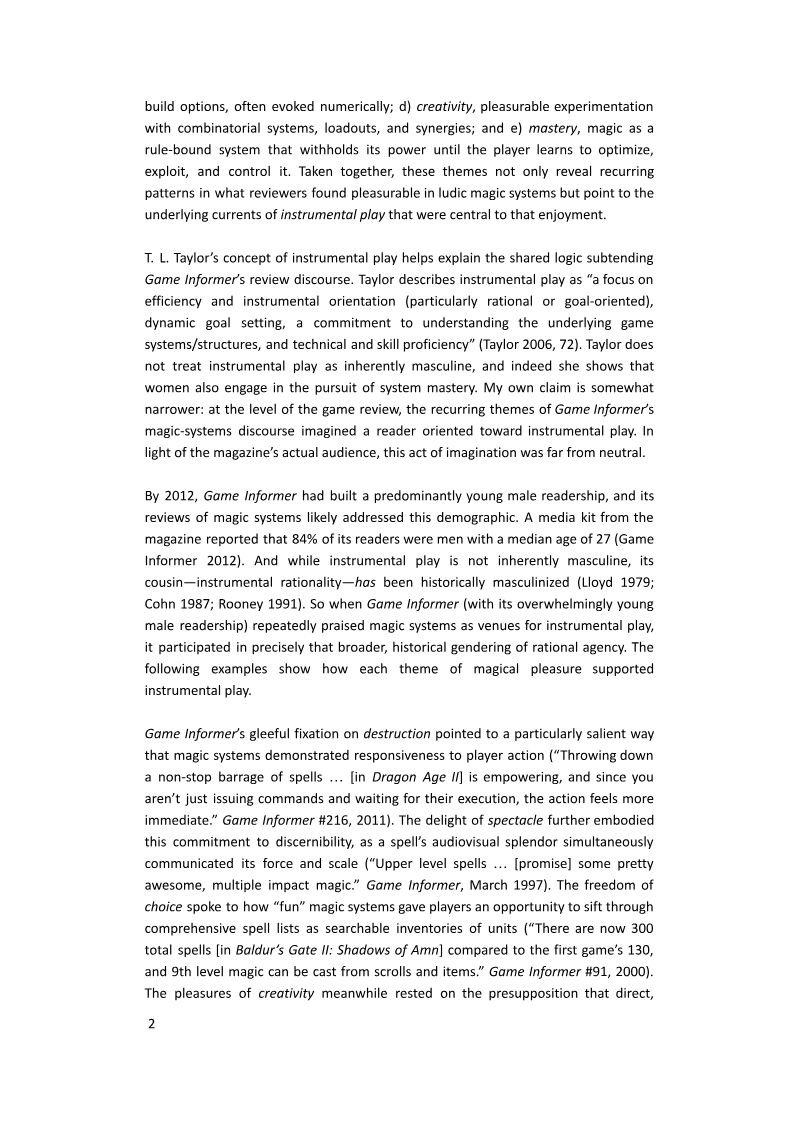
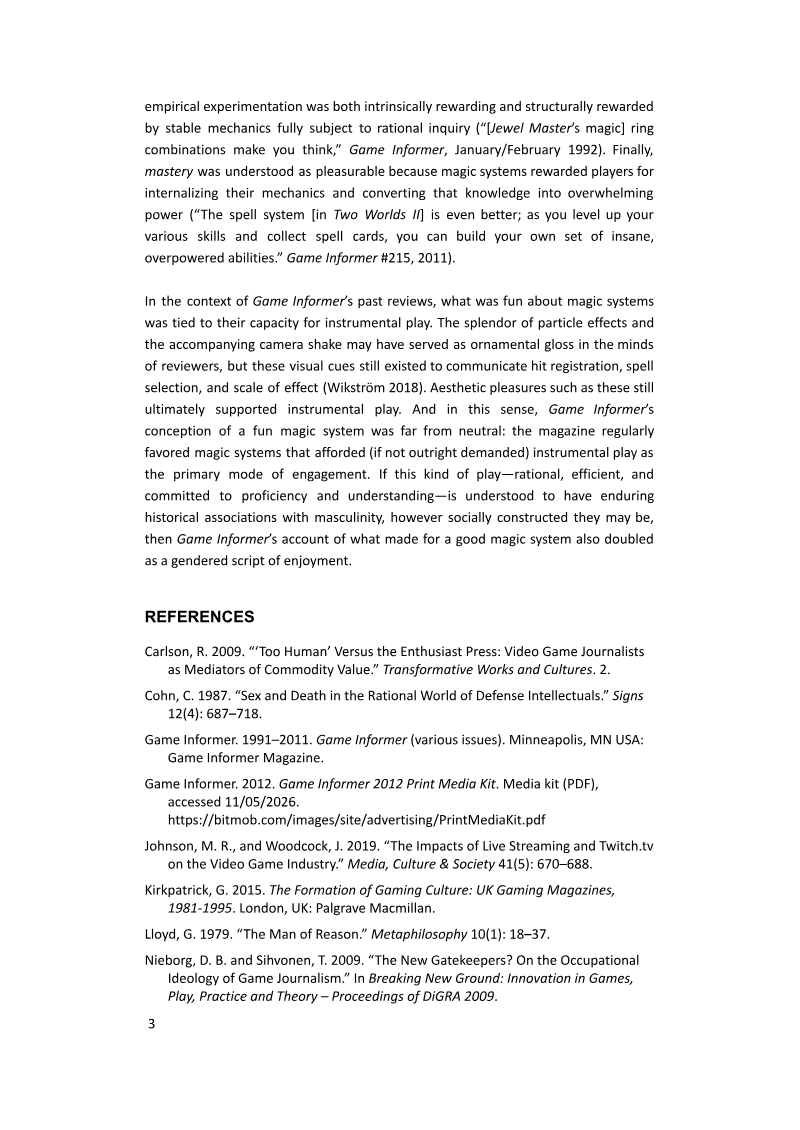
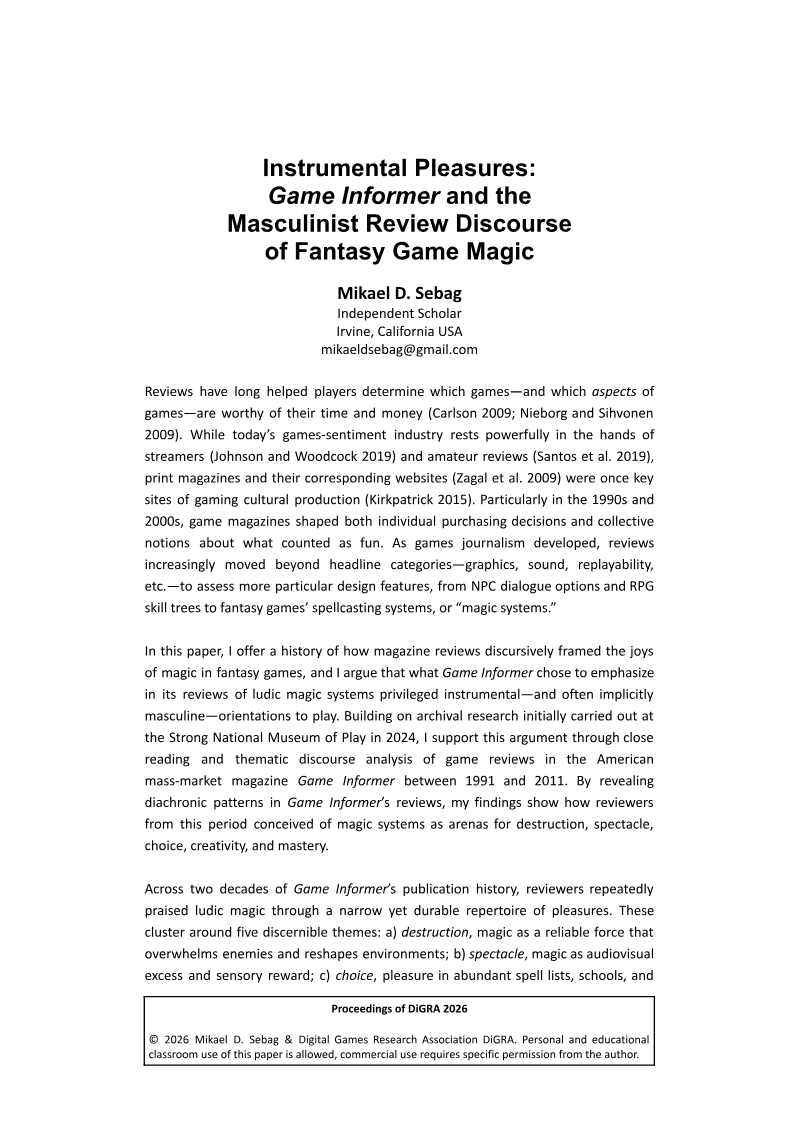
Instrumental Pleasures: Game Informer and the Masculinist Review Discourse of Fantasy Game Magic
This paper examines how reviews in the American mass-market magazine Game Informer framed the pleasures of magic systems in fantasy games between 1991 and 2011.
- The paper analyzes reviews in Game Informer, an American mass-market game magazine, from 1991 to 2011 to examine how fantasy game magic systems were praised and framed.
- Reviewers repeatedly valued magic systems for five themes: destruction, spectacle, choice, creativity, and mastery, which the author interprets through Taylor's concept of instrumental play (efficiency, goal orientation, system understanding).
- The author argues that the magazine's repeated valorization of instrumental engagement amounted to a gendered script of enjoyment, since instrumental rationality has historically been coded as masculine.
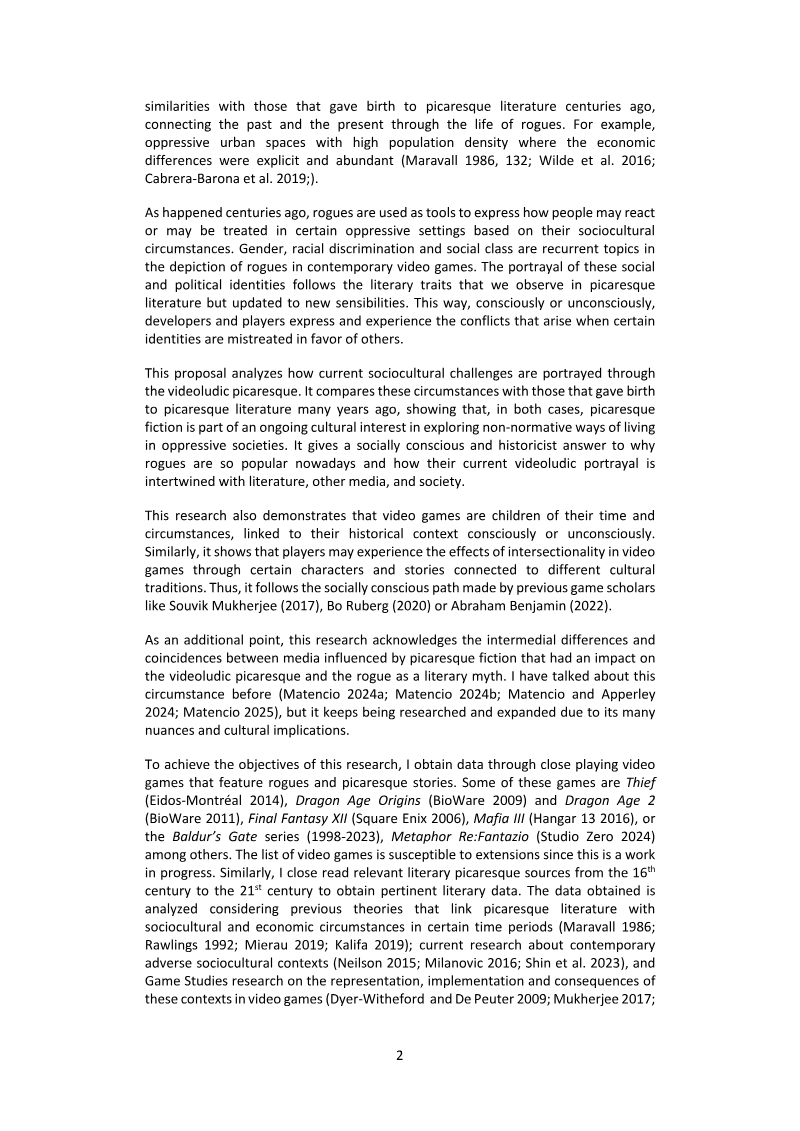
Portraying Unfavorable Sociocultural Circumstances Through the Videoludic Picaresque
This paper examines how contemporary video games use the rogue figure and the picaresque framework to portray unfavorable sociocultural circumstances, arguing that the videoludic picaresque continues a centuries-old literary tradition of depicting marginalized lives in oppressive societies.
- The paper argues that the videoludic picaresque continues a centuries-old tradition: picaresque fiction, from sixteenth-century Spain onward, served as an early form of intersectional storytelling addressing class, gender, ethnicity, and sexuality.
- The author proposes that urban density, visible economic disparity, and institutional corruption, prominent in early modern picaresque novels, closely parallel present-day conditions, which is a key reason for the rogue's renewed popularity in games.
- The rogue protagonist is framed as a vehicle for exploring how identities are treated within oppressive systems, with games shaped by their historical moment in the same way early literature was.
Stories and Changing Social Norms: Representation of Gender in Video Games from 2007 to 2017
This study examines how gender is represented in three major video game franchises between 2007 and 2017, arguing that changes in game narratives reflect a broader shift in North American sociocultural attitudes toward gender.
- The study argues that gender representation in three major franchises (Dragon Age, Mass Effect, Uncharted) shifted between 2007 and 2017, moving from overt sexism, sexual violence, and objectification toward greater female agency and inclusivity in later installments.
- Dragon Age: Origins is described as containing overt sexism, sexual violence, and objectification, while Dragon Age II and Dragon Age: Inquisition present more agency and inclusivity for female characters.
- Because the three franchises were built by different developers, the author treats their parallel trajectories as evidence of a broader North American cultural pattern rather than studio-specific quirks.
Companies behind it

As the documents state it.