More from University of Science
View all
More on Metaverse
View all
PocketGamer.biz
101 concepts for games innovation
PocketGamer.biz · 2019
The Game Business
"Anyone can make a game now" — Meta Horizon VP Interview
The Game Business · 2026

Naavik
What Happens When AI Becomes Your Gaming Teammate
Naavik · 2026

Thomas Brush
The One Thing AI Can't Put In Your Game
Thomas Brush · 2026

PocketGamer.biz
Block Blast Hit 300M Players — And Kills 95% of Ideas
PocketGamer.biz · 2026
Whitepaper
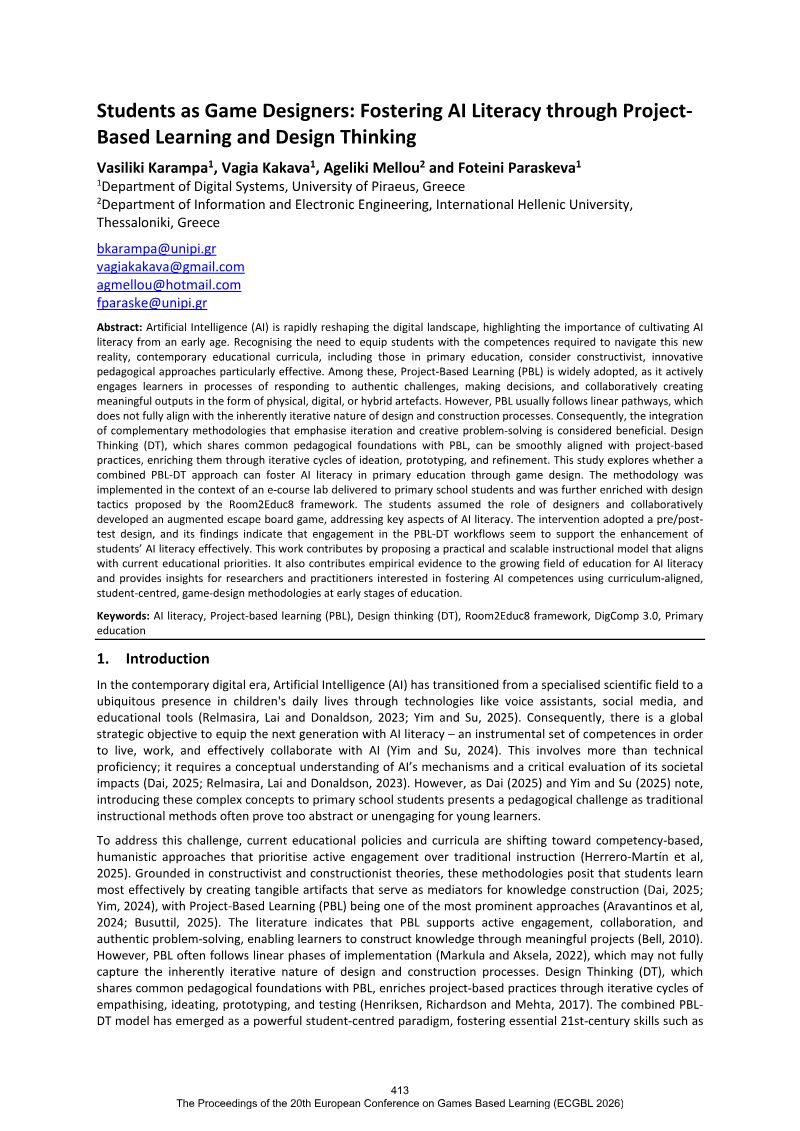
Students as Game Designers: Fostering AI Literacy through Project-Based Learning and Design Thinking
European Conference on Games Based Learning (ECGBL) · 2026
Whitepaper
Countering Hindsight Bias and Memory Decay During Debriefing Through Dual-Track Simulation Game Design
European Conference on Games Based Learning (ECGBL) · 2026
Whitepaper
Cloisonné Serious Game: AI Cognitive Apprenticeship Instructor for Intangible Cultural Learning
European Conference on Games Based Learning (ECGBL) · 2026



Whitepaper
Designing with Unpredictable Narrators: Tensions in AI-Mediated Game-Based Learning
European Conference on Games Based Learning (ECGBL) · 2026
Whitepaper
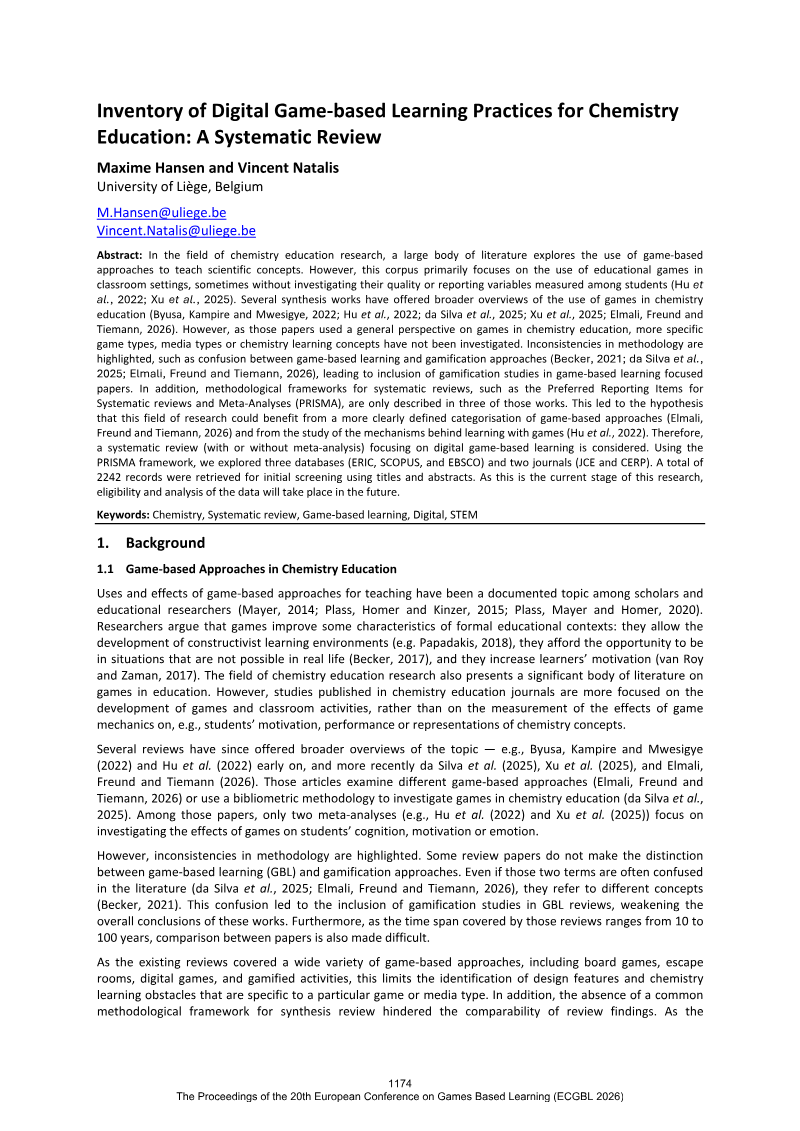
Inventory of Digital Game-Based Learning Practices for Chemistry Education: A Systematic Review
European Conference on Games Based Learning (ECGBL) · 2026



Whitepaper
CyberYuruGu: An Interpretative Gameplay Model Grounded in African Epistemology for Explainable Cybersecurity Reasoning and Human-AI Sense-Making
European Conference on Games Based Learning (ECGBL) · 2026



Whitepaper
Designing with Generative AI: Ethical and Creative Redesign of Visual Assets in a Statistics Game
European Conference on Games Based Learning (ECGBL) · 2026