ArticleBrutally Honest
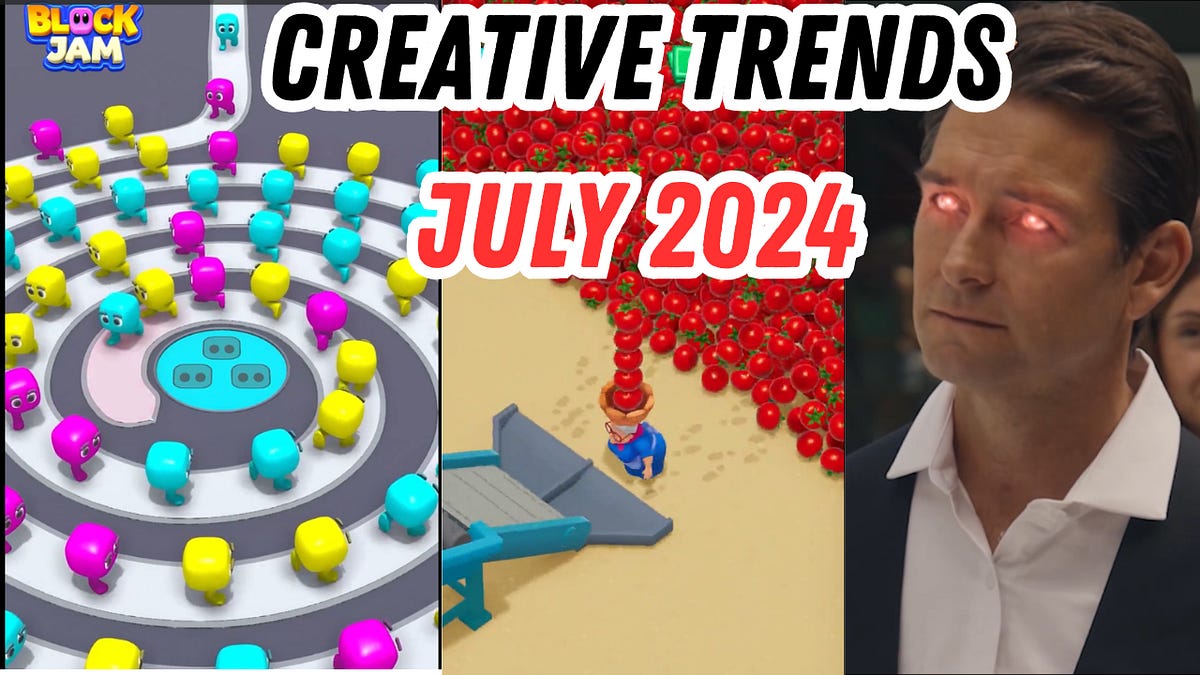
Creative Trends in Mobile Games: September 2024
17 Oct 20241 page~1 min full read
Key insights
8 slides
The landscape
Mobile game user acquisition is shifting toward high-production-value creative.
The industry is moving away from simplistic advertising toward high-production-value content.
Creative quality. Creative quality directly influences acquisition performance.
Video length
Advertisers are increasingly utilizing long-form video content exceeding one minute.
Long-form video content is used to incorporate deeper narrative hooks.
AI integration
Artificial intelligence is now a core component in marketing asset development.
AI plays an expanding role in both the development and execution of marketing assets. Its integration is expected to remain central to successful user acquisition strategies.
Celebrity power
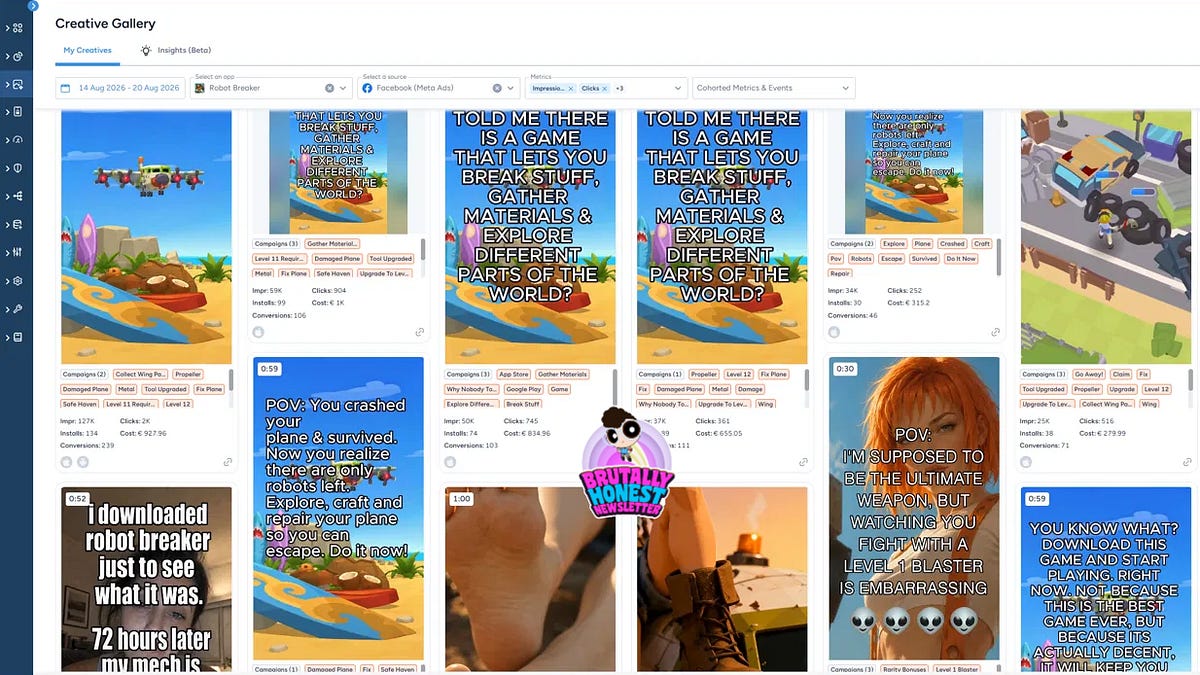
Celebrity endorsements are strategically deployed to drive brand visibility.
Celebrity endorsements serve as a powerful tool for brand visibility and user conversion. They are strategically deployed as a primary tool in current marketing efforts.
Casual gaming
Casual gaming segments are adopting high-fidelity 3D visuals and hypercasual mechanics.
Casual gaming segments are adopting high-fidelity 3D visuals to improve performance. They are also using hypercasual-inspired mechanics, such as innovative gate iterations.
Genre blending
Successful acquisition strategies now rely on genre-blending creative content.
The industry is moving toward a more targeted approach using diverse creative levers. Successful strategies rely on genre-blending creative content and targeted levers like animal-themed imagery.
The future
The line between game content and marketing creative continues to blur.
Developers must prioritize high-quality, personalized, and technically sophisticated assets to remain competitive. The integration of AI and refinement of complex creatives are expected to remain central.
Competitive necessity
Creative quality directly influences acquisition performance in a competitive market.
The necessity to maintain engagement drives the evolution toward high-production-value content. Developers must prioritize high-quality, personalized, and technically sophisticated assets.
1 / 8
Ask AI about this report