Transcript
A major Google update can have a dramatic impact, positive and negative, across hundreds of brands. Then we internally scrabble around trying to decipher and reverse engineer what happened, how we should change how we operate. You've got to build content that isn't necessarily just for Google. And I think the best place to do that is on smaller, more focused, niche [Music] websites. Hello and welcome to the Game Business Show with me, Christopher Dink. A few weeks ago, we ran a story on the stark drop in the number of articles being produced by the games media, which was tied to a significant decline in the number of professionals writing about video games. This made me want to dig a little bit deeper into this area of the industry and speak to some of the leaders in this space, which is exactly what I've done. I obviously have a vested interest in this area myself. Now, we're specifically looking at the traditional games media here. There's a whole other conversation around influencers, content creators, and streamers to be had. But for this episode, we're drilling in on the traditional side of things, and you
don't get much more traditional than our first subject. Future Publishing is the oldest games media business with a history in magazines, and it still makes magazines to this day, but it's probably best known for Games Radar, PC Gamer, and the Future Games Show. I caught up with Dan Dawkins who has been at the company for 25 years in various leadership roles and is currently content director for games, video and digital events and I want to get his view on the challenges of writing about video games in 2025. Here's Dan. What are the biggest challenges as a gamers media organization that you're facing today? Kaha. Uh where do I begin? Um, the challenge is a myriad and and I think we're facing the same challenge I think a lot of people in media are facing and I think the same challenge a lot of people making games are making. We're in an attention economy where there's never been more noise, less context. The rise of AI creates more duplication and distortion. And I guess we are like anyone trying to carve our space and our
audience within all of that. So I guess to to sort of drill a bit deeper like the things that are very much on my mind uh you know there's too many games I struggle to have enough time to play them. I'm a professional games journalist. It's just too much. The games industry itself is going through a difficult phase perhaps coming out the other side of it. But I always think in games that I guess like you know somebody's problem is everybody's problem because we're a very dependent ecosystem and and that might not always be apparent but on the right timeline I think we all face up sharing these challenges then you know for media we've we've been facing a challenge for I guess going back 20 years where we've essentially become like a Google dependency and you know that's another set of conversations and really could quite deep into it, but the fact that so much media is, I guess, Google or discovery dependent and whatever the whims of those algorithms are is almost the sort of the tale of the modern media age for better or for
worse. And I think there's been lots of responses to that that we could sort of get into and talk about. And I guess on top of all of that, you're then throwing this sort of AI, what is it? Is it the apocalypse? Is it a new age? Is it a false dawn? Who knows yet, right? But I think one would be deeply naive to say that's going away and you know I think a lot of people have been very quick to dismiss it. I don't think it's going away. Like I think enough people with the vested interest in making it happen that there will be some new adjustment to whatever that means to us. Is this Google dependency? Is this just the reality of it? Is there is there no way of breaking that? Yeah. Well, I think that the fact that we were so exposed and I mean we we are a really large media organization like Future PLC uh reaches something I think like one in three adults globally. Um so we have to think about this problem a lot and we were probably like many media organizations Google
overexposed. So I think we've consciously and this is perhaps over the last decade wrestled with like other routes to get people to there's quite a wise phrase that I read from someone at the Guardian who was one of their media strategists who said um platforms are not strategies and I think that if you've you've overindexed on the success on a certain platform at a certain point in time you're almost just waiting for that bubble to pop and I think we've seen that with different platforms over the last 10 years. So I think we've become much better. Uh I'm not saying perfect because everyone's still another truism of media. So I feel like I'm waiting for the day when things settle down 5 years. So I think I've learned that's never going to happen. So we've just diversified a lot more. So I think we we find even for our websites we find increasingly more routes to get the audience there whether that's uh traditional social media you know Facebook, Instagram X blue sky or even more community-led routes like uh Steam
or Reddit, Google Discover, we're just finding that whilst Google's still a core part of what we do and that's Google search traffic primarily uh diversifying our traffic has made like our models a lot more robust. Mhm. It's still an advertising dominant market. You know, the days where, you know, Future could make a significant chunk of its money selling magazines is or or subscriptions to anything, I guess, is in the past is I'm just saying those words knowing it's true and asking you if it's true. Yeah. Well, I will point out we are still publishing magazines uh and good magazines, but I will not tell a lie and say that they are the, you know, the ascendant media delivery medium. Of course, they're not. But we like every publisher have been I guess quite exposed to like I say to Google and to the like the ad monetization model. So we've been forced to diversify and I think for future particularly I think we were one of the first media companies I guess because truthfully now going back
about 10 years future was in quite a difficult place. Um and we were forced to really reexamine what our audience wanted, how we delivered it and how we operated as a company. Obviously, I would say this because I work for Future, but at the same time, I've got to be upfront and say it was really hard. But like we we did a great job, I think, at understanding the value of what we create. And I think that was why when Future probably pivoted hard and earlier than other publishers into e-commerce, but I'm talking, you know, about the gaming brands, but also wider future. And that turned out to be like a massive engine of success for us and it still continues to be. But I think like any market once people can see success somewhere else, everyone piles in and it becomes more competitive. But so e-commerce has been a really powerful strand for us and continues to be and obviously a big strand for us now is the rise of the digital showcases. Yes, I guess reaching outside of our core platforms. Stick on Google for a little bit longer. The helpful content update,
the everyone's favorite thing. How's that affected you? H well I feel like we could have this conversation at any point in the last three years and I would say a different thing to you. There's been a variety of content updates. I mean the big movement within Google in the last sort of three years maybe has been this drive for like EAT or EAT like expertise experience authority and trust and I guess like Google wanting you to show your workings out and to explain why you've done something and how you did it and show pictures of what you did. This is again notionally what Google askked for. Is it the reality of what they prioritize? Mhm. It's hard to know. An experience of a large organization like us is like a major Google update can have a dramatic impact positive and negative across hundreds of brands. Then we internally scrabble around trying to decipher and you you'll know what this is like to decipher and reverse engineer what what
happened, how we should change how we operate. And I guess like cutting a long story short, like I feel like we we could have like skipped a year and ended up at the same place quite often. Um, and and this is the the craziness of it. So, and this goes back to what I was saying about platforms not being strategies. At the heart of all of games media, like we were saying off air, I've been doing this since 2000, 2001. What is still true is what what do the audience want? Why do they come to you? What's the trust? what are you delivering you're not getting elsewhere. I think it's too easy to lose sight of that and to get obsessed about the algorithm problem of the day or or the platform challenge of the day. But what role do you see yourself the media sort of playing in sort of unearthing and discovering new titles? And I guess this might tie to what you're about to say about your showcases. Yeah, 100% that because I think it's perhaps a misconception or a thing that was true for a while of websites would only cover
the big games because that's what traffic's and you know we get a lot of uh PRs saying it's really hard to get our game covered and I guess the truth of that is I guess if you ran a website that only covered unknown indie games and you know you'd know this and like if you wrote the headlines in a way that weren't trying really really hard to encourage the new audience you just wouldn't have a model because the the the interest isn't there and it's too hard to monetize. And you could argue maybe there's a newsletter in that or a different type of discovery thing. But for the traditional web model, that wasn't working. So I think a lot of web media pivoted to big games, game guides, deeper on the big games. But I think we found increasingly that um game discovery for us is being delivered through uh social video whether that's on games radar PC gamer or across something like the future game show which is uh like a big digital game showcase that we launched 5 years ago now which is crazy to even say and and even within the company at the time felt like a tremendous punt and it was
essentially myself and the producer James Jarvis we felt that we were running it on our own making it selling it creating it, marketing it, but you know, it went well and it's kept going well and it's sort of steamrolled to this point where we're getting 13 million live viewers a show. It's like I was saying to you off air is my every waking moment of thinking about these shows. But what what we've zeroed in on is the idea of the shows are all about discovering new games and we work really hard to curate each show to pick games that we think I guess the games of tomorrow we think the audience are going to love. I know that sounds quite vain glorious or hyperluting but you know you just you work in media enough you get a smell for what you think a good game is and some you're right sometimes you're wrong but for example we had uh blueprints that's one of this year's goty contenders I didn't even know myself we debuted that in the future game show last year so you came out and I why haven't we talked about this blueprints
and you're like oh right we literally did yeah so we see very much the role of the shows is, you know, bringing those cool games to to to the audience. Do you do consider it like still the role of the media in one way, shape, or form to enable discovery and sort of support the industry in that way? Cuz that's the question. Talking to different people the other day, I was going maybe it's not the media's job to worry about discoverability. Ultimately, it's got to service its readers, but it clearly it's something that is important to you. It's an interesting question because I guess it depends on again how you define the media, the platforms that the media chooses to play in in all of this conversation. You know, the role of say YouTube and video and its effect on what would be trades some Instagram, but like really they're entirely video literate. They discover everything through the lens of YouTube. There's hundreds of brands
reporting to offer game discovery or within niches. YouTube is sort of catering to all of this. But then the problem becomes there's so many people offering to save you time and curating things that you almost need a curation of the curators to uh which might be an opportunity for somebody. And I think that's actually where there is a role for trades traditional journalistic skills of deciding what is important and I guess curating what they believe to be the most presentable version people would chime with and sharing that with people. That goes to the heart of I guess what brands are, you know, what does your brand pro your brand promise to do and how does it deliver it? And I guess also what do you as a journalist, what do you think you're uniquely good at? And I think that we're in a an age now where people can be uniquely good at very niche or bizarre things and that's enough. You know, it's you've probably
heard the theory, the Kevin Kelly theory of a thousand true fans. Yes. Yeah. where you know essentially you know if you've got a thousand true fans that's all you need to really have a career and a life and like I think that's true in the digital age but you know at the same time you you've got that competing against I guess with what what future party represents this sort of multi-million audience Leviathan so you know we're trying to straddle all those worlds but it's it's difficult really question how do you see the games media looking by by 2030 shall we I was asked this question at a conference the other day and I'll probably give the same answer. I I would say this side of a genuine AI mageddon where you know somehow everything pivots to this crazy AI model which I I always feel that stuff slightly oversold. I think it will look broadly similar. I just think we'll have an accelerating trend of like you've said I guess like a certain tier of media organizations
might find it harder and harder. uh there'll be sort of consolidation and I think with from that comes fragmentation and then you know for people like yourself who are able to spin off and create projects like this you know it already feels like we have quite an established ecosystem of people like yourself who are doing newsletters who are doing YouTube channels will there be a stage where that's peak solo newsletter creator you know different analysts that sort of thing I don't know like but But I just I see that trend happening is maybe really good talented people spin out of trad media organizations. A lot of them will be seeking whether it's consultancy or more public facing stuff. I think that will happen. The interesting thing for me is having seen a bit through the arc of time is how traditional games media sees its role within this space and I guess within the the evolving role of what YouTube can deliver which is kind of everything. And I think there was probably a trend in games media maybe
going back sort of 5 to 10 years ago where it felt like the only journalism people to do wanted to do was like grownup journalism which seemed to be then become solely about I guess like culture issues, wider social issues and employment issues that are really important things. But a lot of the stuff that when I used to work in magazines was like we're just going to obsess about what would be the Alden ring of the day, right? or whatever it was. And except that the grown-up thing was just being really crazy and nerdy about something essentially stupid. Cuz for a lot of people in games, that's what their relationship with games is. My kids don't know about any of the wider ecosystem and maybe never will. They just want to play fun games for an escape or to play with their friends. And I I wonder how tradgage with that. Or is that something that's permanently now belonging in the realms of influencers and YouTubers? I say that as someone who works on a weekly Grand Theft Auto 6 show. We've
done 67 episodes and there's been one trailer. So consider that, right? And and we're never short of things. I feel like we're never sure of things to talk about. Um but that's that's crazy. I personally enjoy that type of stuff. That sort of nerdy obsession and escape I think is really cool. and like whether the media moves back towards that or find some sort of middle ground. I guess that's it's finding the voice of media will be an interesting thing to watch perhaps as much as platforms. Is AI going to wash us away? You know, that sort of thing. You can probably tell that we did that interview before the second trailer drop for Grand Theft Auto 6. So hopefully Dan and the team has another year's worth of stuff to talk about on his GTA podcast. Now, our next interview subject is also a major media player in the form of FandM. Fandm operates GameSpot, Metacritic, and Gamefax, but is probably best known for hosting thousands of pop culture wikis, some of them official and some of them
not. They're a little more of a userenerated media brand. So, quite different to Future in that regard, but no less significant. Now, FandM did own another games website called Giant Bomb, which it put on pause just over a week ago, and they have since allowed the publication to go independent. We unfortunately conducted our interview with Fandom before the Giant Bomb story took place. So, if you're wondering why we don't talk about it, that's why. Anyway, here is Fandm CEO Perkins Miller. What are the biggest challenges you're facing at the moment as a media organization or just pop culture organization? I don't know what term you use. It's great to see you, Christopher. I I think the biggest challenges that, you know, we face is one, you know, can we make sure the products and platforms we build are in service to these communities who are passionate about gaming. So, we have wikis that hundreds of thousands of people are updating every day about the games they love and making sure that those tools work well and they're easy to use. We want to make sure that audiences can find them. So,
you know, we're very well ranked by Google because we have 50 million pages of content. And so, wikis and blogs that are created in support of a game, you know, whether it's a game guide or what the latest DLC is all about, or we've built these maps that allow you to figure out where you are in a game. We have to make sure that we're building the right tools for the right experiences for our platforms because we're userenerated on the core for the hundreds of thousands of creators. Now we have you know 280 300 million people that come every month to you know consume the content across the platform. So just making sure you get that right I think is job one. Discovery is you know I think as these you know platforms that are you know sourcing traffic whether it's Google or now AI or social you know you have to be on your toes to make sure that you're out there and accessible effectively people who are trying to discover the content they love. And you know that also you know cuts across our other businesses and we've built this series of experiences to serve these
communities of gamers and we have an e-commerce business. We want to make sure that we're getting the right games at the right price where we have media platforms and Metacritic and GameSpot and Giant Bomb and we want to make sure that the content that's created is relevant and again discoverable by Google are you know making sure that AI is pointing folks to get the right experience. So I think those are the two things we build the platforms in the right way to help people discover the content they need and then that discovery process you know whether it's from social or AI or search you know do we make sure that the platforms are discoverable themselves so that people can get to the content they love. I'm I'm in the business media but I used to be part of gamer network. I knew some of the challenges they were facing with things like changes to Google algorithms the advertising landscape shifting. I guess it's a little bit different for a wiki type business, but the release schedule being inconsistent could dictate whether or not they had a good year or a bad year. And then there's a lot of concerns about AI and it basically not necessarily having to leave Google to find out how to beat
that boss in that game. But you didn't list any of those. So is is that an indicator that those are things are a little bit more out of your control or is it that you're already working around those sort of things or embracing them in maybe in some cases? Well, I think the good thing about our business, about Phantom, is that we're somewhat less sensitive to the fluctuations in the release cycle for gaming because, you know, roughly 85% of our audience comes to fandoms wikis or comes to Gamefax uh for games that have been around for anywhere from 2 to 20 years. So, you know, though, you know, whether you're playing Minecraft or C Call of Duty COD, you know, or you're trying to figure out a way to, you know, get around on Skyrim, there are games that are in the market that we provide an enormous resource for people who are now have purchased the game or playing it or have been playing it for years and just need some extra support. And so, that's 85% of that traffic goes, you know, on a
what we call evergreen basis to that content. you know, the business that's around release schedules, whether it's Fanatical for the games that are being released or news coverage, which you know, is on uh, you know, Giant Bomb or more more directly GameSpot and Metacritic, that certainly fluctuates based on the game release cycle. You know, we for sure are going to have are impacts are like everybody else is, but I think we've been the fortunate thing we because we have these platforms that are much broader in terms of servicing audiences at scale across the sort of legacy of gaming, we're a little bit less sensitive to the fluctuations of the market in that way. What about the sort of AI side? One my former colleague says honestly for them people stealing their content is more stressful than AI for them at the moment. But is that something that you're mindful of or concerned about? And I mean people like Google scouring your publication and putting it up in a platform that you can't necessarily monetize. I think AI, you know, is is certainly a threat of sorts, particularly to commoditize news
and information, you know, things that are quick answers that don't require a lot of kind of detail to in terms of discovery and it varies, right? So whether you're using perplexity or one of the GPTs from open AI um you know or you're working on somebody else's you know agentic model that maybe you know anchored the llama I think there's so many different ways to kind of get to different content that users are still figuring it out. So I think we're very much on the early days of it. What and I think news businesses you know were you know were just a very singular is a game out you know how much is it things are very simple in terms of their query. I think potentially just as Google was always a risk in that way. Um AI for sure is a risk in that in terms of how people are going at to learn. And right now though, what we find is that for the blogs or the wikis that people dig in on, there's so much density and detail there that people really love to dig into that it tends to be a destination
that people spend more time at beyond what the AI may serve them. So, we're we're currently seeing actually a decent amount of referral traffic from the AI platforms. Um and we haven't seen a real much degradation from Google. Um even with their AI results bar box that's just at the top. Um which we call AIO which is and we figure think of AI optimization to to that. Um so we haven't seen that quite as much. So I think it really depends on to some degree the content you're sourcing. And I think it also depends on, you know, again, can you log where you are in a game on a map in AI? Can't. Um, you can do that on Phantom. Uh, you know, if you're trying to sort of find your way through sequentially a game guide or try to read about a DLC and sort of figure out like, well, what what do I need or figuring out what kind of weapons you may have missed along the way, you know, if you don't really know kind of the question of the prompt in AI, that's again, it's simple, you know, maybe
commoditized information. and you're sort of just need to learn. It's not a great tool if you don't know the prompt. And so when you get to the W, you're kind of in the game environment and so you can kind of dig in and get immersed in that. And and I think that's typically what we're seeing in the experience still sustaining. Now I that obviously can change and I'm you know I'm a believer in the only the paranoid survive. So I think we have to make sure we're we're considering that. right now that's that that's your experience is something that we we haven't seen as much impact across the core wikis or blogs because the content density it's interesting obviously I run a business game business publication I know that you're answerable to your audience right that's what's most important to you and the industry's got this discoverability crisis going on and they're looking at the games media to say hey can you cover my game can you help surface my game but meanwhile you've got that challenge where you know you're about that Google traffic and you're trying to drive those numbers and the things that deliver those numbers isn't interesting indie
game X or interesting AA game Y. It's GTA 6. It's um it's it's it's those big tent pole titles. It's Elder Ring. It it's it's those sort of games that delivering you the things you need and it's what your audience is looking for and what your audience is asking for. I mean, while the industry is is trying to find the discovery channel, there's a problem in the games industry where there's a discoverability crisis. is there's a media that's becoming increasingly focused on the bigger games that are already being played by millions and millions of people. Is there a solution here that can be found? I don't know. It's a good statement though and I think it's it's right that the you know there were almost 20,000 games released to Steam last year and you know there's not the discovery mechanics whether you know you can think about whether enough wish listing and you know are there you know games that were released in alpha that people test and that does that give a sense of when you know but the I think the dynamic of you know how do you go to market with a game is is really difficult as you say because the volume is so high and I think with AI AI tools that enable games
to be created more easily if not more quickly. You know, it's only going to mean more particularly sort of, you know, double eye triple eye games that are going to be in the market over the course of the next 2 or 3 years. Um you know what we've built and we you know think I will be helpful is that one you come to the team you create a wiki you know we can help you you know okay with data and insights about okay here's how you know the best way to create this content and be able to publish your game on our core platform we have fanatical e-commerce business we can help you sell it so we can figure out okay what's if you're thinking about pricing and promotion like we can help you on that front because we're in the market with affiliates and you know we'll you know we can't review every game, but you know certainly you can say well okay well where is the game on the you know how do you know how do we think about you know game guides you can have a game guide built on game facts um so there's ways to do it and so I would just encourage the you know communities we as a community to kind of come to us and say we can help you you use some of the
tools we have at our disposal to to play the game or or to get the game promoted the answer to that from your side is to create the tools so that people can sort of do it themselves I guess they need their community to do rather than than it being necessarily a corporate run. I don't actually know how that works. Do do you allow for Sorry if it's an ignorant question um for developers and publishers to to set up their own wiks and things like that. I guess you do I do know actually I did know that answer. Yeah, we we we welcome the you know the the studio or the publisher to build a wiki you know an official wiki so that they can make sure that they get the game descript that's clear and a guide and deployed and they can put the assets in so you can see what it's like. you could figure out what weapons you need. I mean, you know, we we have databases if you wanted to build one that would hang off that would give again the index of all the weapons or tools depending on the game you've got to build. So, we we absolutely encourage it and it's super helpful because then people as they start to play the game, they can use it as a as everybody does as a reference tool to figure out kind of where they are and you know how to play the game
better or get over a obstacle you know that they can't they can't play around right now. Do you ever foresee a time where we're not quite so reliant on advertising to sort of fund our world? You know, subscription media can work and there's obvious examples of it. You know, in the US, you know, both Wall Street Journal and New York Times have a decent business. You know, puck is a very bespoke business in certain segments. I think certain areas where you have a information that's so esoteric and probably an audience that is relatively small but willing to pay for that esoteric information I think that the subscription business generally works or you've got an organization like you know New York Times Wall Street Journal big news engines and if you believe like I do that there's a good commitment to journalism there and I think it's worth paying for I think in the gaming business I mean you see the conversation we're having just a moment ago with, you know, 18,000 games with, you know, there's 150,000 plus legacy games are on the market. People are
looking to discover, you know, a new experience or maybe their friend referenced something that they're trying to figure out. It lends itself to wanting to have open access, right? It just is like you want to have a the lowest barrier entry as possible so that people can get the information they want. And so the the balance to that is we want to have the broadest amount of content. We have 50 million pages of content accessible to everybody in the world at any time. To put a payw wall up in front of that is a pretty huge hurdle, especially if someone's just trying to figure out like, "Oh, I just bought Skyrim. I just want I'm trying to figure this one thing out. Am I going to pay a dollar or $2, whatever it may be, just to get that information, but I can't even look at it in advance to understand whether it's going to be helpful to me." That's a very big hurdle to clear. Even if the money amount sounds trivial, most people will go try to find the information somewhere else. So advertising what it does is it just offsets that expense so that they can get access and sample be like I'm just I'm doing this one thing I just want to see is it do I need this information and
the I think there is opportunity as we build up other experiences you're referencing you know the guides or tools I mean we're working on these game guide utilities work with AI to sort of figure out like is there a way to create a utility for people that's powered by insight so as they're playing the game they can literally be a voice or text get the information they want quickly and and would a tool that is dynamic in that way. Would you pay for that to be a companion to you in your gameplay? Maybe, but I think it's got to be such a specific again bespoke utility that you absolutely need and going to use regularly as opposed to wanted to say, "Hey, look, we need the we want to have the broadest access for the largest number of people." In that case, advertising is the kind of better mechanic for for funding that. Now, the games media is getting smaller. We've seen cuts like across the business. Budgets are tighter, but there are all these sort of new areas and opportunities. I guess that's a real challenge in trying to sort of chase that new stuff, but with ultimately
limited resources. Yeah, I think that's right. I mean, as I said, you have to be responsive to the change. You know, I think that's where and is very difficult because I think, you know, audiences, you have to just follow where the audiences are going. You know, if audiences are on TikTok, you have to make sure you're calibrated. If audiences are consuming video on YouTube, what's your YouTube presence? If you know, how do you make sure your wikis are as discoverable as possible? If you're creating content that's video, how do you distribute it in a way that is most efficient? And the models are going to change. I mean, it is it it just will. And I think, you know, I think right now the large platforms are very, very impactful on user attention. And I think that's very different from what it was 10 years ago when it was really kind of Google as the predominant distributor with a little bit of Facebook and you could kind of figure out how to get audiences off of Facebook. But now we're in a world where that wall garden of Facebook is very, very high and they keep the audiences there. and Google's, you know, competing now against the pace of AI chat bots and
and and generative agentic platforms. So, you know, I think that's the real trick to this whole thing is that you have to be able to sort of figure out where you are and change your model and that's why we have an e-commerce business. That's why, you know, we believe in the wiki. We believe in user generated content. How do we make it easier? believe to make sure you know ratings and recommendations you know the real kind of true utility that's like a real we think that's a real powerful tool for people and they're going to always need it. So those sort of things are kind of how I you know how we see the world kind of evolving in the next you know at least couple years. Well I was going to ask that and I realized I'm out of time so maybe you've already answered the question which is what does the future hold? How do you see things in by 2030? I mean right now we have the the forces you I mean you read Matthew Ball's stuff and there's various analyses that are done on the state of the industry and you know I think right now as I said PC gaming is surprisingly strong and healthy and I think actually PC gaming and cloud-based gaming are probably going to be very strong going forward.
Um I think you're you know the console business is really tough. Um I think I think mobile will continue to be a area of strength but not an area of depth. Um, and so just because the form factor, I think there'd be some depth to it, but you know, the casual gaming side of mobile will always be there. Um, but you know, in terms of franchise support, I think it's I think PC gaming, cloud-based gaming, you know, is going to be particularly material. I think mobile will be a very central part to that. Um, but that's where I and I think the fact is AI will accelerate development and make development more sophisticated and make sure like for example you got to, you know, figure out DPI in a different way as you're creating a game or you got to get your frame rate speeds to, you know, optimized for different, you know, CPUs on different devices. That'll make it it'll be easier to do that effectively. So, I think I think you're going to see more games produced. It's going to be easier to sort of release crossplatform. I think PC and mobile and cloud are going to be central to it. Um and and I
think it's going to be discoverability is going to be a crux challenge, you know, so how do you find the game you really want to play? And I think that's where the ability to sort of have community and have social because those are the ways that people will discover content predominantly. You playing in those spaces will be vital from a, you know, from a sort of a developer studio standpoint. One of the things interesting about fandom is that its wiks allow it to go deep. It can delve right into individual franchises and games and look at the law and everything associated with them. Of course, it's mostly userenerated content and sometimes the firm's offerings aren't what the fan bases are actually after, but generally fandom is able to go niche and future is similar really in some ways, although more on the traditional journalism side. It has a magazine about retro gaming, has a website about PC gaming, it has a podcast about Grand Theft Auto, has a newsletter about the games industry. So, it also operates in niches where it can. In fact, my old haunted IGN started doing more in this area. Its acquisition
of Gamer Network. Yes, it gave it a big website and you're a gamer, but also gave it a dedicated PC game site in Rock Paper Shotgun, a games tech outlet in Digital Foundry, and a business site in gamesindustry. Google's algorithm changes, as Dawkins mentioned earlier, is supposed to prioritize websites that offer expertise and specialtity, which would theoretically benefit niche websites. And we're also seeing a rise in games journalists that are launching their own newsletters, launching podcasts through platforms such as Substack or specializing in specific areas. You're listening or watching one of those right now. To talk more about this, my final interview was with Alex Donaldson. Alex straddles both worlds. He is one of the leaders of VJ27, a mainstream media outlet run by IGN. But he's also the founder and owner of RPG site, which is a strong profitable media business that started off as a Final Fantasy fan site. So I was eager to get his thoughts on the state of things. There's certain independent websites that are disappearing. Yeah. And there's others
like yourselves which is doing very very well. trying to put that into question form, I guess. You know, what do you see as the the the problems or the challenges that's going on at the moment? Well, I mean, very very well is all relative, right? Like I would say we're doing well by our standards and by what I believe and what my my business partner believes we need to do. And so that's that's the first key component, right? Is it's about expectation. So we talk about indie publishing specifically, I can see a few challenges. One is that there just aren't as many indie publishers anymore. There were a few brands that went on really big buying sprees um over the course of a couple of years. And when I say that, the average person is probably going to think more about things about large acquisitions like Game Network going to going to uh Breed Pop and then Z Davis. But I'm more thinking about Gamers Group buying websites like Silicon era and buying websites like buying websites. I'm at the sort of
level and in that you had a lot of those midtier websites disappear if we're talking in football terms right it's like yeah you've got your Premier League teams which is your websites like your Euro gamers or you know your IGN stuff like that whatever but in the games media those middle leagues have really shrunk and really contracted and then down in the football says we're staying with the football thing down in the conference where you've got people playing on weekends and stuff. That's actually doing okay, I think. But that's obvious. People aren't necessarily making any money. People aren't even necessarily monetizing. But that middle bracket has really been squeezed. And I guess that's kind of similar to video games, right? In the sense that the you got the massive games now and the indie games. You got GTA 6 and you've got Bellatro. And actually the games that are in the middle are relatively few and far between. But and this is where I think the parallel continues. and they can't believe I'm only thinking of this parallel now as I'm talking like they didn't pre-think
this but obviously we've just had clear obscure come out right and be a huge success which is a really important game for our website as well and that's interesting because that is that's your single a game I guess you might call it or whatever and when you do get those and they're done right there's a massive audience for them people are really interested in them people forgive them for being shorter for perhaps being not as not quite as polished whatever um and so I think there's a similar thing going on in games media where people do want a website like an RPG site or a video games chronicle or what have you or Gamatsu to extend your uh uh comparison to the development scene. Obviously the reason why Clay obscure expedition 33 did very well because it's a sort of style of game that you don't get too much of. Right. And it's the same with reason why Space Marine 2 which was guess AA not really AAA but it looks AAA definitely made on not on a AAA budget. It was made on a relatively big budget, but that al did a thing that was like, we're going to make a game for an audience that's this. Hell Divers 2 did
the same thing. These games that went did very very well. And because they focused in on on maybe a niche or a specific area, it happened to blow out there. And of course, what you're talking about your site is a niche. And one of the things that I'm getting out of this a little bit is that being specific and specialist and niche. We still play in the big pit with the big guys. So we're a role playing specific video game website. So we for the most part only cover role playing games. The rule is actually remakes. We cover role playing games and games that we know RPG players love. So a really good example is we got really bored of everyone asking us where our Zelda review was whenever there was a new Zelda. And eventually we just went screw it, we're just going to cover Zelda. It's not an RPG but we get it. People were interested that well Phoenix right is another good example like adventure games. we sort of venture into that but mostly we're in this role playinging niche and we're serving that niche and I think something that has happened and that is ongoing is Google is sort of
making a decision that they quite like the idea of a smaller internet which is ironic considering the state of Google and who knows where this is going to go if search gets broken off and stuff like that we've got all this antitrust stuff going on but they've sort of decided this idea they don't necessarily like sending 80% of the internet's traffic to the top 5% of websites. There are some exceptionals like Reddit. They love Reddit and stuff like that. And you've seen that in sort of, you know, probably I think the single biggest story in games media in the last year. Forget all the acquisitions, not forget all the job losses, but put them to one side for one moment. Is there's a company GHF, which is the the the the guy who runs it dayto-day is former colleague of mine Kirk, who you will know as well. And GHF basically provides video game coverage for mainstream brands. So they did The Sun for a while and things like that. And they did Sports Illustrated. They did video games at Sports Illustrated.
And it was tremendously successful. Hugely, hugely successful. Video games at Sports Illustrated was bigger than a lot of traditional video game websites. You speak to games media, they will say that sounds terrible. That's bad. I think John said something to that effect on the episode you had with him and cat as guest hosts. But suddenly Google decided overnight and Sports Illustrated got a a a message in their Google uh web tools saying this is do domain abuse because the idea is is you're using the popularity and the strength and the ranking ability of the Sports Illustrated domain to make the video game content rank higher and thereby stealing content stealing clicks from the video game experts. And so the Sports Illustrated guys panicked because when you get a strike like that, if you don't act, it can literally kill the entire website. So it could kill the entire this huge brand that, you know, had a prestigious magazine name attached with all sorts. So they literally
overnight deleted the entire video game section. Wow. And GHF, they had loads of people working on that section. All those people had to be let go. Terrible. And what's interesting there is, so you can look at that one of a few ways. video game specialists can go, "Ah, yes, Google is finally saying they want video game specialists to cover video games." Great, fine. You can also look at it as, "Oh my god, this is terrible." Because GHF was doing things the right way. They were actually getting video game experts, people who were video game journalists from the specialist side to come and do the coverage on this mainstream site and do really high quality coverage and they still got whacked. The end result though, I think, is that if you're a specialist and you really zero in on something, Google is starting to really appreciate it. But obviously that's only one side of things. Like I think a big problem in the industry is a reliance on Google, a reliance on traffic from this one company that controls way too much of the internet. Because if they decide
they don't like you, they decide they don't like your ad presentation, they decide they don't like something about your design, whatever. And a lot of this is not decided by a human. It's decided by a machine. We're having it right now having really like as you and I record this. Over the weekend, there's been really seismic shifts which suggest Google has made changes to the algorithm. And I over the weekend I've been getting texts from website owners, from editors going, "How's your traffic? What's going on? Have you noticed any changes? We're noticing changes." Panicking, terrified because they can whip the carpet out from under a business and take it away. And that's why the the key thing is I've really the answer's really gone away for me now. I apologize. But the really key thing is you've got to build content that isn't necessarily just for Google. And I think the best place to do that is on smaller, more focused niche websites. The reason why they rely on Google is because, you know, it's cuz the way this is monetized, right? I mean, if you can't, if it's all about advertising, you need traffic. And if traffic is, and don't me
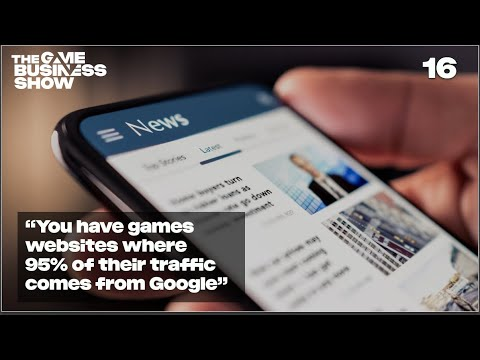
wrong, I think the world the whole media world will be a hell of a lot better. we all just paid for our medium, right? Um like we used to back in the magazine. Agreed. But every time I've spoken to I've always gone like is there a way that we can we can not be reliant on Google and every when you talk about the subscription model and maybe it works in your world and maybe we can talk about that. But in the particularly the bigger company bigger brand worlds it it barely makes a dent compared to the Yeah. Yeah. programmatics. Remember all that Google is is a traffic acquisition method. Mhm. because all you're doing is using Google to acquire the traffic and then that traffic you're monetizing with ads. You can monetize that traffic in a different way which is where we get into subs or whatever else and it's always going to be an alchemy. So yes, so you do have games media brands out there independent or large where literally 95% of their traffic can come from Google. That is I I think where you're in the danger zone. A big part of what we've tried to do on RPG over the years is chip that away to get that Google percentage down with more direct traffic, a dedicated
audience, more traffic from the highly followed social media channels, whatever, whatever, whatever. I think if you build an audience, I mean, I'll put it this way. I know that RPG site reviews can traffic more, can have more social traction than reviews on websites that are maybe four or five times the size of RPG site. And that's because people actually recognize the site. They recognize what it's about. They trust it. Like if you look at a game like Play Obscure, which you mentioned earlier, there are totally RPG fans who specifically wait for and seek out our verdicts. And God, don't I know it when when a publisher doesn't provide review code early enough and we run a review late because as soon as the embargo release, we've got people banging down our door going, "Where's yours? Where's yours?" And the funny thing, I suppose, is that you and I will recognize is I think this mindset was common in like magazines in the past. From a British perspective, you in my view, you were a person who specifically trusted the reviews of N64 magazine or ON&M and you
sort of were one of those teams and of course you know you look at Edge and so much of that magazine's power has been built obviously it's been built off great writing but it's been built off that institutional trust of the brand right and these things are all related. So, it's not to say there isn't great writing in online games media, but I think a lot of the large scale stuff now is an absolute content factory. And I don't say that in a porative way and the way people use the, you know, content farm. Don't get me wrong, lots of crappy farms exist too, but like I think the approach on big websites is a lot of content D and we want to cover everything D and so on and so forth. And that approach has led to the idea of seeking out a specific site's verdict has declined. Apart from like YouTubers and things like that or Twitch streamers, even online brands that used to have that sort of reputation, I can think of online brands that people thought of that way that people no longer do, which shows sort of the shift, I think. Yeah. What I find really
interesting, and I I haven't articulated this in my head in any way, so I'm sort of going to waffle a little bit, but there was a time, you're right, I read N64 magazine, but N64 magazine, even though it was a journalistic publication, it had a personality to it, and I read it because I mean, online publications are relatively faceless. You can get an IG, you know, the way everyone chases the big games now. You'll have an article from IGN giving Assassin's Creed Shadows a nine or whatever and then you'll get another opinion piece from IGN saying they didn't really like Assassin's Creed Shadows and you're like seeing hang on I I this I'm very confused by the publication stance. The point is it isn't the publication stance is the individual journalist starts which is fine. it it kind of takes away that ability to build an audience and and a community maybe and but then you starting to see these more established journalists and I I don't really include myself in this but you you can do people like Steven Tortillo and those sort of people who have gone and gone I'm going to go down the route of basically making a be a media publication where I'm the sort of brand which is a almost an influencer approach. Yeah, it is terms
of an individual, but it has a certain flavor, a certain style to it. And when they do bring in, you know, freelancers to it, they sort of have to fit in with that style, and then they're funded by the community themselves through. That's not the case for me, but it's the case for Steven and stuff where they're charging the community for it. I actually quite like that, even though it probably is resulting in lots of job losses at the moment, I quite like that idea in principle of a sort of media that people are, you know, you can fund through various different measures that isn't reliant on Google. And that's goes back to your game metaphor that you were talking about earlier about how video games today, they're not driving audience growth by sticking ads on Facebook. I mean, they are doing that a bit or ads on the TV or anything like that or they're doing it by g by creating Discord communities and building up things through Discord or through um Twitch or whatever those platform they choose to target with their game. And they're building communities that way and then selling to that community and then letting that community spread out the games. And I guess I don't know if that's exactly what you were saying, but it certainly feels like it sort of ties in with your
becoming less reliant on Google and building things up through the community, but if you can build a bit of an audience, it's huge. I mean, it could be small potatoes, you know, by the standards of games spark and IGN, it really is small potatoes. But if you're a small business, as I am or as I lead with a turnover that can maybe support four or five full-time people or an equivalent level of freelance or permalancer budget-wise, that little bit of dedicated audience can change the face of the business. And don't get me wrong, I'm not saying that that is all our business. Obviously, we have guides and stuff, but as with anything, it's a complex alchemy. So a lot of the times our guides will will provide the funy for content that is essentially a loss leader to make sure we stay on top of being a really definitive coverage for RPGs covering lots of small games that barely anybody buys and and even for the guides it's like we've pivoted ironically this is our time is a flat circle right so we entered this
world where guides became and I think of when I think of this I think of Destiny I think of Pokémon So I think of the period when VG 24/7 specifically pivoted to guides and they started doing a lot of stuff that many other sites began to do as well. It was using Google Trends and answering people's queries and doing lots of guides that are three, four, 500 words long that answer a specific question. Now we got the Google AI summaries and basically that's taken that away and our strategy for that has been essentially stop writing content that can be summarized by AI. So instead of writing a a guide that answers a question that can be summarized in 100 words and thereby the AI can summarize it, we go in and we say we're going to go back to the old school. We want to do really nice full in-depth walkthroughs. We call them like minimalist walkthroughs. So, there's still the full game on one page, but it's not like over the top. It's not handholding. It really
just takes a step back, step down from the hardcore game FAQ stuff. But the end result is people really like those. And so, we have two things happen. One is that we get a lot of search traffic off them. We target very carefully. We pick our battles very carefully about what games we're going to do it for. Again, this comes with being small where if you're a big site, you go, "Well, there's no point in paying someone x amount to spend 60, 70, 100 hours doing a walk through for this really long RPG when it's an RPG that's only going to sell 500,000 copies and therefore what's the point? We might as well put them on 500 Oblivion pages instead." I get it. So, that's where and that that's great because that actually opens a door up for us. Um, but the crucial thing is that content can't be summarized by AI. So it does well on Google, but in addition, people have come to love those minimalist walkthroughs. So now we get messages. We got one literally this morning and got got a got an email of someone to the staff inbox going, "Are you planning to do one of your
walkthroughs for such and such a game because I really, you know, I really love using your stuff." And that doesn't happen really on bigger websites ever. Having worked a lot on bigger websites as well, that just doesn't happen. And the number of people I've given me advice of just step back and do your own thing. But even then, it can be difficult because making money is about lots of lots and lots of different things. So, it's really hard. You know, two great friends of mine and and a friend of yours, Andy on VGC and then S who runs Gamatsu like those guys are completely dedicated to news. I'll be flat out like this is a hell of a lot more difficult to monetize and make money off because the value of a page to a user in terms of a page impression on the ad is in part determined by how long people are on the page. So if people are hitting a news story reading half a paragraph and bouncing after 30 seconds that page is worth a lot less money than a big old article that people stay on for 5 minutes or a guide. We've got
guides on RPG site with dwell times of 20 25 30 minutes which is insane and but that sort of helps to massage all the news that people just bounce at which is why it's this alchemy. You've got to have a little bit of everything within reason. But this is this is why it's so difficult because you've got to have a bit of everything but if you do too much you're screwed. So I feel like the the the parallels with game development in in that sense with like lower scale game development or to be fair the parallels between AAA game development and mega mega sites um is also similar. Although the one thing I would say in the media is I have for a long time for nearly 20 years since I was teenager been of the belief that you're better off with a smaller ship that can turn quickly than with a Titanic. I've got friends who have worked on websites where they've seen the iceberg coming but it's been too late to turn and that's it. Whereas at least if you got small ships then actually if you're
a media brand a broader media brand if you've got several small ships and one of them six you you're still okay. And I think that's also why you've had companies like Gamers Group have a great interest in websites the size of RPG site or Silicon era or Gamatsu or Push Square or VGC for acquisition because what they see there is a small ship that they can keep floating but then the problem is you end up with a big company and they make loads of silly changes and and and and the thing that made the small ship viable goes. You'd mentioned Google's AI changes. Yes. How much a problem is that? So here's the thing. I think there is a certain type of way that people have been doing things and a certain type of content that is essentially not going to work anymore as long as this system remains the way it is. At that point people have to move on and that has happened before like you know there was a world when we didn't do the sort of guides that we've done for the last 1015 years. There was a world when forums and message boards were the
sort of revenue driver for a lot of sites where they'd have a big old message board and then an editorial site would exist to the side and actually not be making any money. So people are going to have to move and rethink but I don't think it's sophisticated enough. An AI can summarize what the overall review position is. So maybe an AI is dangerous to open critic to Metacritic, whatever. But it can't give you one really strong opinion from someone that you trust or one really strong opinion from I'm an RTS fan and I want to read the verdict of a hardcore RTS fan on this new Command and Conquer Spiritual Successor. I'm a hardcore RPG fan and I want to read about specifically the RPG mechanics in The Witcher 4, not the broad strokes that you're going to get from a big brand. And so the AI can't replicate any of that. So I'm I'm less concerned about that. I think the bigger AI threat is sort of in the language models that are going to be able to summarize a lot of content or rewrite
content. We have enough problems with plagiarism as it is. probably every single story that gets posted to RPG site gets scraped and re-uploaded to at least 25 different websites and now they're in a position where they can start using AI to rewrite. And I do think there'll be a time will come where there'll be some up and cominging games media brand and we'll get 6 months into them being quite significant and people will realize that it's just a load of AI rewrites and then the editors just using that to get free copies of games from PR. I'm less concerned about the Google search AI. We'll see. I could be wrong on that, but also my business is not built, like I said, yeah, our strategy for a while has been to not write stuff generally. News is different, but for guides and features to really not write stuff that can be summarized or replicated by AI, I'm conscious of the time I've taken up some time. Um, what have I missed, Alex? But I mean it's the challenge really is and and this is a challenge for the whole industry, right? Is what's going
on in games media from big brands down to indie is a problem of talent retention and a problem of talent acquisition. And these are deadly because it means you've got the drain at both ends because it's harder than ever for indies to make it work which means you're getting less young people through the door and at the top there's not enough money. there's not enough progression and so people go to publishers, people go to PR and the thing I always hear is where where are we going to get video games? I was chatting to someone at BA about this. Where are we going to get video games Mark Ker mode? Where are we going to get video games Roger Eert? And the answer is who knows if we'll ever get there because no one gets to that level of experience or very few people get to that level of experience or people get to that level of experience and they sort of age out of the traditional journalism and criticism game to do something like what Steven is doing or like what Patrick Cleick's doing or like what Jason Shri is doing or they end up in a position like myself or Andy where you're running a website and you maybe
get to write a little bit but a lot of your time is spent bogged down with boring business stuff. And so these are the key things we've got to fix. The talent acquisition thing is we need more small independent brands. Best things that people can do for that is they can support independent brands. Whether that is visiting, reading, subscribing, following on blue sky, whatever for these smaller games media brands. The other thing is, you know, a lot of people who listen to who watch this are going to be people who are in a position to tip the scales in this sort of thing. Give support to small brands in terms of access and things like that. be one of the publishers that understands the power of a well-placed article with a small brand as opposed to a poorly placed article on a massive brand. If you're a publisher or a developer and you're going, "Yeah, but isn't working with an individual niche website? Isn't that ultimately the equivalent of working with a individual niche influencer or in those spaces?" It could be. I I always think of um I mean she's now retired to go off and do something else, but the channel still exists under new people. for Alex. Alex brilliant,
but like the biggest Monster Hunter fanboy expert you could ever imagine. So, Alex would always be there for Monster Hunter stuff. Even though he was a YouTuber, he would be in the mix with the regular media. I went on a Monster Hunter World um preview trip to Asaka with Capcom and it was a bunch of traditional media and Rex and that makes perfect sense because he's an expert. So, I think yeah, you can work with individual um influencers. What I would say if if you were our advertising publisher coming to me as they often do and saying we need a pitch for sponsored content for this company for for X new game from X from from Y franchise and I know in that scenario I'm basically up against two things in that instance is up against YouTubers who can provide similar or very big brands who can provide similar but on a different scale and stuff like that. And my argument in that pitch would be yes well the YouTubers tend to be a bit more narrow.
So there are some RPG specific YouTubers but a lot of the times they are Destiny YouTubers or Final Fantasy YouTubers or whatever. So it's you know someone who does Destiny I don't know or Final Fantasy Union biggest Final Fantasy YouTube channel run by a lovely couple. Um so my argument would be we do a bit of everything. So if you are stick with Final Fantasy, right? If you're Square Enix and you're marketing Final Fantasy 17, yes, you can go and do a big thing with a Final Fantasy YouTuber and that might be well placed, but all I'll say is we don't just have the Final Fantasy people. We've got all the Persona kids who you have been unable to reach. We've got the Mass Effect people who you would like to reach or the Boware people or whatever. And so that's what I would say. Um be niche. But this whole conversation is be niche, not too niche. is the Yeah, I mean to be to be fair that that is to that is totally it because niche is beautiful and you can own a niche and kill it, but you've got to find that balance because if you're too niche, you're never going to be a viable business. So, the games media is
certainly going through a seismic shift just like the rest of the industry. In fact, I love what Alex was saying there about how the games media world is sort of going through a similar thing to the rest of the games industry. But just like the rest of the games industry, there are pockets of success, particularly in niche areas. We'll be covering this world moving forward. Expect to hear a lot more about this in the year ahead. For now, that's it for this week's episode of the Game Business Show. We'll be back later in the week with our news and analysis show. To make sure you don't miss that, head to the business.com and put in your email address for free to make sure you get an email about it. Until then, thank you for tuning in.
Auto-generated captions from YouTube — names and numbers may be misheard.





















Comments