1 free read left. Create a free account for unlimited reading + AI research.
Create free account
Britain After Brexit - The Challenges & Opportunities
Key insights
6 takeaways- 01The UK games industry remains resilient due to the stability of the Video Games Tax Relief, which continues to anchor the sector despite post-Brexit regulatory and funding challenges.
- 02Operational friction has increased due to non-tariff barriers, VAT complications, and restricted talent mobility, forcing many studios to establish EU-based subsidiaries to maintain regional access.
- 03The current weakness of the British pound functions as a strategic financial hedge for developers earning revenue in foreign currencies, helping to maintain global competitiveness.
- 04London has experienced a notable surge in venture capital investment, driven by international investors who continue to value the depth and quality of the UK’s developer talent pool.
- 05A shortage of domestic publishers has driven an increased reliance on capital from the US and China, leading to concerns regarding the potential assimilation of British studios into foreign conglomerates.
- 06Foreign investment acts as a catalyst for local growth by enabling studios to expand domestic operations and reinvest in the broader UK ecosystem.
Ask AI about this video
Transcript
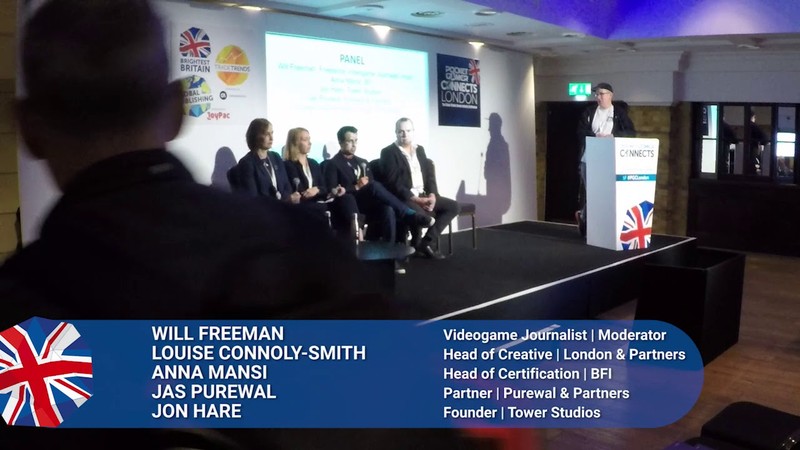
[Music] right um yes I guess then we will dive in and thank you so much for coming I appreciate you know first a couple of hours of the conference a hell of a lot going on so thank you for choosing to spend some of your time here we're of course going to talk about that little thing called brexit you know I guess I'll very briefly my name is will Freeman I'm a freelance game journalist two other bits and pieces in the games industry and I'll introduce our panelists in a moment but you know very briefly as I'm sure I'm sure you don't need me to explain what brexit is and I probably couldn't because nobody can in full detail but you know it's almost
certainly it seems the withdrawal agreement directoral deal agreement withdrawal agreement bill that was passed by MPs on the 9th it's been with house but House of Commons Lords mighty since the 16th it seems like Breck's it's going to go through so really the idea of this panel you know No Deal seems incredibly unlikely we might get some perspectives from the panel on that kind of thing but really what we want to talk about here is kind of the impact what planning and readiness people in games whether an individual or a company whatever your role in games is I'm kind of look at the opportunities and there are challenges of course but you know how we can collectively address those challenges so you know we have to be realistic but I guess we're gonna you know don't want to do it dive too deeply into well is it wrong or right i think just sometimes there's a couple of things to say on that issue but yes so that's the direction the panel's gonna
be so yeah and I think yes arriving fashionably late and for all the John hair fans here that's thought they're going to be disappointed yes so yeah I was gonna say closest to me so John came in just at the right time so we've got Jen John hare CEO at our studios I think it's fair to say kind of UK or global game dev veteran and Legend recently got one of his team's games on a stamp which is not a bad achievement next whim Jasper well founder and partner at Pure Oil and partners I'm sure many of you know jazz we got next this Anna Anna man C head of certification from the BFI and last but not least Louise Connelly Smith head of creative at London partners so enough my awkward waffling let so give him a warm welcome right and the first question is just if
you could very briefly do like a one or two line intro just to set the context of who you are let's start in the opposite order Louise hi I'm Louise I work at London our partners we are not like Jazz's company a law company we are in fact the Mayor of London's promotional organization so the way of describing is that everything positive you read about London it's probably come from us my role is to be relentlessly positive about London always I live here and I do love it and I've worked at London partners for eight years so I still remain totally committed to the cause thank you brilliant so Anna months ahead of certification at the British Film Institute although in my role there we certify films TV programs and video games to be British to access the video games tax relief I'm also a trustee for games aid and an ambassador for autistic a play the games arm of their charity autistic er hey I'm jazz pure well I'm a
lawyer business advisor and investor to games companies and passionate gamer and take a keen interest in brexit from all of those perspectives I've also not as you're going to hear influence what I'm gonna say a keen anti brexit activist I'm John hair I'm a kind of veteran game developer I'll be making games 35 years the last four years I've been working with the team in Helsinki in Finland before that a team in Poland for five years a team in Ukraine for two years and the Turkish team for six months and before that just forever working in the UK all over the place so it's my experience brilliant right well then we will dive in I mean this is a huge big complex issue I'm sure I can get through half of these questions but still we will try and find some time at the end for you guys to ask questions so you know get your thinking hats on in that regard let's talk first of all I got every single question pretty much be a panel or a one day conference but what might the impact for funding for games be I
mean you know video games tax relief is a significant one there is also stay aid and that private funding might put this to you first of all just in terms of V T gr yep so in terms of the video games tax relief the government is committed to it there's not going to be any change once we leave the European Union so there isn't work missed to it it's carrying on there's also the creative Europe funding which games developers rebellion yum yum I can't and italic Pig of all applied for we are in the creative Europe funding for to the end of December after that we don't know whether they'll be a replacement for it or not but they'll be you know it has been said that we do need to have something whether the government carry on that but the most important thing is about video game types people continue in terms of state aid and you may not want to come in but this with Jazze we
will no longer be as we're no longer be doing the world's bleep arts day but they will they we could be part of a competition market Authority so it'd be could be similar rules in terms of how we administer the video games to actually so as far as we're concerned in terms of the tax relief it's business as usual we don't want to change any elements of their cultural testing where it's European or if we want to keep it all the same on private funding I'm not from some so much of an expert I don't know if anyone else oh if anyone wants to sound thing but I can jump in so just last week we released a report which was drawn from a company called deal room so we did that with Department of Culture ministry in sport and with a company called tech UK in the UK last year had a hundred and eighty eight percent increase in funding a VC funding there was over ten billion pounds might be dollars actually invested in the UK of which seven
billion came to London so we are after the US and China one of the speakers before said well we're much smaller than the US and China we are much smaller than the US and China but we are significantly more than anywhere else in Europe I mean just by a huge distance and in fact this morning I was just speaking to a VC company out of New York and they're going you know what we're really seeing the UK some very interesting developments and we're thinking of setting up here so I think you know this isn't gonna stop well just from a development perspective I've been doing deals selling games and licensing games for 35 years and the last 10 years has been pretty hard to get money out of European publishers from a developer perspective so most of the money is actually in we've got two deals at the moment one in the US on one in China and that's kind of where the money is getting the tax relief is really important so it's great that staying in place I also hope that we keep this no v80 on the bills thing going because that's just very convenient but actually
I think that sometimes people panic too much about a change I think everything's changing anyway and actually as I said Europe for a development perspective isn't a great source of money for a lot of UK companies and European companies I made the GTR thing that Ana was talking about is underpinned by this thing called state aid which is this idea in the European Union that member states can't advantage their own local industries to March because it would just become an absolute bloody mess so instead there are certain rules that say well if you follow these kinds of rules then it's okay to benefit your local industries and it took a long time for the games industry to persuade the European Union that we should have video games tax relief because of these concerns well that's basically just the UK government helping the UK industry to so technically once we leave the European Union we can do anything we like and one of the probe breaks at arguments for the games industry before Gregg's it was that this would be video games tax relief unleashed that the government could really help the creative industries much more and the
answer to that is maybe but like basically everything I'm going to talk about from my little tough knees worth all of this is that you've got to split everything into three distinct phases there was everything up to now Briggs the brakes it moment on the 31st of January there's this transitional period for however long this lasts at the moment it runs up until the end of December and then there's the future right and so we kind of know what the situation is up until the end of this year what happens after that is so complex and bearing in mind that in December this country was living hour by hour as to what was going to happen in breaks it says a lot of uncertainty once you get beyond the underneath but beyond the end of this of this year and just a few words on funding and deals access more generally has the last two years negatively impacted the games industry from a deals perspective kind of hard to tell there's no objective evidence about it it's all a bunch of anecdotal evidence what John was saying is right the fundamentals are there's been a lot more money coming from Asia in the US
but equally I could tell you two to three IPOs of games companies or games like companies in the UK that did not happen in the last year because of uncertainty over breaks it I couldn't meant I could give you funding give you financing deals that didn't happen all were complicated by Briggs it but that's just up until now is there going to be more certainty in the next year or so probably are we in a massive boom for our industry right now yes so we are insulated to some extent but like I'm saying don't mistake what happened in the last two years for what's gonna happen in the next year and then one earth it's going to happen from December onwards from the perspective of optimism for the industry and also videogame tax relief although I know you were saying the government's clear as to where it's going to be now and it has aspirations for the future but is it going to be significantly better we don't know that I think for the time being I think we've just won is that business as usual carry on and you know we may still be have some sort of system
that replicates state aid and in terms of our relationships with other territories and so we need to sort be cautious about that the game you know it's a good relief it works across all the all the other sectors so I think let's carry on with it it's open to all sizes of studio from so you know this is an advantage we have over the French Gant tax relief where it's the minimum budget is a hundred thousand euros they used to 150,000 euros they reduced at one hundred thousand there is no minimum budget for the video games tax relief is open to all UK developers of all sizes and the majority of people that axiology of developers are small to medium developers as well it's interesting to hear that perspect I guess we all and I can naively think this is that that kind of the Beast that was uncertainty is behind this now but it sounds from what yes you were saying is we still have a degree of that ahead just on that point we've just done the easy bit we've done the we've done the easy bit which is the process up to leaving the European Union
which will happen or 31st of January but then the nest of the rest of this year and the year after and the year after that is going to be a complicated legal financial operation or all kinds of battle over but what kind of breaks it do we do we want the deal was signed and the election was fought on the basis of there is a deal and that deal involved relatively close alignment as soon as that election was over we hadn't interview with the Chancellor that just a few days ago saying there isn't going to be regulatory alignment we're not going to be in the customs union we're not going to be in this single market and that's change I'm not expressing interview as to whether it was a good thing or a bad thing I'm just saying there's a lot that still needs to get figured out just from a pragmatic point of you as a developer who's done in my whole life and made my career living from it our perspective is sometimes quite different so I was making games from 85 and we were the number one country in the world at making games in the late 80s and early 90s and did not capitalize on it and the government was quite late at recognizing you then I
know people like Yuki spend a long time pushing for the tax relief which we eventually got which is great but there's another thing which has come into the business world since those eighties days which is deciding about start oops lucky they're a good thing now when nine out of ten companies got bust that is not a good thing it's not a great model and the reason we were strong in the 80s and 90s is if we had a very strong publishing community in the UK we had some of the world's best publishers as well I'm hoping that with this change of staff out of it comes some strong publishing because from a developer's perspective it's enough risks to spend a few years making a game three or four years if we then trying to also publish a market with no experience you'll likelihood of failure is very high and actually as an experienced guy I've gone through so through working with publishers for 20 years self-publishing for a is and now I'm the last to use going back to working with publishers and actually making more money because it secures my business it D risks it so it's a lot of issue about D risk we need to discuss and to not
panic about headlines and things up here and think on the floor you know do be really mind if the behalf of our companies aren't gonna succeed stay that way let's push the money where it's gonna actually go somewhere and not continue to play games to keep everyone happy and busy but not ultimately productive so I'm hoping that this is the changes comes out of this change with the EU just as we're almost halfway through versus one of my questions out of 15 so far my fault the intro let's face it I'm sayin I think we could linger on that discussion not linger but stay with that discussion but to move on and it's kind of a related thing what do you think the impact would be if any on exporting games I mean obviously we've moved to this digital era one could naively think that transcends some of the issues but in terms of the movement of product do you see any opportunity or negative impact how should one prepare for that anybody well we're getting all
our money from the US and China at the moment so to me it makes no difference I'm working with a developer in Helsinki I don't have to pay them vit which is great because it makes everything easier to account for we have no employees living in any one else's country which is where you might have problems and that's another thing to touch on this there's a lot of ways to partner with companies in Europe apart from going and living in their country I've spent the last four years working in Helsinki with a company basically as a partnership between companies and splitting them in the money previous to that I was publishing with a company in Poland I was the publisher again splitting them in the money going out there outsourcing myself to them to work but I need just taking my time before that even if there are problems with with access I worked in Ukraine and Turkey relatively difficult country Ukraine you just to get the visa easily you just need a little piece of paper from the company and you come in even in China now you get a 2-year visa as long as you don't stay for three months you can go home
and come back again it's not as complex as people think it is and I've been doing in for the last like 15 years and my working life I guess if I'm talking export and what do you think does anyone think there'll be an impact on how games are distributed or how come game companies might want to distribute their games anyone want to brave that one I'll go for it so u2's jog on for a second there's a thing called tariff barriers there's a thing called non-tariff barriers a lot of the brexit debate has been about tariff barriers which is the idea that you literally have to pay taxes for something to come into a country or out of a country that's that's a solid thing we can understand that it makes sense it's the kind of thing that is a big concern in the manufacturing world as a very largely digital industry particularly for developers and publishers direct half barriers are very unlikely to be a problem going forward it's the non-tariff barriers we have to worry about it's the fact that the rules are different between one country or another one of the real benefits we've had in the games industry and all the
digital industries is that because the rules have become increasingly aligned on IP on data on consumer on tax like the 80 there's less and less friction and it's a lot easier for you to distribute your games all around the world like we act as though it's like god-given right to ask like we have a god-given right to distribute on a frictionless basis around the world that's based on a series of rules have been built over time so the the worry is not that there's going to be taxes on our games necessarily but that in lots and lots of indirect ways if the EU in the UK diverge starts becoming harder in lots and lots and lots of different unsaid ways and I can't prove it because we're not there yet and it's not doom and gloom that's suddenly all the games industry companies are going to fall over it's just in lots of unseen ways it starts getting hard I'd like to pick John's example in a no deal scenario you absolutely would be paying v80 to that company in Helsinki you would and that is a cache hit to you because you
wouldn't be able to recover it except over time period and I'm not saying that's going to happen I'm just saying that's an example of where we may see things and does that make it harder to export from the UK maybe so for example I'm the chairman of a company called facepunch which is a company in walls holder made Garry's Mod and rust very quietly successful we have set up a subsidiary in Ireland so that in the event of a no deal breaks it we would switch and our steam distribution contract would be in Ireland and from that perspective we would have follow the Irish rules going forward I could name you a good number of companies that have quietly done that not all of them by any stretch but enough of them to try to be insurance against what we'll was talking about there could there be an impact on on exporting in you almost I guess the other one you know as part of the research for this looking into kind of the questions developers are asked or concerned about and publishers in studio so on a related issue seems to be you know I guess importantly a lot of game companies come to the UK you know didn't start here administrative headquarters
large publishers I might put this to you first Louise do you see there being significant impact to what the impact will be on that as I post you as obviously you're slightly involved in the process so we help just in case I hadn't explained that we help overseas companies come to London and set up here we work really closely with central government to do that for the UK but it's in the name London and partners so it's all about London for me we are not seeing a drop off from overseas companies who are interested we are seeing that they are taking longer to make a decision and I think that's actually some clarity is helpful lots of companies don't like uncertainty and I think the fact that people sort of know what the direction is even if they don't know what the deal looks like you know they know that we're leaving so at least they can work that out the other thing that we have seen is because the pound has gone down in value by 30% we have actually seen a lot of acquisitions of UK companies by overseas
companies particularly by North American and Chinese whether it's acquisitions or investments and what that means and it's quite weird is that companies like sensible object which are a really brilliant British company are now neon tech a really British American company and so that's quite odd for us because in a way a lot of the really amazing British developers partly I'm again another company I met this morning from the US said we're interested in acquisition and it took me a long while to realize when I spoke to Chinese people companies when they said oh we're really interested in IP what they really meant was we're really interested in buying companies and that just took a twig and I'm not saying that's the ideal scenario the ideal scenario is for developers to have a really successful company overseas and to go actually we really want to have an entity in the UK and then I want to really make the case that they should come to London and we're not seeing a drop-off point in that because this is again how you can
do deals as a developer so I mean I generate IP we developed it in Finland and then we license it out now we've licensed to a company in the States and the company China got very good money last year without losing any shares no I'm buying us out so you can access money by old-fashioned publishing deals there is out there and for a developer it's more stabilizing and you don't lose that as you're saying lose that power lose that control so it's harder but I would love to see a bigger push for this and to push up the publishing community because that's the period in the Angry Birds years like it's almost ten years ago now where you could just publish yourself from quickly become picked that's gone I mean there's over a million products out there to fight with it's sensible in this time to partner with good people to help you on whatever expertise and be hitting sales distribution channels marketing whatever and not try to do everything yourself so I would advise developers look for good publishing partners certain ease work for us this last year particularly has been good actually and I'm just going to jump in the other thing that we know is that people the reason that they're
coming to London is because of the tower I mean so it's partly the money but it more importantly it's the people the developers who are already here and I think that London absolutely again in this case punches above its weight it has more developers than the rest of you Europe I mean not the rest of Europe combined but certainly more than other cities are big centres for developers and I think that's one of the reasons that we see overseas companies come here is that initially they're looking at other markets and then when they actually see the developer talent particularly those not from Europe they come to London and that's that's for us is one of the real differentiators that we've been able to build on and that we've been able to continue to build on but at the same time just to give a counterpoint to that there's a difference between all of that and actually having you what you were talking about will which is having your headquarters here right like I used to work in Silicon Valley my job was helping to helping high-growth Silicon
Valley startups to move to Europe and ideally to the UK and a huge part of that is the same reason why you had a lot of Japanese migration into the UK business migration which is you have that entry point into the rest of the European Union that is not going to exist and that was a big factor it's not the only factor because other factors were timezone talent language rule of law all of those things are still here but a massive component of that we are about to rip away and we don't know what we are replacing it with so you're absolutely right and that's why you're going to see and you already seen quietly a bit more interest in islands I take no pleasure in that but that's a bit more competition that didn't exist previously in quite the same way yeah I mean I agree but one of the reasons people come here as well as because of the UK market because it's a huge market and particularly on things like mobile we're very mobile first I mean I don't know how many of you know particularly what I'm thinking Germany France Spain
they're not really where we are as consumers and I think that's why a lot of companies do come here I mean I agree with you I think it is going to change but I also you know when we look at how the British consumer buys online and that partly because we have such a strong financial technology sector that has driven a lot of behaviors and a lot of other sectors including mobile gaming oh just I'm hearing it from a perspective of an old British developer who remembers when we were the top right so I'm hearing there used to be restriction on pushing the money into Britain to stop it being unfair I'm also hearing we're trying to invite people from other countries into this country all I can see by these changes is a benefit for British developers and publishers so actually let's just see how these changes settle down there will be some winners and losers as always in business I've got a new phrase at the moment it's like waves they go up and down as long as you don't drown on the Downs you survive for the next Arps so let's just see how it goes but I can see some positives about what everyone is
saying for for us here in uk-based developers and that mean doesn't mean we don't work with people from other countries it means we work with them in a slightly different way actually and have more ownership I was gonna try and skip it does anybody want a brave answering movement of people in two minutes but yeah I guess that's the other thing you know we have an amazing London and the UK this tremendous bed of talent and talent is something that moves across the world in the games industry do you know I guess when people think of brexit movement of people is probably fairly high up the list of things they say really quick on that working in Europe since 2006 I've never changed citizenship never moved house I just go backwards and forwards and people coming backwards or forwards to me actually if you work in the right way you simply do not need to change the country you live in to work with people in different countries it's really really simple pretty else have any thoughts on how that movement will end the Conservative government hasn't yet stated what it's going to do it is going to be in an incredibly difficult position because free movement is a brilliant example of
the tension between the nationalistic approach and the anti-immigration approach and the pro-business approach it's just very hard to see how that squares going to get circled and is another example of what I was saying this is that this is the easy bit I understand and respect what you're saying but there are a lot of UK games companies that directly want to bring talented folks from Europe to come and live with their families in the UK and that system will change and we have no idea what's going to replace it so uncertainty is again the catch word there right we have oh we've got four five and a half minutes left I've got and all of these questions are really simple and I'm sure so yeah I've got plenty more here believe me but just to give you guys an opportunity to ask any questions especially if they're really specific to your own situation or not general broad questions does anybody yes I think microphone will be no job too small brilliant thanks Anna hello yeah quick question for John you were saying
about we're developers and you're saying find a good publisher how would a developer go about finding good publishers well you've got to go to a lot of conferences and speak to a lot of people I mean we'd be making this that latest game for four years and we spoke to 80 publishers I think I probably turned down 12 deals signed one with a company in China a year and a half ago on one with a company in the States who got us into Apple arcade six months ago but it's just about surviving it's that's where experience comes in having a nose for what is a good or a bad deal but you've got to do a lot of fishing to catch the best fish so that's it just get and keep surviving that time again for anyone looking for a development deal look for an advance against royalties or it's a massive risk for any developer because once the company's paid you in advance they've got skin in the game they've gotta fight for your title if they pay you nothing up front they're not going to fight for it harder it's really simple it's great thanks anybody oh thanks very much anybody else got a question come on all these am I not
seeing any hands I guess I'll have to go ah fantastic the man with his hand up it's my version of doing David Dimbleby but you know when there's only one hey give it actually happened to him everyone sold out within the space of five years when some big money turned up all of us including us as developers we don't work hard during the 80s in the 90s we hit the mid 90s all the big media companies like Sony and Warner and bertelsmann showed I probably just too went okay there you go that was actually what happened we all got greedy and grabbed the opportunity before it disappeared okay so it wasn't really the EU that destroyed all the publishers not at all now it had gone before that really happened yet so what will happen now I mean how will these publishers reestablish themselves new powerful uk-based publishers I'm looking at one
of them right now well there you go so we just keep on working on that but trying to build a community we seriously haven't got enough of these companies kicking around in the country and it helps uk-based developers to have strong uk-based publishers it's no coincidence now we're going to the US and China mostly to get the bigger deals you know there was another question from the chat down here the second different right hi this kind of relates to the idea that all the big publishers kind of got wiped down in the 80s and also the idea that all this money is coming in from US and China with the pound falling so aren't we at risk of basically kind of wiping out our own UK games industry as all of this money comes in all of these game companies get bought out they become assimilated by the US the taxes get paid over in the US and the industry just kind of collapses in on itself and repeats the whole process again because it's not the these people coming into buying it's not encouraging people to stay in the UK actually I'm gonna take
that as well but I'd really be interested in your coins one of the things that you see and I think you see it more now is that when companies make money so I'm going to talk about Bossa so Bossa raised money last year and one of the things that you'll see is that they then although it wasn't a huge amount it encourages them to grow their London presence or their UK presence and they sometimes not always come investors themselves and they will invest in other UK businesses so it's actually a positive when money comes in I agree don't necessarily want them to all sell out but it is a real positive when British companies get investment because they will often use it and it will grow their ecosystem that's that's what we've really seen in other sectors and I also believe in the game sector I mean I mean Monster is really simple I'm earning in dollars from the US and dollars from China at the moment and every day I look and hope that rate is as low as it possibly can be because if you're earning dollars at the moment and that's where that money's coming from
the dollar based contracts it's actually better for us we're getting more pounds for our dollar right now so it's not always as simple as it seems from our perspective it's great we've made actually quite a lot of money because of the currency changed this last year I think we better because of time end on that note it's simple innit themes or it's not it's incredibly complicated thank you so much for your attention thank you for the questions and of course thank you to the panelists a round of applause for everyone [Applause] you [Music]
Summary
The British video games industry maintains a resilient posture in the post-Brexit landscape, anchored by the continued stability of the Video Games Tax Relief. While the sector has experienced a notable surge in venture capital investment, particularly within London, the industry faces ongoing challenges regarding regulatory divergence and the loss of access to European Union funding programs. Despite these structural shifts, the domestic market remains a highly attractive destination for international investors, who continue to value the depth and quality of the UK’s developer talent pool.
Operational complexities remain a primary concern, as non-tariff barriers, potential VAT complications, and restricted talent mobility create friction for studios. To mitigate these risks, many organizations are adopting a dual-track strategy: establishing subsidiaries within EU member states to maintain regional access while simultaneously pursuing robust international publishing partnerships. This adaptive approach allows firms to navigate the evolving legal and financial environment while leveraging the UK’s inherent creative strengths.
A significant structural vulnerability exists in the shortage of domestic publishers, which has led to an increased reliance on capital from the United States and China. While this trend raises concerns regarding the potential assimilation of British studios into foreign conglomerates, such investment often serves as a catalyst for local growth by enabling studios to expand their domestic operations and reinvest in the broader ecosystem. Furthermore, the current weakness of the pound provides a strategic financial hedge for developers earning revenue in foreign currencies, effectively offsetting some of the risks associated with foreign acquisition and ensuring the industry remains competitive on a global scale.