1 free read left. Create a free account for unlimited reading + AI research.
Create free accountPresentation Interactive Games and Entertainment Association
1 free read left. Create a free account for unlimited reading + AI research.
Create free accountPresentationInteractive Games and Entertainment Association
Income for the financial year from 1 July 2023 to 30 June 2024 was down 0.9% on the previous year.
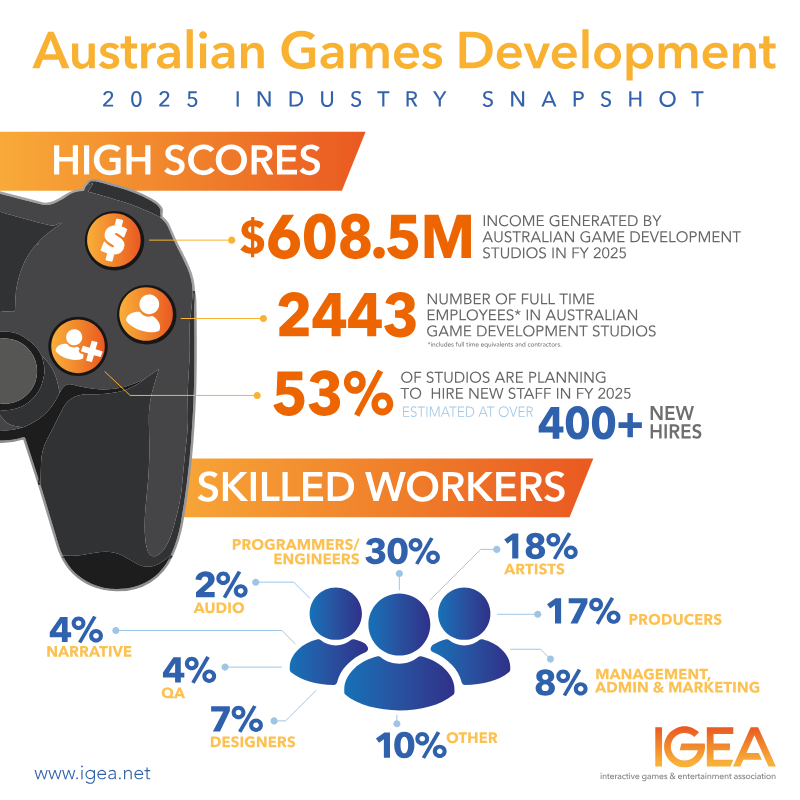
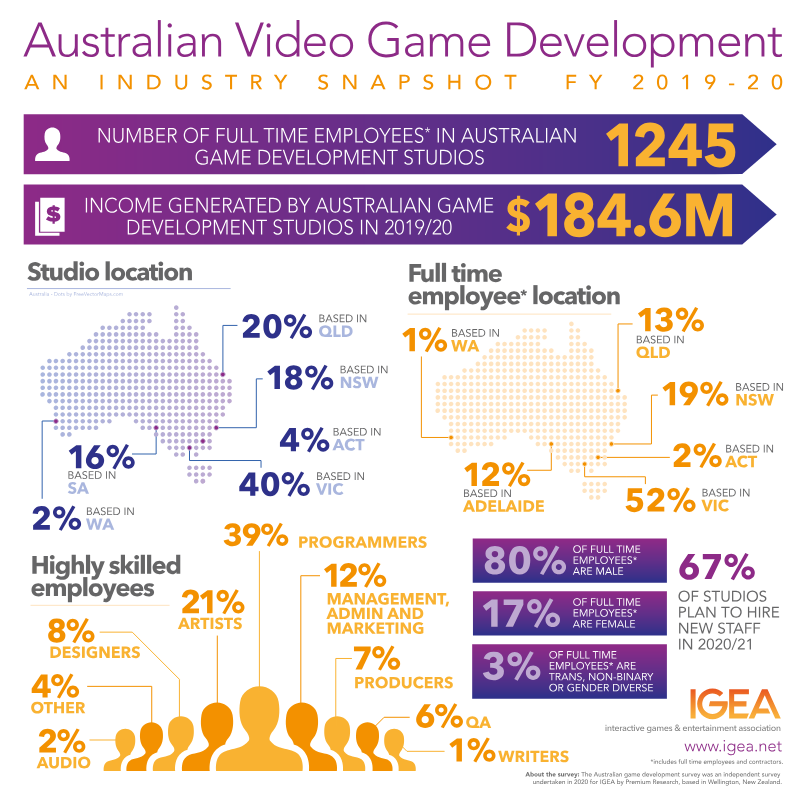
The Australian Industry Snapshot FY 2024 presents a financial and workforce overview of the country's game development sector for the financial year running from 1 July 2023 to 30 June 2024. Its findings point to a sector generating roughly $339.1 million in income, a modest decline of 0.9% from the previous year, while the workforce of 2,465 employees, including full-time equivalents and contractors, grew by 0.3%. The data indicate an industry that is largely export-oriented, with 93% of revenue originating outside Australia, and one that is heavily invested in intellectual property, with 85% of respondents developing their own IP.
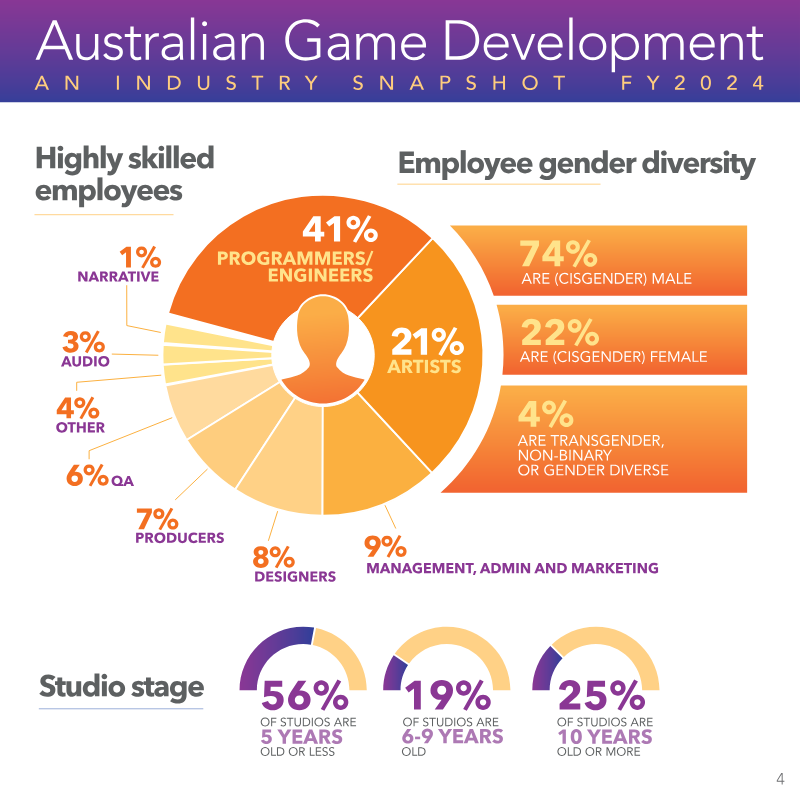
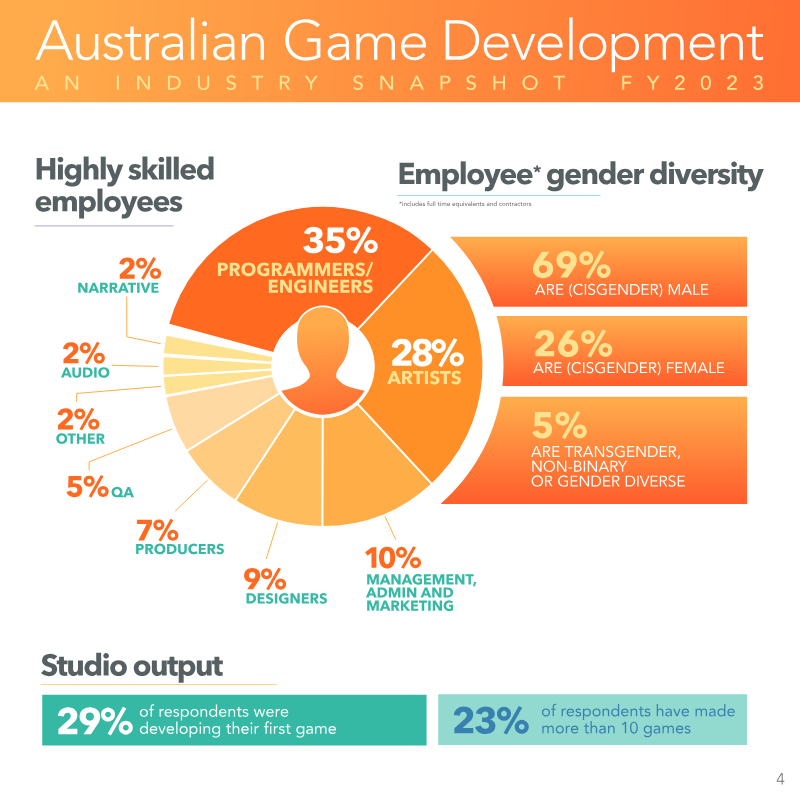
Looking ahead, the outlook is cautiously optimistic. Around 61% of studios plan to hire new staff in FY 2025, with an estimated 195 or more new hires, and 53% predict income growth over the coming year, compared with 28% expecting stable income. The snapshot also profiles the sector's maturity and composition: 56% of studios are five years old or younger, while 19% are six to nine years old and 25% are older still. Employees are predominantly male (74%), with female-identifying staff comprising 22%, and the most common roles are programmers and narrative engineers, followed by audio artists, designers, producers, and QA staff.
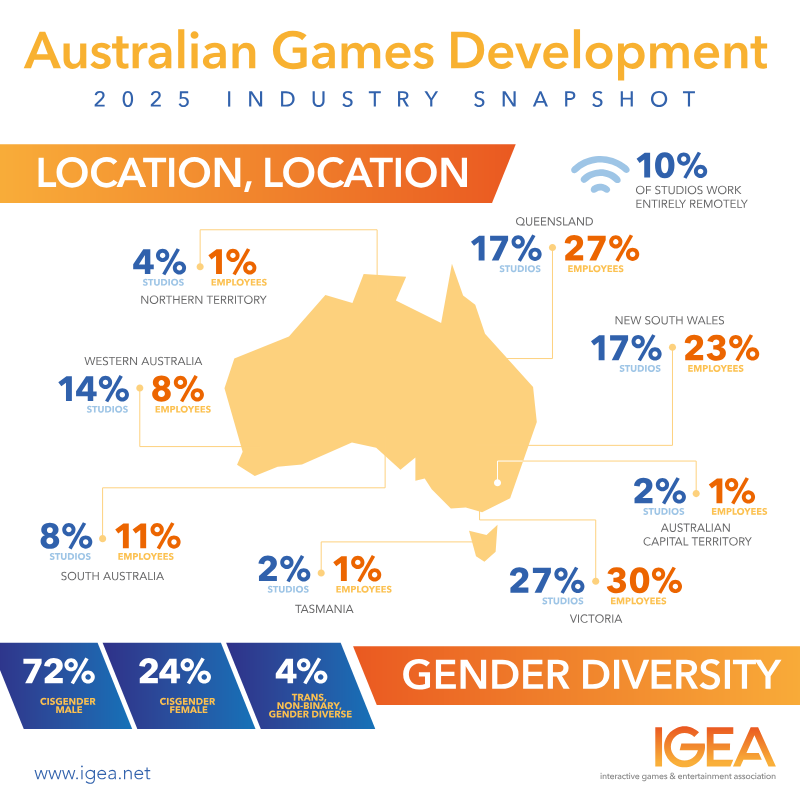
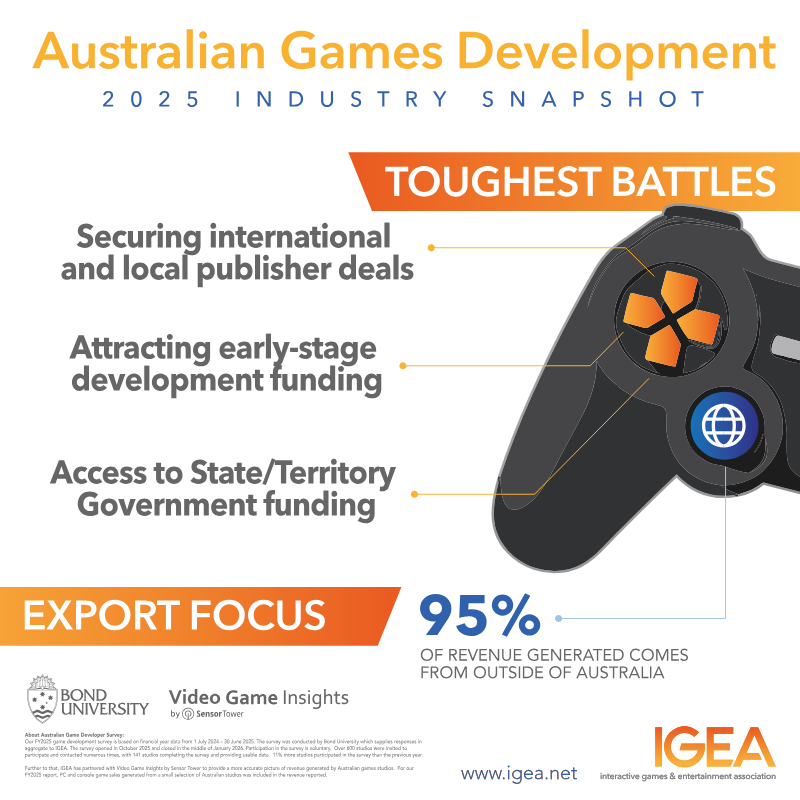
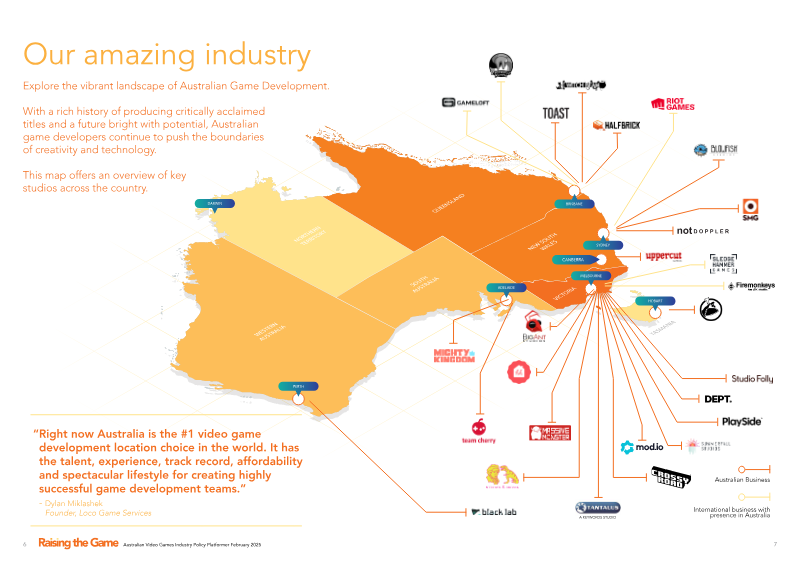
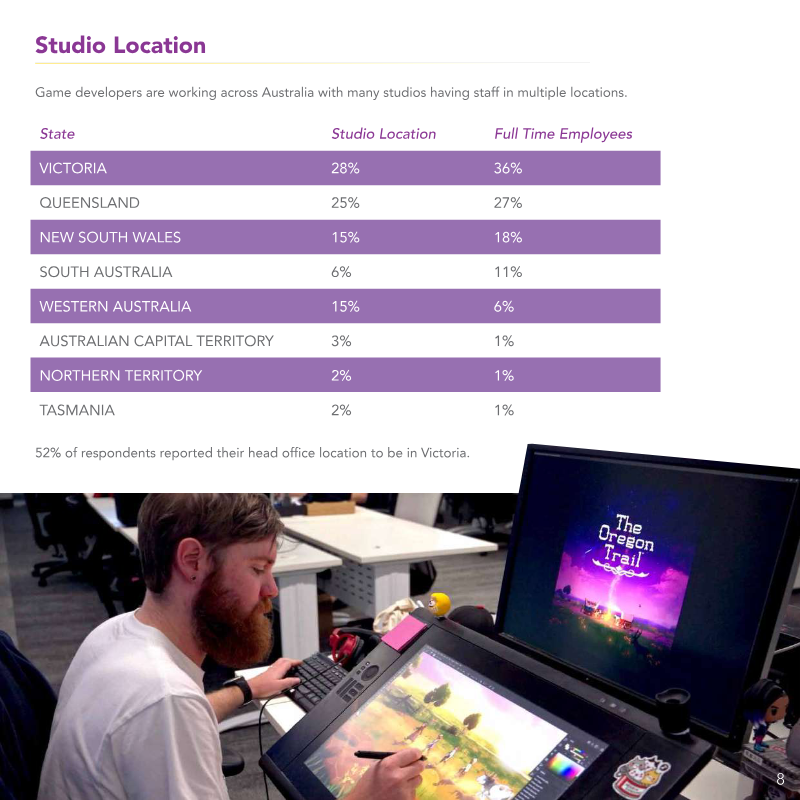
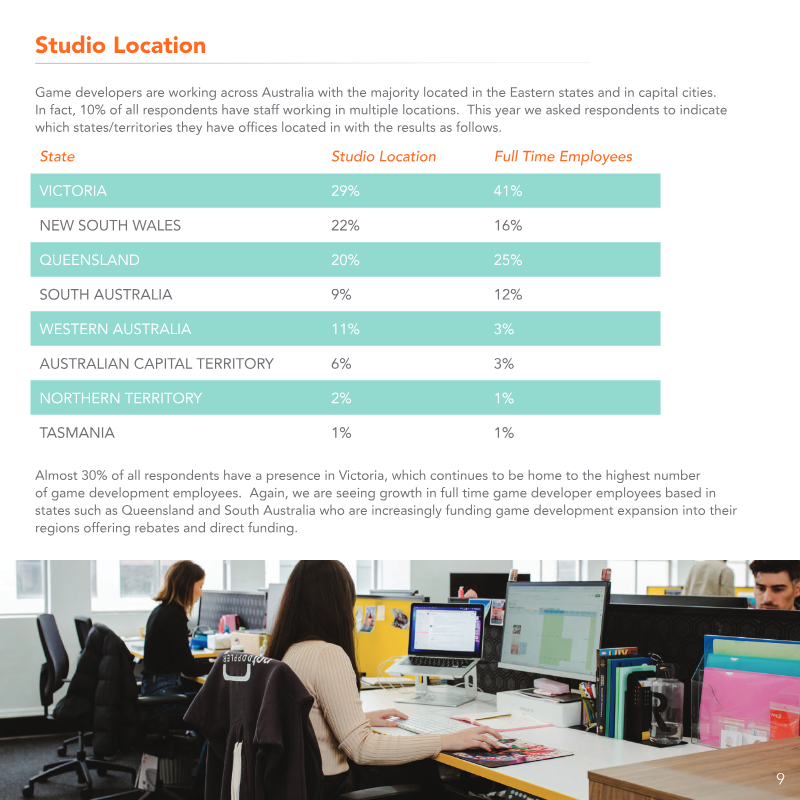
Geographically, 52% of studio head offices are in Victoria, and 4% of studios operate completely remotely. Full-time employment is concentrated in New South Wales and Victoria, with additional presence in Queensland, Western Australia, and South Australia. Respondents identified securing international and local publisher deals and attracting early-stage development funding as the principal challenges facing the industry.
The survey was conducted by Bond University, with responses supplied in aggregate to IGEA. The collection window opened in October 2024, and the findings reflect self-reported studio data rather than audited financial statements.

New Zealand Game Developers Association · 2026
Interactive Games & Entertainment Association · 2026



Interactive Games & Entertainment Association · 2025
Interactive Games & Entertainment Association · 2025
Interactive Games and Entertainment Association · 2024
Interactive Games & Entertainment Association · 2024
Interactive Games & Entertainment Association · 2023


Interactive Games & Entertainment Association · 2020



Interactive Games & Entertainment Association · 2020

Interactive Games and Entertainment Association · 2019
Interactive Games and Entertainment Association · 2019
Interactive Games and Entertainment Association · 2015
New Zealand Game Developers Association · 2026