1 free read left. Create a free account for unlimited reading + AI research.
Create free accountReport DiGRA
1 free read left. Create a free account for unlimited reading + AI research.
Create free accountReportDiGRA
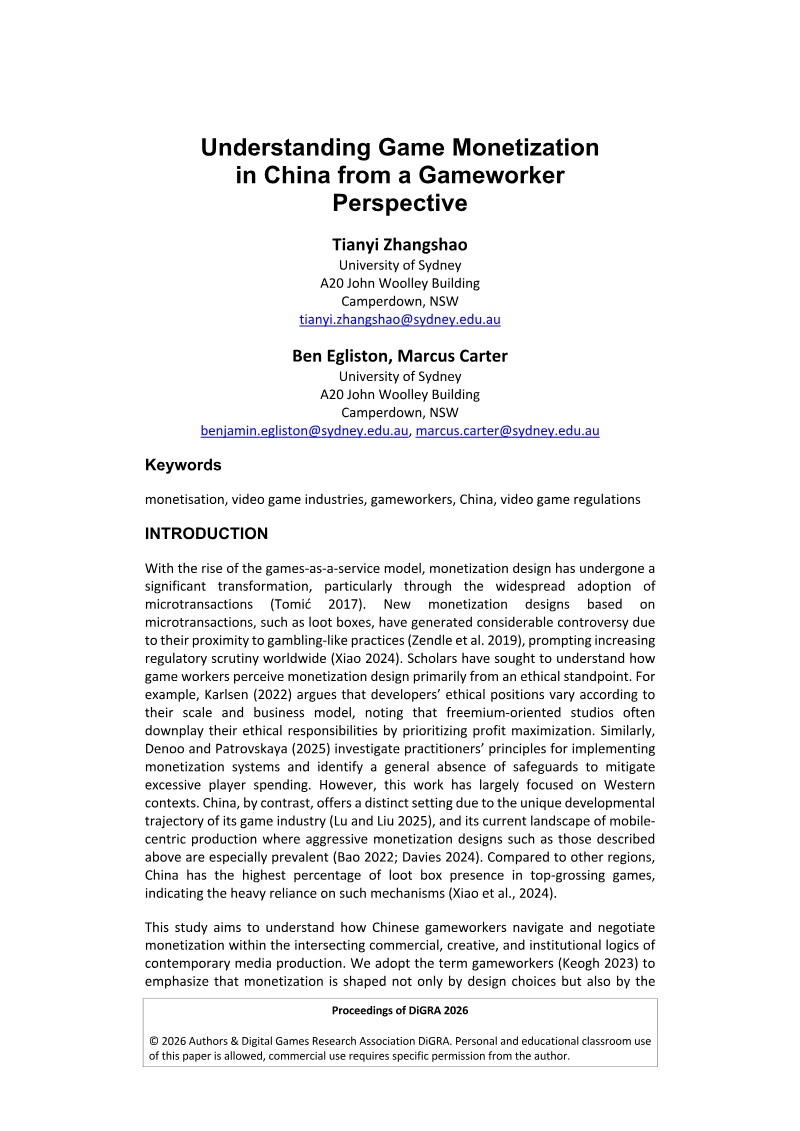
The study interviewed 24 gameworkers across publishers, designers, developers, investors, and studio owners. Most had freemium project experience.
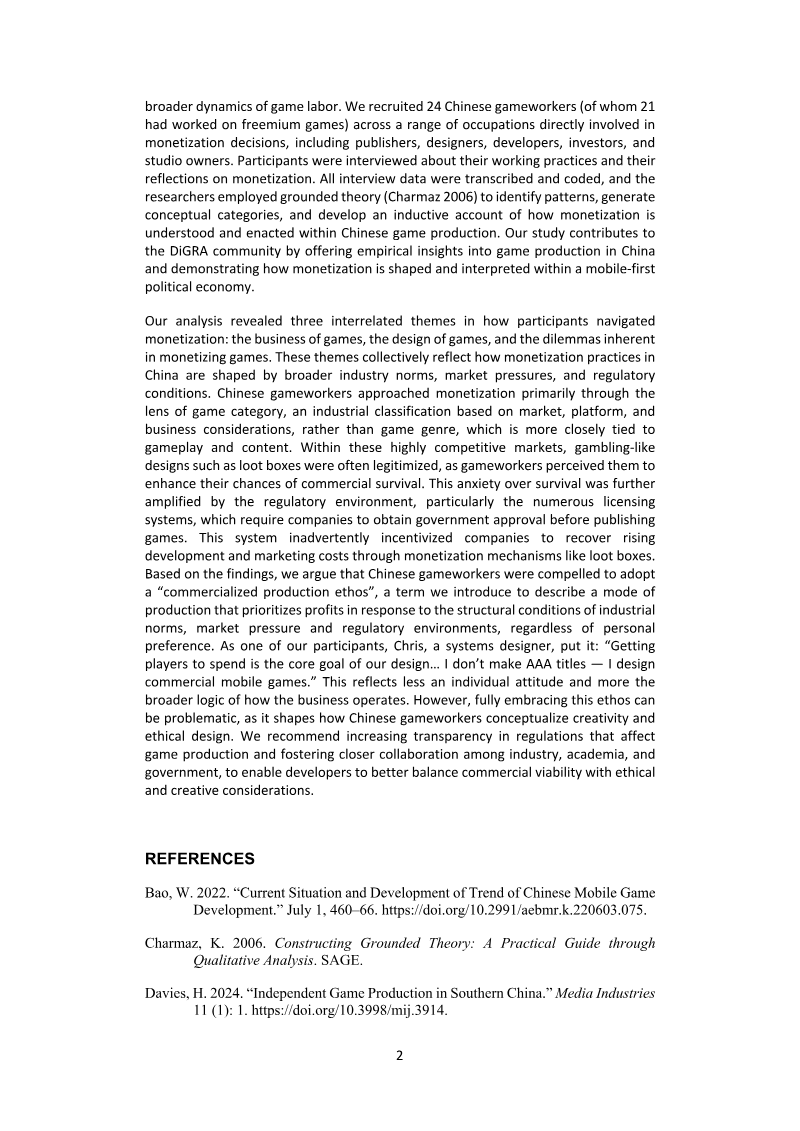
This study examines how Chinese game workers understand and enact monetisation in video game production, addressing a gap in research that has largely centred on Western contexts. Drawing on interviews with 24 gameworkers spanning publishers, designers, developers, investors, and studio owners, most of whom had experience with freemium projects, the authors apply grounded theory coding to develop an inductive account of monetisation practice. The work situates monetisation within the intersecting commercial, creative, and institutional logics of contemporary media production, using the term gameworkers to emphasise that monetisation decisions arise from broader dynamics of game labour rather than design choices alone.
The analysis identifies monetisation as operating across three interrelated levels: the business of games, the design of games, and the dilemmas inherent in monetising them. Chinese gameworkers tended to approach monetisation through industrial game categories, which reflect market, platform, and business considerations, rather than through genre, which relates more closely to gameplay. Gambling-like mechanisms such as loot boxes were frequently seen as legitimate because they were perceived to improve commercial survival in highly competitive markets. The authors find that licensing systems and rising development and marketing costs further incentivised monetisation mechanisms, leading workers to adopt what the study terms a "commercialised production ethos" that prioritises profit largely irrespective of personal preference.
The authors argue that this ethos is problematic because it shapes how workers conceptualise creativity and ethical design. To address this, they recommend greater transparency in regulations affecting game production and closer collaboration among industry, academia, and government, with the aim of helping developers reconcile commercial viability with ethical and creative considerations.

DiGRA · 2026

DiGRA · 2026



DiGRA · 2026



DiGRA · 2026



DiGRA · 2026



DiGRA · 2026



DiGRA · 2026



DiGRA · 2026

DiGRA · 2026



DiGRA · 2026



DiGRA · 2026

DiGRA · 2026