1 free read left. Create a free account for unlimited reading + AI research.
Create free accountReport Interactive Games and Entertainment Association
1 free read left. Create a free account for unlimited reading + AI research.
Create free accountReportInteractive Games and Entertainment Association
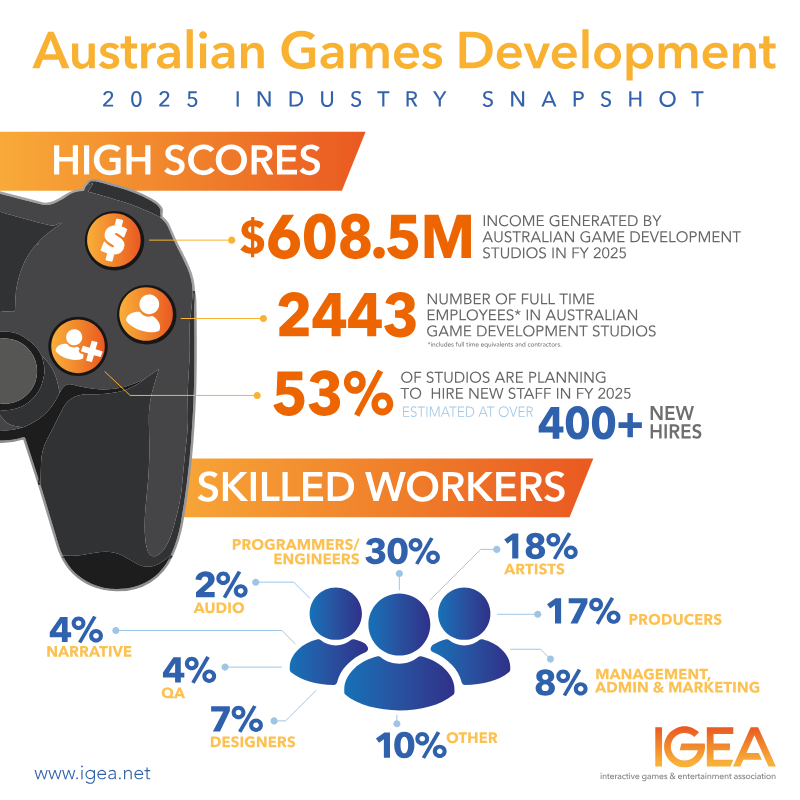
Studios across the country employed approximately 1,245 full-time staff and contractors in FY 2019-20, generating roughly $184.6 million in income.
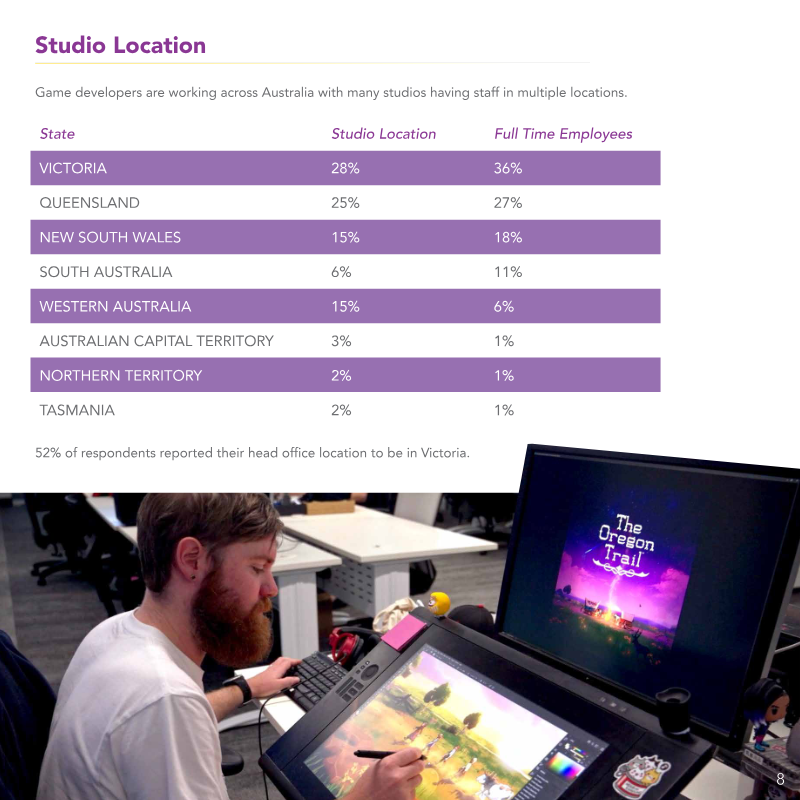
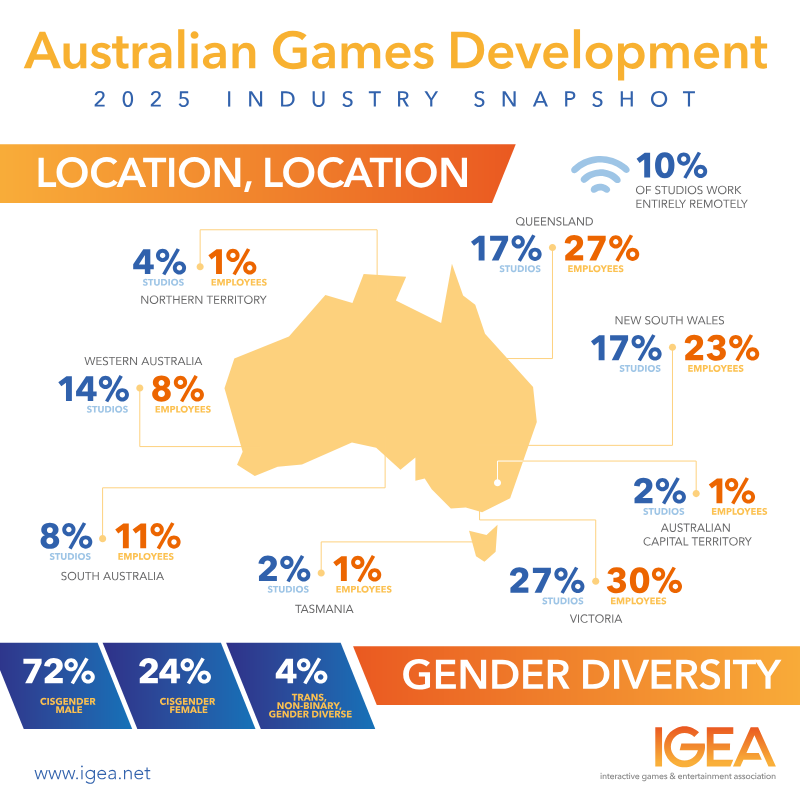
The Australian Game Development Industry Snapshot for FY 2019-20, produced by the Interactive Games & Entertainment Association (IGEA), profiles the country's game development sector at a time when COVID-19 was beginning to reshape its operations. The industry employed approximately 1,245 full-time staff and contractors across studios, generating roughly $184.6 million in income during 2019/20. Studios were concentrated in New South Wales, Victoria, and Queensland, with a majority of full-time employees based in those states. Programmers made up the largest share of the workforce at 20 percent, followed by artists and designers, while women accounted for 17 percent of full-time employees and a notable 67 percent of staff were male.
Business characteristics point to an young, export-oriented industry. Around 51 percent of studio income came from overseas markets, and 78 percent of respondent studios developed their own intellectual property. Most studios were relatively new, with roughly half operating for five years or less. Development focused heavily on mobile platforms, with PC/Mac and console also prominent, while emerging formats such as virtual and augmented reality represented small shares of activity.
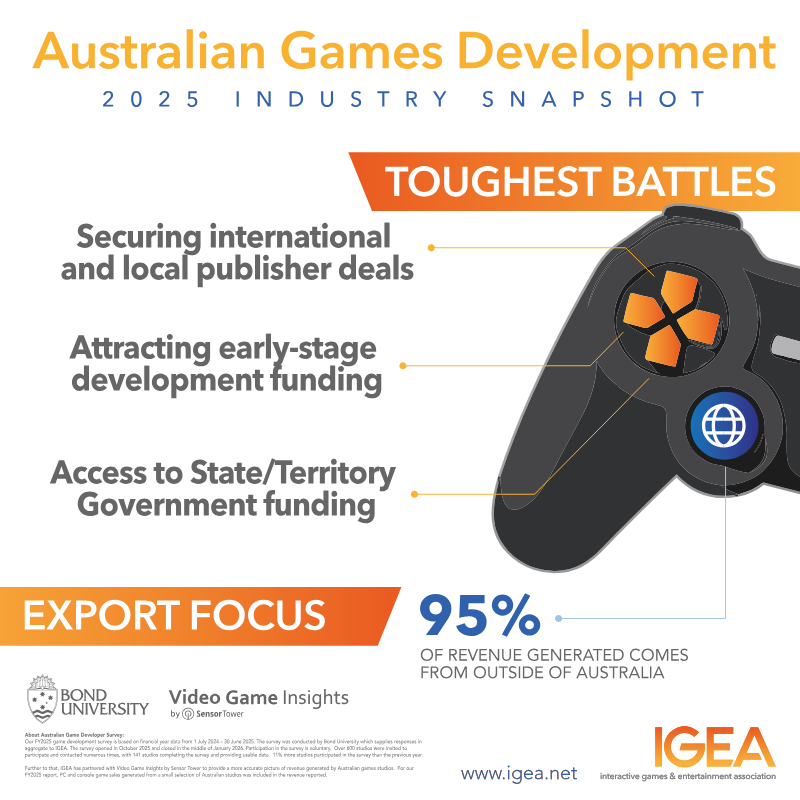
The industry identified its leading challenges as a lack of government funding, difficulty attracting early-stage development finance, and the scarcity of employees with specialised skills. COVID-19 introduced further pressure, with studios citing the cancellation of international events, reduced investor contact, and lower productivity as major concerns. Even so, 76 percent of studios expected revenue to remain stable or grow over the following year, and 61 percent reported no staff redundancies, though 14 percent had reduced access to finance and 11 percent reported reduced contractual revenue.

New Zealand Game Developers Association · 2026
Interactive Games & Entertainment Association · 2026



Interactive Games & Entertainment Association · 2025
Interactive Games & Entertainment Association · 2025
Interactive Games and Entertainment Association · 2024
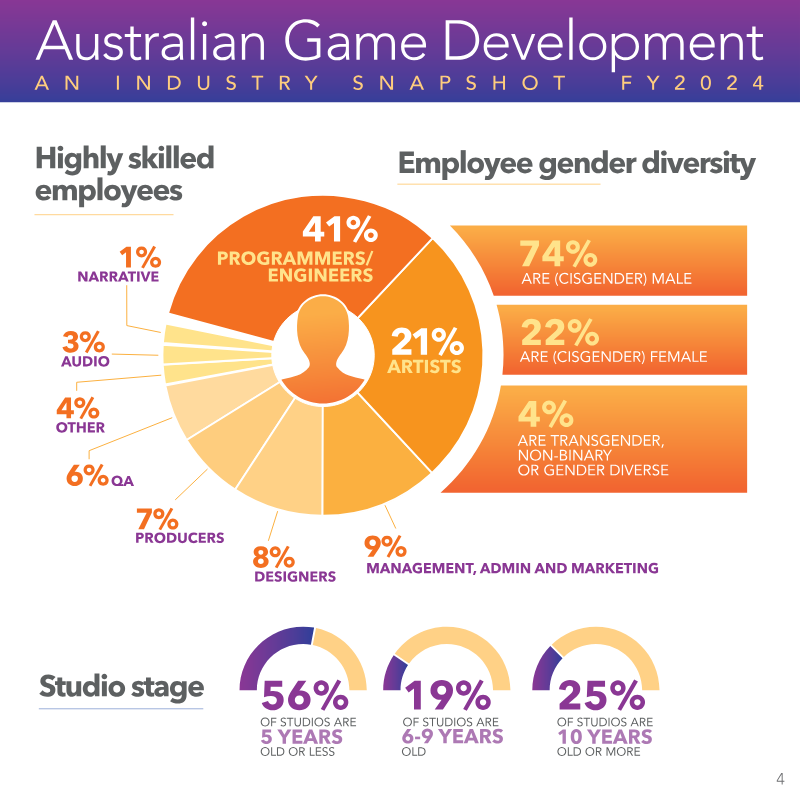
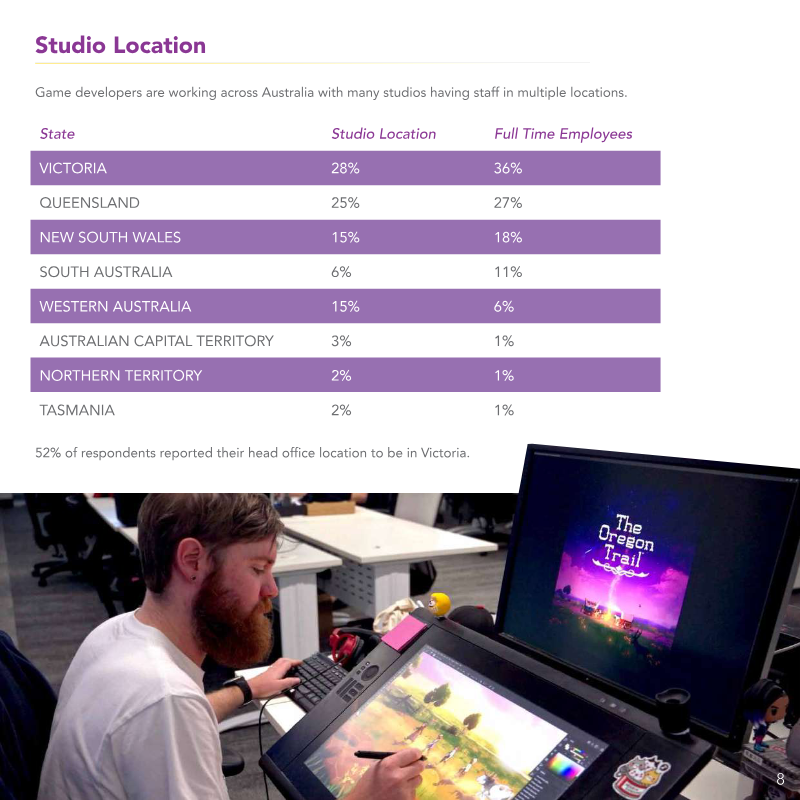
Interactive Games & Entertainment Association · 2024
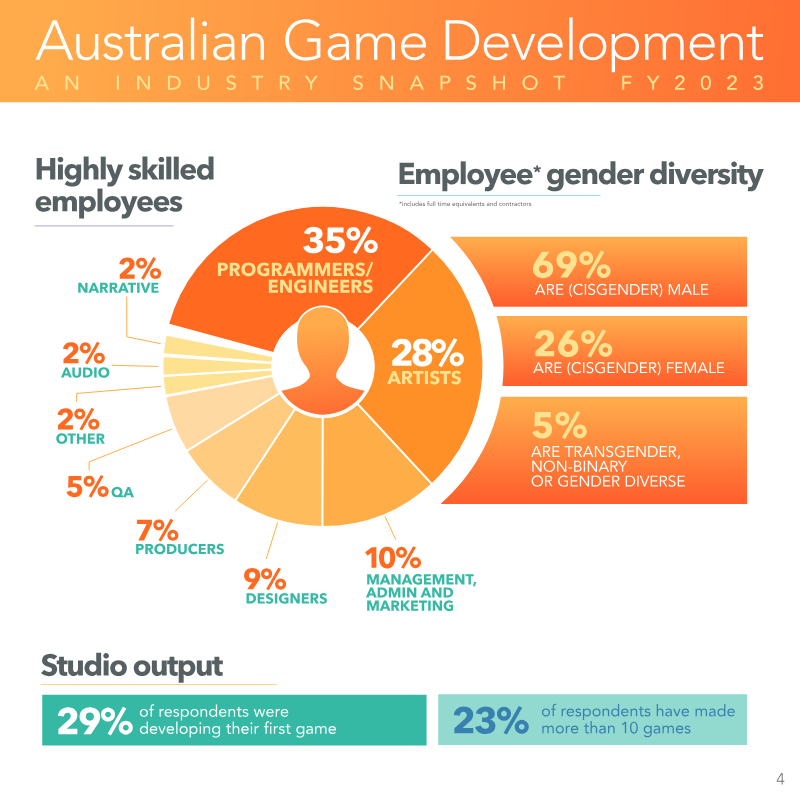
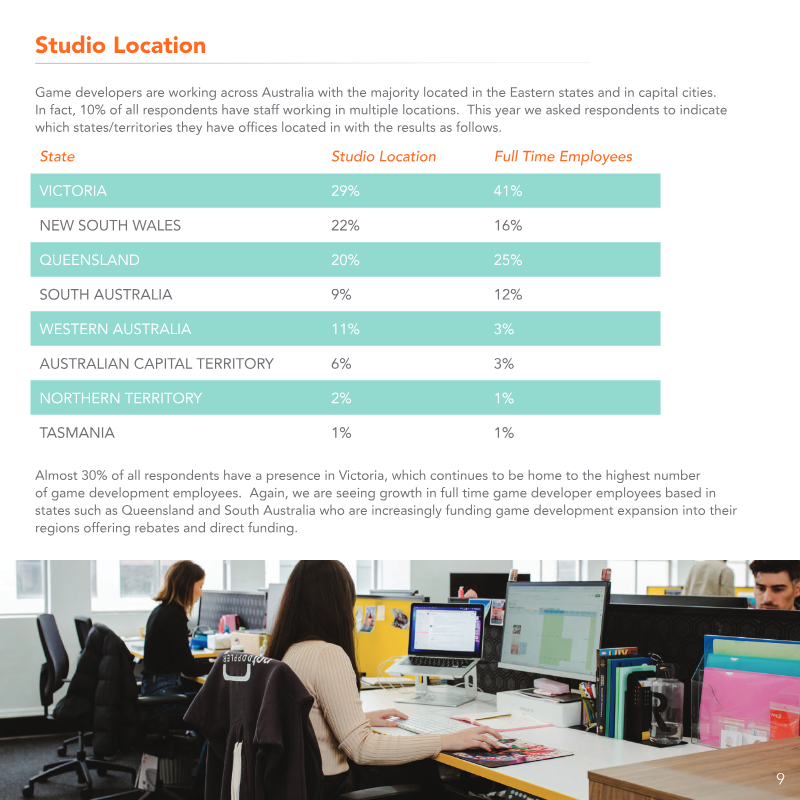
Interactive Games & Entertainment Association · 2023


Interactive Games & Entertainment Association · 2020



Interactive Games & Entertainment Association · 2020
Interactive Games and Entertainment Association · 2019
Interactive Games and Entertainment Association · 2019
Interactive Games and Entertainment Association · 2015