1 free read left. Create a free account for unlimited reading + AI research.
Create free accountReport AppMagic
1 free read left. Create a free account for unlimited reading + AI research.
Create free accountReportAppMagic
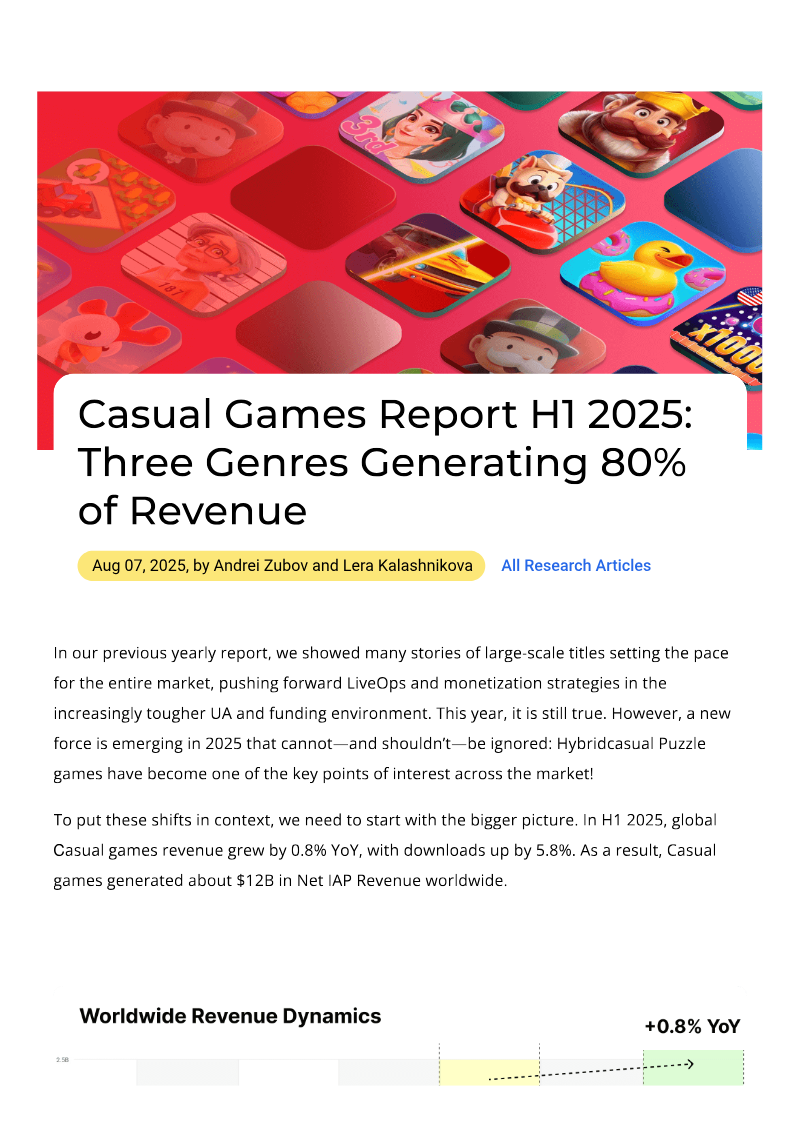
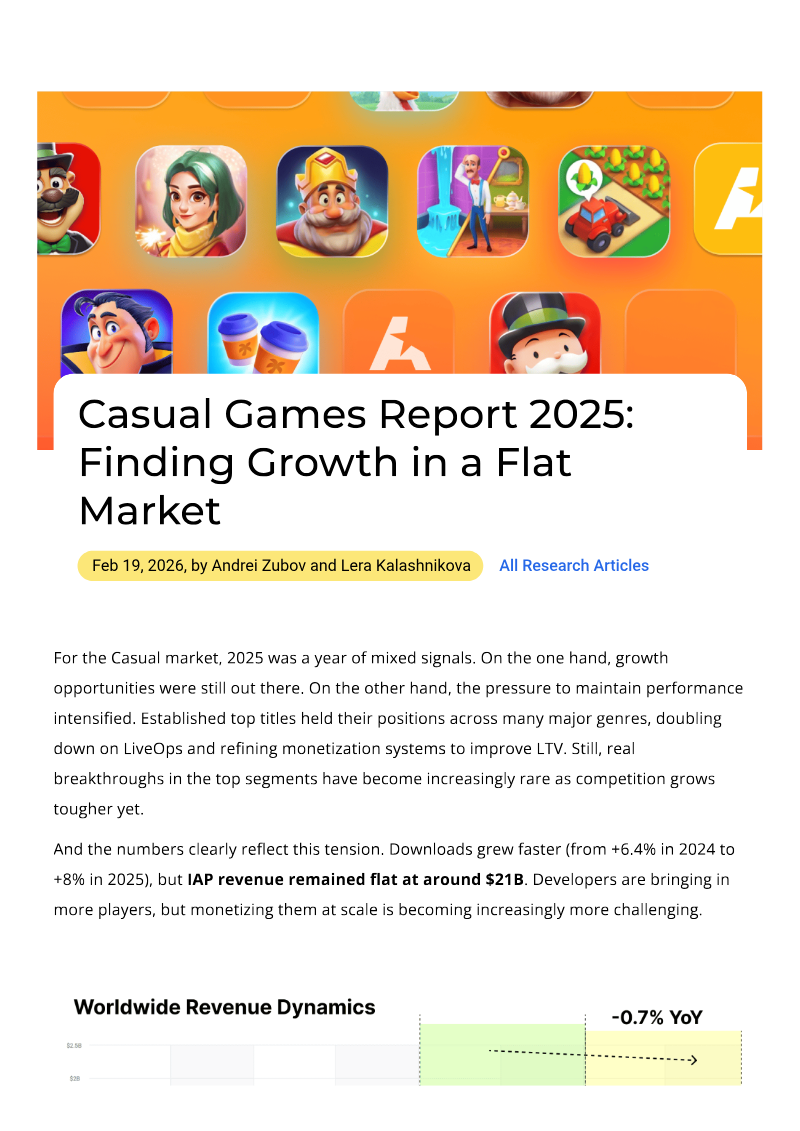
Global revenue increased by 3.6%, and downloads rose by 6% during this period. Legacy titles maintain market dominance.
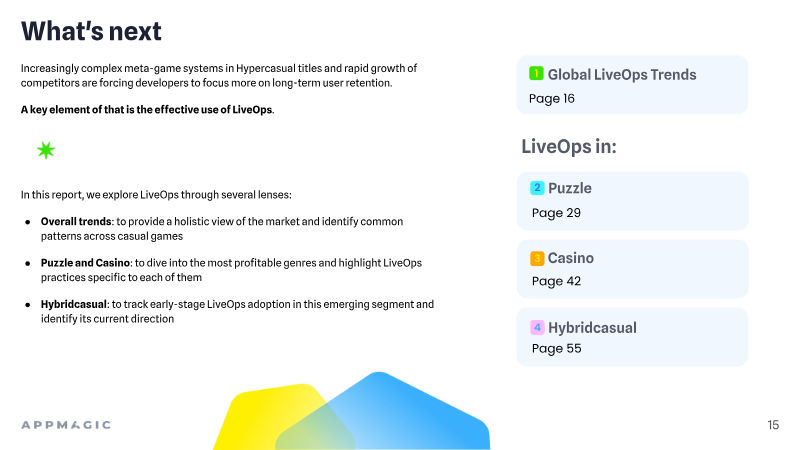
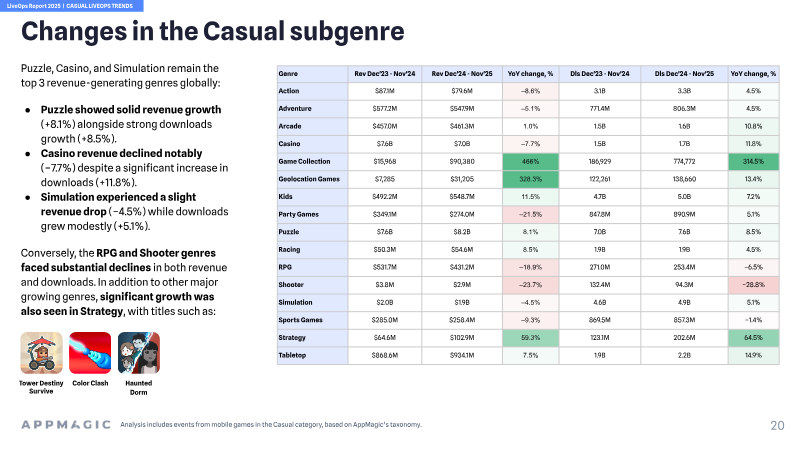
See it on page 9The casual mobile gaming market experienced modest growth during the first half of 2025, characterized by a 3.6% increase in global revenue and a 6% rise in downloads. While the puzzle genre remains the primary revenue anchor, the industry is witnessing a significant shift in monetization strategies. The hypercasual sector has undergone a dramatic transformation, posting a 111% revenue surge through the adoption of deeper monetization mechanics, while the casino segment faces a 15% revenue decline despite increased download volume. Market dominance remains heavily skewed toward legacy titles, as only 11% of top-grossing games were released within the last two years, forcing developers to rely on aggressive LiveOps to maintain player retention and engagement.
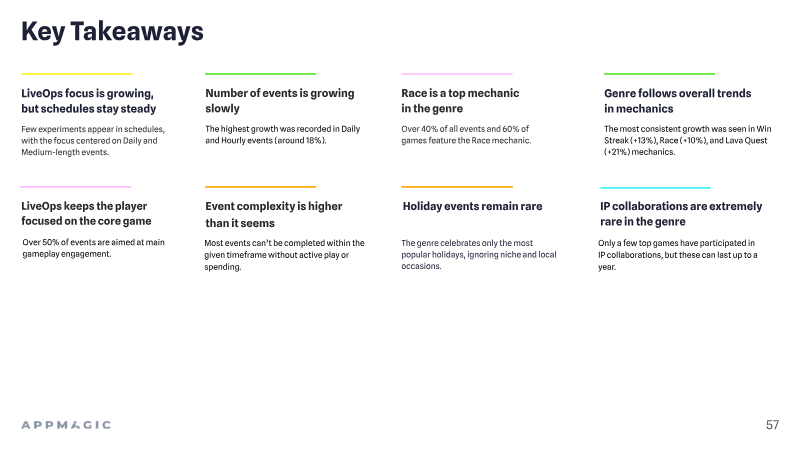
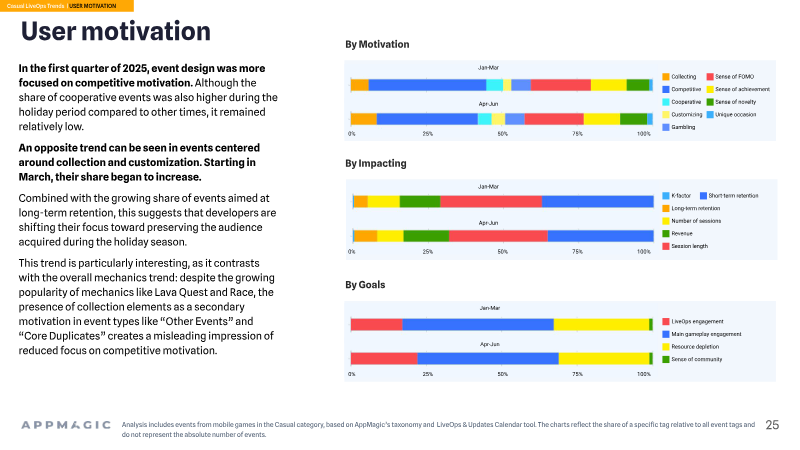
LiveOps activity has become the industry standard, with 82% of top-grossing titles launching at least one event during this period. Strategy has shifted away from sporadic, holiday-driven content toward consistent, long-term retention mechanics such as win streaks, digging, and resource-depletion challenges. Puzzle games continue to favor stable, recurring formats and paid passes, whereas casino titles have adopted a high-intensity approach. Casino developers are increasingly utilizing frequent, short-term events and dynamic sales offers to target veteran players, with nearly half of these titles incorporating IP collaborations to bolster their monetization efforts.
In contrast, the hybridcasual segment maintains a more conservative posture. While these developers are gradually increasing their event density, they remain focused on core gameplay engagement rather than the complex, whale-targeted monetization seen in the casino sector. Holiday-themed events have become largely peripheral across the broader casual market, representing a negligible fraction of total event activity. As the industry matures, developers are increasingly turning to data-driven platforms to optimize their event schedules, signaling a move toward more calculated, performance-based engagement strategies across all casual gaming sub-genres.

AppMagic · 2026

AppMagic · 2026
AppMagic · 2026
AppMagic · 2026

AppMagic · 2026

AppMagic · 2026

AppMagic · 2026
AppMagic · 2026

AppMagic · 2026
AppMagic · 2026
AppMagic · 2026

AppMagic · 2026

Two & a Half Gamers · 2026