1 free read left. Create a free account for unlimited reading + AI research.
Create free accountWhitepaper European Conference on Games Based Learning (ECGBL)
1 free read left. Create a free account for unlimited reading + AI research.
Create free accountWhitepaperEuropean Conference on Games Based Learning (ECGBL)
The analysis examines how gamification has been applied to assembly language programming courses. It covers game-based projects and badge-based progression systems.
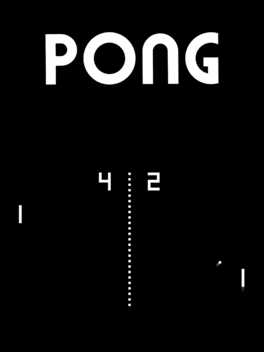
This preliminary analysis examines how gamification has been applied to assembly language programming education, drawing on 18 studies selected from an initial pool of 162 records indexed in IEEE Xplore, the ACM Digital Library, and ScienceDirect, supplemented by snowballing from reference lists. Its central thesis is that gamification, including game-based projects such as Pong, Breakout, and TetrisOS implementations as well as badge-based progression systems, generally enhances student engagement, motivation, and comprehension of low-level concepts such as registers, branching, and memory addressing.
The evidence base is largely qualitative or survey-based. Representative results include a course in which 65% of students reported enjoying a game-creation project and another in which badge-based progression was associated with improved assessment performance. Badges appear to increase participation and assessment outcomes without significantly raising intrinsic motivation, and several of the studies are small or preliminary. A five-participant control experiment, for example, found higher reported engagement but no significant performance difference, underscoring the limited statistical strength of much of the current work.
The analysis finds gamification to be a valuable but insufficient tool. It can introduce cognitive overload and produces variable responses across students, and its effects on long-term retention and deep conceptual understanding remain inconclusive. The authors therefore recommend pairing gamification with complementary instructional strategies, conducting longitudinal studies, and developing subject-specific, adaptive gamification frameworks. The supporting reference list spans roughly 30 works on game-based assembly and computer architecture courses, though the evidence base itself remains modest in size and rigor.
Each row is a game or company this document names, each column a document, oldest first. A mark means that document names it. Select a row to see those documents.



European Conference on Games Based Learning (ECGBL) · 2026



European Conference on Games Based Learning (ECGBL) · 2026



European Conference on Games Based Learning (ECGBL) · 2026



European Conference on Games Based Learning (ECGBL) · 2026



European Conference on Games Based Learning (ECGBL) · 2026



European Conference on Games Based Learning (ECGBL) · 2026



European Conference on Games Based Learning (ECGBL) · 2026



European Conference on Games Based Learning (ECGBL) · 2026



European Conference on Games Based Learning (ECGBL) · 2026



European Conference on Games Based Learning (ECGBL) · 2026



European Conference on Games Based Learning (ECGBL) · 2026



European Conference on Games Based Learning (ECGBL) · 2026
GAMEHEARTS · 2026