VideoDeconstructor of Fun
TWIG #383: Turkey Dominates Puzzle Games, Royal Kingdom’s Struggles, and Playtika’s Big Shift
14 May 202661 min video

I love how you bring me on and then I just turn this into philosophy corner. It every [laughter] news article of philosophy corner. Let's do it. [music] Hello everyone and welcome to Deconstructor of Fun this week in games. I am Jen Dano. I fold the marketing and publishing role on the podcast. Today we have a special crew because Crush and Mishka are out in Istimble getting hair transplants. Oops. I mean they are hosting a uh an event I think with with Latan and so we'll get the scoop when they come back next week. So today we have in first chair definitely not Phil is [laughter]
good one product just product role
Phil Blackmonization SAR second third chair I don't know
I think I guess a fourth chair Lord Torrento still puzzle product queen
all right here is what we have on the episode today a lot of like investment
news company news merger news grand game raises 70 million in series B to scale hybrid casual games. Play Tikica leaves social casino behind to focus on casual hits like Disney Solitire, maybe even June Journey. Phil shits on Royal Kingdom and I uncover Royal Match's new web shops on iOS US. We discussed the worldification of live service games and how nearly every major publisher began chasing large scale explorable worlds. You would think this is philosophy corner with Adam, but but Phil actually put this one in. Sega and Roio are struggling. We'll go through that news. We had some good clarification in Deconstructor of Fun Slack as to what's going on with them. And then in IP corner, lots of stuff going on in the world of IP in other areas. Wordle gets a new TV show. Angry Birds and Subway Serpenters team up. And then Phil can finally finally get your Clash of Clans Royale whatever action figures as
Supercell Inca Toy with Spin Master. As you can imagine, I have thoughts because, you know, I used to work at Hasbro. Anyway, sorry I've been out for a couple weeks. I have been pretty sick. Sadly, I and I'd like a read you on 2026. As part of my brain, you know, surgery stuff, my kryptonite is actually these things getting like respiratory infections. So, I'm grounded again a little bit. My doctor is like, "Do not shake hands, do not pass, do not travel anywhere." And so for an extrovert like me, this is horror. For an introvert like Adam, this is your blessing, right? Do do you wish you would have had this doctor telling you this?
Yes. [laughter] Please give me excuses not to be around people. That's great.
So So I am going to do Games Beat LA next week, which is May 18th and 19th because humble brag. Humble brag. I'm nominated for a boss mode award. So super honored to be able to go do that. So but I have to skip MAU. So, no Vegas
for me, which for some people is a huge bummer for me. I'm like, that's okay. Anyway, Adam, how have you been since GDC? I wanted to see what's up with you.
Yeah, I just realized like it's been two months. It actually feels in my mind like it's been like two years. I've been through a lot. [laughter] Uh, but right now, at least in terms of family and personal stuff, I'm in the house of sickness. My kids have just been in like constant cycles of fevers and cold. So, that's not been great. just been back from a lot of travel, so that's also messing up my cycles. But yeah, like business as usual for remote work with a family and puppies are good, dogs are good, kids are good other than sickness. So all good.
There's something going around. It's like the flu before the summer starts almost.
Yeah. And one update then on like my AI spiral stuff is that I built a gigantic rag database which think of it like notebook LM you can just kind of like throw a whole bunch of stuff in.
But I was just like you know what let me just scrape the entirety of Deconstructor of Fun and this week in games all the way back to like twig one so I can ask it questions as like one brain of all of the podcast. So, I can go back. I can ask questions like, "How often have we talked about Netflix and their strategy and get a report and a graph of like how often we've talked about it, how positive it was, and then how negative it was." It's great.
Wait, how many times, Adam, how many times we talked about Netflix?
I I don't have it off the top of my thing, but I can come back and we can do a full report of like
these like fun little queries to construct
contradictions. Contradictions. Oh, yeah. You can go back and do contradictions, all that fun stuff. We're going to do the whole whole therapy episode after this.
Yeah. [laughter] Well, this is going to make our year- end uh episode so much better. We can just do some sort of ongoing report for this.
Yeah. Well, at least for me, I'm doing it because I'm inherently lazy and I'm trying to like do better prep around
Twig. And so many times I'm like, did you guys already cover this? Right. Like, did you already do this thing? Do I need to actually double check my sources? Okay, let [laughter] me double check. Okay, cool.
The answer is yes.
Yeah, that's good. All right, let's do a quick shill. I actually have something to announce from Deconstructor of Fun. So, we are going to be doing something called the roundts by Deconstructor of Fun by us. It's a invite only full day event for senior product and marketing leaders in games and apps. We're bringing together the sharpest industry leaders in each city for a day of curated talks, moderated roundts, and peer-to-peer level conversations on topics that matter most to us in 2026. So right now the confirmed cities are San Francisco, well technically San Monteo, LA, Seattle, and Barcelona. So mainly these are in June. Seattle's going to be in August. So Laura, get ready.
In San Monteo, we're going to be at the Zinga headquarters. In LA, we're at the
Google Play P Play Vista headquarters. Seattle is at Amazon at AWS. And Barcelona is going to be at Take Barcelona. A bunch of great sponsors are already on board. We still have some open slops, but Appch charge is fantastic. They're helping us kind of set everything up and run it. Help shift, Heroic Labs, Uptick, Webtune. So, in LA, we're going to have the Webtune folks come and give a whole presentation about how you can use their channel. Like the overlap between the Webtune audience and games is it's like huge and fantastic. So, I'm excited to have them. So, you can apply to join for these events. either go into our our deconstructor fund slack channel, the events tab, our newsletter has signup links, we have the Luma pages, it's on the website as well and the events tab. We have a new events tab of the website. So, thank you for letting me do the long version of this and then we'll just do some updates as we get closer to each one of the events. The first one is June 12th in Samonteo at Zinga. So, get ready for that.
kickass live ops named kickass Tools. That's where Heroic Labs comes in. They just released a massive update to their Satori live ops platform. And having done my research, I can say with confidence that it's [music] second to none. In a single product, you get everything you need, including event capture, player segmentation, feature flags, remote configuration, AB testing, experimentation, live events, calendar, messaging, retention, graphing, analytics, and so much more. If you're serious about running live services in a game, get serious about the tools you use. Connect with Roy Labs and make some serious cheese with your live ops. In today's hyperco competitive digital landscape, understanding your app's journey from discovery to download isn't just insightful. It's the difference between scaling and stagnating. Enter Appslier, the undisputed leader in mobile attribution and marketing
analytics. They've mastered the science of making every ad dollar work harder by revealing exactly where your players come from and how they interact with your app. Their platform transform mountains of complex data into clear actionable intelligence that separates winning campaigns from budget- draining experiments. And I know that many of the top game companies leverage Apps Flyier and are a key partner in their success. Apps flyier, where your app's potential meets performance. All right, so let's get right into all of the topics. No corrections because you guys were all perfect the last couple weeks. Not really, but that's okay. All right, so Grand Games. Grand Games raised 70 million in series B led by Balterton Capital pushing the Istanbul Studios total funding to 103 million with a valuation reportedly up nearly sixfold in 12 months. You know, basically Grand has posted 5x annual
revenue growth and closed three funding rounds within two years of its 24 funding. Magic Sword and Blockout hit number one and number two on US iOS download charts this spring. The company has surpassed 50 million downloads across more than 200 countries with 75 employees split across five autonomous studios. Grand Games will deploy the capital toward marketing hiring pipeline of upcoming hybrid casual puzzle launches. You know, marketing being number one in that list is very true. We'll talk about this later, but Laura, I knew you were excited to talk about this. Lots of puzzle stuff. What's going on? What do you see?
Well, I saw this and I was like, this is so cool and I think it's cool beyond the actual fun just the funding itself is one great part of it, but it's a larger story than that. I mean, one, we all like being right and it proves what we do and Mishka have been saying this whole time. Turkey is one of the most if if not the most concentrated mobile puzzle ecosystems. We've been saying this from be beginning. Eyes on it's a
place to watch. Grand Games, as you mentioned, closes this 70 million series B. Mind Tale, a new studio founded by Dream King and Tactile alumni, closes 2 million preede with an AI native production thesis. We have Dream Games that we know about that's also in Turkey. They completed a 2.5 billion raise last year. CVC, the CVC fund bought out the earlier VC's valuing the company at 5 billion. Scopely has a majority stake in Loom Games at a valuation of 1 billion not even a year after starting. According to Navic, there are 65 different startups that stemmed from the same early Turkish gaming studios. And I think that we have to remember is that lot some of these people had exits, right? So these studios contain repeat founders. These these founders had exits and then they become angel investors. So you have experts funding the future, raising the bar of what's considered good and worth funding. Like this term has been is new to me, but I've heard this a lot in recently is a flywheel, like a positive upward spiral. There's just momentum building in this space. And what's smart is that you have the Turkish government
noticing this and being like, "Hey, we should do something, too." It's not new now, but new 2026 incentive program reimburses mobile gaming studios up to 50% on UA spend, app store fees, and cloud costs under presidential decree number 10962. So, it's just this self-inforcing ecosystem where talent leads to startups, startups leads to exit, exits lead to investing, government policies jumping in, and it's just this wonderful place for puzzle games, hybrid casual games. So, Adam, what do you think?
I just got to give kudos to the team. I think Grant is amazing. just gives me more and more faith around the games industry when smaller teams can have this type of outsized impact, great scaling story, high innovation story and strong polish like I think magic sort continues to scale well blockout is scaling car match plateaued but still like shows the team that they're innovating and coming up with genres that's working and I think driving a
strong hyper casual model around it. So, what's more interesting to me with Grand is like, where do they go from here? Like, what sub genres should they be doing next, cuz I think they've shown that they can stack these puzzle games. They're avoiding red oceans, so they're staying pretty agile. But what sub genres can actually do this and like continue to raise the ceiling of these different subg genres? I think back to like casual puzzle design 101 from like the 2010s when you and I used to work together, right? Like [laughter] if you think of like Floren Steinhoff talking through like match three design and saga design, right? Like highly probabilistic levels that drove near misses on a regular basis, right? Like luck element.
But now we're seeing genres that are scaling well without that, right? Without the same level of luck with significantly more skill in the core gameplay. Also like the mantra, the like principle that you can never make a bad move in a casual game, right? like a match three every move is positive for
you many of these games now right like including sort you can make bad moves you can make very regrettable moves
so there's like I I keep playing these games and there's this like inner atom coming back from like wooa days being like oh they've broken the rules people love it because it's different it's breaking those rules and it's actually creating whole new subg genres so that's the part that's actually really really exciting to me and still the fundamental question around like like which of these can scale right? Like do you need to still lean back into that probabilistic because I think Phil you've talked a little bit about that and like level design seeds do they need to add a little bit more of that or actually is it that they've been able to create these whole new audiences and continue to lean into it. The second area for me is how can they future proof themselves? We're celebrating them because their headcount. We're celebrating them because of the Turkish ecosystem, but I think Grand right now operates at the more polished end of hybrid casual right now and they're able to deliver like great feeling games with sort of strong AP strong hybrid casual design and they
end up with much more durable businesses I think as a result. But the risk is as developers on the much more hyper end of the spectrum start to move up the chain, can they maintain this defensibility and durability as sort of especially like Chinese UA marketing teams start to attack the space significantly more aggressively? That's the thing that I'm thinking about on the horizon that I'd want to work with the team and figure out like how how could we go after that? Yeah, I I really wanted to double down on this aspect that you just brought up on UA and and really we're in a you know China versus Turkey race here and what you see coming out of China with their ability on forex and puzzle and I mean know they've been dominating in forex and now they're start we're starting to see them really dominate in puzzle a little bit more on the merge side but I mean they're coming for all of these other games. So on this UA point and I want to give a little bit more detail on
what Laura mentioned about all of the subsidies coming from the Turkish government. And by the way, if you haven't already to listen to GameCraft season 4, so this is Mitch Laskkey and Blake do this amazing podcast, such a service to everyone in the business of games. They did a whole episode on Turkey, which talked about the Peak Mafia, which is you can which is interesting. You can kind of trace back all of these people that work in the Turkish gaming ecosystem to peak. It's kind of like the PayPal mafia that happened in Silicon Valley here. And so that is a must listen episode to understand how Turkey has evolved to become the hotbed of puzzle games. To me, a lot of the secret sauce of that is due to a couple different things. Everyone is investing in the Turkish studios because of how the Turkish government is also subsidizing a lot of the expenses. And so this is why I think the next hit game has to come from Turkey, especially in Puzzle right now because the way the subsidies work, it
allows it to take so many more shots on goal with its rebate system. And so here's the program. And what's new about it is they updated it as of January 1st, 2026. And so Turkey's Ministry of Trade reimbures game studios 50% on their overseas UA spend in every market and up to 70% in the US and the UK specifically. So they recognize that they recognize that the most valuable players to what Eric always says is in tier one markets specifically in the US and UK. Now it does cap the UA rebates per game. Right now, it's capped around $350,000 per game with a ceiling of 1.1 million across a studio's portfolio. But once a studio hits a higher level, I get to the dream or the peak tier, it's up to 11 millions. So for the dream and the peak, this doesn't matter. But what this does help with is finding the next new game. So, on top of that, to what Laura said,
you get 50% off software, data, cloud hosting, global events, your travel, your booth cost, half of all of your Apple and Google platform fees up to $200,000. So, it cuts that 30%. Well, we all know 20 whatever that number is. So, it cuts it down. And this also applies to a startup on day one. If you do a game startup, you can apply for these rebates. Previously, last year, you had to wait a year. Plus, you get paid by the government in five months. They wire you your money. So, all of this means about 450 almost $500,000 in direct cash back if you hit all of the ceilings. So, imagine h how many more games that you can spit out ahead of the rest of the world if you're only paying a dollar for US, UA, and then you know the Turkish companies now only have to pay 30 cents because they get in a sense that rebate in the US. So, I bet Phil, you're gonna talk all day long about currency arbitrage and cash recycling, but I do
think that this system is what is going to allow so many more shots on goals. Show me like the next hit game has got to come from them. So, what do you what do you have, Phil?
I think maybe just to start with Graham Games. I mean, it was a significant raise, guys. I mean, was it 70 million they announced? I mean, that's a significant raise. I think they had 30 million in 2024 and then they had like a $3 million round, although don't quote me on that. And that's in a very short time period. Right now, we're looking at top apps in what Scissor Tower calls the hybrid and hyper casual genre for puzzle. And you can see Magic Sword, $70 million in the last 12 months, up from 60 12 months trailing. And when you compare it to the other games in the category, I mean, it's in fifth place. This is a company that's scaling like very quickly. And remember, we're not looking at ad revenue here. And I am curious, Adam or Laura, what do you think the ad split is on a game like this to IP? Do you think it's a 50/50 or do you think this feels like more IEP based based on what I'm seeing here? I have a hard time imagining they're doing more than 70 million in ads. But
for the life of me, I cannot remember where the ads are. I'd have to have an idea of how many ads they're showing, where they're showing, are they interstitial? Are they are they videos versus static? I
I mean, the thing I'm curious that they didn't announce is it's not a unicorn yet. And I'm surprised if they're growing this fast and they're scaling, they need UA financing. and I'm surprised they didn't go that route rather than give up equity. So, I think that's an interesting note. I'd be curious to hear from the usual suspects when it comes to UA financing on if they thought this is something they should have done. I'm curious on what you're talking about in terms of this kind of like hybrid casualish subgenre of puzzle because I love watching it. It for me it's fascinating, right, to see all these different type of puzzle games come into play. When you look at the different subg genres, they've kind of had their moments in the sun. They've kind of like tried to scale and then they've like burnt out. So, physics is one of them that we're looking at here. Here's Screw. Remember Screw? That was bigger, you know, earlier in 2024. That doesn't re really seem to have panned out. And what is it that's going to take one of these like puzzle hybrid games to
kind of get out into what Eric Crest calls the$100 million territory. And right now, it's really just Match Factory and Color Block Jam. And what is the next hundred million one? Because the thing I keep going back to is
casual block plastic category or no
you could throw that in there too. Uh you mean like uh yeah I think that's fair. The thing that we've undervalued about what what I would call merge and and match three and I've talked about this beforehand. It's it's the best game economy of all time, right? It's infinitely sustainable. It has fail states. The whole match three model is how many times can I get you to fail state multiplied by conversion multiplied by price, right? Like that's a fundamental model that like drives match and merge is is just how many times can I get you to to merge [ __ ] and get your balance down to zero. They seem like they have too much friction in them which I think cuts their LTV short and that's ultimately where they collapse is that there's just too much like in match three now we're going down to like below like 1.1 1.2 attempts per success for the first 100 to 200 levels. Like we're
really clearing out early game friction. Seeds Adam you mentioned that are becoming really important. That's the initial arrangement of the gems, although it can actually mean more. Like everything has been tuned to make the game easier and have less friction except at very acute moments. Do you think that's the right read on what's holding these games back from getting to 100 million or is or is there more that's going on here?
The thing that I've started to detect though is like almost the 4x trick of they start with the higher skill. There's something really really unique and new in the beginning to make you really feel like this game makes me feel smart in those first, let's call it 100 levels. And then over time they start to introduce more randomization elements to the game, especially things like sort where they have to try to like retrofit in the way that they're going to keep things engaging and control pacing over time. I actually go back to a book. It's from 2010. It's called casual game
design, designing play for the gamer and all of us. It has a whole bunch of different chapters in it of like the different types of casual games from the real arcade era. And like all of these like paradigms for why casual games are fun and what's the different types of fun within casual. I think this is a really really good starting point for a lot of these different genres because like it really starts with take like core human emotion and like what things we just naturally find really really satisfying almost ASMR type of things but you look at stuff like naturally people like to sort things. They see a big screen of different colors and they're like I just kind of want the blue things to be next to the blue things. And if you start with that kind of like visceral pull towards play, then you still have to pull it towards a successful or more durable model, which I think you still end up in a space where you've got to use probability and near misses in a saga world.
I mean, you got to remember like these sort games are cognatorial games. There's a ton of lineage behind magic
sword. It's not just random that to me makes it firmly in the puzzle category. I think I think there's something about cognitive resources that are really interesting here. I agree with your idea of like symmetry. There's actually just a really great peer-reviewed piece about how women like to have cleanly houses that actually like reduces mental stress. So, I think there's something very innate about this this drive to clean. Sorry, Jen. Go ahead.
Thank you. [laughter]
I I don't think I don't think casual is just about people cleaning their houses for sure. [laughter]
No, but it's about it's about bringing water.
Sorry, Jen. Jen has wanted Jen has wanted to come in. Sorry.
I know. And so, I mean, I love this topic and we could go super super deep on this. I've been spending a lot of time on casual puzzle in general and I think one of the things that you guys are astutely talking about is the mechanic, but what does the mechanic do? It gives you an emotional state. And what we're finding now is that especially in all kinds of gaming, games are emotional support animals for people. And what happens is people are turning to mobile gaming, es especially
in casual to fulfill an emotional need state that they have throughout the day. And that emotional state typically changes depending on what they're doing. Am I on a bus and I need to be like stay awake or a subway train I need to stay awake. Am I looking to relax for a moment? Do I need to, you know, be stimulated? Am I creating order out of chaos so that I feel like I'm a master of my own domain? And I think what happens is a lot of the games are starting to fulfill different types of emotional states and players are gravitating to those to fulfill those things rather than saying, "Oh, I'm going to play this really cool mechanic." They know that it makes them feel a certain way. The one other thing I will also mention is not only is it the second to second minutetominute play, the metagame systems are truly creating an ecosystem that keeps you retentive and it gives you another kind of emotional state. So, I I talked about it a couple weeks ago. The idea of completing collections that fulfills
like a a need state of I got I got to catch them all is a certain state that in addition to the second to second, you're also getting these metagame system rewards that have you feel a certain way, a sense of progression, achievement. Anyway, Phil, does that help what your some of your questions?
I I love how you I love how you bring me on and then I just turn this into philosophy corner. [ __ ] [laughter] it. Get every news article. Philosophy Corner. Let's do it.
We were talking earlier about how now these games are a little bit more punishing. You can make the wrong moves. So now I'm wondering about the emotional state of this new generation of players that just like to be punished a little bit whereas the
They do.
Well, exactly.
It's not everyone, but some people like a little bit of the skill and the challenge. And so when it's too easy, it's boring.
Yeah. if you can be skillful and not be punished for making a wrong move.
Do you blame yourself or do you blame the game? That often matters in like how do you do you rage quit or do you like
oh I have to try again because I want to get better and I want to progress and I want to increase my skills. So all of these are emotional states that you have to really think about as you're designing your experience and seeing how players react can depend on is that mechanic or that feature working or not working in this. All right, so we are going to move to our next topic which still is in the world of casual is Playa. So Playa is in a sense doubling down on casual uh versus its social casino roots. So total Q1 revenue is about 744 million. It's up 5.5% yearonear. Casino has been reportedly stabilizing, but casual titles are what's really accelerating. Disney Solitire has been doing incredibly well. 123 million in revenue, up 72% sequential. So now Play Tikica's number two game by revenue. Like holy [ __ ] that thing just launched last year, too. So direct to consumer, we love this because they're one of the few companies
that actually talk about TTOC. So they're at 291 million, up 63% year-on-year. Web stores are now 39% of their total revenue. So this is super important as we talk about something a little bit later on Royal Match that I noticed 39%. So that's pretty big. So the CEO said on the legacy casino titles, quote, "We are not making a forward promise on continued growth from there. Flattening the decline is an important milestone." So Bingo Blitz is down 5% year-on-year. June's Journey is up 10% yearonear. Phil's going to talk a little bit about that. that Arpdow is up 8%. DAU decline yearon year but Arpdow up. So are they harvesting their old titles, investing in their winners? It looks to be that way. Adam, what do you see?
They also just talked about quiet restructuring too.
They did in January 2026. Playa
announced a massive global restructuring laying off 15% of its workforce uh about 500 employees. I think June's journey got hit a bit more last year if I remember correctly, but you know, all of this is does lead to some restructuring. Sorry, back to you, Adam.
Yeah, but obviously then that the negative 24 versus the 10% that's all TC.
The important piece of information that was in the press release was that Playo was described by the CEO as a casual mobile games company with a strong social casino business. Wow. I mean, that is a changing of the guard if there ever was one. And so, right now, we're looking at Playa's portfolio with 2026 being year-to- date run rates for revenue and downloads. It's very obvious that the only thing that matters in their portfolio right now is Disney Solitaire, which is on a 250 million, $260 million run rate this year, and dwarfs their second in command, which is Bingo Blitz. And number three is Dicam. So, that acquisition is already paying
some dividends in their portfolio, although that looks down too. And then of course we have June's journey underneath that. But it's very easy to understand why casual has become so much more important for them because of course it's harder to acquire in social casino post. People still haven't figured that out. I think Monopoly go crowded out quite a bit of the audience. Coin looters seem to be the only thing that matters. Slots have just been suffering and no one's been able to figure it out yet. And I'm surprised that Playa isn't even going to give it a shot. I'm just surprised people are kind of throwing in the towel on Social Casino outside of one company called Scopley. I wish there would be more innovation and attempts here to basically solve the acquisition problem post ET in a way that it doesn't feel like they've been able to solve. One last thing I'll I'll I'll shout out to DDC Mix. DDC Mix for a favorite company. How's it looking? Remember, they're one of the people that were early to report. They are up to 40% DTC revenue this quarter. Now, sometimes you would Yeah, sometimes you would expect that as a function of survival bias if they're
pulling back from UA a little bit. That means you have much higher customer or payer concentration. So, this could be survival bias, but still wild to see them at 40%.
Well, the thing I want to point out too is everyone's like, "Oh, those casual people don't do DTOC." Their entire business is social casino and casual. And so, when everyone starts to say it's only like midcore players, that's not true. There is an opportunity in casual for D2C.
Well, we will soon debate that. Jen,
shall we talk about Royal Kingdom?
Yes, we shall.
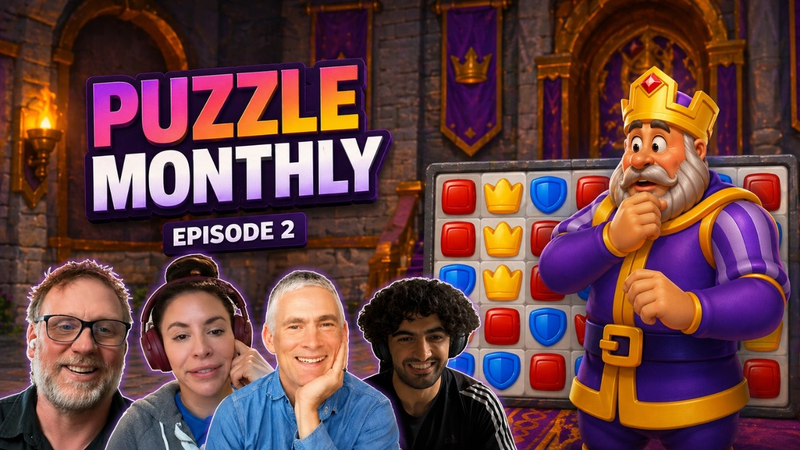
So, Royal Kingdom, huge, huge match three release. Of course, it's been more than 12 months. How are they doing? Let's check in on them. I was triggered by recent Puzzle Monthly episode where one of the hosts tried to crown crown in some ways
Royal Kingdom. I wouldn't say as a success, but as crossing some certain thresholds and celebrating it. When I look at right now the dream portfolio revenue, which is what we have displayed
on the screen. I looked at the stacked revenue for the firm Royal Kingdom and Royal Match. This looks like a mihoyo graph of adding on a Hongai Star Rail onto this. It looks like there was a decline in Royal Match. And when we look at the downloads figures, we can see that they pulled back a little bit, which by the way is rational. You want to route your player to the highest valued game. you want to go out and compete on the ads and see which ones perform best. But when I look at for instance launch lined revenue per download between Royal Match and Royal Kingdom, Royal Kingdom is performing much worse than Royal Match did. Of course, very different time periods, but of course it's still a bottom line. It's still revenue that we have to look at. If we look at the cumulative downloads for each of them, now this is not launch aligned. This is since the November 2024 release. You can see that they're really picking up the pace on Royal Kingdom, particularly recently. But right now, Royal Kingdom has actually exceeded Royal Match over the last 12 months when we just think about downloads over that period. So, it looks like they're just kind of reorienting some of their
portfolio more towards Royal Kingdom than Royal Match. But when I look at that stacked revenue graph, when I look at the change in downloads, this looks like maybe it added a couple million in incremental revenue. But that to me just seems like a failure. It seems like this is everything we were talking about previously that have written about match three is at equilibrium and this is the game that shows it. There's no more room here. Match truck star match villains they don't look like they're doing any better.
So if you want to hear the full episode of what triggered Phil it's puzzle monthly episode number two check it out. So we came up with some of the conclusions and we talked about whether I think the big topic for me was was did royal kingdom cannibalize royal match? We dig into that a little bit and then you showed that the graphs where a lot of downloads people are coming in but then if they're going to choose one of the games if they choose Royal Match the revenue per downloads much better than it is if they choose Royal Kingdom and then we looked at the stacked revenue graph. I would have expected to see like a whole little mountaintop on top of the Royal Match revenue if this was purely
incremental revenue for me. But to me the reason we see kind of this revenue spike for Royal Kingdom and then the spike in downloads is they ran a massive UA campaign. When I say massive, it was like every celebrity under the sun they had talking about this game. LeBron James, Shakira, Jimmy Fallon, etc. This happened like midappril 2025. And you have to remember with these games, you don't see the revenue immediately because our estimation of where Royal Kingdom probably starts to monetize is a couple months in, about two months in. That's where they really start to see then the the fruits of their UA efforts. I think one thing that's always been struggled and and more of the question, is it cannibalistic? Is it not is what's the portfolio strategy for them? [clears throat] Because remember they launched they launched version one they redid fundamentals of it and then they relaunched afterwards before starting this revenue acceleration through downloads. So the question I think should answer is what do they want this game to do? Like when when Candy Crush Soda, one of my favorite games came out
after Candy Crush, they were redefining what the engine looked like. They wanted to be like we want to change. We want to throw match three engines on their head. when I think that Coral Kingdom tried to do that initially but it didn't land hence the redesign and for me the question still is obviously my assumption they want incremental revenue they want new players they were trying to tap into their market did they do that I don't think so what are they going to do next what's their plan what are they going to do with this game because it's probably better for players to go play royal match than it is for players to play royal kingdom
how do you think they can avoid the king portfolio issue like you talked about candy soda saga like that resonates with is that every next game thinks through their scar tissue of the previous game, says like foundationally here's the cracks that we felt that we want to solve with this next one and then leans in fully into those cracks. But in the case of Candy Crush Soda and the King portfolio, it didn't work. So what would your advice then be for Dream to avoid that?
I don't think we should be leading into
cracks. I mean, we should fix the cracks. I think we should get weird. every type piece of research is like people want something different and our instinct is to play it safe and build something like that's familiar. Sure it should be familiar like we don't want to like you know teach that the sky is green and water interacts in a different way because we want those heruristics for our brain to understand that we look at something and this is how it's going to work but we also want to have something that's novel and new. I think when we get more of the same and it's too similar, it's not scratching what what players have been saying in various surveys, etc., etc., what they want. And I feel like we're scared to get weird.
So, if we think through like match three as a history and all the big leaprog moments, right, like Candy Crush to Gummy Drop, Gummy Drop to like Playrex and Homescapes, right? Like when you're saying get weird when you're saying get unique in those cases it was like a meta innovation, right? Like adding new things to the outside. What are you thinking about getting weird in the case of like Royal Kingdom? They tried it with Luck Battle here with Royal
Kingdom. Didn't work. So how weird did it like define weird?
So weird in like the 2012 to 2018 time frame. We didn't need to get as weird because the market wasn't as big like it was still growing. Now, we have 15 million different types of match three games that all cover a little bit of mostly the same. They cover one or two different things. And I think it's tough because we look at people that do make really new things that I would consider new. Like the puzzle hunters had a diagonal match in their game. That's weird. I love that. But it didn't land. And so I think then the association is well that that didn't work so we shouldn't do it. No, I think it didn't work so we need to keep trying. It's never a guarantee that we take one change and it's going to work. I think it's more of you can't give up. It's persistent. You got to keep testing. and keep trying and figure out what sticks. And I think it's just risk risk aversion. People look at match three is like this is our money ticket. And one assumption I want to correct, it's not.
I think the challenge with this one cuz I play both games still to this day as a player. And what I can tell you in the evolution is, and Laura, we talked about
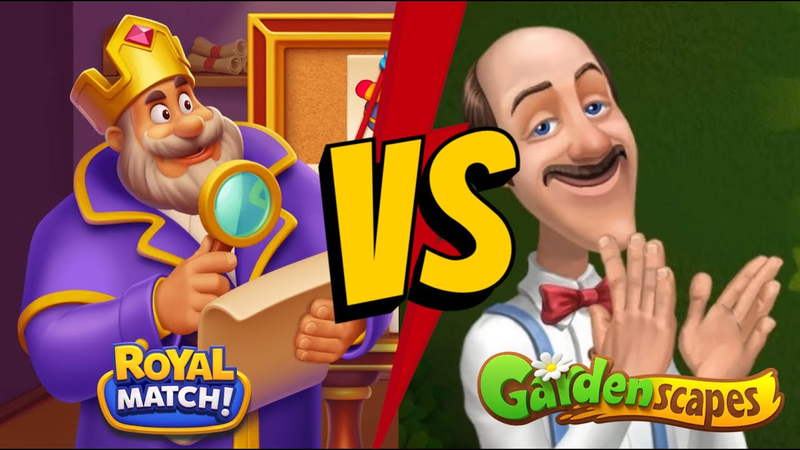
this when Royal Kingdom was even in soft launch that they were really trying to be weird. they were trying to go for almost like RPG, puzzle RPG and then they ended up like removing so much of that is they found like most of the game now is just a regular you know match three game and the similarities between the two games is immense. Kingdom does a little bit differently is it has like a block blast like always on like miniame system that it does. We covered, you know, if you go back in Adam's tool, we cover that extensively. So, we don't need to revisit that here that we all thought that that was a little bit of a mistake and they must have seen something that we didn't see. But, you know, clearly that push doesn't look to be warranted in terms of how it is playing out. The thing that if I could go back to royal match and direct to consumer and so what I wanted to talk about is in a sense as a player here's
what I noticed last week. So I noticed [clears throat] that they're now allowing web payments powered by Exola are you know one of our old sponsors and I bet they are just raking in the cash. I was doing back of the envelope math and I think it's a quarter to a half a million a month that they must be doing in web shop fees now that they're in this game just even in the US. And so I pulled some screenshots to kind of walk us through. You are offered, you know, they keep this so simple for this player is pay here or you get a,000 more coins for this $9.99 purchase. And so that's about a 20% of of value. So, one,000 coins is about $1.99 value. And so, you're like, "Oh, so let me click there." It's like, "How do you want to pay?" Here's all these options for how you want to pay. Apple Pay, Google Pay, PayPal, Cash App, like anything that might work, especially in your region. I'm in the US, so these are my choices. I just clicked Apple Pay, and I'm not going to show you the whole flow because
I don't want to give my information, but it like immediately went through. And the next screen just shows you kind of like, you know, it went through. So here's the other thing. Well, first it let me just say too, like dear sensor tower, when are you going to have the web shop numbers up? Because we are about to see the royal match revenue numbers drop in the rankings just like I Phil, I think you mentioned you saw June's Journey drop, but we still saw from the the company's report that it was up. So I think we're starting to see that. Sensor Tower actually has come out and said they're almost ready with that feature. They actually are hoping some of us can test that for them. I can't I can't wait because I think we're about to see a 10 to 30% drop in that revenue. So, the screen that we have up right now, this is a new monetization technique that they are using inside of Royal Match that rips off what we see be successful in Gossip Harbor. And so, Royal Match is finally monetizing events. So, they're basically selling you some rewards when you cannot
complete a miniame. So, they have a brand new miniame that they actually just added a merge miniame to royal match. So, you match these like little anvils together and you play through a miniame system that is a merge miniame. If you don't play enough to complete it, you spend five bucks, you get enough anvils now that you can complete that and earn your rewards. This is brand new to the game. I expect to see this be a monetization lever that is going to really really help them. And again, thank thanks to Gossip Harbor. They just ripped them off for this. So, a couple of things just to pay attention to. Uh, thank god I'm a player because it's like, "Ooh, ooh, ooh, I get to see this stuff like right as it comes out." And I'm, like I said, I'm playing both so I can see how they are testing different things in different games. Stay ahead of the competition with Sensor Tower, the trusted source for mobile marketing intelligence. Whether you're tracking trends, benchmarking performance, or scouting the next big
hit, Sensor Tower delivers the data that drives strategy. Dominate the charts with Sensor Tower. In today's hyperco competitive digital landscape, understanding your app's journey from discovery to download isn't just insightful. It's the difference between scaling and stagnating. Enter Appslier, the undisputed leader in mobile attribution and marketing analytics. They've mastered the science of making every ad dollar work harder by revealing exactly where your players come from and how they interact with your app. Their platform transform mountains of complex data into clear, actionable intelligence that separates winning campaigns from budget draining experiments. And I know that many of the top game companies leverage Appsier and are a key partner in their success. Appslier, where your app's potential meets performance. Unless you've been living under a rock, you know this is web store rumbringer. 70% of top apps are using a web store.
And the best ones, they're doing it with app charge. Do you want a $20,000 inapp purchase? Yeah, app charge does that. How about using web- based Apple Pay checkout? Yeah, Appch charge does that. Do you want to pretend that subscriptions are still a viable monetization strategy for games? Yeah, Appch charge even lets you do that. Look, these guys are backed by Supercell, Moon Active, and Play Tikka. They get what high average revenue per paying customer means, and they're already doing over half a billion dollars in transactions a year. So, are you going to be the first to do a $20,000 AP? Don't accept microtransactions. Embrace macrotransactions. Learn more at appcharge.com. All right. So, Phil, do you want to talk to us about Worldifying?
So, recent piece that was published on Medium was called after worldifying everything, what's next for live service games. This was just a great piece. And
the argument here is that when we look at Genchin Impact, it seems like after Genchin, there was a huge move to these really expensive 3D worlds. And when you think about these 3D worlds, you have things like atmosphere, you have transversal, you have characters, all these things kind of come together. And in many ways, the product that these titles were selling was in fact like the 3D world. The 3D world was the cornerstone of what separated them from everything else. And what the piece is arguing is that first of all that's a huge that's a huge expense. But are these 3D spaces really just marketing tools rather than something that is driven through the funnel? So they talk about Hankai Star Rail. They talked about Zen Zone Zero. They both kind of moved away from this Genchin formula. It's almost like a correction in some ways. And so I think that's just a fascinating observation in and of itself and deserves debate. And of course, we brought our leading doof philosopher here to open the floor with a [laughter] statement.
I disagree with that, but like I agree with you that the open world was a marketing front end, right? Like they the marketing trick here with Genchin was always you get to play Zelda on your phone that transforms into a RPG game. And I think framing up Hankai Star Rail and ZZ as like real success stories as they moved away from it is incorrect. The issue that I've got right now with the article is like I think it frames it up as like this is literally the live service industry and this is like all publishers when I think this is actually like you look at all the games that they're referencing. A lot of this has been eastern developers that have worked very much in like the otaku and anime space, right? Like absolutely there's a ton of dive in after Genchin of this like worldification, Genchinification, tower fantasy, solo leveling, withering waves. I haven't seen as much with western devs, right? Like at least in terms of
coming up to the release. I think a lot of like the tenses codev things have not really come out or have kind of stalled or been cancelled, right? Like but it just feels like a general like the same thing that we're talking about with match three. Typical genre expansion curve. first major title is Genchin. Subsequent sequels each fight for a smaller and smaller share of that same audience that wants to go after it. And you need clear USPs to carve out your piece, right? You can't just go after Genjin with Genjin. Now it's Genjin plus something new. Over time, that something new has been meaning like that has to be really different. Like the thing we're watching all now is Everness to Neverness, the anime plus GTA game that just came out and and watching that, right? Like everything is trying to come out with what there's something new is. And I I actually applaud Mihoyo with things like Petite Planet, which goes after a different audience, but same same model, right? So yeah, that's
generally my take is like I think the weakness in the space has more to do with like everyone is just saturating the same space. And unfortunately those USPS that we're talking about are really expensive, right? Like to go after Genchin, you have to build Genchin, you have to build Zelda every year in order to just compete, in order to get like one foot out into the market. Not a lot of developers can do that. So that's why like it feels odd making framing this up as like literally the entire live service industry. But so so let me let me pitch it to you in a different way. I I disagree with the piece in that it's not just a marketing tool, but I think it is a marketing tool and the marketing tool it's for is HD gamers, right? I mean that's what Genchin captured is it was a true dual skew game, PC mobile. We don't have PC revenue directly, but I would imagine the split is pretty even between both of them. We know it has still has a great PlayStation and PC audience. To me, open world is a subsidy for HD gamers to bring them in. It's the level of immersion that they expect. Exactly. Like you said, we haven't seen
a lot of these in the West, but you're thinking of this from a mobile perspective. Have we seen MMOs in the West? Yeah, we've seen a ton. Right. I would think about it more from that perspective. And that to me, I think can actually pay back itself because I think you get to amortize those costs over HD cuz you're not going to launch a traditional menu-based squad RPG on PC and go after that same audience. Raid: Shadow Legends is not going after the same group of people that are playing Conan on Steam. There's still something to the open world. I would say the thing that I think the article misses is that if you are going to be an open world game, you have to embrace different mechanics. And I've worked on a lot of MMOs, particularly on the monetization side, and you really have to pivot your understanding if you've been in mobile because the problems that you're trying to solve in that game economy are so different than other games. And sometimes Gabe Leaden jokes and calls it a walking simulator. But yeah, transversal is a huge part of MMO monetization too. Mounts are incredibly important. Things like housing, like it's a different paradigm. Tabs in Path of Ex never talk about. It's the one of
few games to directly sell UX in such a naked way and still make a substantial sum of money. It's just a completely paradigm that only really exists when you have these 3D worlds to interact with. I'm surprised we haven't seen more people in the west take a shot at this 3D world that scales crossplatform. There's one in Sacramento that will be trying out Ozer Games. They have a game coming out. Remember this is the team that did Star Wars Galaxy of Heroes. I'll be very curious to see how that performs. I was just trying to think through your thesis and I agree that this open world behavior appeals to more of a classic PC console player because I think you're absolutely right and I think what helped it win on mobile was that it introduced squad RPG aspects at a time where squad RPG was, you know, one of the kings of monetization which has since been dethroned by casualized forex. I think more people don't try this because it is immensely expensive.
I think what are the numbers like there's 2,000 people working on Ginchin when they launched announced that it cost them 200 million per year.
You know to our earlier conversation you can be in Turkey with a team of 15 people you know taking a bunch of shots on gold to potentially make you know hundreds of millions of dollars in revenue. And so I think people are starting to say, "Well, that's not the key to success anymore and the risk isn't worth the reward."
I buy that. But I'm curious for each of you. This is the exact thing AI is great at. These world models have been specifically trained particularly by the Chinese. Tencent has their own model. This is the exact type of stuff AI can deliver. And I would say at the margin of all the things we think about at a very low marginal cost to users. Don't you think that predicts that we'll see more of this? And and in fact, doesn't that put the West at the advantage rather than the Chinese if we're able to do this? Because they're I mean, their their comparative advantage labor goes away in an AI world.
It's definitely happening. So, it's not
like a future prediction. It's already happening. Even some of the games that are launching right now have been outspoken around the amount of AI that they're using.
You mean like Crimson Crimson Desert? Not even Crimson Desert, just like Evernist to Never Ananta, I think is the the other like action RPG coming out. Like, so when you're saying like this could be an advantage to Western teams, like I think I have found that Chinese teams have leaned into this aggressively already. Yep.
For the last few years. So if there is an advantage, we are a couple years late and we need to get on this realing fast if we want to go after that thesis.
Fair enough. All right, let's just knock out a few other quick topics. Wordle has a new TV show. So Jonathan Knight, head of New York Times games on LinkedIn, announced that NBC green lit a new prime time game based on Wordle. So it's in development right now. And Samantha Guthrie is going to be the host. So going back to that almost old school, remember like Who Wants to be a Millionaire where Regis Filman was the
host. So, it is of a different era and I know that not everyone will watch this, but a bunch of six-year-old women, you know, in Iowa will watch it. Any thoughts on this one? Anyone excited about Ortle?
Look, coming off the smashing success of the Candy Crush TV show hosted by Mario Lopez in the early 2000s, Rest in Peace, My Sweet Child, one season of glory. I'm excited to add this to another chapter. [laughter] I think this is perfect for this audience who are still the 70 year olds that are at home watching MSNBC or whatever that's called now, MS Now or something or it's on NBC. All right, so the other one I wanted to talk about Spin Master and Supercell Partner on a toy line. So look for toys next summer. Great idea. My old boss Doug Wadley is actually at Spin Master. So, it makes a ton of sense that they did this. Are How much money are you spending on this, Phil? And
ludicrous. Ludicrous amount of spending. [laughter] Waiting. I've been waiting for this forever. Every time I go into kind of like one of those more anime
shops for figurines, I'm like, "Why isn't Supercell here?" Like, Rob Low is in my ear. Chief Chief Marketing Officer of Supercell saying, "We are the only recognizable brand in mobile." And I'm like, "Okay, well then why don't you give it the prestige that it deserves with expensive figurines that I can buy?" I will say one of the things I did find in my trip to China is that the molds for a lot of these toys can take years to get done. This is not a snap of the fingers and I was my my jaw was on the floor when I learned about this. You think it's faster?
Do do you want me to recount the third of my career that I spent making action figures on every toy brand on the universe? te tell me more because when I heard that it could take years to get the molds done I was like oh this explains why this wasn't done sooner when Brawl Stars exploded. Do you think that's an incorrect understanding?
What happens is it takes 18 months to bring a toy line to market. The creation of the molds or the things that actually make the toys only takes a couple of months. But I think what you're trying to say is it takes 18 months to bring a
toy to market. So that part is true. It does take a long time. any hard good takes a longer time than a soft good. Like it's much easier to get a t-shirt to market very quickly because all you got to do is like print a logo on it. So to actually make the molds, so these actually won't be expensive. These are going to be lower price. So you're not going to get your like massive figurine that you're going to put in back that's like a a Hot Toys or like a sideshow collectible, but you're going to get action figures that are 10 bucks that are going to be super awesome that you can put on your desk. Remember to choose your license stores, your licences correctly because they actually licensed out the toys to line I believe the messaging service in Taiwan and then they like sublicensed out some like toy manufacturing. So there was actually some Brawlstar toys for a small period of time and they were garbage. They were hot garbage. They were damaging to the brand. They were so bad.
Uh so just just remember who you snort the MG Coke with. It it does matter. [laughter]
I said that. You said I had to be Eric
Crest. That's what the guy says.
Yeah. Yeah. Well, this is a good shout out to Bill Kang who did the deal. He's kind of ending his run with Supercell. So, I I messaged him and I'll be like, "Dude, congrats. You should have called me though." So, the last one is it's Roio and Subway Surfers. And so, it looks like there's an Angry Bird Subway Surfer crossover, which I think is a great brand fit, but it goes into kind of a story that came out. Adam, do you want to talk about what happened with Sega's earnings reporting?
Some sad Roio news. There was a a news article from mobile gamer.biz that basically talked about ROIO set for restructure. Effectively, it was is a translation from Japanese. They talked about how the deal failed to create economic value. The companies will be reviewing their free-to-play portfolio and there's a plan now to lower the priority of freeto play going forward. This was notable talking about things like Sonic Rumble Party having weak performance. So, I don't know how pervasive that like lower the priority
of freetoplay games going forward is because obviously ROIO would continue to should continue to make mobile freetoplay games. I think this is pervasive across the Sega portfolio. Yeah,
they also talked about things like 100 staff being relocated that were working on sort of Sega and Roio's free-to-play games likely based on sort of like Sega IP being transferred onto other projects. I think this is just continued terrible news kind of coming around a lot of these acquisitions. My bot has already told me that Roio, we've talked about sort of ROIO declining year-over-year post acquisition. And really none of the ROIO Sonic games really materializing at the time. We talked about like, you know, it was a 2.2 revenue multiple, 13x sort of EBIT multiple to acquire this asset. And there was a strategic case for Sega to do it. They were flat at the time and they needed
mobile muscle. However, like personally, I just never really like when there's a bunch of these synergy assumptions that aa company suddenly has a mobile developer and now they've unlocked
mobile in all of their IP is going to be this like treasure trove for ROIO to take advantage of. Like Roio building Crazy Taxi is like not a real synergy. That's not a not a real thing. I think the cliff around IP value is real. And even for things like Take Two and Zinga, we've talked about like, oh my god, now Zinga has a treasure trove of Take Two IP. It doesn't, right? So, like, yeah,
really like the decay just gets gets steep and it's really just Sonic or Bust at this point.
Also, in this news, they officially announced cancellation of a longunning super game. I don't know if you saw that in the
Yeah.
article that basically they had announced a while ago a 800 million to 1 billion USD dev cost super game
and they just cancelled it. And I would just say this has never [laughter] ever ended well, right?
Talk about a write-off.
Yeah.
Yeah. So, I don't know if it's it's probably not like 800 million, right? Like, it's probably something in mid dev that they were like, "Well, this thing's
going to cost this much to build." But like I go back to even like Ubisoft when they talked about the quadruple a Skull and Bones investment, right? Like,
yeah,
you don't go to these budgets unless you are literally Call of Duty or Grand Theft Auto. No one else gets
Whoa, Mr. Mister. What about Mihoyo? We were just talking about them earlier. But you're talking about like dev budgets throughout, but even like Mihoyo doesn't cost 800 million to get the launch.
Yeah. What do you think it took engine after marketing costs?
It cost them 100 million in dev cost to get the launch.
But marketing was it 100 million per year to get
But it was 100 million in dev cost to get the launch and it was 200 million per year in dev cost to maintain the live content.
And what do you think? Well, marketing budget must have been what you think 200 million at launch. What are they? Maybe 300 million in the whole top. So they're they're they're not around these numbers. Okay, fair enough. Yeah,
I don't know. Some of the math is like real match is a billion a year in UA these days. So I I would have to imagine Yeah, you're for those games you're you're in that
Yeah.
maybe 800 million.
You know,
we talked about Battlefield. Battlefield got up to high dev cost. I don't think 800 million, but like you have to earn your right to get up there and it's got to be a step-wise franchise function. you're developing a new IP super game and all of a sudden you've got this conviction to go to any other
and this was PC console or crossplatform right like game file has a write up I didn't get a chance to read the whole like write up but I know that he went super super deep into this topic so if you're interested go check out gamefile
I think you know in our Slack we have a lot of roio folks and so what they posted was just to address the headline above about roio restructuring that this is not the case quote back in September we did restru structure into business units internally at Robio where like Scopia or Supercell, each live game has its own business unit with the GM and their respective P&L. During that reorg back in early fall of 25, we did have about 10% reduction in headcount. So to be clear, we are not going through that now. The confusion is with the headline coming from the mistransation of of the Japanese world rebuilding. So just to
give, you know, it's this is what's awesome about our community is like they tell us what's going on in the news so that we can get it right and don't have to correct it next week. All right. I also agree with you, Adam, 100%. I'm glad you brought up Take Two and Zinga. Don't just go buy a company because they're great at mobile and expect them to like help you if you only know AAA. You You can't bring these cultures together if it doesn't like already organically exist. So, I think you're spot on with that.
Guys, this was lovely. Great to have you. Great to see you. Maybe see you in two more months, Adam. Hopefully, it's sooner than that. And
I'll look like 10 years older, too. It'll be great.
All right, everyone. We will see you next week. and have Mishka and Chris back.
You did it. You made it to the end of the episode. As a fan of the show, it would help us out if you'd subscribe and [music] leave us a review on the podcast service of your choice. Those stars and likes while small action on your part mean a lot to us and help to grow [music] the show. More importantly, are you a member of the Deconstructor of Fun Slack group? If you [music] have 5 years
or more of games industry experience, go to deconstructorofund.com/slack [music] and apply to join. Join the games industry best professional community filled with peers always willing to lend a hand [music] or subscribe to our newsletter to get all the latest insights from the deconstructor of fun content [music] creators. Thanks for listening.
Auto-generated captions from YouTube — names and numbers may be misheard.
Turkey has solidified its position as a global powerhouse in the puzzle and hybrid-casual game sectors, driven by a sophisticated ecosystem of repeat founders and aggressive government subsidies. By reimbursing up to 70% of overseas user acquisition costs, the Turkish government has enabled local studios to scale rapidly and disrupt traditional casual game design. These developers are increasingly moving away from the probabilistic, no-bad-move models of the previous decade, favoring skill-based mechanics that offer a distinct competitive advantage in a crowded marketplace.
The broader mobile landscape is currently defined by a state of equilibrium and strategic contraction. Established match-three titles are finding it difficult to generate incremental growth, leading to a reliance on direct-to-consumer web shops and event-based monetization to circumvent platform fees. Simultaneously, major players like Playtika are pivoting away from legacy social casino models toward casual titles, while others are grappling with the high costs and saturation of the open-world genre. These challenges are compounded by the failure of many high-budget super game projects, which often succumb to unsustainable development costs and market saturation.
Corporate consolidation remains a fraught endeavor, particularly when attempting to merge AAA console publishers with mobile-focused studios. Cultural incompatibilities and the failure of projected synergies frequently undermine these acquisitions, suggesting that financial consolidation is an insufficient substitute for organic operational alignment. As the industry matures, the focus is shifting toward brand expansion through physical merchandise and the integration of AI-driven content creation, forcing studios to prioritize unique value propositions over the expensive, high-risk development models that characterized the recent past.

Deconstructor of Fun · 2026

Deconstructor of Fun · 2026

Deconstructor of Fun · 2026

Deconstructor of Fun · 2026

Deconstructor of Fun · 2026

Deconstructor of Fun · 2026

Deconstructor of Fun · 2026

Deconstructor of Fun · 2026

Deconstructor of Fun · 2026

Deconstructor of Fun · 2026

Deconstructor of Fun · 2026

Deconstructor of Fun · 2026
Deconstructor of Fun · 2026

Deconstructor of Fun · 2026
Deconstructor of Fun · 2026
AppMagic · 2025

Sensor Tower · 2025
Deconstructor of Fun · 2024

Deconstructor of Fun · 2026

Deconstructor of Fun · 2026

Deconstructor of Fun · 2026

Deconstructor of Fun · 2026

Deconstructor of Fun · 2026
AppMagic · 2026
Comments