The Pokémon Company
Company
Documents about The Pokémon Company

Mobile & F2P | Jordan Blackman | Why the Best Games Are Winning by Squeezing Less | DD 2026
The mobile gaming industry is undergoing a fundamental shift in monetization strategy, moving away from aggressive, friction-based tactics toward a model that prioritizes long-term player engagement.
- Reducing aggressive monetization 'pinches' can increase both player retention and total revenue simultaneously, contradicting the traditional industry assumption that player satisfaction and business performance are inversely related.
- Successful monetization redesign requires 'revenue migration,' where removing a friction point (such as level-gating) is balanced by alternative, less intrusive spending opportunities within the game loop.
- The cost of aggressive monetization is rising because modern players are increasingly sensitive to friction and more likely to churn when they feel over-squeezed, making the traditional 'out-squeeze the competition' strategy less effective.

Gamescom 2026 insights and Sony Music's shock Puzzle & Dragons investment | Week in Mobile Games
The global gaming industry is currently navigating a period of strategic realignment, characterized by shifting developer allegiances, significant capital movements, and a renewed focus on core gameplay experiences.
- Sony Music has acquired a 23.29% stake in GungHo Online Entertainment, the developer behind the mobile hit Puzzle & Dragons.
- Godot is gaining significant market share as an open-source alternative to established engines, becoming the most-used engine in the GMTK Game Jam with 47% usage compared to 39% the previous year.
- W4 Games, a company supporting the Godot engine ecosystem, has secured $18 million in new investment.
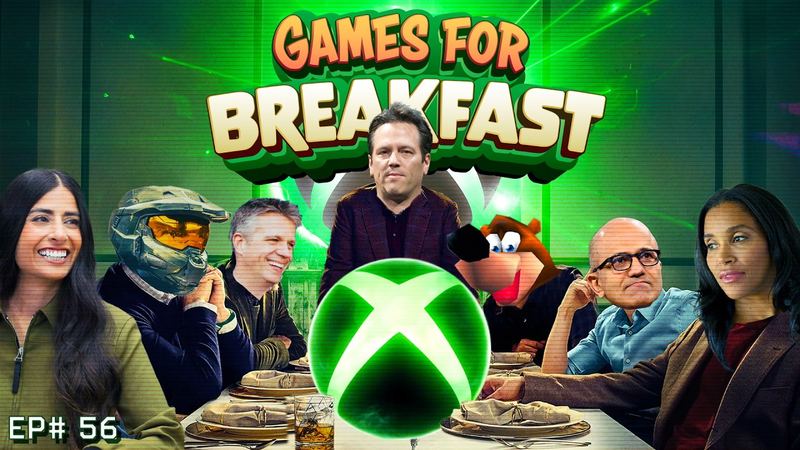
Xbox’s Line of Succession, Sony Shutters Bluepoint, and Discord Doesn’t Learn | Games For Breakfast
The gaming industry is currently undergoing a period of significant structural and leadership volatility, marked most notably by the departure of Phil Spencer as CEO of Microsoft Gaming.
- Microsoft Gaming has replaced CEO Phil Spencer with former AI product lead Asha Sharma, signaling a strategic pivot toward AI integration, monetization, and corporate efficiency over traditional hardware-centric models.
- Xbox is signaling a departure from exclusive console titles in favor of cloud-based, cross-platform expansion and hybrid hardware solutions, following the exit of Sarah Bond.
- Bluepoint Games has been shuttered after the studio was forced to cancel a mandated live-service project, highlighting the industry-wide risks of forcing established developers into unsustainable live-service models.

Week in Mobile Games E68 - The Top 50 Mobile Game Makers, and crisis in the EU's games industry
The mobile gaming industry is currently defined by a stark dichotomy between the commercial success of established live-service titles and an increasingly hostile regulatory environment.
- Supercell CEO Ilkka Paananen has warned that the European Commission's proposed 'Digital Fairness Act' could severely damage the regional games industry by imposing restrictive regulations on free-to-play mechanics.
- The SEC is investigating AppLovin over allegations that the company breached platform partner agreements regarding data collection practices, specifically concerning the use of children's data.
- PocketGamer.biz released its 'Top 50 Mobile Game Makers 2025' list, which ranks Tencent at number one, followed by Take-Two Interactive and DeNA in the top three.

Week in mobile games E62 - Apple's regulatory wins and 2025's top genres
The mobile gaming landscape is undergoing a significant structural shift as regulatory environments stabilize and genre dominance evolves.
- Strategy games have become the most lucrative mobile genre, generating $10.6 billion in the first half of 2025 and surpassing RPGs, which saw an 11% year-over-year revenue decline.
- The European Commission is expected to approve Apple’s revised App Store fee structure, effectively ending a major regulatory dispute, while UK interventions are not anticipated until 2026.
- The puzzle game market is highly concentrated, with Royal Match, Candy Crush, and Gardenscapes accounting for nearly one-third of total global revenue in that segment.

Week in Mobile Games E45 - Tripledot's surprise acquisition of AppLovin's games business
Tripledot Studios is significantly expanding its market footprint through the acquisition of AppLovin’s games division in a transaction valued at $900 million, split between $500 million in cash and $400 million in equity.
- Tripledot is set to acquire AppLovin’s games business in a deal valued at approximately $500 million in cash and $400 million in buyer equity, with the potential for $250 million in additional financing via a promissory note.
- Ludia plans to hire 50 new staff members over the next year and pursue M&A activity to acquire mobile studios following its management-led buyout from Jam City.
- Shift Up’s 'Goddess of Victory: Nikke' has surpassed $1 billion in lifetime mobile revenue, with Japanese players contributing 58% of total spending.

Superstar Session: Lessons Learned When Including Third Party Content in Your Videogame PGCD #2
The session provides an expert overview of the legal complexities involved in integrating third-party intellectual property into video games.
- Developers must secure formal written contracts for all third-party intellectual property, as verbal agreements provide no legal protection and leave studios vulnerable to litigation, injunctions, and revenue loss.
- Copyright protection generally lasts for the creator’s life plus 70 years, though specific jurisdictions like France may extend this duration based on factors such as military service.
- Fair use is a narrow legal defense in the United States that is rarely applicable to commercial video game assets, meaning developers cannot rely on it to avoid licensing requirements.

PocketGamer.biz Podcast Episode #7: iOS 14 reactions, Pokemon reveals, and more!
Apple’s 2020 software updates and evolving App Store policies represent a significant shift in the mobile ecosystem, as iOS 14 introduces features that align Apple’s interface more closely with Android standards.
- The Pokémon Company is aggressively expanding its mobile portfolio with titles like Pokémon UNITE, Pokémon Smile, and Pokémon Café Mix, positioning mobile as a primary growth pillar.
- Nintendo is de-prioritizing mobile revenue, which accounts for only 4% of its total earnings, and is shifting its strategy to use mobile apps primarily as marketing tools for its console business.
- Supercell’s Brawl Stars demonstrated the continued profitability of the mobile market by generating $17.5 million in its first week following its launch in China.