Flaregames
CompanyGermany
Documents about Flaregames

How Angry Birds reached the stars
The Angry Birds franchise serves as a definitive case study in transforming a mobile game into a global transmedia powerhouse.
- Angry Birds achieved the first-ever 1 billion download milestone in the mobile gaming sector, providing a massive ecosystem that facilitated high-profile partnerships for subsequent titles.
- Strategic partnerships with major entertainment entities like 20th Century Fox (Angry Birds Rio), NASA (Angry Birds Space), and Lucasfilm (Angry Birds Star Wars) allowed Rovio to leverage external marketing muscle and distribution channels without relying on a traditional internal marketing budget.
- The Angry Birds Star Wars licensing model set a premium industry standard by charging a 28% total royalty rate—14% for Rovio and 14% for Lucas Arts—while managing over 1,200 partnership opportunities to maintain brand exclusivity.
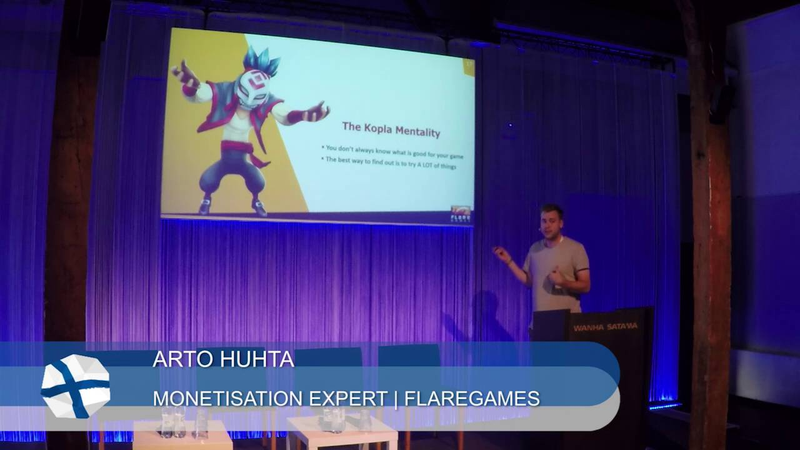
How Flaregames and Kopla Games Doubled the monetisation performance of Nonstop Knight
The development of the mobile action RPG Nonstop Knight, a collaboration between Flaregames and Kopla Games, serves as a case study in utilizing iterative design and rapid experimentation to optimize monetization and player retention.
- Flaregames and Kopla Games doubled both day-30 player retention and total revenue for Nonstop Knight following its 2016 launch by shifting from front-loaded monetization to a long-term engagement model.
- The development team utilized a 'brute-forcing luck' methodology, which prioritizes rapid, low-cost experimentation and the quick discarding of unsuccessful features over extensive upfront design.
- To scale the game effectively, the team integrated specialized roles like economy designers to balance progression systems while relying on internal playtesting for immediate design validation.
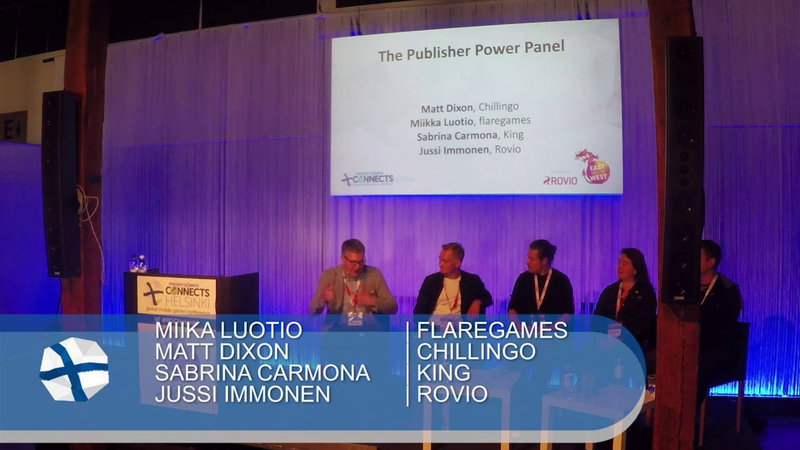
Publisher power panel: What games publishers offer in 2016
The 2016 Pocket Gamer Connects Helsinki panel, featuring representatives from Rovio, Flaregames, Chillingo, and King, explored the evolving role of mobile game publishers in a maturing, highly competitive market.
- Mobile game publishers have shifted from providing simple capital to offering deep, long-term co-development partnerships focused on soft launches, live-service optimization, and player retention.
- Rising user acquisition costs and market saturation have made it essential for developers to focus on specific genres and clear, long-term visions rather than a volume-based approach.
- The 2016 mobile market remains top-heavy, but significant opportunities exist for mid-tier developers who can deliver high-quality, innovative experiences within specific niches.
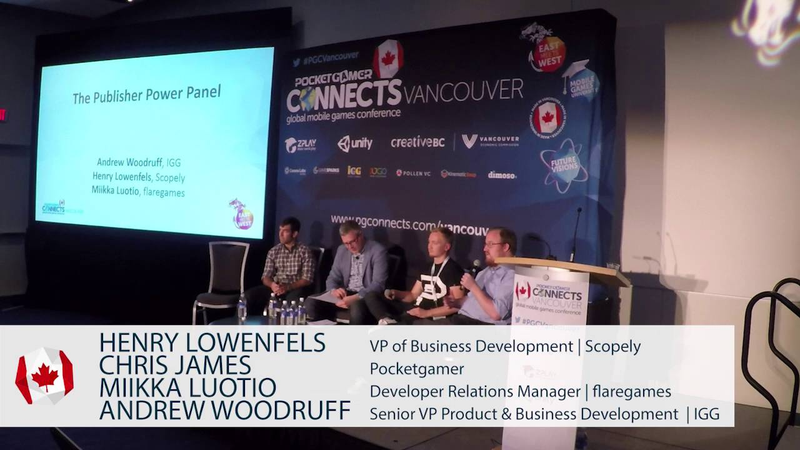
Trends in mobile game publishing with Scopely, Flaregames and IGG
Mobile game publishing has evolved into a strategic partnership model where publishers function as co-developers, providing essential funding, marketing infrastructure, and operational expertise.
- Mobile game publishing has shifted to a co-development model where publishers provide funding, marketing, and operational infrastructure to allow developers to focus exclusively on core gameplay.
- Publishers prioritize developers who demonstrate team cohesion and the capacity to produce multiple titles, moving away from interest in one-off projects.
- Successful pitches must feature addictive, universally appealing core mechanics that transcend specific demographic biases.
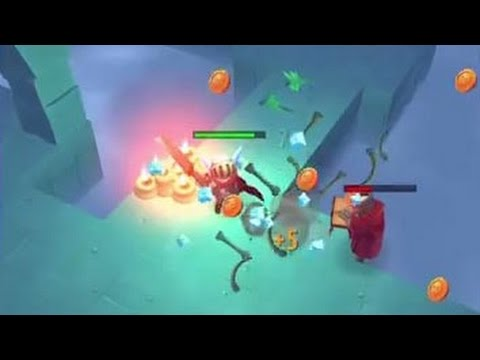
FTUE: Nonstop Knight
Nonstop Knight, an idle RPG developed by Kopla Games and published by Flaregames, represents a Western adaptation of the autoplay mechanics popularized in Asian mobile markets.
- Nonstop Knight, developed by Kopla Games and published by Flaregames, adapts Asian autoplay mechanics for a Western audience by shifting focus from active combat to meta-game progression.
- The core design minimizes active gameplay, allowing the protagonist to fight autonomously while the player manages character upgrades and resource allocation.
- The game features an idle progression system that continues to accumulate rewards while the application is closed, providing a summary of gains upon the player's return.

FTUE: Olympus Rising
Olympus Rising, a mobile title developed and published by the German studio Flaregames, represents a strategic evolution of the build-and-battle genre.
- Olympus Rising is a mobile build-and-battle title from German studio Flaregames, designed as a spiritual successor to their previous game, Royal Revolt 2.
- The game differentiates itself from its predecessor by shifting from a cartoonish aesthetic to a mature, photorealistic visual style based on ancient Greek mythology.
- Core gameplay centers on direct hero-led combat where players control a single character to lead waves of support units against enemy fortifications and towers.

Monetizer: Dawn of Steel
Dawn of Steel, a mobile real-time strategy (RTS) game developed by Superweapon and published by Flaregames, represents a refined entry into the competitive mobile strategy genre.
- Dawn of Steel is a mobile real-time strategy game developed by Superweapon and published by Flaregames that differentiates itself from mass-rush competitors through granular, tactical unit control.
- The game utilizes a standard monetization model centered on 'influence,' a hard currency used to bypass time-based gating for building upgrades, unit repairs, and research tasks.
- To drive higher spending, the developers implemented a tiered pricing structure for hard currency that offers increased value for larger real-money purchases.
Monetizer: Royal Revolt 2
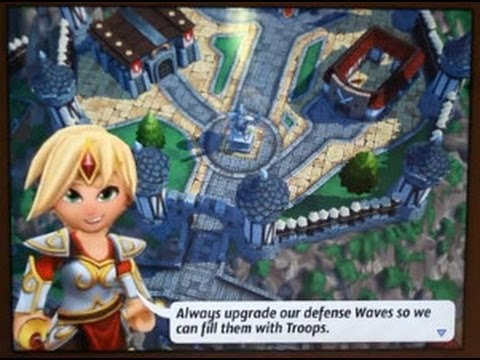
Royal Revolt 2, developed by Flaregames, is a mobile title that integrates city-building mechanics with tower defense gameplay.
- Royal Revolt 2 utilizes a dynamic 'percentage fill' resource mechanic where players purchase a percentage of their storage capacity rather than fixed amounts, creating a fluctuating exchange rate tied to progression.
- The game employs a high-value conversion tactic by offering a permanent 'third builder' as an incentive for a significant one-time hard currency purchase.
- Hard currency (gems) is integrated into core progression by allowing players to directly purchase experience points, accelerate construction, and unlock additional troop or spell slots.