Click
Company
Documents about Click

Last-Click Attribution, Deterministic Measurement, and Wittgenstein’s Ruler
The core thesis challenges the validity of claims regarding deterministic, individual-level attribution in the post-App Tracking Transparency (ATT) mobile advertising landscape.
- Claims of deterministic, user-level advertising attribution on iOS post-ATT are highly suspect and should be viewed with skepticism.
- Marketing teams asserting they have found workarounds to Apple’s App Tracking Transparency (ATT) framework to achieve deterministic measurement are likely misrepresenting their capabilities.
- The concept of 'Wittgenstein’s Ruler' serves as a warning that if you cannot trust the measurement tool, you cannot use it to measure the subject, as the tool itself becomes the variable in question.
What Is a Normal Click-Through Rate or Wishlist Rate on Steam?
This analysis provides benchmarks for organic Steam wishlist performance, aiming to help independent developers gauge their game's market potential.
- Weekly organic wishlist growth is a more reliable indicator of a game's market potential than click-through rate, with top-tier games earning 300–3,000 wishlists per week compared to 0–40 for underperforming titles.
- Click-through rate is a misleading metric because it is inversely correlated with traffic; high-performing games often have lower click-through rates because Steam exposes their capsules to a wider, less-targeted audience.
- Steam’s algorithm begins providing significant automated promotion and visibility once a game reaches $250,000 in lifetime gross revenue.
Stadia's Click to Play: The Future?
The primary focus of this analysis is the evolution of game discoverability and distribution, specifically highlighting Google Stadia’s implementation of a "click-to-play" feature.
- Google Stadia’s 'click-to-play' feature represents a significant shift in distribution by allowing users to transition instantly from external links, such as YouTube, directly into a game session.
- Independent game development remains high-risk, with industry estimates indicating that only 15% of indie titles generate more than $100,000 in gross revenue.
- Platform visibility is increasingly driven by integrated features, such as Steam’s community recommendations and news hubs, alongside the use of free-to-play models and downloadable content.

Hypercasual Made Playables. It Will Not Sustain Them. Part One: How We Got Here
Playable ads emerged as a dominant creative format in the mobile gaming industry by 2019, largely driven by the rapid growth and aggressive user acquisition strategies of hypercasual game studios.
- Hypercasual studios pioneered playable ads by leveraging their simple, repeatable game mechanics, which allowed for quick onboarding and high engagement in under 10 seconds.
- The hypercasual business model, which prioritizes scale and low-cost user acquisition, found that playable ads significantly increased Installs Per Thousand Impressions (IPM) compared to traditional video ads.
- Early playable ad adoption was hindered by three core uncertainties: lack of knowledge on effective design, technical difficulties in creating HTML-based ads from Unity-built games, and a lack of proven success stories.
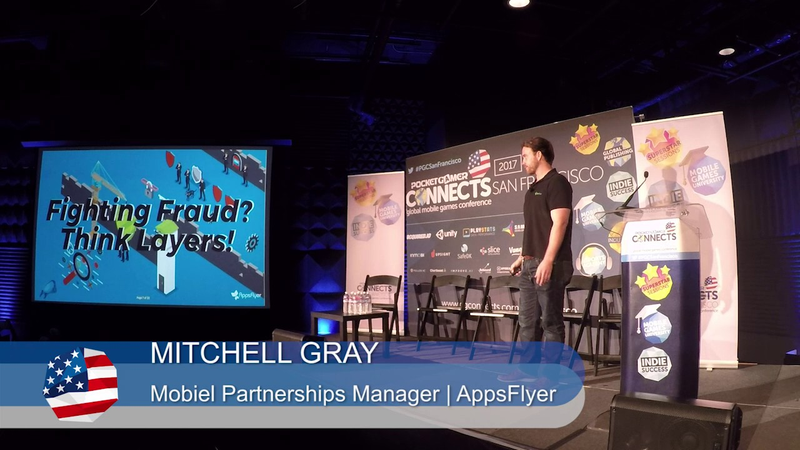
Rapid response to mobile ad fraud
Mobile advertising has surpassed web-based advertising in scale, leading to increased investment and sophistication among marketers.
- Attribution providers can mitigate fraud by leveraging massive datasets, such as those analyzing over half a trillion interactions per month, to identify and block malicious activity across entire client bases.
- Fraudsters frequently target organic installs to force marketers to pay for users who would have downloaded the application without paid intervention, creating a prisoner’s dilemma that complicates accountability among ad networks.
- Effective fraud mitigation requires a layered approach that combines real-time prevention with post-mortem detection, as simple blacklists of IP addresses or devices are easily bypassed by sophisticated actors.

International Games Guide: 51 Nations
The International Games Guide provides a comprehensive overview of the global video game industry, examining the market landscapes of 51 distinct nations.
- The 'International Games Guide' provides a comprehensive analysis of the retail, distribution, and development sectors across 51 nations.
- The report covers a diverse range of markets, spanning highly developed regions like Singapore and the United States to emerging gaming nations such as Pakistan.
- Each country entry is designed to help industry professionals identify specific regional opportunities and operational challenges.

Click to Share on LinkedIn
The text presents a standard online consent interface for LinkedIn’s use of cookies and related privacy policies.
- The provided report content is not a game-industry report; it consists of LinkedIn's cookie consent, sign-in, and account creation prompts.
- LinkedIn uses essential and non-essential cookies for service provision, security, analysis, improvement, and to display relevant ads both on and off its platform.
- Users can accept or reject non-essential cookies and can modify their choices at any time in their settings.