Access
Company
Documents about Access
A Long Dark Road: Blending Player and Authored Story in a Sandbox Survival Game
The development of The Long Dark illustrates the complex tension between authored narrative and emergent, player-driven gameplay within the sandbox survival genre.
- Hinterland Games separated 'The Long Dark' into distinct sandbox and story modes to allow for an Early Access launch without spoiling narrative content, a strategy that resulted in 250,000 players in the first three months and 500,000 within the first year.
- The long-term separation of sandbox and story modes created a dissonance in player expectations, as the sandbox community became accustomed to a non-narrative experience and resisted the shift toward a more linear, authored story.
- Development of a narrative mode in a sandbox game should ideally integrate with existing systems rather than creating a split experience, as seen in titles like 'Subnautica' and 'The Forest' which successfully blended both approaches.
PlayerUnknown's Battlegrounds: From Pre-Alpha to 20 Million and Counting
PlayerUnknown’s Battlegrounds achieved unprecedented global success by eschewing traditional marketing budgets in favor of a grassroots community-building strategy.
- PUBG achieved massive scale by replacing traditional marketing budgets with a grassroots strategy that prioritized direct, transparent communication with players and content creators.
- The studio leveraged a small team of 25 people to foster organic momentum on Twitch, effectively bypassing the need for paid advertising or external PR agencies.
- Early development relied on a community snowballing model, using Discord for distribution and iterative feedback loops to ensure the player base directly influenced the game's evolution during Early Access.
Slime Rancher: A Preemptive Postmortem
The success of Slime Rancher stems from a development philosophy that prioritizes a highly polished, satisfying core gameplay loop over speculative features or complex systems.
- Treat Early Access as a live service product rather than a development phase, focusing on major, feature-based content updates that generate hype rather than minor patch notes.
- Design games to be 'YouTube-friendly' by prioritizing emergent, unpredictable character behaviors and satisfying core gameplay loops that are visually engaging for spectators.
- Leverage organic growth on YouTube by distributing keys to smaller creators first, allowing the game to naturally climb the 'food chain' to larger influencers like Markiplier and Jacksepticeye without direct outreach.

Mini Metro: When Less is More
The development of the user interface for the strategy game Mini Metro serves as a case study in how minimalist design choices can foster player discovery and engagement.
- Mini Metro achieved commercial success with 800,000 units sold and over three million dollars in gross revenue, maintaining a 96% positive rating on Steam.
- The design team prioritized minimalist UI by omitting complex HUDs, leaderboards, and meta-progression systems to focus entirely on the core gameplay loop of network optimization.
- Development spanned two years and involved extensive visual iteration, resulting in the creation of over 4,000 images and 112 preview videos.
Open Production With Sunless Sea: Kickstarter, Early Access and After
Open production serves as a transformative strategy for independent game developers, enabling studios to transition from financial instability to long-term sustainability.
- Open production models like Kickstarter and Early Access provide financial stability and a diagnostic feedback loop that allows developers to refine design and marketing before full release.
- Developers must maintain final authority over creative vision, as relying too heavily on veteran player feedback can skew development toward niche preferences and alienate broader audiences.
- Sustainable financial planning requires that crowdfunding stretch goals remain low-cost and high-engagement to ensure early capital builds a foundation for future projects rather than serving as a temporary fix.
Taking Desktop Dungeons from Prototype to Pre-Order to Steam
The development of the roguelike game Desktop Dungeons serves as a case study for the efficacy of open development, a methodology defined by the continuous release of prototypes to a player community to gather feedback and iterate on design.
- QCF Design utilized open development to identify thousands of bugs and edge-case strategies by releasing continuous, iterative prototypes to a community-based testing network.
- Open development should be conducted through independent channels before transitioning to Steam Early Access to avoid the risks associated with the platform's high user volume during early, unrefined stages.
- The iterative feedback loop serves as a marketing strategy by cultivating a base of 'superfans' who act as organic advocates for press outreach and community management.
Tooth and Tail: Building Community Within Open Game Development
Pocketwatch Games successfully navigated the resource constraints inherent in small-scale game production by pioneering a model of community-integrated development.
- Pocketwatch Games utilized community-integrated development to offload critical operational tasks like quality assurance, balance testing, and tournament organization to their player base.
- The studio transformed development into a collaborative ecosystem by treating dedicated users as an extension of the internal team, allowing for faster iteration cycles.
- Access to early development builds was restricted to active participants, ensuring that testers were genuinely invested in the project’s long-term success.
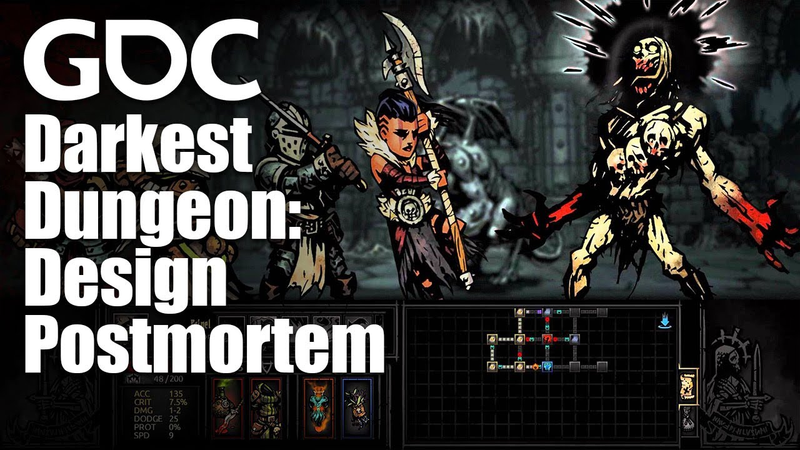
Darkest Dungeon: A Design Postmortem
Darkest Dungeon centers on the philosophy that the human experience of adventuring is defined by psychological trauma and permanent consequences rather than traditional power fantasies.
- Darkest Dungeon features approximately 70,000 words of text to support its Affliction system, which includes 15 character classes, seven distinct afflictions, and four virtues to simulate human emotional responses.
- The developers intentionally designed the game to prioritize the 'sword arm' over the 'sword,' focusing on the psychological state of heroes rather than traditional RPG power fantasies to create moments of triumph through the possibility of failure.
- The 'corpse' mechanic, introduced during Early Access to eliminate dominant combat strategies, caused significant player backlash because it was implemented as a major gameplay change that altered the experience for existing customers.
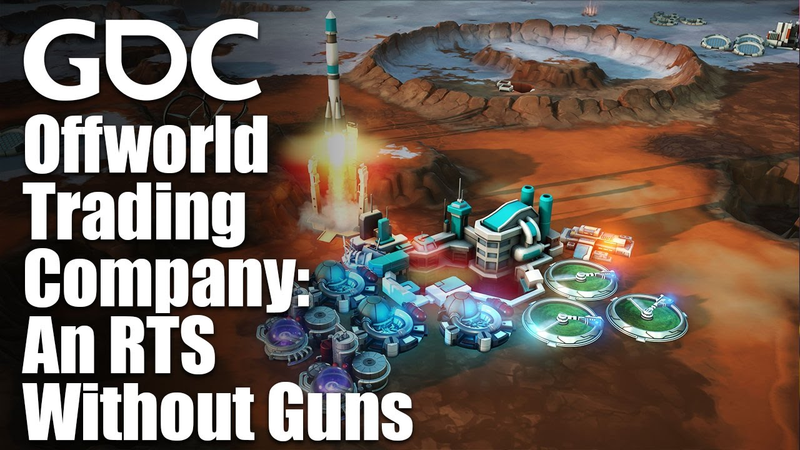
Offworld Trading Company: An RTS Without Guns
Offworld Trading Company reimagines the real-time strategy genre by replacing traditional military combat with a dynamic, player-driven free market.
- Offworld Trading Company differentiates itself from traditional RTS games by focusing exclusively on the 'macro' economic layer, removing unit micro-management to create a distinct sub-genre.
- The game's market mechanics utilize a dynamic pricing system where buying black market items, such as pirates or sabotage tools, increases their cost for all players, naturally limiting their frequency and impact.
- Early access development allowed the team to replace a standard setup screen with a reverse-auction mechanic for starting locations, a core feature that was iterated upon for 12 months prior to the official launch.
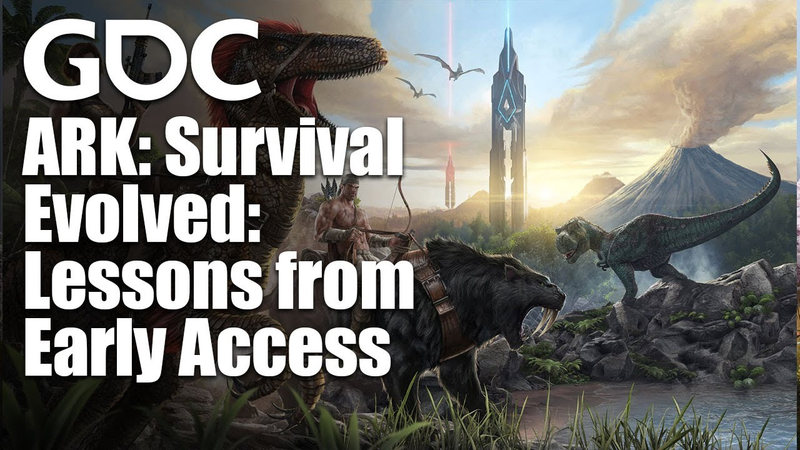
ARK: Survival Evolved: Lessons from the Trenches of Early Access
The development of ARK: Survival Evolved demonstrates the efficacy of an emergent development strategy, which prioritizes iterative growth and high-level guiding principles over rigid, pre-defined design documentation.
- Success in Early Access relies on an emergent development strategy that prioritizes iterative growth and high-level guiding principles over rigid, pre-defined design documentation.
- The development team utilizes a structured feature scorecard system to objectively evaluate updates based on development feasibility, team passion, and long-term meta-game health.
- Concurrent user counts serve as the primary metric for project success, functioning as a more reliable indicator of engagement than Steam reviews.

Early Access Lessons from Raw Data
Raw Data established a significant milestone in the virtual reality industry by becoming the first title to surpass $1 million in revenue within its initial 30 days.
- Raw Data achieved the first $1 million revenue milestone for a VR title within its initial 30 days of release.
- The game’s success was driven by a design philosophy prioritizing high-fidelity, active physical engagement and intuitive weapon handling over rigid realism.
- Cooperative, social gameplay served as the primary engine for long-term player retention and organic market growth.
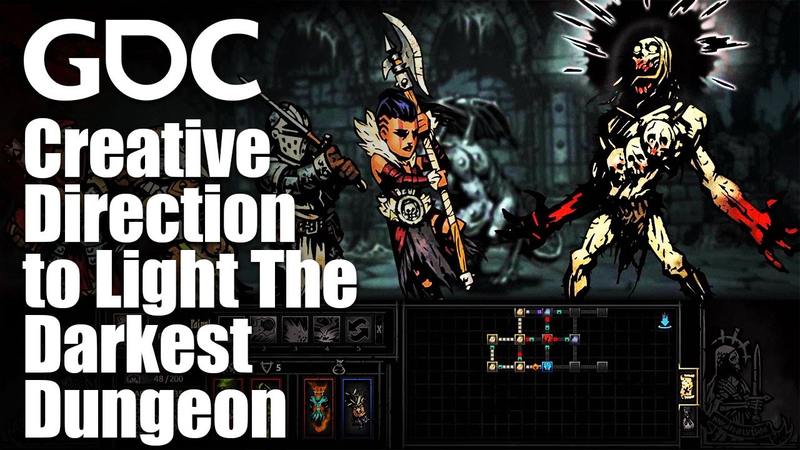
A Torch in the Dark: Using Creative Direction to Light The Darkest Dungeon
Maintaining a rigid, externalized creative vision serves as the primary defense against scope creep and development drift for independent studios.
- A clearly articulated, externalized creative vision acts as a decision-making razor, allowing developers to filter features and resolve conflicts during the uncertainty of production.
- Red Hook Studios defined the core of Darkest Dungeon as an uncompromising, Gothic, low-fantasy, Lovecraftian experience centered on making permanent decisions with imperfect information.
- The team rejected standard RPG tropes like isometric camera angles and exhaustive lore exposition to maintain a claustrophobic, uncertain atmosphere that forces players to experience the game's horror.