
The Game Business
Games industry business news and analysis by Christopher Dring (ex-GamesIndustry.biz).
Documents
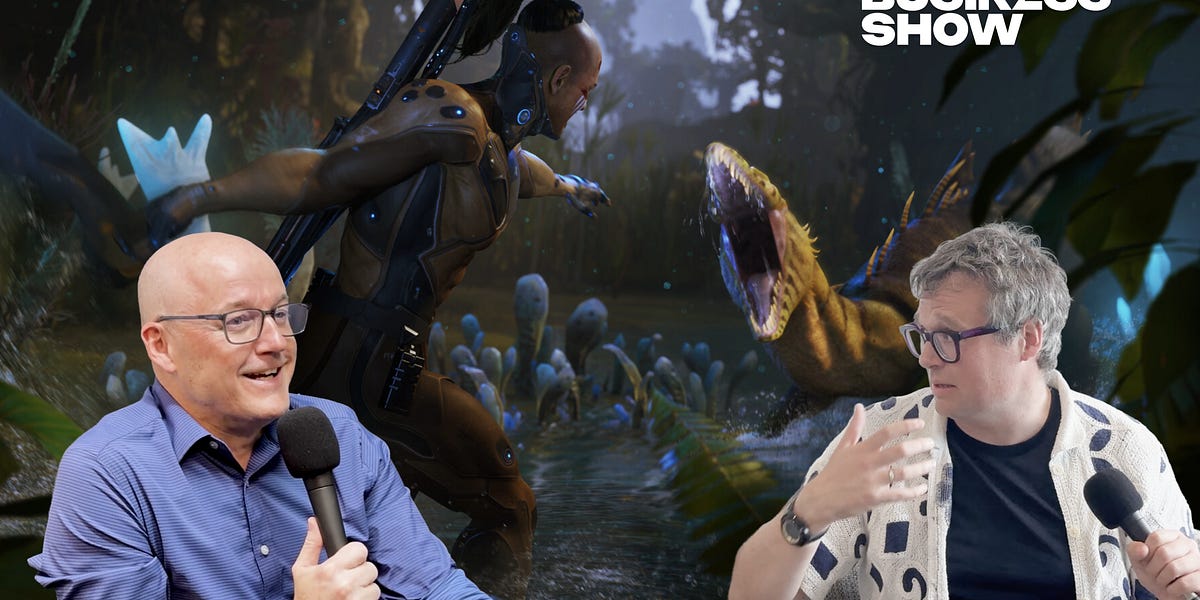
Saber Interactive: We Can Just Do AAA Games Smarter
Saber Interactive maintains a competitive edge in the global video game industry by challenging the traditional, high-expenditure model of AAA development.
- Saber Interactive, with 3,500 employees, claims to have more licensed products in development than any other developer globally, including titles like Hellraiser, Hitman, Jurassic Park, John Wick, Avatar, and Warhammer 40,000: Space Marine 3.
- Saber Interactive attributes its ability to develop AAA games "smarter" to efficient cost management and a focus on quality, citing Space Marine 2 as an example of a huge AAA game developed more cost-effectively than others.
- The success of Warhammer 40,000: Space Marine 2 significantly boosted Saber Interactive's reputation, leading to increased interest from major license holders and enabling the company to be selective about projects, turning down more than it accepts.
Space Marine 2 developer: “We can just do AAA games smarter”
Saber Interactive, led by Chief Creative Officer Tim Willits, has established a successful business model centered on delivering high-quality, AAA-style experiences through disciplined scoping and operational efficiency.
- Saber Interactive maintains a workforce of 3,500 employees and achieves AAA-quality output by strictly avoiding over-scoping and prioritizing operational efficiency.
- The studio focuses on core gameplay loops, such as the swarm mechanics in World War Z, which helped the title reach over 30 million players.
- Saber utilizes a flexible, non-siloed internal culture that allows talent to move dynamically between projects to optimize resource allocation.
Xbox plans 3,200 job cuts, and will drop five acclaimed studios
Xbox is undergoing a significant corporate restructuring, characterized by approximately 3,200 job cuts—representing roughly 15% of its workforce—and the divestment of five critically acclaimed studios.
- Xbox is cutting 3,200 jobs, representing approximately 15% of its total workforce, as part of a major corporate restructuring.
- The company is divesting five studios: Double Fine and Compulsion Games are moving to independent management, while Ninja Theory, Undead Labs, and Arkane Lyon are seeking new ownership.
- The restructuring shifts the company from a decentralized studio model to a centralized structure that prioritizes major franchises like Halo, Gears of War, and Fallout over smaller, independent-style projects.
Xbox Plans 3,200 Job Cuts and Studio Closures
Xbox is undergoing a comprehensive corporate restructuring characterized by the elimination of 3,200 positions and the divestment of five prominent development studios, including Double Fine, Compulsion Games, Ninja Theory, Undead Labs, and Arkane Lyon.
- Xbox plans to cut 3,200 jobs across its business and divest five studios as part of a major restructure. This includes Double Fine Productions, Compulsion Games, Ninja Theory, Undead Labs, and Arkane Lyon.
- Double Fine Productions and Compulsion Games will return to independence, retaining their IP and back catalogs, with runway funding from Microsoft. Ninja Theory and Undead Labs have found new, unnamed owners who will acquire their IP and back catalogs, though deals are not yet closed.
- Xbox's restructuring is driven by declining revenue, profits, and player numbers over the past five years, despite $20 billion in game development investment. Its accountability margin is only 3%, and it lost 64 cents for every dollar invested in independent studios.

The Game Business Micro
The video game industry recently secured a legislative victory in the United States as the Protect Our Games Act failed to pass a critical senate vote.
- A US bill, the 'Protect Our Games Act,' aimed at preventing premium online games from becoming unplayable after discontinuation, failed to pass a senate vote in California, despite clearing the State Assembly.
- The consumer campaign 'Stop Killing Games,' which advocates for the right to play discontinued online games, plans to reattempt legislative efforts with increased funding.
- The report also mentions other industry news, including Ubisoft hiring a veteran leader for Creative House 2, IO Interactive seeking a new partner for Project Fantasy, and Amazon hiring a publishing veteran.
Xbox Divided Over Its Future: Physical PlayStation Games and the Flexible Publishing Future
The global gaming industry is currently undergoing a fundamental structural transformation characterized by a transition toward digital-first distribution and a move away from traditional, high-cost publishing models.
- Xbox is undergoing a significant strategic shift under Asha Sharma's leadership, focusing investment on major franchises like Halo, Gears, and Fallout, leading to cuts at studios such as Compulsion, Ninja Theory, Double Fine, Obsidian, and Undead Labs.
- Despite a generally decent year for Xbox Game Studios, the poor performance of Call of Duty is driving the current reallocation of resources, overshadowing successes from other titles like The Outer Worlds 2 and Avowed.
- Sharma's initial 100 days at Xbox were marked by fan-pleasing announcements, including a Game Pass price cut in May and making some first-party games console exclusive, leading to strong internal and external positivity.
Xbox divided over its future, and do people even buy physical PlayStation games?
The gaming industry is currently undergoing a structural transformation characterized by a transition toward digital-first distribution and a move away from traditional, rigid publishing models.
- Sony plans to cease physical disc production by 2028, marking a definitive shift toward a digital-only distribution model.
- Publishers are moving away from fixed, long-term headcount toward decentralized, scalable partnerships to improve operational agility and reduce costs.
- The industry is pivoting toward a middle-market model that prioritizes realistic, genre-specific budgeting over the pursuit of unpredictable, high-budget outlier successes.

Seven Things You Probably Didn't Know About Naughty Dog Co-founder Jason Rubin
Jason Rubin’s career trajectory serves as a foundational case study in the evolution of the North American video game industry from the 1980s through the modern era of virtual reality and artificial intelligence.
- Jason Rubin co-founded Naughty Dog and, with Andy Gavin, developed early games like "Ski Crazed" and "Dream Zone" before creating "Crash Bandicoot," which became a major PlayStation IP in 1996, competing with Mario and Sonic.
- Sony acquired Naughty Dog in 2001, and the studio released the critically and commercially successful "Jak and Daxter" series on PS2, with Naughty Dog sharing their efficient environment instancing system with Insomniac Games for "Ratchet and Clank."
- Rubin and Gavin left Naughty Dog in 2004, and Rubin later worked at Meta (formerly Oculus) in various senior roles, leaving in 2026 as the company shifted away from VR, a move that didn't align with his personal passions.
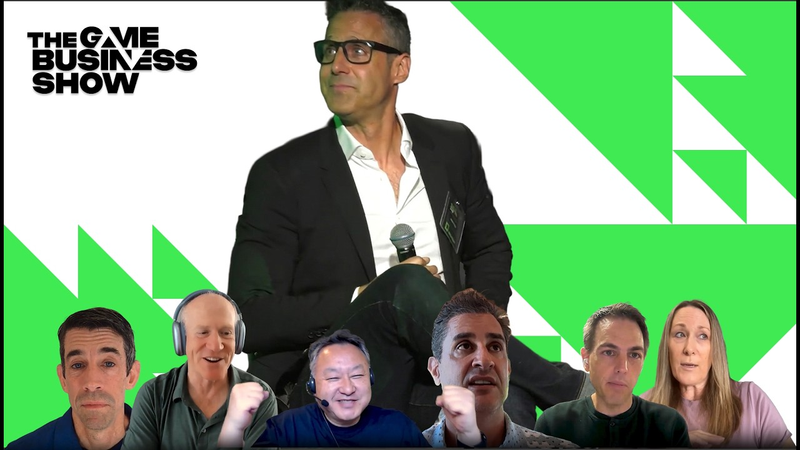
Naughty Dog co-founder Jason Rubin on Crash Bandicoot, trying to save THQ, and the state of VR
The evolution of the video game industry is defined by a persistent tension between creative autonomy and the logistical constraints of corporate oversight.
- The success of the Crash Bandicoot franchise demonstrates that high-quality design and strategic platform targeting can overcome restrictive management environments and manufacturing bottlenecks.
- Efforts to revitalize legacy publishers like THQ reveal that deep-seated operational and financial systemic issues often negate the output quality of individual development teams.
- The industry-wide shift toward edgier content and increased production budgets was largely driven by the competitive pressure to match the market success of titles like Grand Theft Auto.
Why did PlayStation buy Bungie in the first place?
The acquisition of Bungie by PlayStation for $3.6 billion in 2022 serves as a case study in the challenges of pivoting toward a live-service business model.
- PlayStation acquired Bungie for $3.6 billion in 2022 to accelerate its transition into the live-service market, but the strategy has resulted in approximately 700 layoffs and underwhelming performance for projects like Marathon.
- The console market is experiencing a period of stagnation, with U.S. hardware unit sales hitting record lows for both PlayStation and Xbox due to rising component costs and repeated price hikes.
- U.S. gaming revenue showed only a marginal 1% year-over-year increase in May, reflecting a broader cooling trend as consumers delay spending while anticipating the next generation of consoles expected in 2028.

Why Did PlayStation Buy Bungie in the First Place?
PlayStation’s $3.6 billion acquisition of Bungie in 2022 was fundamentally driven by a strategic imperative to transition from a reliance on traditional single-player experiences toward a sustainable live-service model.
- PlayStation acquired Bungie for $3.6 billion in January 2022 to gain expertise in live service games and leverage Bungie's hit live service game, Destiny, as PlayStation's first-party software business struggled to grow beyond 20-30 million sales for its single-player titles.
- Bungie's recent releases, Destiny 2's 'Monument of Triumph' expansion (June 9th) and 'Marathon' (March), have not achieved high numbers, with Marathon peaking at 2 million players, indicating the acquisition has not yet met expectations for PlayStation's live service ambitions.
- PlayStation's strategy to expand into live service games involved commissioning external studios (e.g., Arrowhead, Firewalk Studios) and internal teams (e.g., Insomniac, Naughty Dog) for new titles, a departure from its historical approach of acquiring studios only after prior collaborations.

Retailer Warns of GTA Console Stock Shock
The global gaming industry currently faces a dual crisis of hardware scarcity and geopolitical vulnerability.
- A retailer warns of potential console stock shortages, particularly for PlayStation 5 Pro, which could impact sales of GTA 6, despite its anticipated boost to the console market.
- A new $50 million game investment fund called Denmu is focusing on 'visionary game makers' across all game types (AA, AAA, indie, free-to-play, PC, console, mobile), despite a difficult fundraising environment where most major funds are looking to exit video games.
- Steam is criticized for hosting Russian government-created propaganda games, such as 'ZOV,' which contain Russian iconography (like the 'Z' symbol banned in Germany and Ukraine as a hate symbol) and are seen as 'disinformation tools' due to Steam's low moderation standards.