Sensor Tower
Research137 documents
Documents

Report29 pages
Store Intelligence Data Digest: Q3 2023
This analysis examines global mobile application performance during the third quarter of 2023, covering downloads across the Apple App Store and Google Play. Total worldwide downloads reached 35.1 billion, representing a slight 0.7% year-over-year decline. While App Store installs grew by 6.1% to 8.7 billion, Google Play downloads fell by 2% to 26.4 billion. The data, compiled via the Sensor Tower Store Intelligence platform, focuses on unique, per-user installs and excludes pre-installed apps and third-party Android stores.
Meta emerged as the dominant publisher, driven by the July 2023 launch of Threads. The new social platform garnered nearly 40 million installs on its launch day and became the fifth most downloaded app globally for the quarter. Instagram secured the top global spot, fueled largely by the Indian market, which accounted for 51% of its new installs. In the United States and Europe, the e-commerce platform Temu maintained its leadership position, significantly outperforming competitors like Shein and Amazon in terms of download velocity.
The mobile gaming sector saw Garena Free Fire reclaim the top global position with 60 million installs, surpassing long-time leader Subway Surfers. Monopoly Go showed the most significant momentum in the U.S. market with 44% quarter-over-quarter growth. Regionally, India remained the largest market by volume with 6.6 billion total downloads, more than double that of the United States. While the U.S. and China continued to lead App Store activity, Brazil showed the most robust growth on that platform with a 24% year-over-year increase. Conversely, major Google Play markets like Brazil and Indonesia saw single-digit declines in download volume during this period.
- Global mobile app downloads reached 35.1 billion in Q3 2023, a 0.7% year-over-year decline driven by a 2% drop in Google Play installs despite a 6.1% increase on the Apple App Store.
- Meta dominated the quarter as Instagram secured the top global download spot, while the July launch of Threads generated nearly 40 million installs on its first day to become the fifth most downloaded app globally.
- India remains the world's largest mobile market by volume with 6.6 billion downloads, more than double the volume of the United States.
- Garena Free Fire reclaimed the top global position in mobile gaming with 60 million installs, displacing Subway Surfers, while Monopoly Go saw 44% quarter-over-quarter growth in the U.S.
- Temu outperformed competitors like Shein and Amazon in download velocity to lead the e-commerce category across the United States and Europe.
+1
Sensor TowerSept 2023

Report40 pages
Store Intelligence Data Digest: Q2 2023
Global mobile app performance in the second quarter of 2023 reflects a stabilizing market, with total downloads reaching 34.3 billion despite a marginal 1.5% year-over-year decline. While TikTok maintained its long-standing position as the most downloaded app globally, the quarter was defined by the rapid expansion of the shopping platform Temu, which achieved 74 million downloads and secured a top-ten global ranking. In the gaming sector, established titles like Subway Surfers and Ludo King continued to lead worldwide, though new entries such as MONOPOLY GO! and Honkai: Star Rail demonstrated significant momentum by dominating Western markets and leveraging existing brand equity.
Geographic trends highlight a shift in growth centers, as traditional markets like the United States, China, and the United Kingdom experienced download contractions. In contrast, India solidified its status as the world’s largest mobile market, accounting for 24% of global Google Play downloads. Emerging markets also showed resilience, with the App Store seeing double-digit growth in Brazil and Indonesia. While Meta and Google remain the preeminent global publishers, Meta faced regional headwinds in Asia due to regulatory shifts in India that impacted Instagram and Facebook adoption.
Sector-specific analysis reveals a transition toward gamification and retention-focused strategies. Education apps, led by Duolingo, successfully utilized streak features to drive high user engagement, whereas the food delivery and streaming sectors faced saturation. Food delivery downloads fell below pre-pandemic levels, and streaming services pivoted toward aggressive monetization and advertising strategies to combat slowing acquisition. Although Netflix maintains a superior 79% retention rate, its low new-user acquisition rate of 3% underscores the broader challenge of maintaining growth in a mature digital landscape.
- Global mobile app downloads reached 34.3 billion in Q2 2023, reflecting a stabilizing market despite a 1.5% year-over-year decline.
- India has become the world’s largest mobile market, accounting for 24% of all global Google Play downloads, while traditional markets like the U.S., China, and the U.K. experienced contractions.
- Temu emerged as a major disruptor with 74 million downloads, while new gaming titles MONOPOLY GO! and Honkai: Star Rail gained significant momentum in Western markets.
- Netflix faces a mature market challenge with a high 79% retention rate but a low 3% new-user acquisition rate, forcing the streaming sector to pivot toward aggressive monetization.
- Food delivery downloads have fallen below pre-pandemic levels, signaling market saturation in the sector.
+1
Sensor TowerJul 2023
Report20 pages
The Mobile Economy and Digital Ad Space in 2022 and Beyond: An Analysis of the Global Trends Shaping the Mobile and Digital Advertising Industry
This analysis examines the global mobile economy and digital advertising landscape throughout 2022 and into early 2023, utilizing proprietary market intelligence data from the App Store and Google Play. While global app installs have slowed following the initial pandemic surge, they remain significantly above 2019 levels. Mobile games continue to be the primary driver of downloads globally, exceeding 50 billion installs in 2022, though the utilities category has recently emerged as a significant growth leader, particularly in emerging markets like India.
A major shift occurred in 2022 as global consumer spending on mobile games declined for the first time, falling to $79 billion. This downturn was particularly pronounced on Android devices, which saw a 7 percent revenue drop driven by high inflation and the lifting of COVID-19 restrictions. Japan experienced the most significant contraction, with game revenue falling by $3.2 billion. Conversely, the entertainment category has become a primary engine for revenue growth, with spending on apps like TikTok, HBO Max, and Disney+ reaching record highs. In the United States, entertainment spending doubled compared to 2019 levels, while in Japan, a manga reader app became the top-grossing title for the first time, displacing traditional gaming leaders.
The digital advertising sector reached $28 billion across North America and major European markets in the fourth quarter of 2022. While established platforms like Facebook maintain the largest market share, TikTok has emerged as the fastest-growing ad channel, recording a 60 percent quarterly increase in U.S. ad spend. Facing headwinds from Apple’s privacy changes and reduced marketing budgets, many developers are pivoting toward subscription models and diversified monetization strategies. Looking forward, the reopening of China and the high smartphone penetration growth in Africa are identified as critical factors for the next phase of global mobile adoption.
- Global consumer spending on mobile games declined for the first time in 2022, falling to $79 billion, with Android devices experiencing a 7 percent revenue drop.
- Entertainment apps have overtaken gaming as a primary revenue engine, with U.S. spending on entertainment doubling since 2019 and apps like TikTok, HBO Max, and Disney+ reaching record highs.
- Digital advertising reached $28 billion in North America and major European markets in Q4 2022, with TikTok emerging as the fastest-growing channel via a 60 percent quarterly increase in U.S. ad spend.
- Mobile games remain the primary driver of global downloads with over 50 billion installs in 2022, though the utilities category is now a significant growth leader in emerging markets like India.
- Japan experienced the most significant mobile gaming contraction in 2022, losing $3.2 billion in revenue and seeing a manga reader app displace traditional gaming titles as the top-grossing app.
+1
Sensor TowerMar 2023
Report20 pages
The Mobile Economy and Digital Ad Space in 2022 and Beyond: An Analysis of Global Trends
The analysis evaluates how the mobile ecosystem and digital advertising evolved through 2022 and projects future dynamics, using Sensor Tower’s App Store and Google Play data, quarterly download and revenue estimates, and ad‑spend figures from North America and major European markets. It frames the mobile economy as still expanding beyond pre‑COVID levels while noting a slowdown in install growth, with India, the United States, Brazil and Indonesia leading global downloads and emerging markets such as Africa poised for rapid gains as smartphone penetration rises.
Mobile games retained dominance, accounting for over 50 billion downloads and generating roughly $79 billion in revenue, yet 2022 marked the first year of year‑over‑year revenue decline, driven by reduced spending in the United States, Japan and other major economies. Utilities—particularly VPN apps in India—became the fastest‑growing category, while Turkey showed the sharpest adoption increase but faced inflation‑driven limits on consumer spend. Venture‑capital funding contracted, raising concerns about the emergence of new app disruptors, and Android revenue fell 30 percent year‑over‑year, contrasted with a modest 1 percent iOS growth.
Spending patterns shifted as entertainment apps eclipsed social networking in the United States, with TikTok, HBO Max and Disney+ leading a surge that doubled 2019 levels and made entertainment revenue twice that of the next‑largest non‑game category. In Japan, a manga‑reader app topped overall gross revenue for the first time, highlighting diversification beyond games.
- Mobile gaming revenue experienced its first year-over-year decline in 2022, generating $79 billion from over 50 billion downloads as consumer spending dropped in major markets like the United States and Japan.
- Android revenue fell by 30 percent year-over-year in 2022, while iOS revenue saw a modest 1 percent growth.
- Entertainment apps have overtaken social networking in the United States, with revenue from platforms like TikTok, HBO Max, and Disney+ doubling 2019 levels to become the largest non-game category.
- India, the United States, Brazil, and Indonesia lead global app downloads, with emerging markets in Africa expected to see rapid growth due to increasing smartphone penetration.
- Utilities, specifically VPN apps in India, emerged as the fastest-growing app category, while Turkey recorded the sharpest adoption increase despite inflation-related constraints on consumer spending.
+1
Sensor TowerMar 2023

Report23 pages
The State of Puzzle Games: 2023
The puzzle game sector is undergoing a significant structural evolution, characterized by a shift in product models and monetization strategies. This analysis, covering global mobile market data from January 2018 through mid-2023, examines the performance of various sub-genres, including Swap, Blast, Merge, and Pair. The primary objective is to evaluate how developers are leveraging meta-features and hybrid monetization to sustain growth in a maturing market.
Key findings indicate that while traditional casual puzzle games continue to dominate total revenue, the hybridcasual model has emerged as a primary growth driver. Between early 2022 and early 2023, hybridcasual revenue surged by approximately 430%, signaling a departure from purely hypercasual, ad-supported frameworks. This transition is particularly evident in the Pair sub-genre, where hybridcasual revenue grew from 14.8% to 58.7% of the total within a single year. Conversely, many established sub-genres, such as Real-Time, Chain, and Bubble Shooter, experienced double-digit declines in both downloads and revenue during the same period.
Methodologically, the findings rely on consumer spending and download estimates from the Apple App Store and Google Play Store, excluding third-party Android marketplaces. The data highlights that successful titles increasingly integrate complex meta-features—such as narrative storytelling, decoration, and social clans—alongside diversified monetization tools like season passes and loot boxes. While casual games maintain the largest market share, the data suggests that future industry success depends on the ability to blend accessible gameplay with the deeper retention mechanics and hybrid revenue streams characteristic of the hybridcasual model.
- The hybridcasual model has become the primary industry growth driver, with revenue surging approximately 430% between early 2022 and early 2023.
- The Pair sub-genre experienced a significant shift toward hybridcasual monetization, which grew from 14.8% to 58.7% of its total revenue in just one year.
- Established sub-genres including Real-Time, Chain, and Bubble Shooter faced double-digit declines in both download volume and revenue throughout the 2022–2023 period.
- Successful puzzle titles are increasingly adopting complex meta-features such as narrative storytelling, decoration, and social clans to improve player retention.
- Monetization strategies are moving away from purely ad-supported frameworks toward diversified models that incorporate season passes and loot boxes.
+2
Sensor TowerJan 2023

Report32 pages
Hybridcasual Games Playbook (2023)
Hybridcasual gaming represents a strategic evolution in the mobile industry, bridging the gap between the accessibility of hypercasual titles and the sophisticated progression systems of casual games. The primary thesis of this analysis is that by blending simple, intuitive mechanics with deeper metagame layers—such as narrative progression, resource management, and social features—developers can significantly increase user retention, session length, and lifetime value (LTV). This shift addresses the declining interest in traditional hypercasual games, which saw a 15% decrease in downloads between 2021 and 2022, while hybridcasual titles experienced continued growth, reaching 5 billion downloads in 2022.
Key performance data highlights the superiority of the hybridcasual model in maintaining player interest. Top-tier hybridcasual games demonstrate average session lengths of 372 seconds, exceeding hypercasual benchmarks by 160 seconds. Furthermore, retention rates are substantially higher, with hybridcasual titles achieving 54% Day 1 retention and 9% Day 60 retention, compared to significantly lower figures for hypercasual counterparts. Revenue models have also matured; while advertisements remain a core component, they are increasingly optional and rewarded, allowing in-app purchases (IAPs) to account for a growing share of total revenue. Successful implementation of IAP strategies, such as secondary currencies and exclusive content packs, has been shown to increase IAP revenue by as much as 35% in specific case studies.
The industry scope covers global mobile gaming, with a focus on subgenres including arcade idle, tower defense, and simulation. Methodologically, the findings rely on comparative performance metrics from 2022, internal product strategy analysis, and specific case studies of titles like Zombie Defense and Aquarium Land. The analysis concludes that long-term success in this segment requires a rigorous, data-driven approach to post-launch optimization, including A/B testing of game economies, audience segmentation, and the continuous integration of new content to sustain player engagement.
- Hybridcasual games reached 5 billion downloads in 2022, contrasting with a 15% decline in traditional hypercasual downloads between 2021 and 2022.
- Hybridcasual titles achieve a 54% Day 1 retention rate and a 9% Day 60 retention rate, significantly outperforming traditional hypercasual benchmarks.
- Average session lengths for top-tier hybridcasual games reach 372 seconds, which is 160 seconds longer than hypercasual industry benchmarks.
- Integrating in-app purchase strategies like secondary currencies and exclusive content packs can increase IAP revenue by up to 35%.
- The hybridcasual model shifts revenue dependency away from mandatory advertisements toward optional, rewarded ad formats and increased in-app purchases.
+4
Sensor TowerJan 2023

Report68 pages
SensorTower The State of Mobile Gaming 2023
The 2023 SensorTower analysis demonstrates a pronounced shift in mobile gaming dynamics, with hyper‑casual titles experiencing a 24 % year‑over‑year decline in Q4 2022, while hybrid‑casual games grow 13 % and exclusive‑access titles surge 54 %. Revenue patterns echo this trend: action and tabletop genres record modest gains, whereas shooter, RPG, and casino segments suffer double‑digit drops. Geographic revenue distribution shows RPG dominance in Asia (39 %) but a more balanced genre mix across North America and Europe, each contributing at least 12 % of total earnings.
Hybrid‑casual games differentiate themselves through the adoption of meta‑features. Thirty percent of leading hybrid‑casual titles embed at least one such feature, compared with only five percent of hyper‑casuals. Character collection is the most prevalent meta‑feature, present in 18 % of hybrid‑casuals and boosting average playtime by 122 %. Downloads for hybrid‑casual games rose 17 % in Europe and a striking 124 % in Asia during 2022, while the global market grew 4 % YoY.
Live‑Ops events prove highly lucrative for flagship titles. Marvel Snap’s themed events generated between $670 k and $746 k on launch day, illustrating the monetization power of well‑timed in‑app events. SensorTower’s event‑tracking tool offers publishers granular revenue attribution, facilitating competitive benchmarking and schedule optimization.
Regional performance highlights divergent trends. Europe’s top five markets—Germany, the U.K., France, Russia, and Italy—saw a collective 6 % revenue decline to $700 million in Q4 2022, with Russia’s market plummeting 72 % YoY after the Ukraine conflict. Despite an 8 % overall download drop, Russia remained Europe’s largest volume market with 673 million downloads (24 % of the region). In contrast, Asia’s quarterly gross fell 15 % to $9.5 billion, largely due to a 20 % Google Play decline, while downloads stayed flat above 5.5 billion per quarter; India led the region by a wide margin.
- The mobile gaming market is shifting away from hyper-casual titles, which saw a 24% year-over-year decline in Q4 2022, toward hybrid-casual games that grew 13% and exclusive-access titles that surged 54%.
- Hybrid-casual games are successfully utilizing meta-features to drive engagement, with 30% of top titles embedding these features and character collection specifically boosting average playtime by 122%.
- Regional revenue performance is diverging, with Asia’s quarterly gross falling 15% to $9.5 billion and Europe’s top five markets experiencing a collective 6% revenue decline to $700 million in Q4 2022.
- Live-Ops events remain a primary monetization driver, evidenced by Marvel Snap’s themed events generating between $670,000 and $746,000 on their respective launch days.
- While global market downloads grew 4% year-over-year, hybrid-casual games significantly outperformed this average with download growth of 17% in Europe and 124% in Asia during 2022.
Sensor TowerJan 2023
Report40 pages
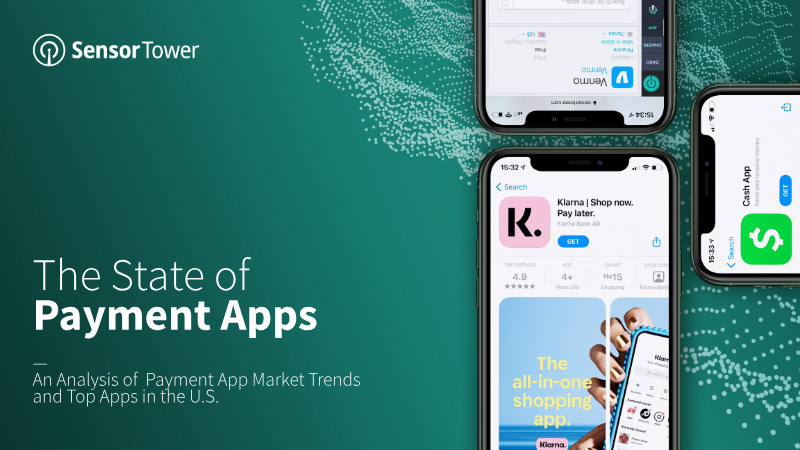
The State of Payment Apps: An Analysis of Payment App Market Trends and Top Apps in the U.S.
The United States payment application market underwent a period of unprecedented expansion between 2020 and early 2021, catalyzed by the COVID-19 pandemic and the distribution of federal stimulus payments. Total downloads reached a record 35 million in the second quarter of 2020 as consumers transitioned toward digital-first financial tools and safer, contactless payment methods. While established platforms like Cash App maintained overall market leadership, the landscape became increasingly competitive due to aggressive promotional strategies and significant app relaunches. Google Pay, for instance, achieved a 347% year-over-year surge in early 2021 by leveraging referral incentives and expanded feature sets including cryptocurrency integration and cashback rewards.
The "Buy Now, Pay Later" (BNPL) segment emerged as a primary driver of industry growth, particularly during the 2020 holiday season. Services such as Klarna and Afterpay saw exceptional adoption rates, with Klarna surpassing one million monthly installs by optimizing its App Store presence and pivoting toward influencer-led video advertising and gaming-related messaging. This growth was further bolstered by deep integrations with major retail applications, positioning BNPL as a mainstream alternative to traditional credit. Simultaneously, money transfer services like Western Union and Remitly experienced a peak in adoption in April 2020, growing 85% over the previous year as users sought reliable digital channels for domestic and international remittances.
As the market continues to diversify, leading payment applications are evolving into comprehensive financial ecosystems. The integration of advanced financial management tools and cryptocurrency support reflects a broader shift in consumer expectations. To maintain dominance, top-tier apps are increasingly relying on strategic keyword bidding and multi-channel marketing to capture a user base that now prioritizes versatility and digital integration in their financial transactions. This evolution signifies a permanent shift in the American financial landscape toward decentralized and flexible payment solutions.
- The U.S. payment app market peaked at 35 million downloads in Q2 2020, driven by pandemic-related shifts toward digital-first and contactless financial tools.
- Google Pay achieved a 347% year-over-year growth in early 2021 by utilizing referral incentives, cryptocurrency integration, and cashback rewards.
- Buy Now, Pay Later (BNPL) services like Klarna and Afterpay became a primary growth driver, with Klarna exceeding one million monthly installs through influencer-led marketing and retail integrations.
- Money transfer services, including Western Union and Remitly, saw an 85% year-over-year adoption increase in April 2020 as users prioritized reliable digital remittance channels.
- Leading payment platforms are evolving into comprehensive financial ecosystems by integrating advanced management tools, cryptocurrency support, and strategic multi-channel marketing to maintain market share.
Sensor TowerJan 2023

Report31 pages
The State of OTT Advertising in the U.S.: An Analysis of OTT Ad Spending Trends and Top Advertisers
Over the course of late 2021 through 2022, the United States Over-the-Top (OTT) advertising market solidified its position as a critical component of the digital landscape, averaging $3.26 billion in quarterly expenditures. This investment represents nearly 15% of all digital advertising spend, signaling a maturation of the sector. While Financial Services previously led the market, Consumer Packaged Goods emerged as the primary spending category by mid-2022. Simultaneously, the automotive industry demonstrated aggressive expansion with a 74% year-over-year increase in ad spend, reflecting a broader trend of traditional industries pivoting toward streaming platforms to capture shifting consumer attention.
Platform dynamics reveal a competitive environment where established services and rising challengers cater to distinct demographics. Hulu and Peacock maintain a strong foothold among viewers under the age of 35, while Tubi has distinguished itself as the fastest-growing publisher, recording a 37% increase in ad revenue. This growth is mirrored by specific service sectors, particularly travel and food delivery, which utilized OTT to drive direct consumer actions. For instance, strategic campaigns from brands like Booking.com and UberEats resulted in measurable performance gains, such as significant spikes in mobile app installations following targeted high-spend periods.
The transportation and grocery sectors further illustrate the shift toward OTT-centric digital strategies. Companies like Turo now allocate more than half of their total digital budgets to streaming advertisements, while grocery delivery services saw a 14% year-over-year increase in investment. These trends underscore a broader industry conclusion: OTT has evolved from a secondary experimental channel into a primary driver for brand visibility and user acquisition across the American economy. As brands like United Airlines and Instacart dominate their respective niches, the ability to track creative impressions and seasonal spikes remains essential for navigating this high-growth advertising vertical.
- The U.S. OTT advertising market reached a mature state between late 2021 and 2022, averaging $3.26 billion in quarterly spend and accounting for nearly 15% of total digital advertising investment.
- Consumer Packaged Goods replaced Financial Services as the leading spending category by mid-2022, while the automotive industry increased its OTT ad spend by 74% year-over-year.
- Tubi emerged as the fastest-growing publisher with a 37% increase in ad revenue, while Hulu and Peacock remain the dominant platforms for reaching viewers under the age of 35.
- OTT has transitioned from an experimental channel to a primary driver for user acquisition, evidenced by brands like Turo allocating over 50% of their total digital budgets to streaming ads.
- Grocery delivery services increased their OTT investment by 14% year-over-year, contributing to a broader trend where sectors like food delivery and travel use streaming to drive measurable mobile app installations.
Sensor TowerJan 2023

Report42 pages
Q1 2023: Store Intelligence Data Digest
The global mobile app ecosystem experienced a slight contraction in early 2023, with total downloads falling 2.6% year-over-year to 35 billion. Despite this overall decline, the market remained bifurcated between Google Play’s 26.9 billion installs and the App Store’s 8.1 billion. While established giants like Meta and Google maintained their status as leading publishers, TikTok secured its eleventh consecutive quarter as the world’s top app. The gaming sector showed stability through the continued popularity of titles such as Subway Surfers and Roblox, even as broader consumer behavior shifted toward emerging technologies and new retail platforms.
The most significant growth occurred within the artificial intelligence and marketplace sectors. AI-powered productivity tools saw an explosive 378% increase in downloads and a nearly 400% surge in revenue, reaching $20 million in quarterly earnings driven primarily by U.S. demand. Simultaneously, the North American retail landscape underwent a major disruption as the Chinese shopping app Temu captured a 50% market share. Following a high-profile Super Bowl campaign, Temu surpassed Amazon in average monthly user engagement, clocking 64 minutes per user. This shift coincided with a general downturn in traditional social networking and messaging installs, though privacy-centric platforms like Telegram and short-video leaders continued to grow.
Comprehensive market intelligence across these sectors reveals a digital economy in transition, where established social media dominance is being challenged by specialized AI utilities and aggressive new e-commerce entrants. By tracking performance across major platforms including TikTok, YouTube, and Instagram, data indicates that while total volume may be cooling, high-value engagement is concentrating in specific, high-growth niches. These trends reflect a broader evolution in consumer priorities toward utility-driven AI and highly competitive, gamified shopping experiences.
- AI-powered productivity tools experienced explosive growth in Q1 2023, with a 378% increase in downloads and a nearly 400% surge in revenue to $20 million.
- Temu captured a 50% market share in North American retail and surpassed Amazon in user engagement, averaging 64 minutes per user following its Super Bowl campaign.
- Global mobile app downloads contracted by 2.6% year-over-year to 35 billion, with 26.9 billion installs on Google Play and 8.1 billion on the App Store.
- TikTok maintained its position as the world's top app for the eleventh consecutive quarter, even as traditional social networking and messaging installs saw a general downturn.
- The gaming sector remained stable during early 2023, supported by the continued popularity of established titles like Subway Surfers and Roblox.
+1
Sensor TowerJan 2023

Report37 pages
How Starfield Reached 10M Users
The launch of Starfield represents a significant evolution in Bethesda’s marketing methodology, transitioning from traditional brand-focused teasers to a sophisticated, multi-channel digital strategy. By prioritizing TikTok, Instagram, and Twitch, the campaign successfully targeted modern gaming audiences, ultimately reaching 10 million players to become the largest launch in the studio's history. A central component of this success was the strategic integration with Microsoft’s ecosystem, which emphasized immediate availability on Xbox Game Pass and utilized AI-driven cross-promotion via Bing. This approach was bolstered by hardware partnerships with companies like AMD, which bundled the game with PC components to incentivize premium edition adoption.
The financial scale of the campaign was substantial, involving a $21.2 million advertising spend in the United States, which accounted for approximately 70% to 77% of the total global marketing budget. During the critical launch window, investment pivoted heavily toward Over-the-Top media and short-form video content. While these efforts secured a top-30 all-time peak on Steam and record-breaking player counts, the title faced a complex competitive landscape. Simultaneous releases and updates for Baldur’s Gate 3 and Cyberpunk 2077 contributed to a polarized reception, reflected in a Metacritic user score of 6.6/10 despite the game's commercial dominance.
Data-driven market intelligence remains essential for navigating such competitive environments, as evidenced by the reliance on digital monitoring tools to optimize regional targeting and creative messaging. By analyzing competitor spending and platform-specific engagement, major industry entities like Activision and Electronic Arts continue to refine their strategies. The Starfield case study illustrates that while massive financial investment and platform exclusivity can drive unprecedented user acquisition, long-term sentiment is increasingly shaped by the broader market context and the specific demands of a digitally native player base.
- Starfield achieved the largest launch in Bethesda’s history with 10 million players, driven by a $21.2 million U.S. advertising spend that represented roughly 70% to 77% of the total global marketing budget.
- The marketing strategy shifted from traditional teasers to a multi-channel digital approach, prioritizing TikTok, Instagram, Twitch, and AI-driven cross-promotion via Bing.
- Integration with the Microsoft ecosystem and immediate availability on Xbox Game Pass were central to the game's commercial scale and user acquisition.
- Hardware partnerships, specifically with AMD, successfully incentivized premium edition adoption by bundling the game with PC components.
- Despite commercial success and a top-30 all-time peak on Steam, the title received a 6.6/10 Metacritic user score, influenced by competition from Baldur’s Gate 3 and Cyberpunk 2077.
+1
Sensor TowerJan 2023
Report68 pages
The State of Mobile Gaming 2023: Mobile Gaming Market Trends and Top Titles in the U.S., Europe, and Asia
The global mobile gaming landscape underwent a significant structural transition in 2022, characterized by a 14% decline in total player spending from its 2021 peak alongside a stabilization of download volumes at approximately 13.8 billion per quarter. While major markets such as the United States, Japan, and South Korea experienced revenue contractions, China emerged as the second-largest market globally, and India solidified its position as the leader in download volume, accounting for 17% of total installs. This period marked a definitive shift away from the hypercasual genre, which saw an 18% decline in downloads due to rising user acquisition costs and broader economic pressures.
In response to these market pressures, the industry is pivoting toward a hybridcasual model that blends accessible core mechanics with sophisticated mid-core monetization and meta-progression features. This emerging segment grew by 13% and generated $1.4 billion in revenue, driven by significantly higher player engagement than traditional casual titles. Success in the current environment is increasingly dictated by the effective use of Live Ops, which now accounts for 97% of revenue among top-grossing games. Features such as character collection and social clan systems have become essential for maintaining high engagement levels and driving long-term player retention.
While established genres like RPGs and shooters faced revenue declines, the action genre grew by 9%, and subscription-based models gained momentum, exemplified by the expansion of ad-free gaming catalogs. Conversely, the crypto and NFT gaming sector experienced a sharp downturn, with downloads falling from 46 million to 29 million and revenue dropping by 35%. Despite the overall contraction in spending, the market remains larger than pre-pandemic levels, with legacy titles like Honor of Kings and Subway Surfers maintaining dominance in revenue and download rankings, respectively, across a diversifying global audience.
- Global mobile gaming revenue declined 14% in 2022 from its 2021 peak, though total market size remains above pre-pandemic levels.
- The hypercasual genre saw an 18% decline in downloads, while the hybridcasual model grew by 13% to reach $1.4 billion in revenue.
- Live Ops are now critical to commercial success, accounting for 97% of revenue among top-grossing titles through features like character collection and social clans.
- India leads the global market in volume, accounting for 17% of total mobile game installs, while China has solidified its position as the second-largest market by revenue.
- The crypto and NFT gaming sector faced a significant downturn in 2022, with downloads falling to 29 million and revenue dropping by 35%.
+2
Sensor TowerJan 2023