Key insights
5 slides
The big picture
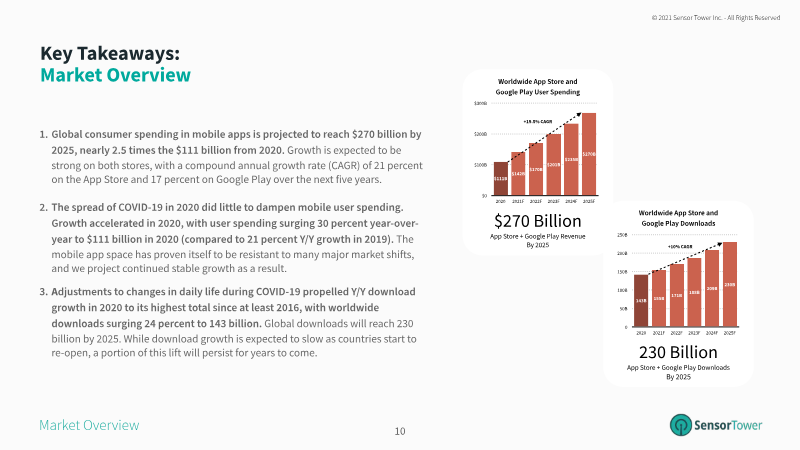
Global mobile consumer spending is projected to reach $270 billion by 2025.
Annual downloads are expected to hit 230 billion by 2025. The industry maintains a resilient growth trajectory.
Store performance
The App Store and Google Play sustain strong compound annual growth rates.
The App Store shows a 21% compound annual growth rate, while Google Play shows 17%. These stores continue to serve as the primary engines of the mobile economy.
Page 34 of the report202033
2021F42
2022F55
2023F58
2024F66
2025F74
European momentum
Europe is emerging as a high-growth territory with a 23% spending growth rate.
Consumer spending in Europe is growing at a 23% compound annual growth rate.
Page 18 of the report202013
2021F20
2022F25
2023F31
2024F36
2025F42
Non-gaming rise
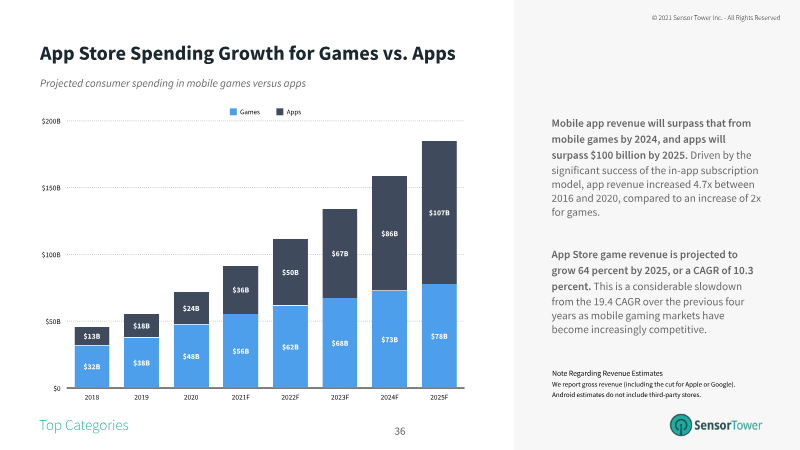
Non-gaming applications are projected to surpass gaming revenue on the App Store by 2024.
This transition is fueled by the widespread adoption of subscription-based business and lifestyle models.
Volume drivers
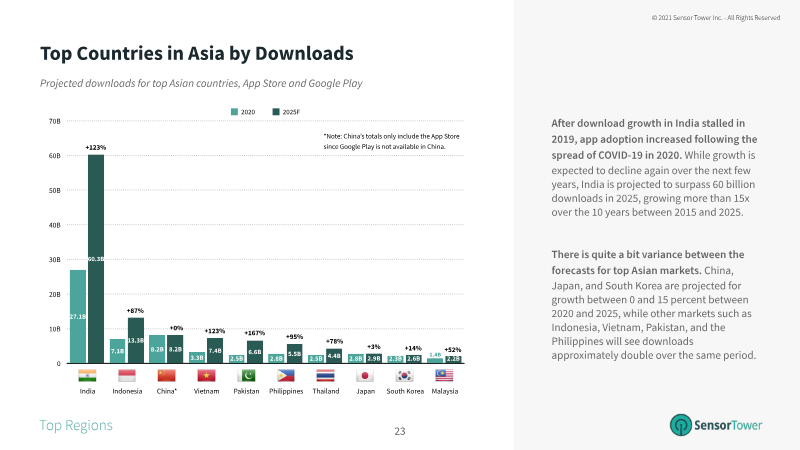
India, Indonesia, and the Philippines are becoming the primary drivers of download volume.
Adoption is slowing in mature markets like the United States and Germany. Emerging regions are now critical drivers of volume in the global mobile market.
1 / 5
Ask AI about this report