1 free read left. Create a free account for unlimited reading + AI research.
Create free accountArticle Replay. The Polish Journal of Game Studies
1 free read left. Create a free account for unlimited reading + AI research.
Create free accountArticleReplay. The Polish Journal of Game Studies
Distilling the key insights…
Animal Crossing: New Horizons functions as a complex site of tension between its marketed identity as a cozy, utopian simulation and the aggressive, exclusionary behaviors adopted by its player base. While the game encourages communal harmony, players frequently engage in the systematic rejection of villagers deemed aesthetically undesirable. This phenomenon is driven by the influence of online paratexts, including fan forums and community-driven tier lists, which codify rigid beauty standards. By labeling certain characters as "uglies," players transform their virtual islands into curated spaces where the selective exclusion of non-conforming entities is viewed as a prerequisite for achieving a perfect, controlled environment.
The pursuit of this digital utopia reveals a paradox where the desire for a relaxing, cozy experience necessitates antisocial actions. Players treat non-player characters as either assets or obstacles to their personal vision, shifting their role from passive participant to active designer and arbiter of social value. This behavior highlights how community discourse shapes individual gameplay, effectively turning the game’s social mechanics into a tool for enforcing aesthetic homogeneity. The player’s agency is thus defined by their ability to exert total control over their surroundings, often at the expense of the game’s intended spirit of inclusivity.
This analysis, situated within the context of the COVID-19 pandemic, underscores the intersection of digital social dynamics and the psychology of cozy gaming. By examining how players navigate these virtual environments, it becomes clear that the concept of coziness is not an inherent quality of the software, but rather a negotiated interaction between game mechanics, community-driven hierarchies, and the human impulse to curate one’s environment. Ultimately, the quest for a perfect island reveals that even in ostensibly gentle digital spaces, the drive for aesthetic perfection can foster exclusionary practices that mirror real-world social biases.
Each row is a game or company this document names, each column a document, oldest first. A mark means that document names it. Select a row to see those documents.
Replay. The Polish Journal of Game Studies · 2026
Replay. The Polish Journal of Game Studies · 2026



Replay. The Polish Journal of Game Studies · 2026
Replay. The Polish Journal of Game Studies · 2026
Replay. The Polish Journal of Game Studies · 2026
Replay. The Polish Journal of Game Studies · 2026
Replay. The Polish Journal of Game Studies · 2024
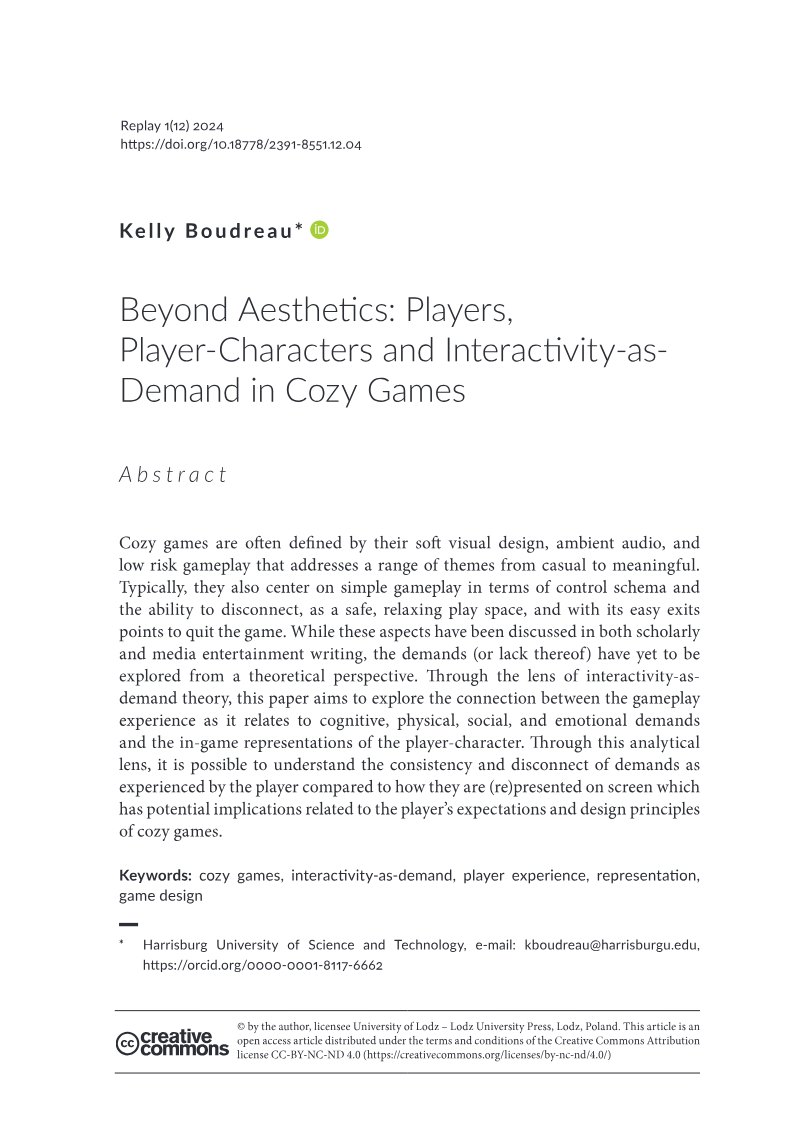
Replay. The Polish Journal of Game Studies · 2024
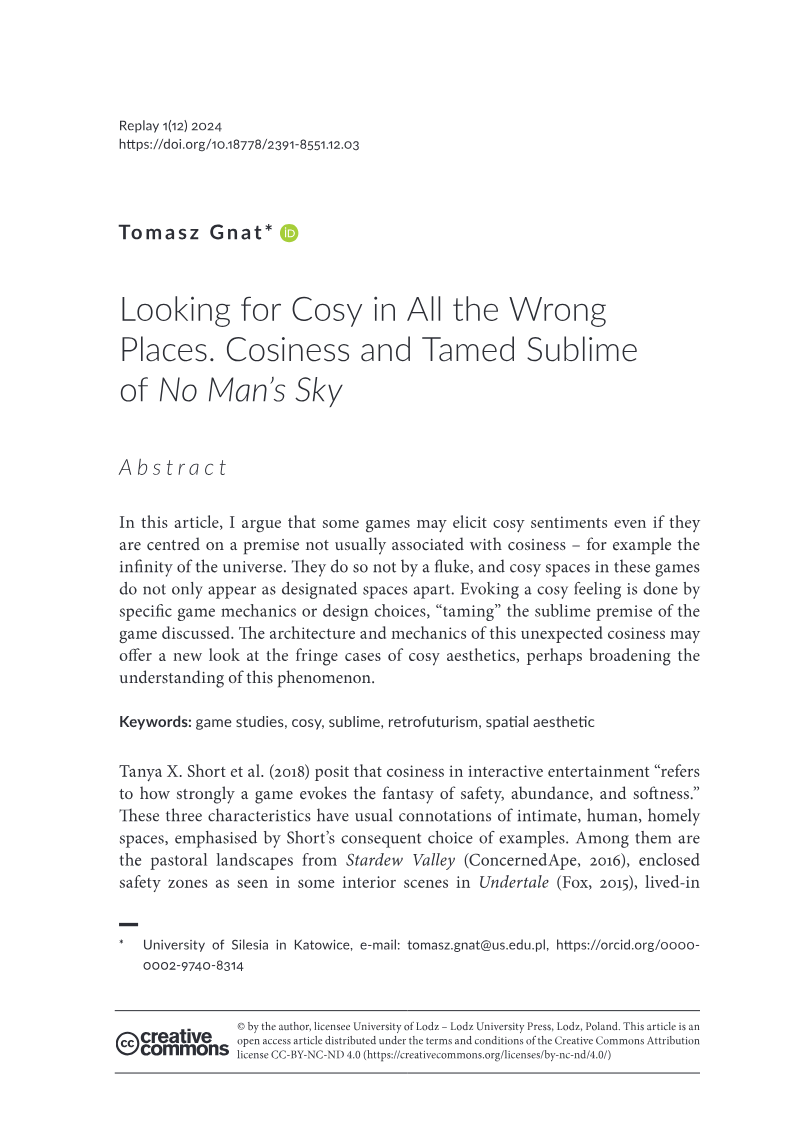
Replay. The Polish Journal of Game Studies · 2024
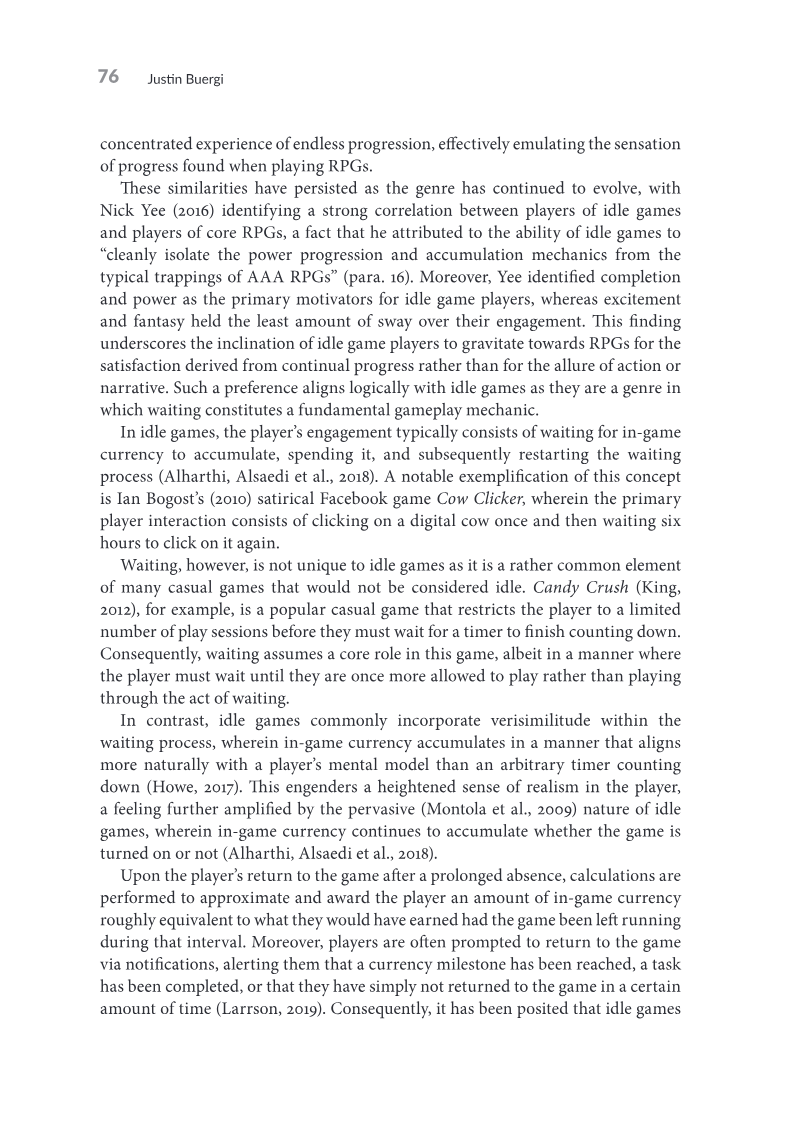
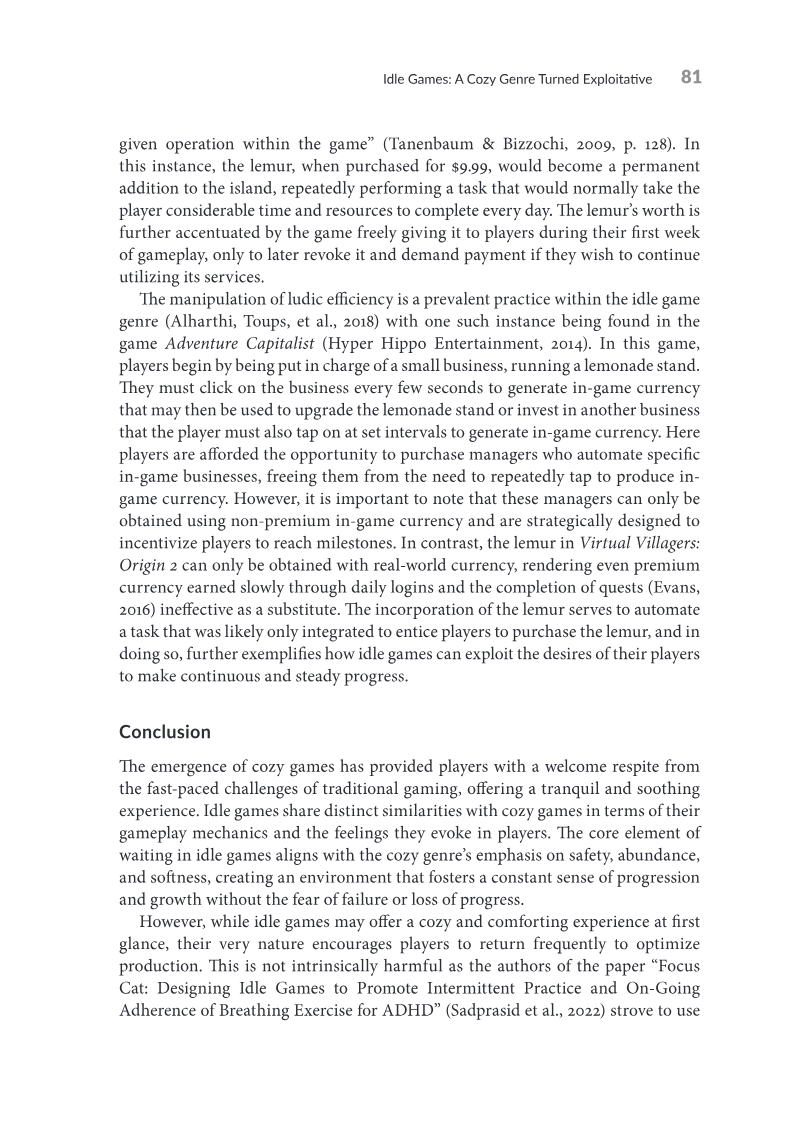
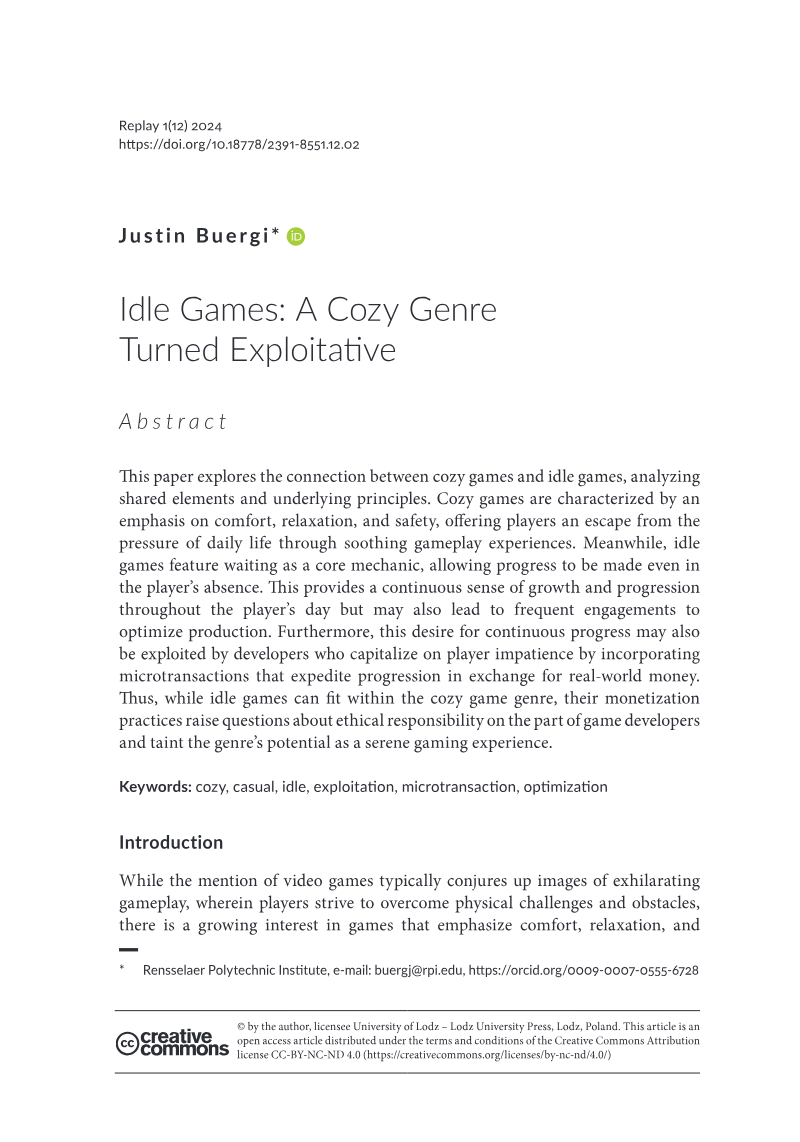
Replay. The Polish Journal of Game Studies · 2024
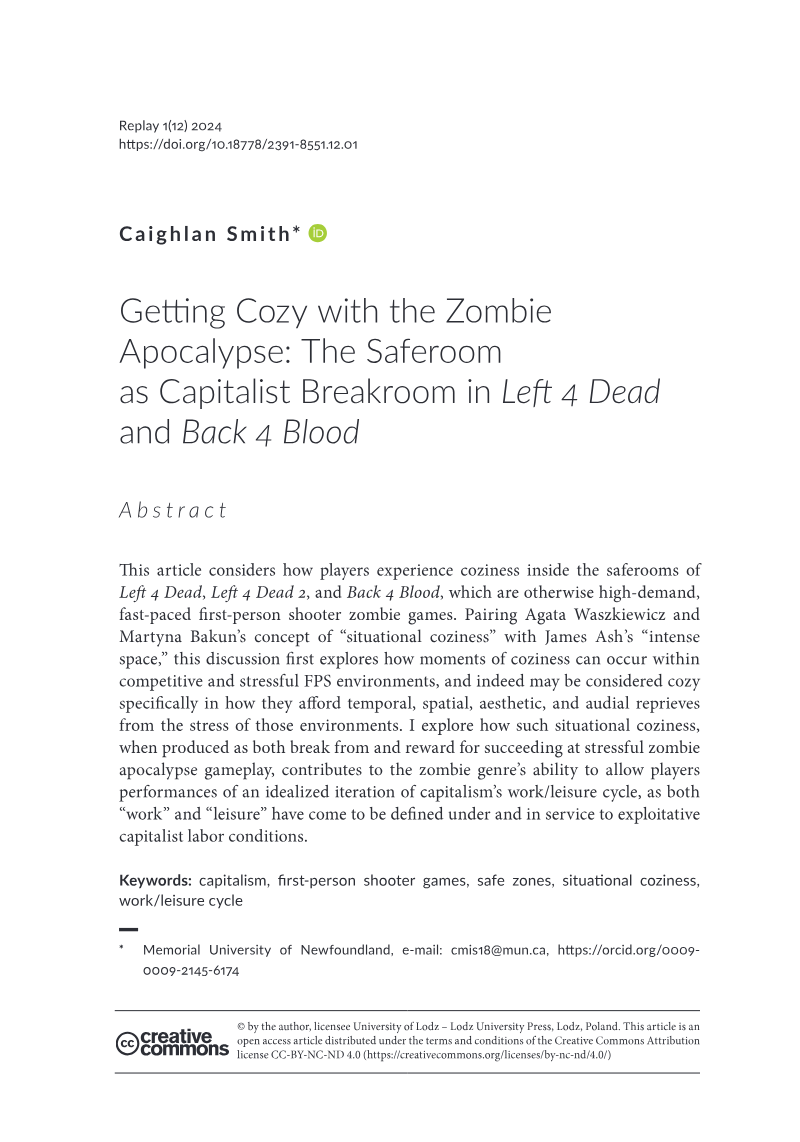
Replay. The Polish Journal of Game Studies · 2024
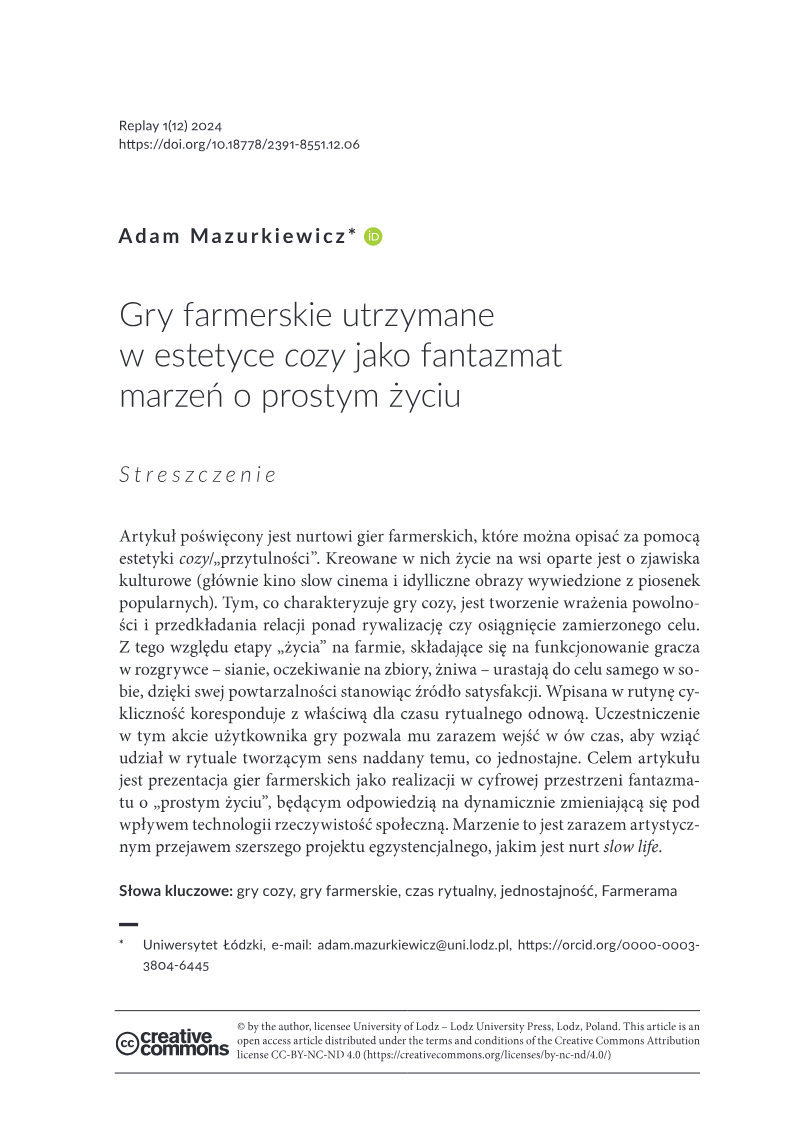
Replay. The Polish Journal of Game Studies · 2024
DiGRA · 2009