
Press Start
Open-access student and early-career game studies journal hosted by the University of Glasgow.
Documents
A Cross-Game Look at Transgender Representation in Video Games
Video games have historically relied on a narrow set of tropes when depicting transgender characters, frequently pathologizing gender identity through narratives centered on dysphoria, mental illness, or the "wrong-body" model.
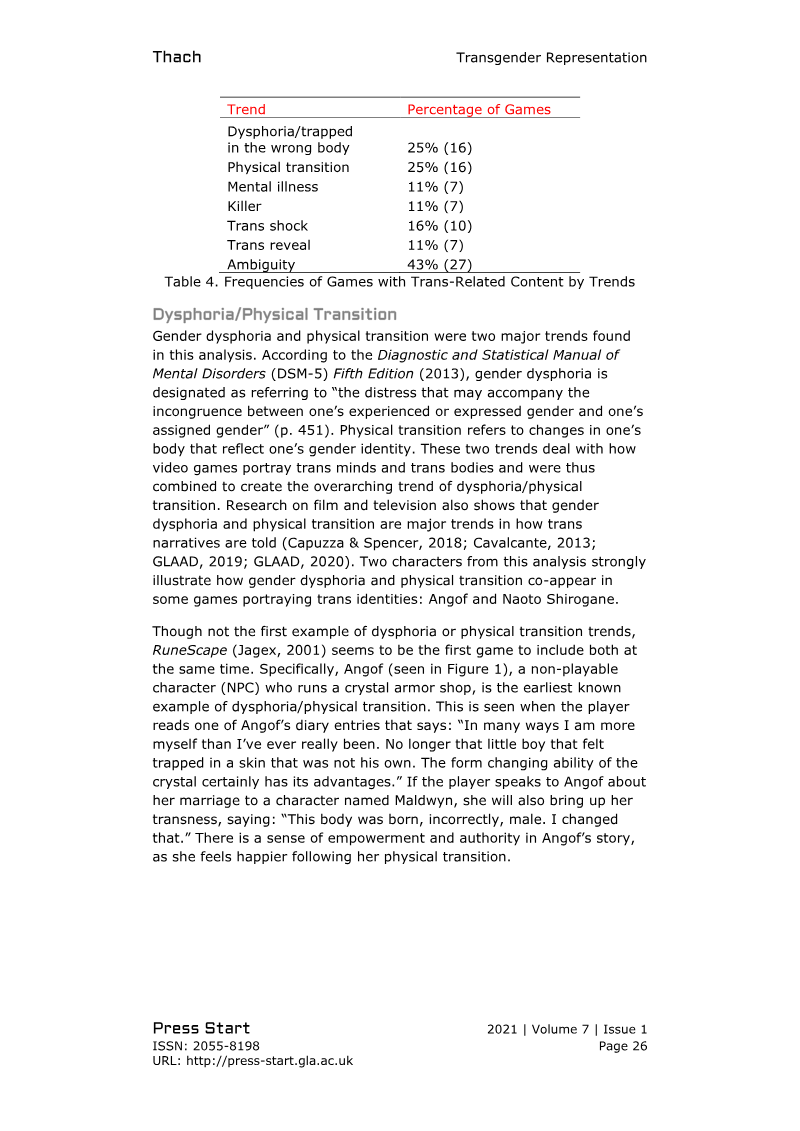
- An analysis of 63 games featuring transgender characters from 1988–2019 identified four primary representation trends: dysphoria/physical transition, mentally ill killers, trans shock/reveal, and gender ambiguity.
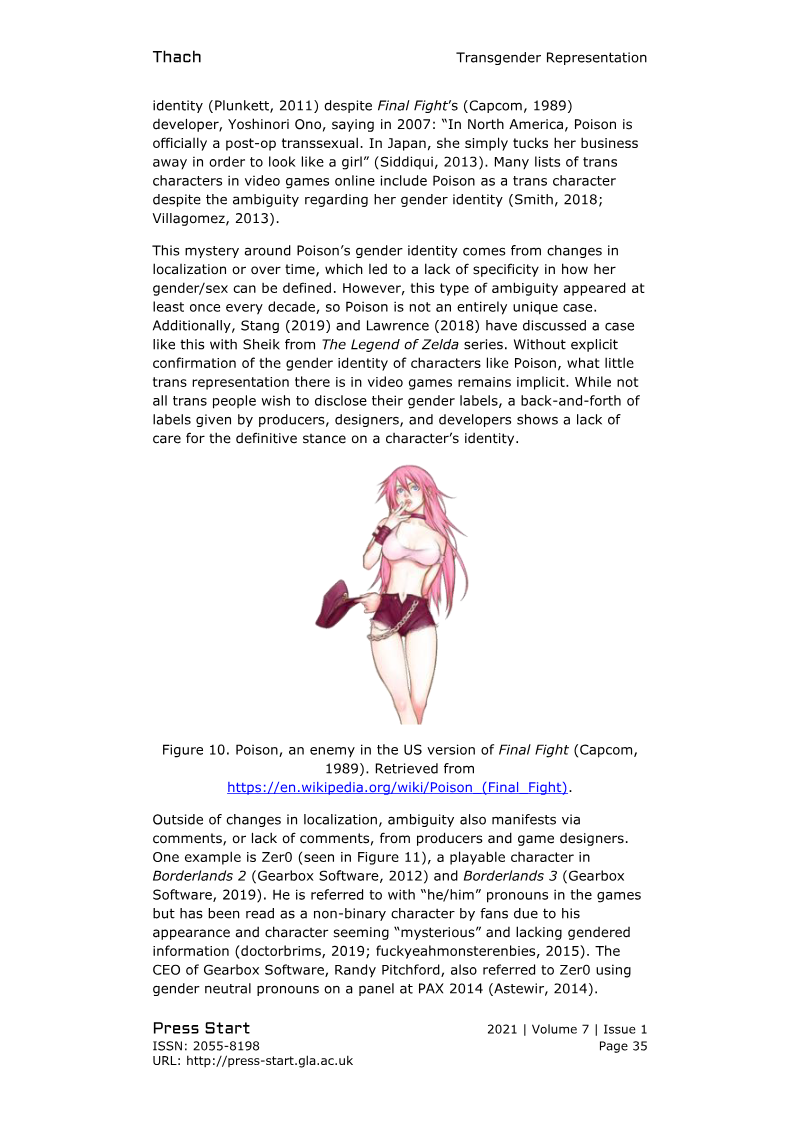
- Gender ambiguity is the largest and most understudied trend in video game representation, often manifesting as implicit transness rather than explicit character identity.
- Video game representations of transgender individuals largely mirror those found in film and television, frequently relying on tropes of suffering, violence, and the 'wrong-body' medicalization model.

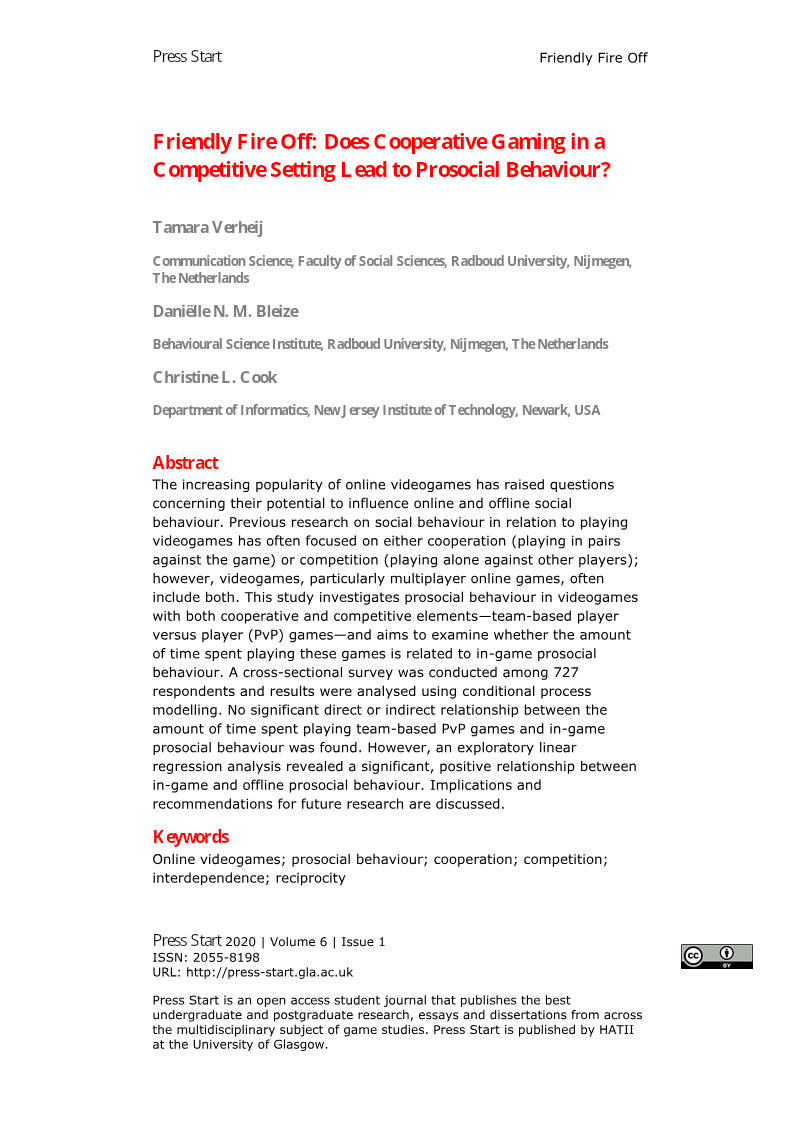
Friendly Fire Off: Does Cooperative Gaming in a Competitive Setting Lead to Prosocial Behaviour?
The relationship between competitive team-based gaming and prosocial behavior is more nuanced than traditional narratives suggest.
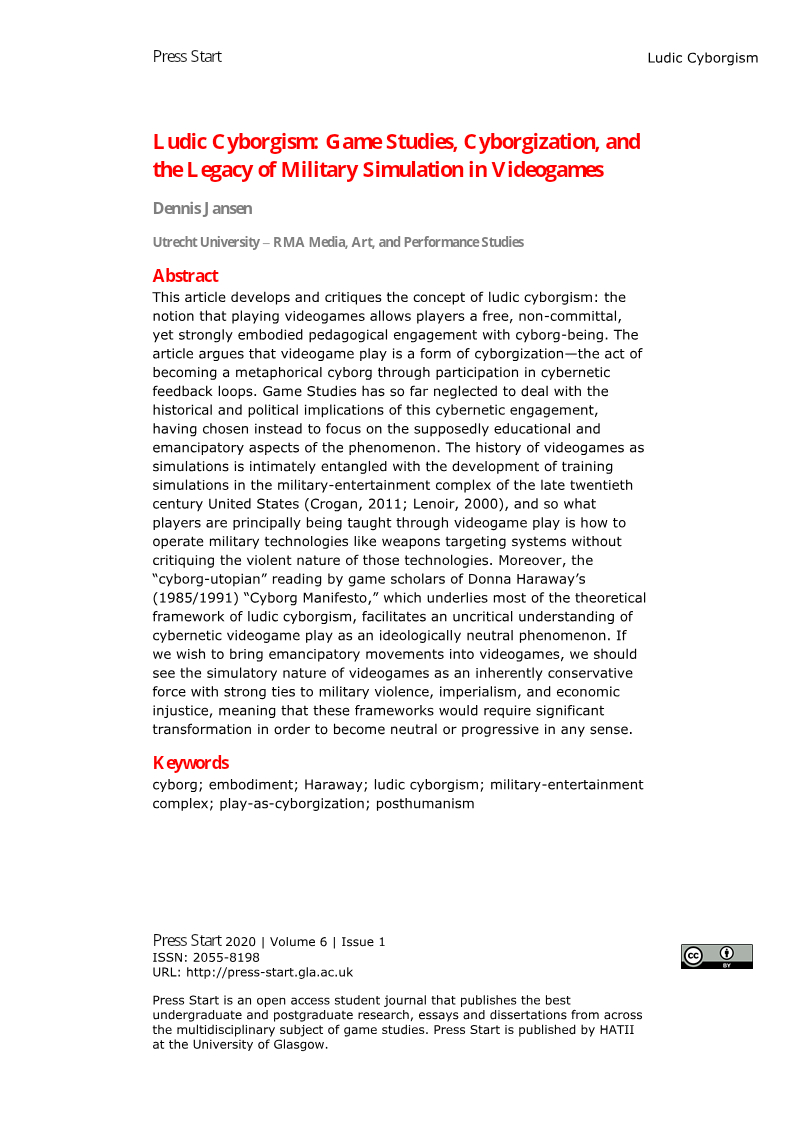
Ludic Cyborgism: Game Studies, Cyborgization, and the Legacy of Military Simulation
Ludic cyborgism characterizes the act of playing videogames as a cybernetic feedback loop that integrates the human player with machine logic.
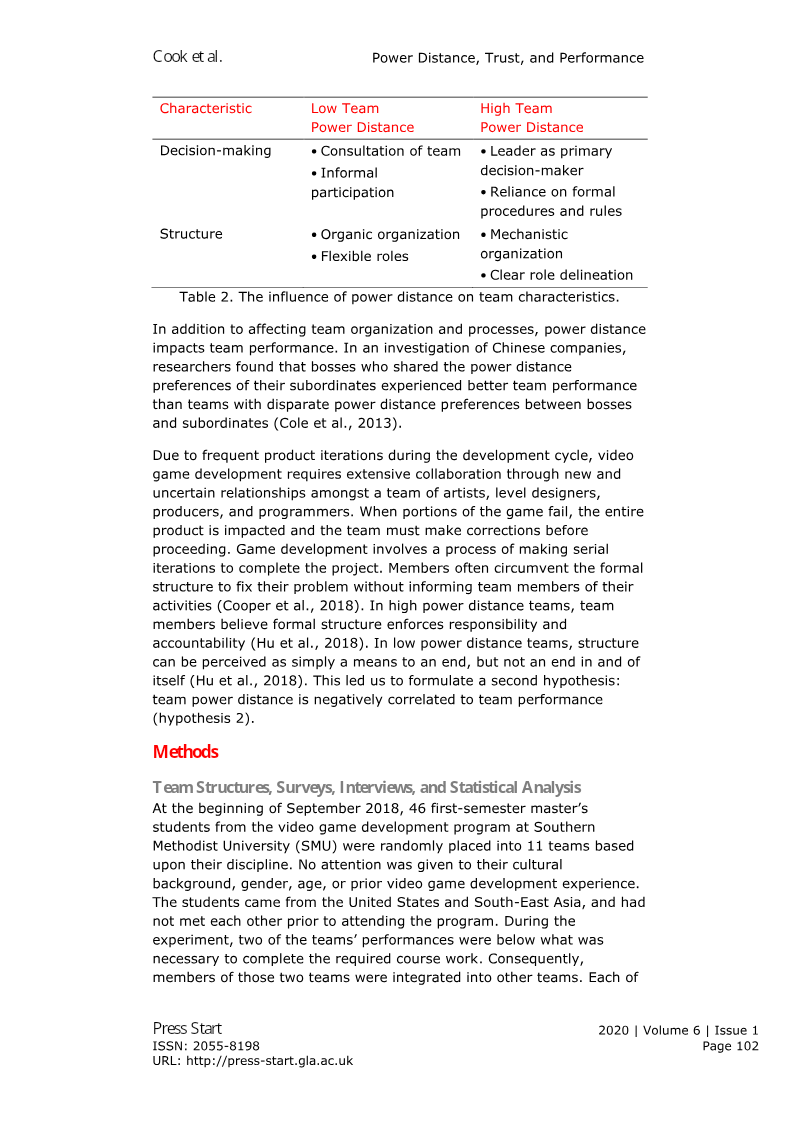
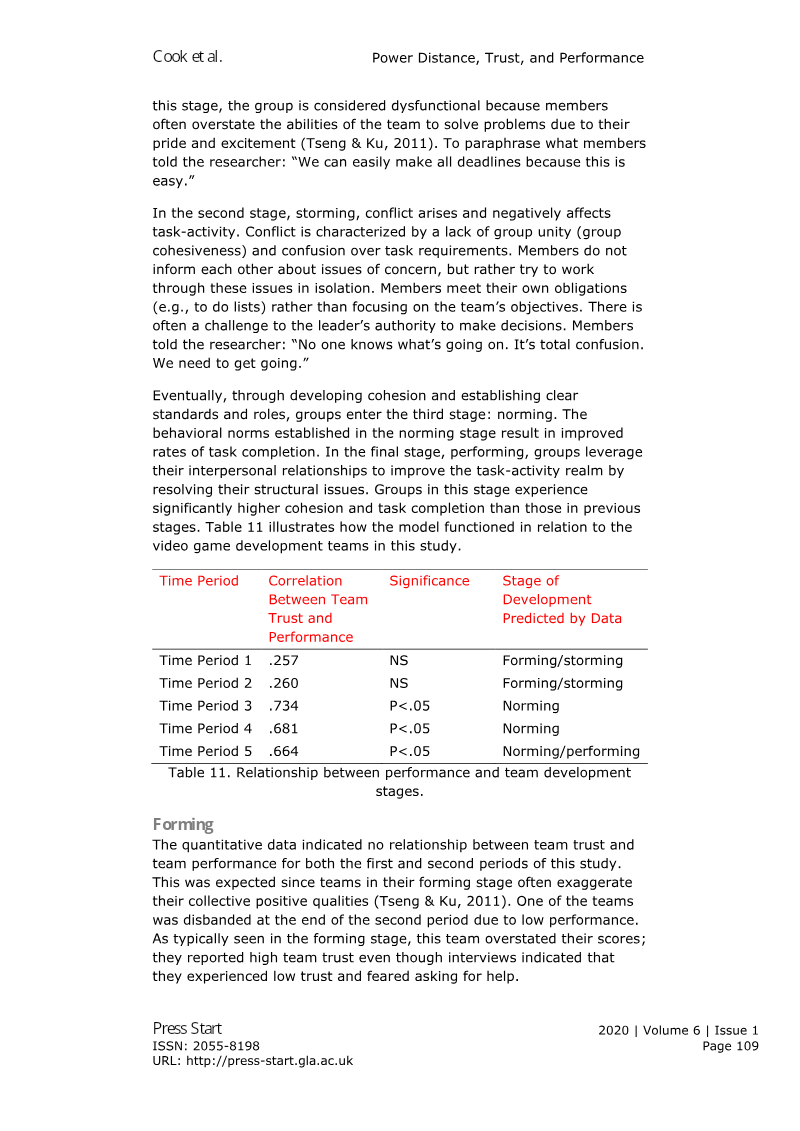
The Relationship Between Power Distance, Trust, and Performance in Video Game Development Teams
Effective video game development relies heavily on interpersonal dynamics, specifically the interplay between power distance and intra-team trust.
Illuminating the Spectre: Challenging the Assumed Power of the Controller-Holder
This analysis challenges the traditional binary between active players and passive spectators in video games, arguing that spectators perform essential, often invisible labor that contributes to the meaning-making and success of gameplay.
- Spectators, termed 'spectres,' perform active, valuable labor by generating knowledge and providing guidance, yet they are traditionally relegated to a passive 'backseat' role due to power imbalances in gaming contexts.
- The 'Watch of the Spectre' software overlay experiment demonstrated that by granting spectators control over screen visibility via interactive 'spotlights,' their labor can be integrated directly into the gameplay loop.
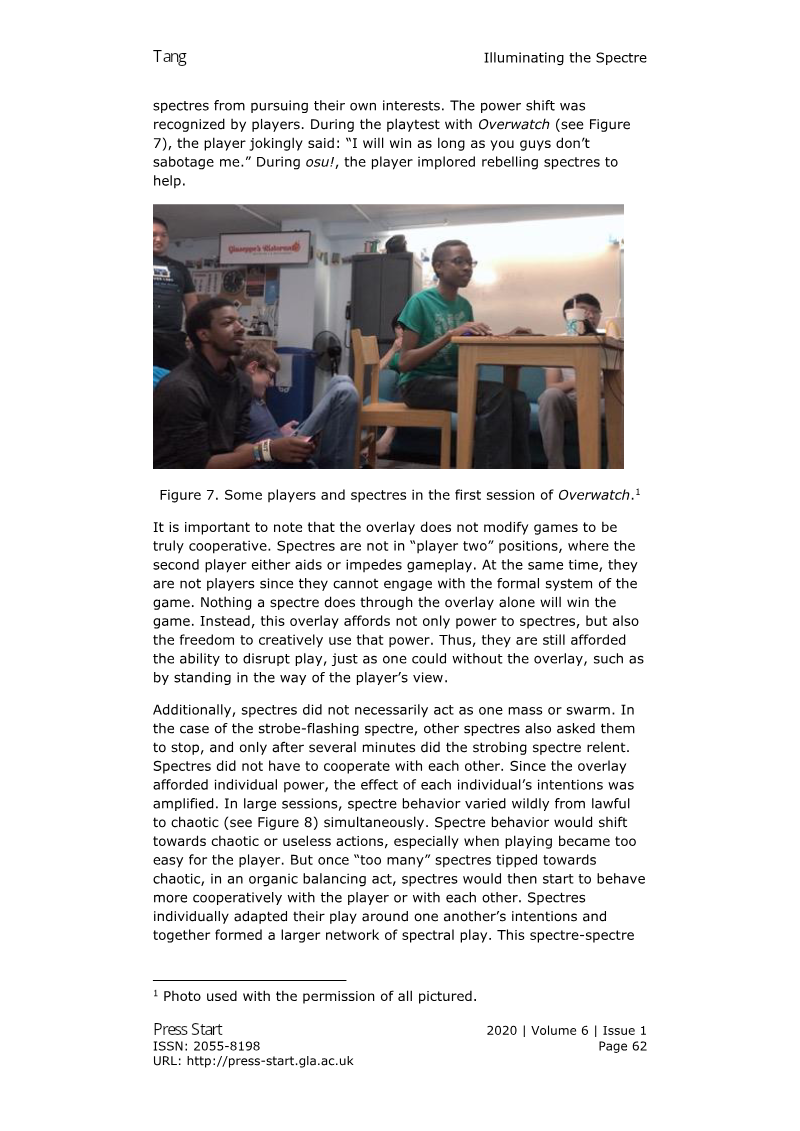
- Playtesting showed that spectators naturally form cooperative networks to assist players, such as highlighting threats, managing UI elements, or coordinating collective strategies to improve performance.
Tekken's Mokujin and the Disjunctive Synthesis of Gender Performativity
The Tekken character Mokujin serves as a potent heuristic for understanding gender performativity, functioning as a metaphor for the fluid and unpredictable nature of identity.
- The character Mokujin from the Tekken franchise serves as a metaphor for gender performativity, as its algorithmic ability to randomly adopt different fighting styles mirrors the fluid and unpredictable nature of selecting gender identities.
- Gilles Deleuze’s concept of 'disjunctive synthesis' is applied to explain how individuals navigate a spectrum of gender options, framing the selection of a specific identity as an affirmation of a broader, univocal existence.
- The number of available gender options has grown significantly in recent years, with a 2014 ABC News report identifying 58 categories, a list that has since expanded through further research and the emergence of platforms like the Nonbinary Wiki.
Stasis and Stillness: Moments of Inaction in Games
Video games are traditionally defined by constant interaction and high-velocity progression, yet moments of inaction serve as a critical counterpoint to these industry norms.
Walking Simulators and Interactive Fiction in the Composition Classroom
Integrating interactive fiction and walking simulators into composition curricula transforms traditional writing instruction by shifting the focus from static essays to the creation of immersive, narrative-driven digital environments.
- Interactive fiction (IF) platforms like Twine and Ink Script allow students to practice digital literacy and worldbuilding by creating text-based games that function as explorable, unfolding narratives.
- Walking simulators such as Firewatch and The Stanley Parable serve as effective pedagogical models because their slow-paced, non-violent, and exploratory nature emphasizes narrative complexity and rhetorical possibilities over twitch-based reflexes.
- Building IF games in the classroom scaffolds traditional writing skills—including structure, word choice, and revision—while simultaneously teaching the logic of programming and procedural rhetoric.
Reading, Writing, Lexigraphing: Active Passivity as Queer Play in Walking Simulators
Walking simulators represent a critical departure from the industry’s traditional emphasis on mastery, productivity, and constant action.
- Walking simulators challenge the traditional gaming industry focus on active, productive gameplay by elevating 'active passivity'—a state where slow, contemplative movement and reading are recognized as valid forms of player agency.
- The authors introduce the term 'lexigraphing' to describe the recursive act of walking through a gamespace while reading its texts, which functions as a queer subversion of the standard expectation that players must constantly act and produce.
- By rejecting the binary between 'readerly' (passive consumption) and 'writerly' (active production) texts, walking simulators allow players to engage in a collage-like narrative experience where they choose their own order of discovery and interpretation.
Shifting Borders: Walking Simulators, Artgames, and the Categorical Compulsions of Gaming Discourse
The gaming industry frequently relies on restrictive taxonomic labels such as walking simulator and artgame to categorize digital experiences, yet these classifications often fail to capture the nuance of contemporary interactive media.
- Gaming discourse frequently relies on restrictive, binary categories like 'artgame' and 'walking simulator' to legitimize the medium, often mirroring the defensive categorization seen in traditional arts and literature.
- Bill Viola's 2007 gallery installation 'The Night Journey' and Connor Sherlock's 2015 'Walking Simulator A Month Club' serve as case studies for how experimental games resist formal classification by prioritizing disorientation and non-goal-oriented play.
- The term 'artgame' has expanded into a broad, often ill-defined taxonomy since its 2003 definition by Tiffany Holmes, now encompassing sub-genres like empathy games, altgames, and serious games.
The Walking Simulator’s Generic Experiences
The walking simulator functions as a fluid, culturally constructed genre defined by its emphasis on slow, solitary exploration rather than rigid structural mechanics.
From Walking Simulator to Reflective Simulator: A Practice-Based Perspective
The reflective simulator emerges as a sophisticated evolution of the traditional walking simulator, shifting the focus of interactive media from mere exploration to the facilitation of transformative, introspective experiences.
Do you work at Press Start? Get a free report of how these documents are read and cited here.