
Press Start
Open-access student and early-career game studies journal hosted by the University of Glasgow.
Documents
What Factors Do Players Perceive as Methods of Retention in Battle Royale Games?
Battle Royale games rely on a complex interplay of psychological and mechanical drivers to maintain long-term player engagement.
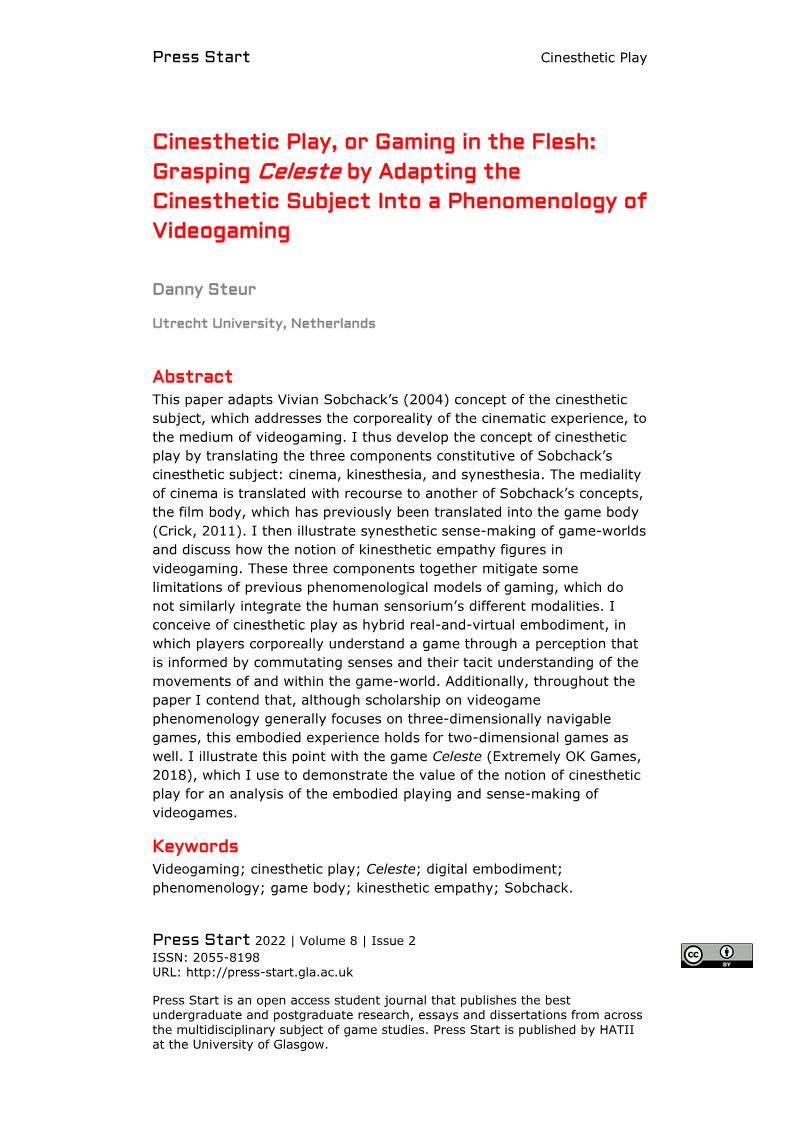
Cinesthetic Play, or Gaming in the Flesh: Grasping Celeste by Adapting the Cinesthetic Subject
Cinesthetic play serves as a robust phenomenological framework for understanding how players engage with digital environments through a hybrid, multisensory embodiment.
- The concept of 'cinesthetic play' provides a new phenomenological framework for understanding videogaming by integrating three sensory modalities: cinema, kinesthesia, and synesthesia.
- Unlike previous models that focus primarily on three-dimensional environments, cinesthetic play demonstrates that embodied engagement and sense-making occur equally in two-dimensional, side-scrolling games like Celeste.
- Cinesthetic play functions as a hybrid real-and-virtual embodiment where players process game-worlds through a combination of visual input, auditory cues, and tacit knowledge of movement.
Valorant and the Platformization of Free-to-Play Games: Framing the Work of Content Creators as a Cultural Commodity
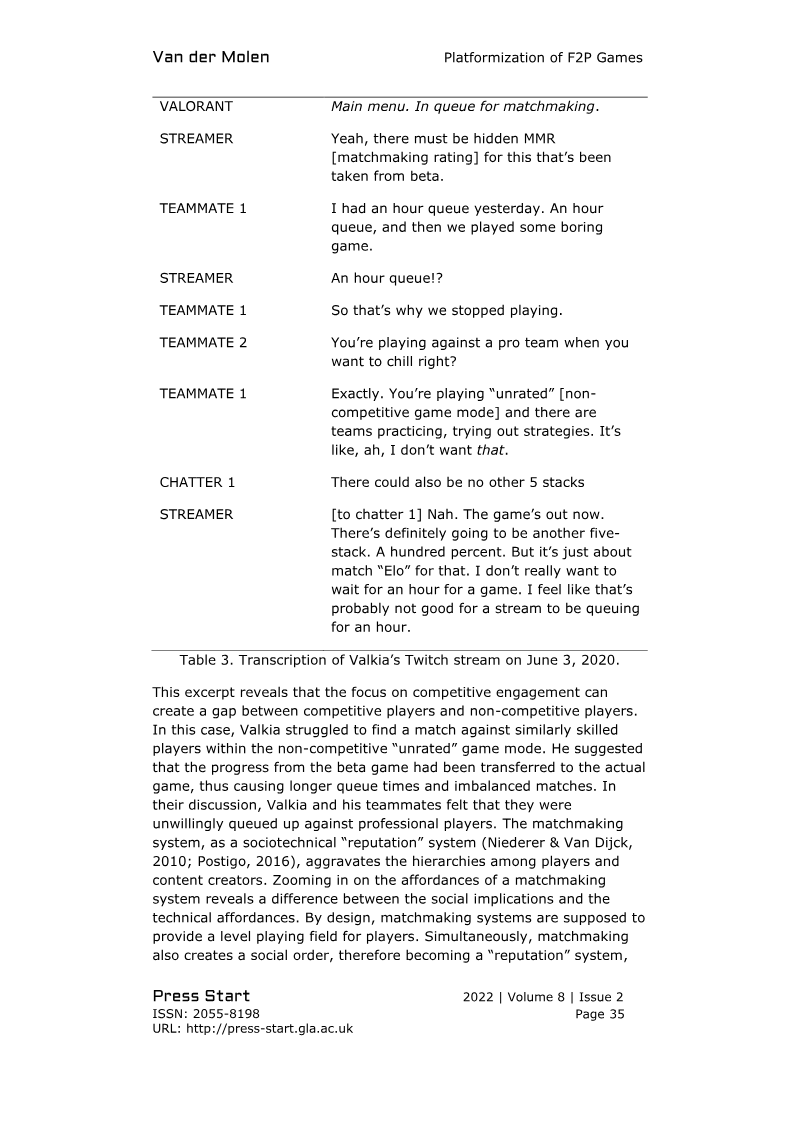
Valorant functions as a sophisticated sociotechnical system that integrates livestreaming infrastructure directly into its free-to-play business model.
Understanding Extended Testing Feedback: Positioning Platforms as a Key Factor in Independent Game Development
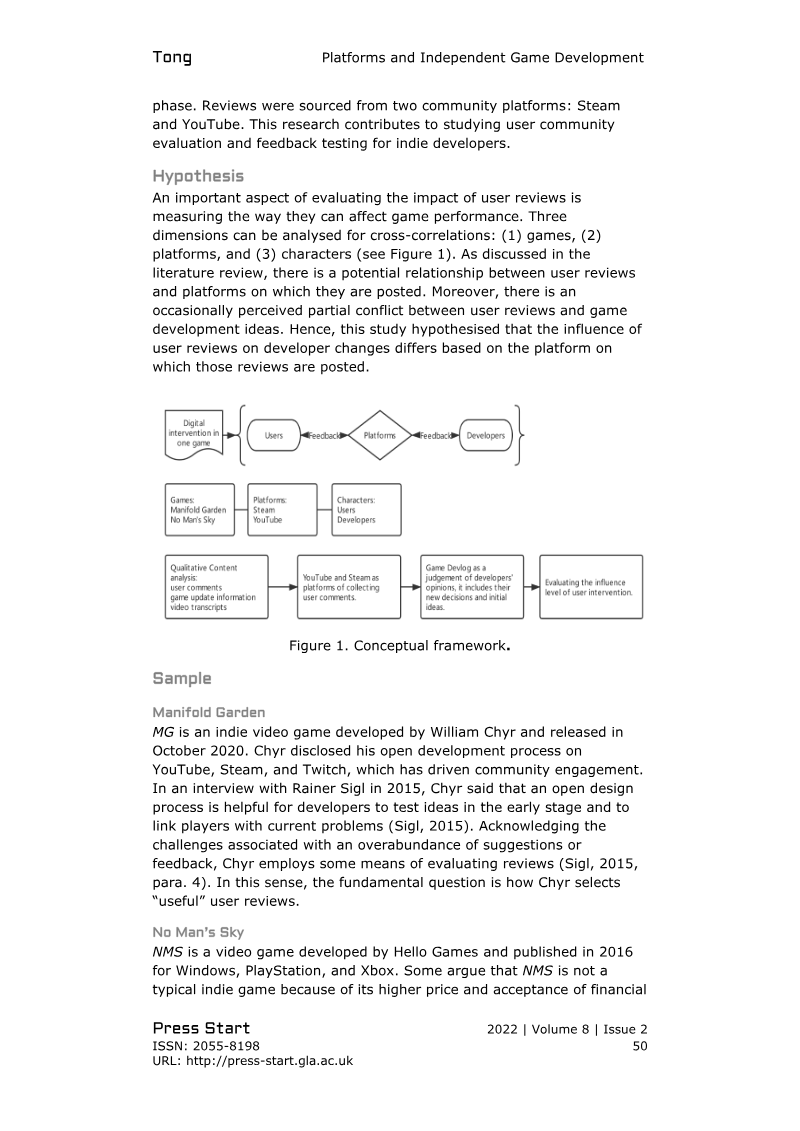
Independent game development relies heavily on the strategic integration of user feedback during extended testing phases, yet the efficacy of this process depends on understanding the distinct nature of different digital platforms.
Visual Novel Based Education in English Literature: A Study on Student Engagement
Integrating visual novels into high school English literature curricula serves as a potent pedagogical strategy for increasing student engagement and academic interest.
Composing the Hero: Musical Gender Construction of Fantasy RPG Heroes
Musical scores in fantasy role-playing games serve as critical tools for constructing gendered heroic identities, functioning as a bridge between narrative intent and player experience.
- Video game scores utilize established semiotics from film and opera to reinforce gendered stereotypes, with composers intentionally or inadvertently aligning musical themes with traditional narrative tropes of heroism.
- In God of War (2018), Kratos' theme uses aggressive brass, low strings, and heavy percussion to reinforce 'militarized masculinity,' triggering during active combat to force players to internalize his heroic actions as masculine.
- Aloy’s theme in Horizon: Zero Dawn (2017) employs a cello and mezzo-soprano voice to evoke 'feminine' emotionality and suffering, contrasting with the hypermasculine, action-oriented musical cues of Kratos.
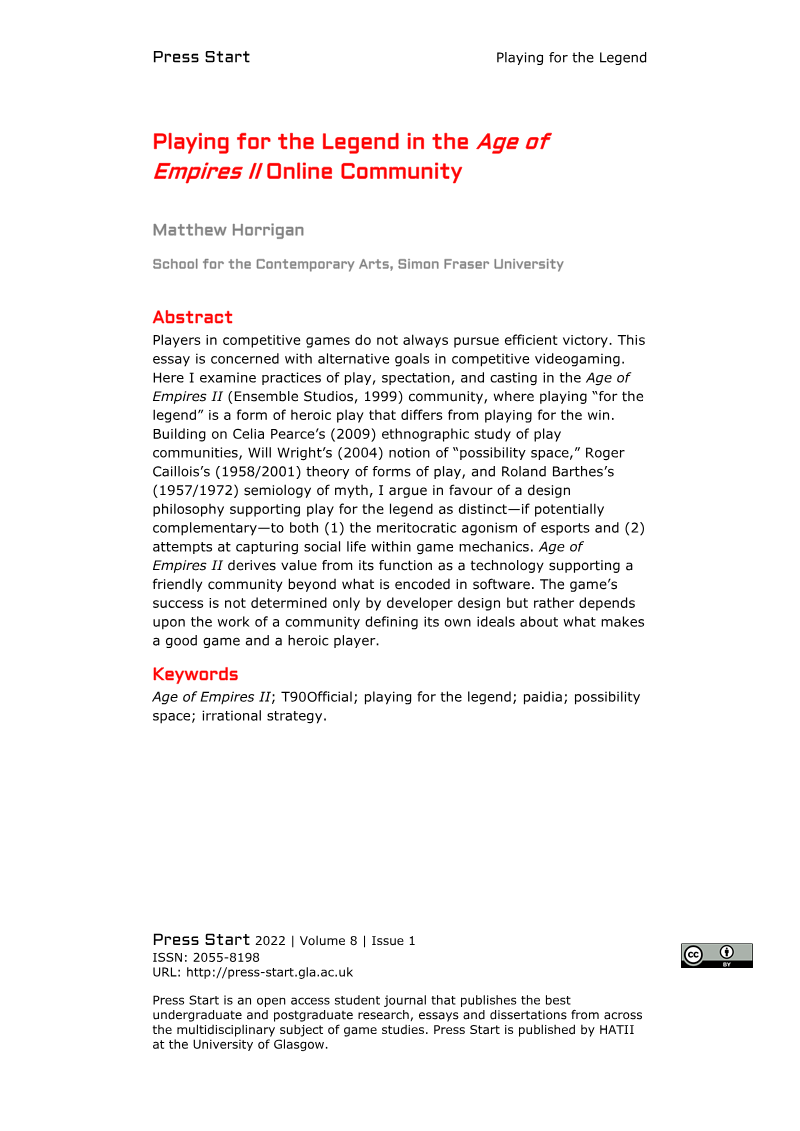
Playing for the Legend in the Age of Empires II Online Community
The Age of Empires II online community demonstrates a distinct departure from the rigid meritocracy typically associated with professional esports.
- The Age of Empires II (AoE2) community distinguishes between 'esports' meritocracy and 'playing for the legend,' a form of heroic play that prioritizes ostentatious, irrational strategies over efficient victory.
- Community-driven spectation and casting, notably through figures like T90Official, transform amateur matches into social events, allowing players to build reputations and lore independent of professional tournament circuits.
- The AoE2 community actively shapes the game's value through a 'social metagame' that includes custom mapmaking, meme-based humor, and house rules, demonstrating that player-defined ideals can supersede original developer design.
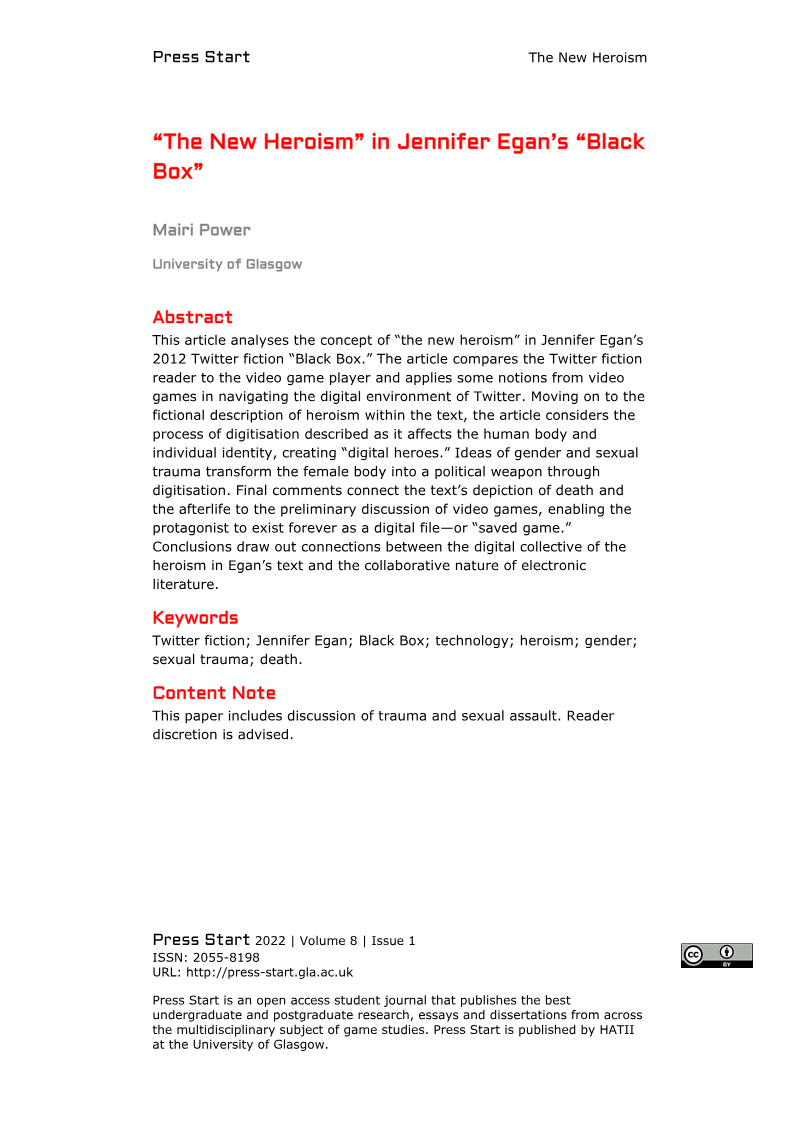
“The New Heroism” in Jennifer Egan’s “Black Box”
Jennifer Egan’s Black Box redefines the concept of heroism by framing the protagonist as a digital agent whose identity is systematically dismantled to serve a collective, technologically augmented mission.
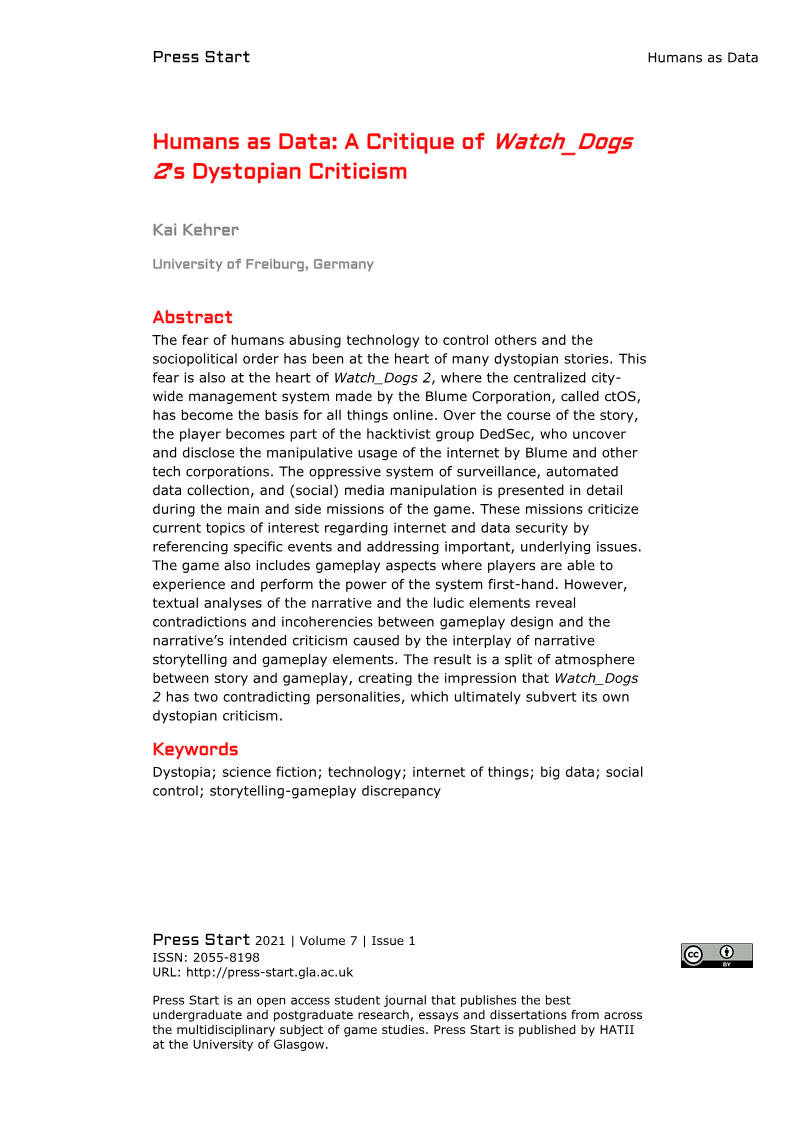
Humans as Data: A Critique of Watch_Dogs 2's Dystopian Criticism
Watch_Dogs 2 attempts a sophisticated critique of modern surveillance, algorithmic bias, and the unchecked power of data-driven corporations.
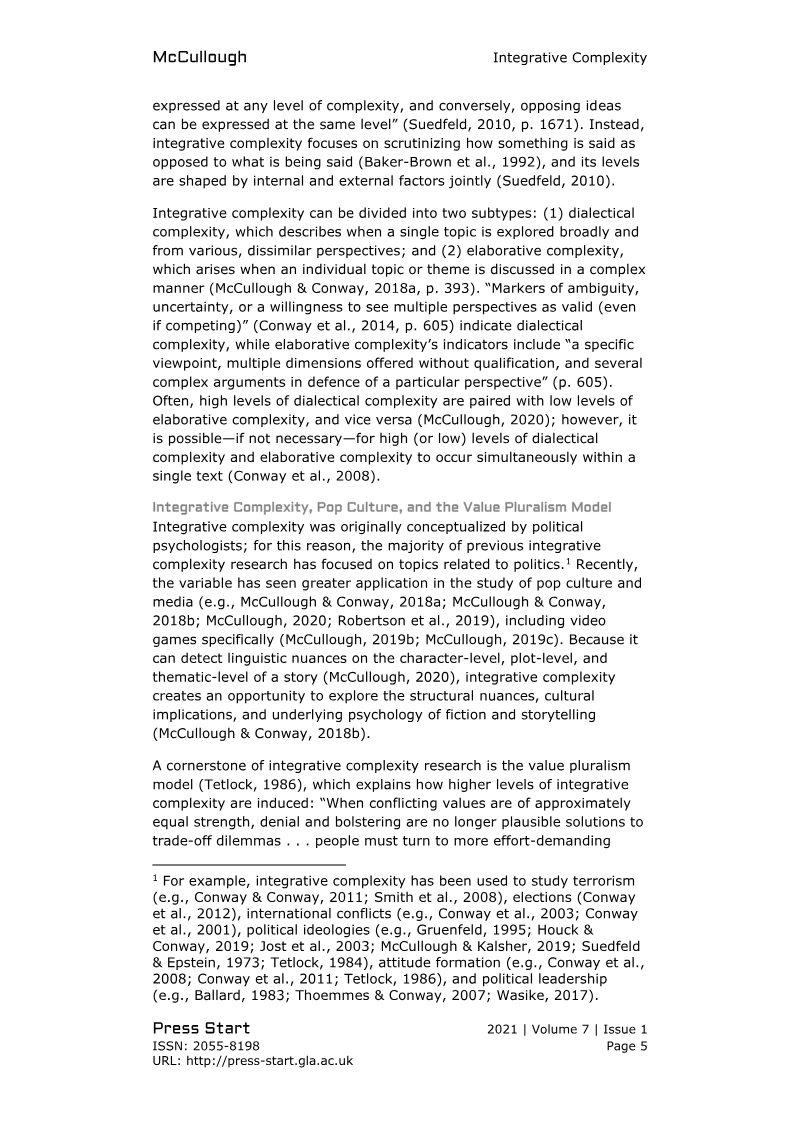
Integrative Complexity, Horror, and Gender: A Linguistic Case Study of Until Dawn
Integrative complexity serves as a critical linguistic metric for evaluating cognitive structure and narrative agency within the horror video game Until Dawn.
- A linguistic analysis of the 2015 horror game Until Dawn reveals that female characters consistently score significantly lower than male characters in integrative complexity.
- The study attributes the lower complexity scores of female characters to their reduced narrative agency and their role as passive subjects compared to male characters, who serve as primary sources of conflict.
- Male characters in the game are frequently positioned as key decision-makers who influence the survival or death of others, whereas female characters like Jessica are depicted with limited control over their own narrative outcomes.
Posthumanism in Outer Wilds
Outer Wilds functions as a profound exploration of posthumanist ethics, utilizing its narrative structure to challenge anthropocentric perspectives in the face of inevitable environmental collapse.
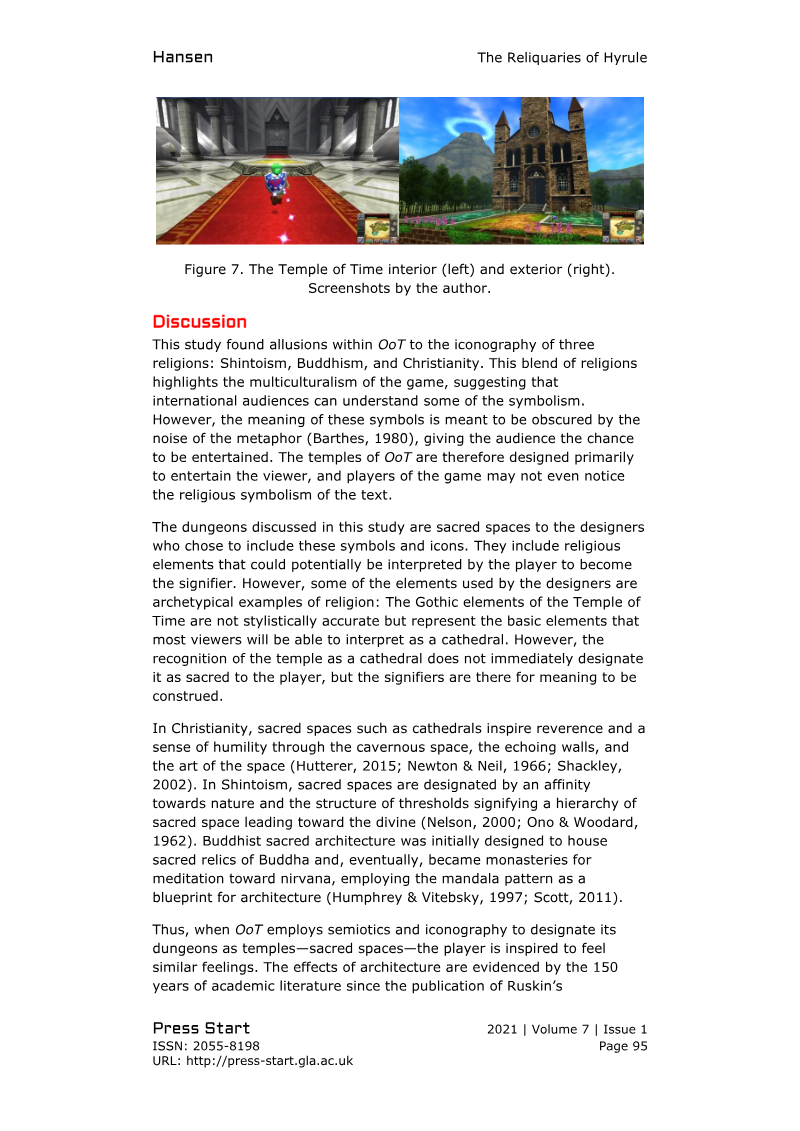
The Reliquaries of Hyrule: A Semiotic and Iconographic Analysis of Sacred Architecture Within Ocarina of Time
The temples within The Legend of Zelda: Ocarina of Time function as sophisticated reliquaries that mirror the structural and symbolic characteristics of sacred architecture found in Shinto, Buddhist, and Christian traditions.
Do you work at Press Start? Get a free report of how these documents are read and cited here.