1 free read left. Create a free account for unlimited reading + AI research.
Create free accountWhitepaper Press Start
1 free read left. Create a free account for unlimited reading + AI research.
Create free accountWhitepaperPress Start
Distilling the key insights…
The reflective simulator emerges as a sophisticated evolution of the traditional walking simulator, shifting the focus of interactive media from mere exploration to the facilitation of transformative, introspective experiences. By grounding game design in John Dewey’s pragmatist philosophy and Donald Schön’s epistemology of practice, this framework posits that games can serve as deliberate tools for personal growth. The core thesis argues that when designers prioritize deep empathy and tailor narrative contexts to specific subjective experiences, they can move beyond conventional metrics of competitiveness or entertainment to foster profound psychological insight.
The practical application of this model is demonstrated through the development of Intervalle, a prototype designed to recreate significant personal memories and artifacts for a single player. This case study confirms that minimalist mechanics, when integrated into a holistic and circular design process, effectively trigger deep reflection. The player’s engagement with the game resulted in a tangible shift in perspective regarding personal relationships and individual concerns, validating the potential for interactive media to act as a catalyst for meaningful self-examination.
This research advocates for a practice-based approach that centers the designer’s role in crafting intimate, empathetic environments. By moving away from the reductive label of walking simulators, the reflective simulator framework establishes a new standard for evaluating games that prioritize aesthetic and empathetic depth. While the current scope is limited to a single-player, highly personalized context, the findings suggest that the reflective simulator model offers a robust foundation for future game development aimed at creating lasting, life-changing impacts through digital interaction.

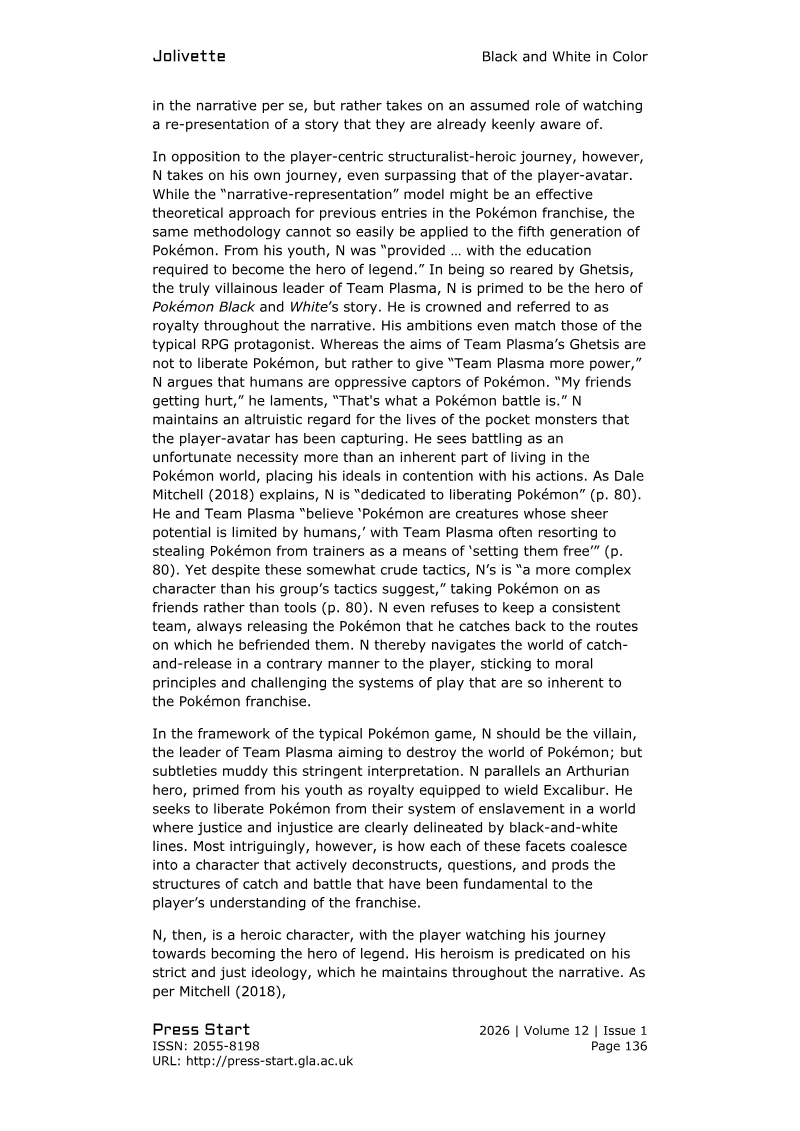
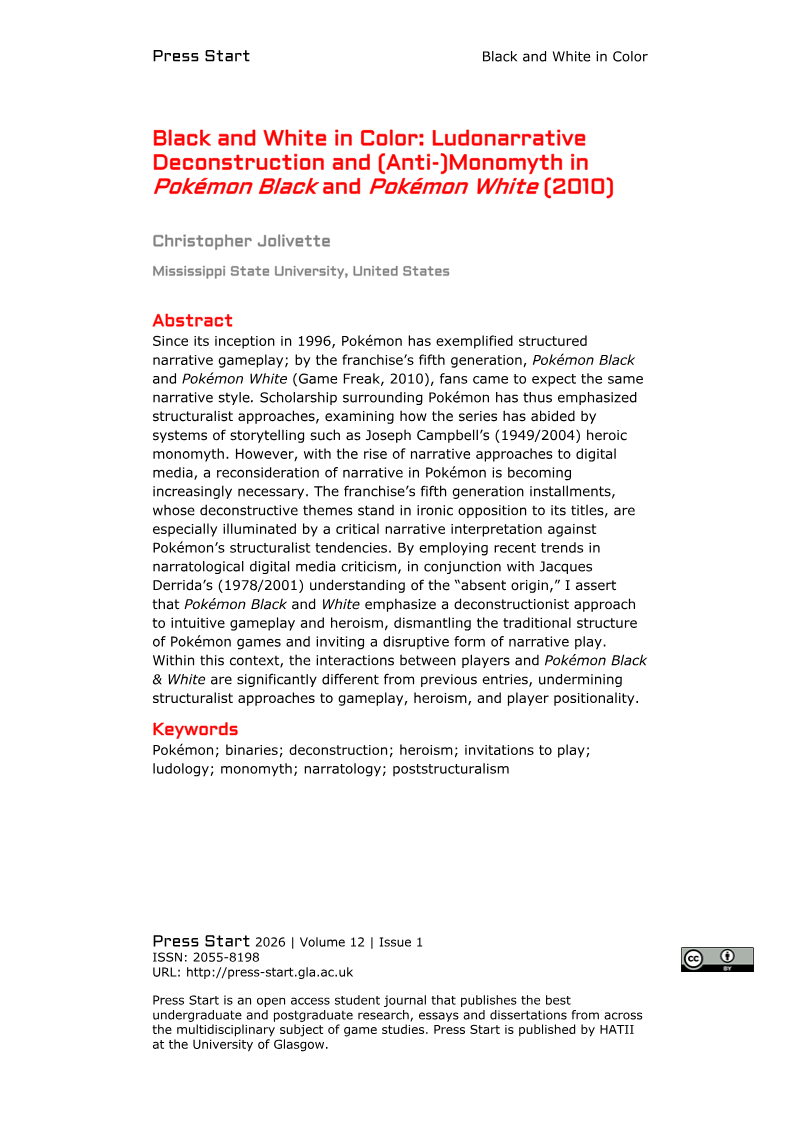
Press Start · 2026
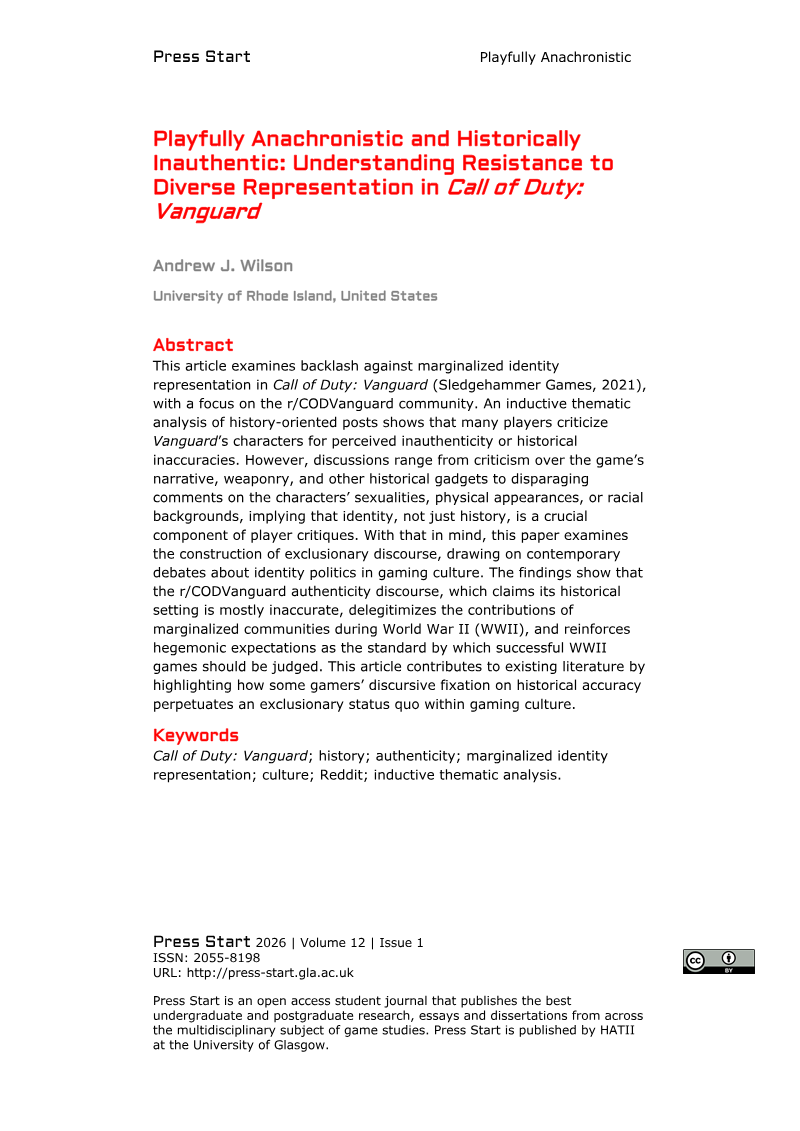
Press Start · 2026
Press Start · 2026
Press Start · 2026
Press Start · 2026
Press Start · 2026
Press Start · 2026
Press Start · 2026
Press Start · 2025
Press Start · 2025
Press Start · 2025
Press Start · 2024
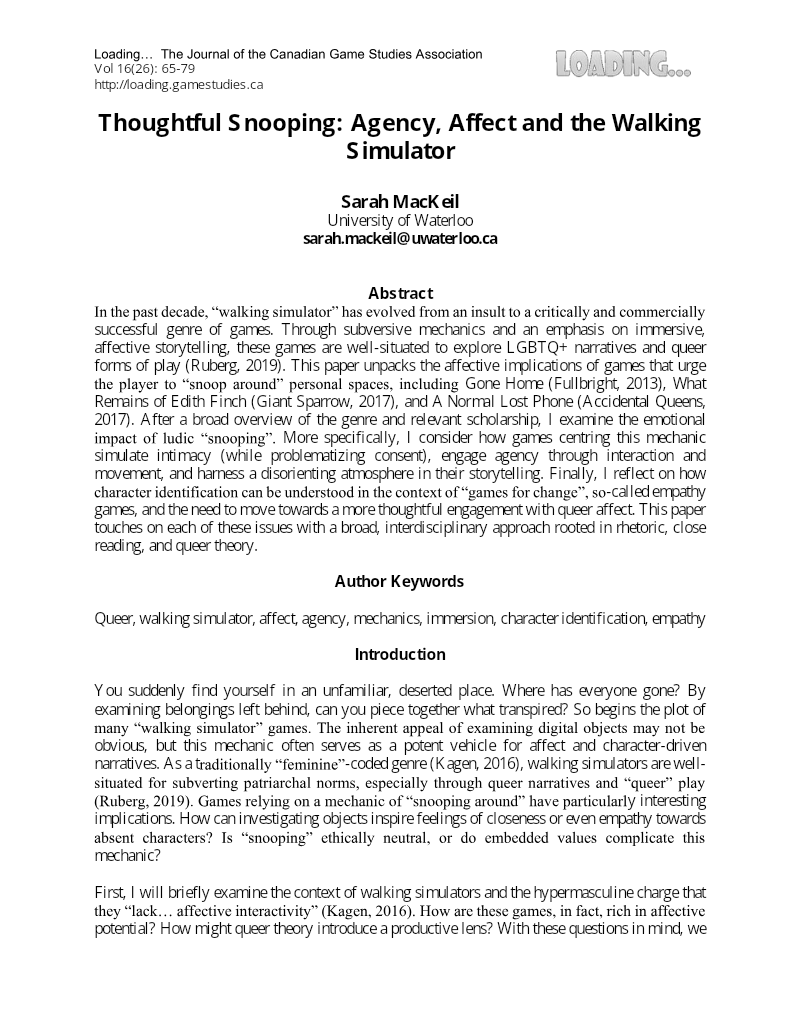
Loading... The Journal of the Canadian Game Studies Association · 2024