1 free read left. Create a free account for unlimited reading + AI research.
Create free accountWhitepaper Press Start
1 free read left. Create a free account for unlimited reading + AI research.
Create free accountWhitepaperPress Start
Walking simulators represent a critical departure from the industry’s traditional emphasis on mastery, productivity, and constant action. By prioritizing slow, contemplative exploration over conventional mechanics of control, these titles challenge the standard metagame that often dismisses reading-heavy experiences as non-games. This shift in design fosters a form of active passivity, wherein the player engages in a recursive, hybrid practice known as lexigraphing. This framework collapses the dichotomy between reading and writing, allowing players to treat digital environments as collages of fragments rather than linear paths toward a predetermined conclusion.
Through the analysis of titles such as Proteus and What Remains of Edith Finch, it becomes clear that this mode of engagement functions as a form of queer play. By resisting the reproductive logic of normative game design, these experiences prioritize affect, disorientation, and the acceptance of radical incompleteness. This approach rejects the hyperactive agency typically demanded by commercialized gaming taxonomies, instead favoring a nuanced, complicit subjectivity. Players do not merely consume a narrative; they perform a queer doing that interprets the game world through a lens of fragmentation and non-linear discovery.
Ultimately, these games serve as vital texts that expand the definition of play within the broader landscape of game studies. By validating the interpretive labor of the player, walking simulators successfully subvert historical biases that favor writerly gameplay. This paradigm shift offers a new way to experience digital spaces, one that values the incomplete and the contemplative over the drive for total narrative coherence. By framing lexigraphing as a legitimate and transformative practice, the genre establishes a space where the act of play is redefined as an inherently creative and subversive engagement with the digital environment.
Each row is a game or company this document names, each column a document, oldest first. A mark means that document names it. Select a row to see those documents.
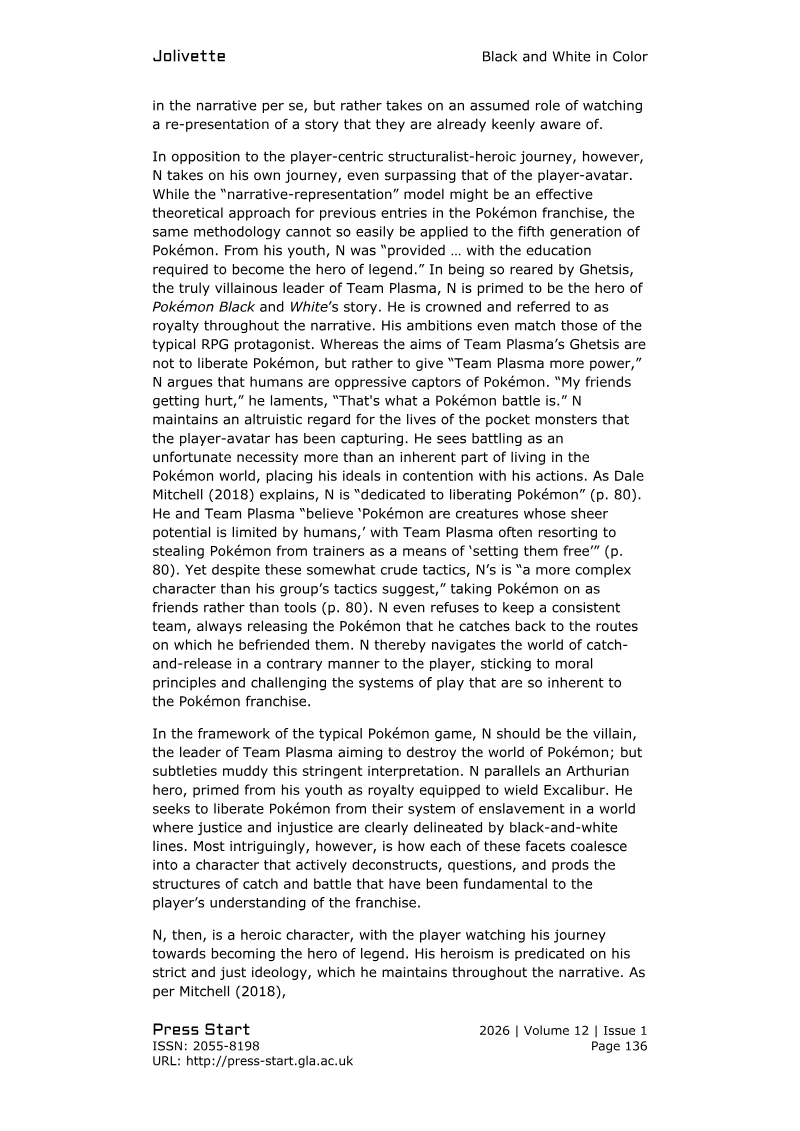
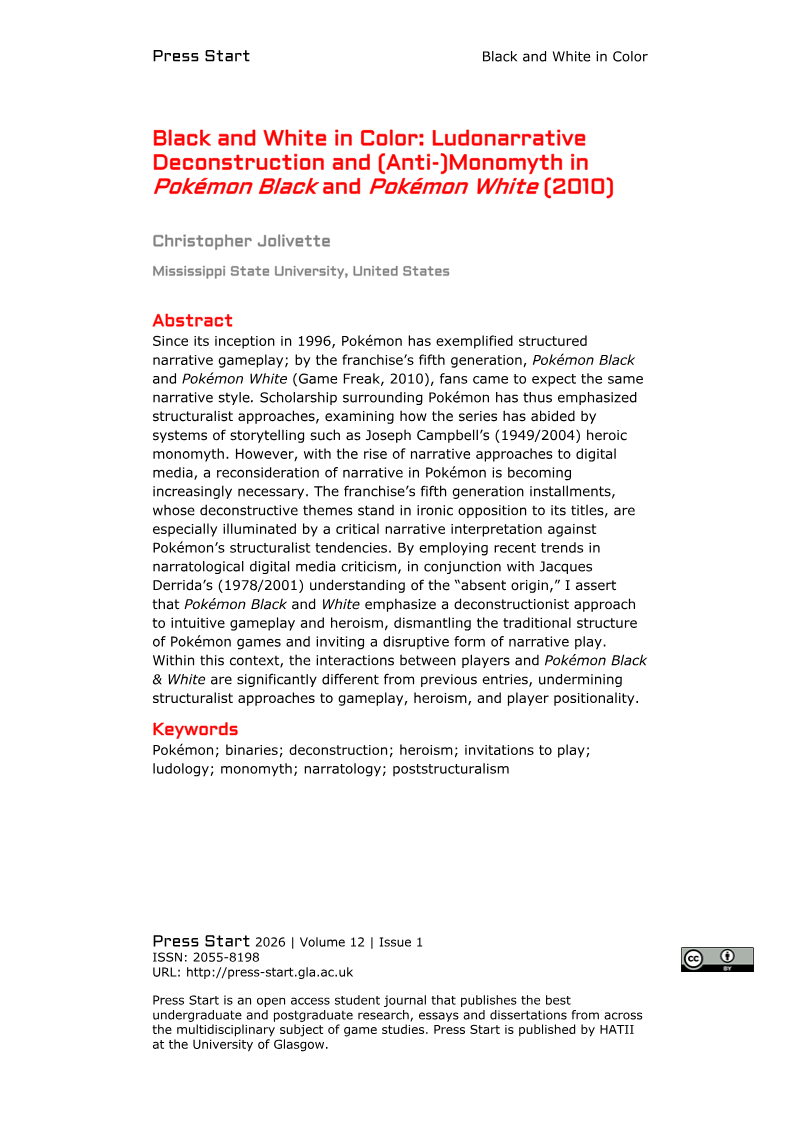
Press Start · 2026
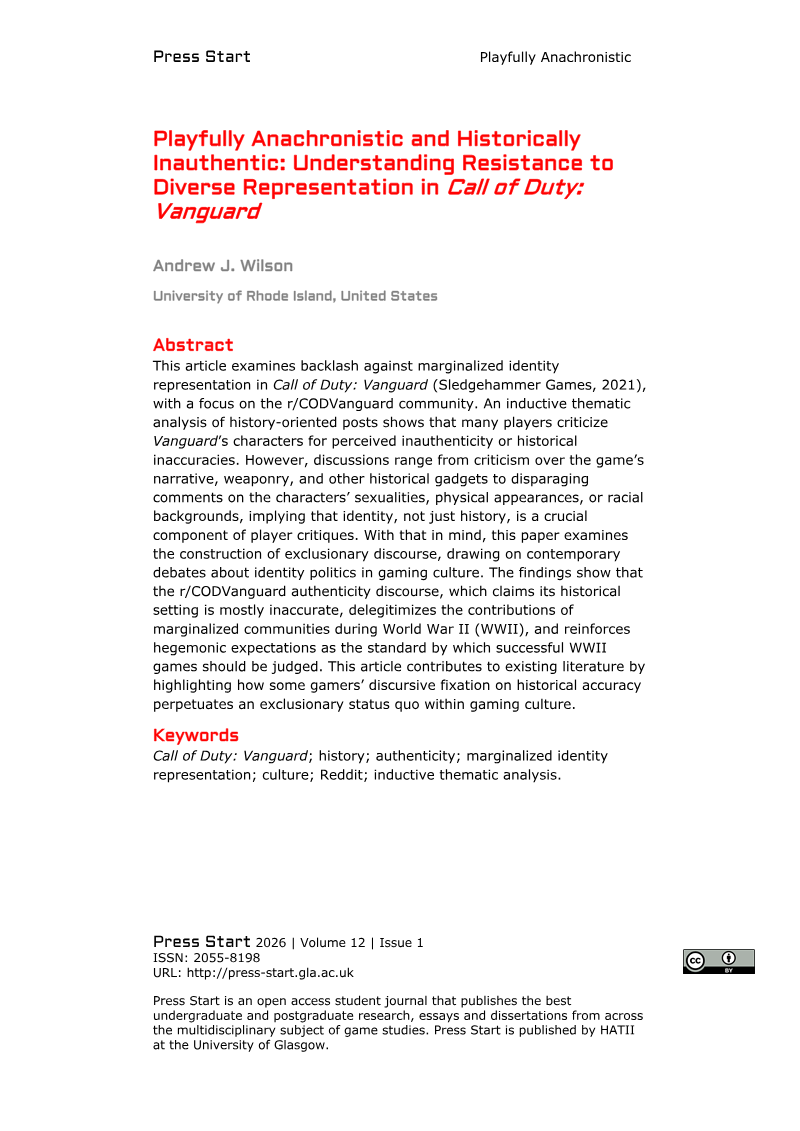
Press Start · 2026
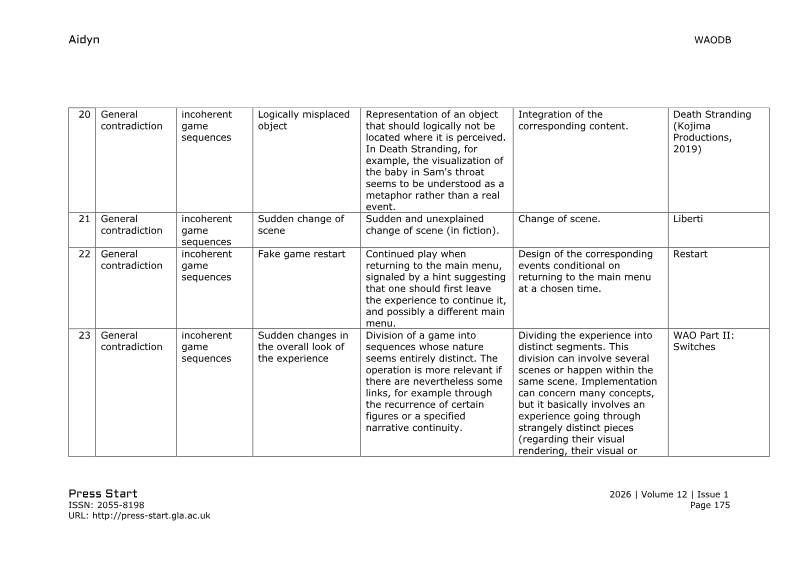
Press Start · 2026
Press Start · 2026
Press Start · 2026
Press Start · 2026
Press Start · 2026
Press Start · 2026
Press Start · 2025
Press Start · 2025
Press Start · 2025
Press Start · 2024
Canadian Game Studies Association · 2025
Loading... The Journal of the Canadian Game Studies Association · 2020
gamevironments · 2017