
International Journal of Serious Games
Open-access peer-reviewed journal of the Serious Games Society on the design, use and assessment of serious games.
Documents
Wuzzit Trouble: The Influence of a Digital Math Game on Student Number Sense
Digital games designed with intentional mathematical constraints significantly enhance number sense among third-grade students.
- Digital games featuring intentional mathematical constraints, such as Wuzzit Trouble, improve third-grade number sense more effectively than traditional procedural memorization.
- The game’s iterative cycle of trial, verification, and revision helps students master number composition and decomposition, allowing them to solve unconventional problems.
- By providing a low-risk environment for experimentation, the game fosters a growth mindset and helps students develop cognitive strategies for managing multiple constraints.
Video Game Self-efficacy and its Effect on Training Performance
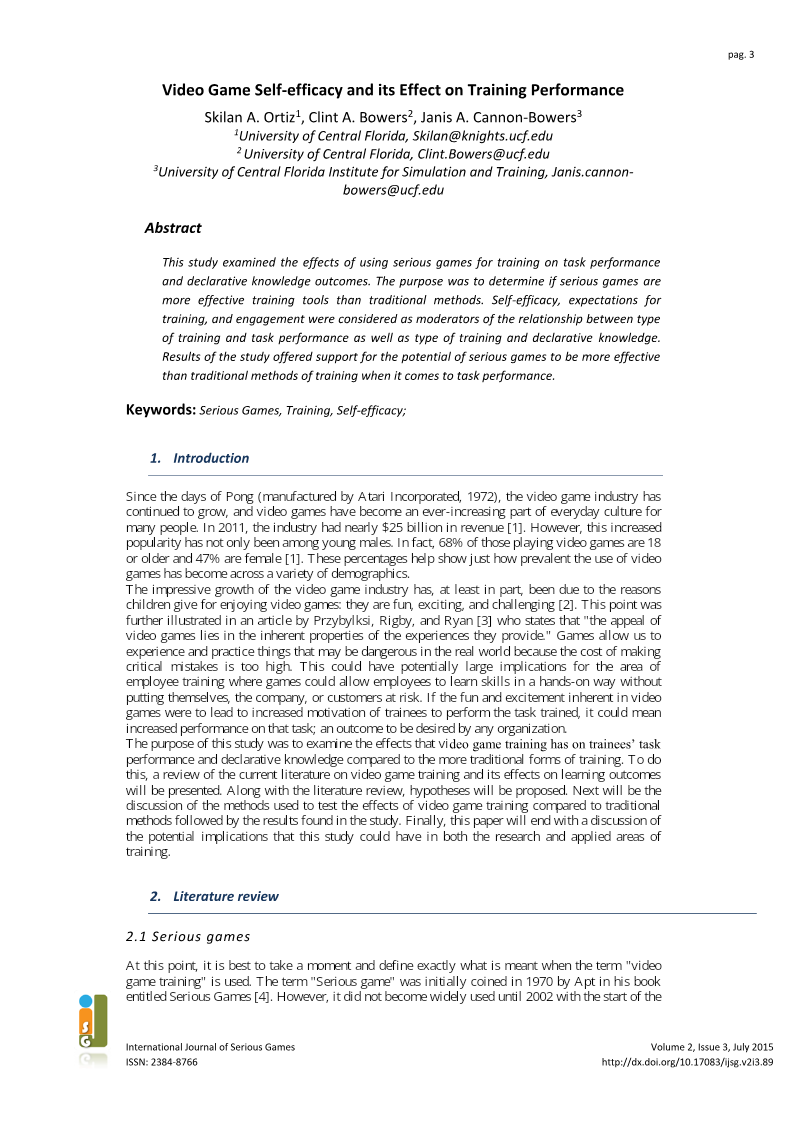
Serious games serve as highly effective training instruments that leverage experiential, active, and situated learning to outperform traditional text-based instructional methods.
- Serious games outperform traditional text-based instruction for procedural skill execution by providing authentic, risk-free environments that mirror real-world demands.
- Video game self-efficacy is a critical moderator that dictates how effectively a trainee translates simulation exposure into actual performance outcomes.
- While both game-based and text-based methods are equally effective for acquiring long-term declarative knowledge, interactive simulations are superior for maintaining and executing complex procedural tasks.
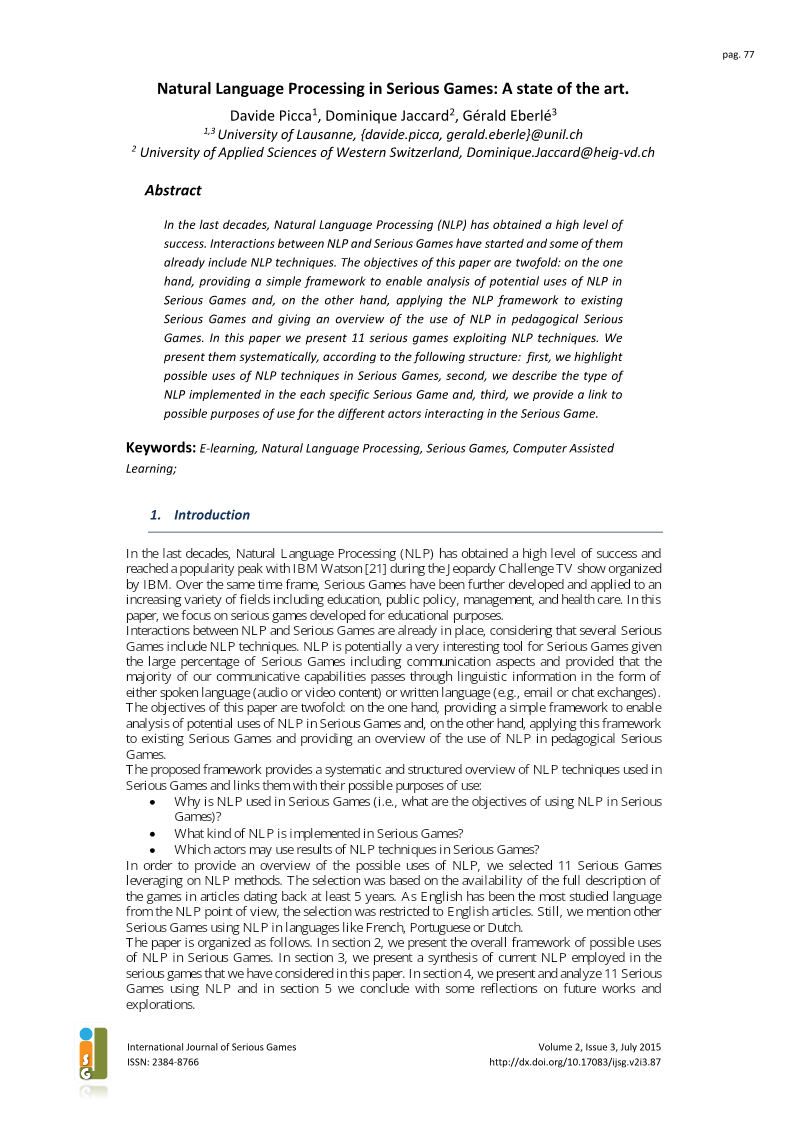
Natural Language Processing in Serious Games: A State of the Art
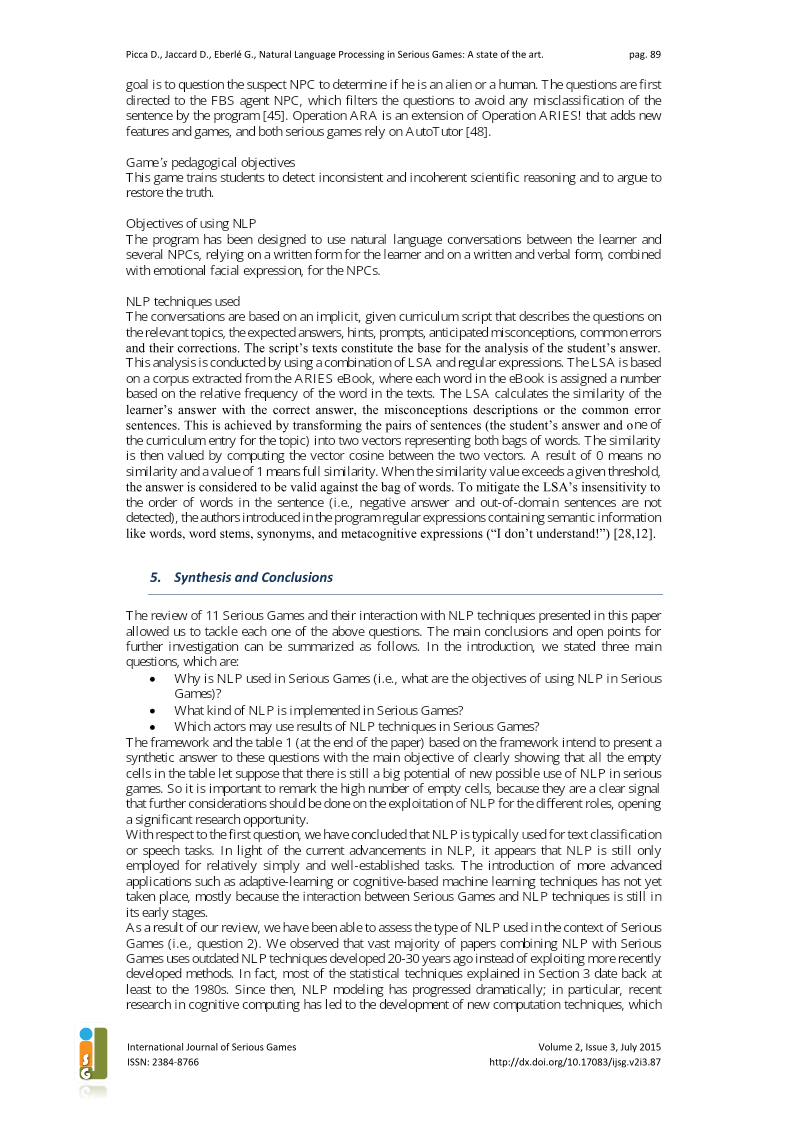
Natural Language Processing serves as a foundational technology for enhancing pedagogical efficacy and user engagement within serious games.
- Natural Language Processing (NLP) transforms serious games from static environments into adaptive, learner-centered platforms that facilitate complex skill acquisition like empathy and risk management.
- Current industry implementations rely on a mix of legacy methods, including finite-state machines and keyword analysis, alongside statistical classifiers like latent semantic analysis and support vector machines.
- Real-world applications such as Mission Rehearsal Exercise and PlayMancer utilize speech recognition and semantic parsing to enable non-player characters to respond to user behavior in real-time.
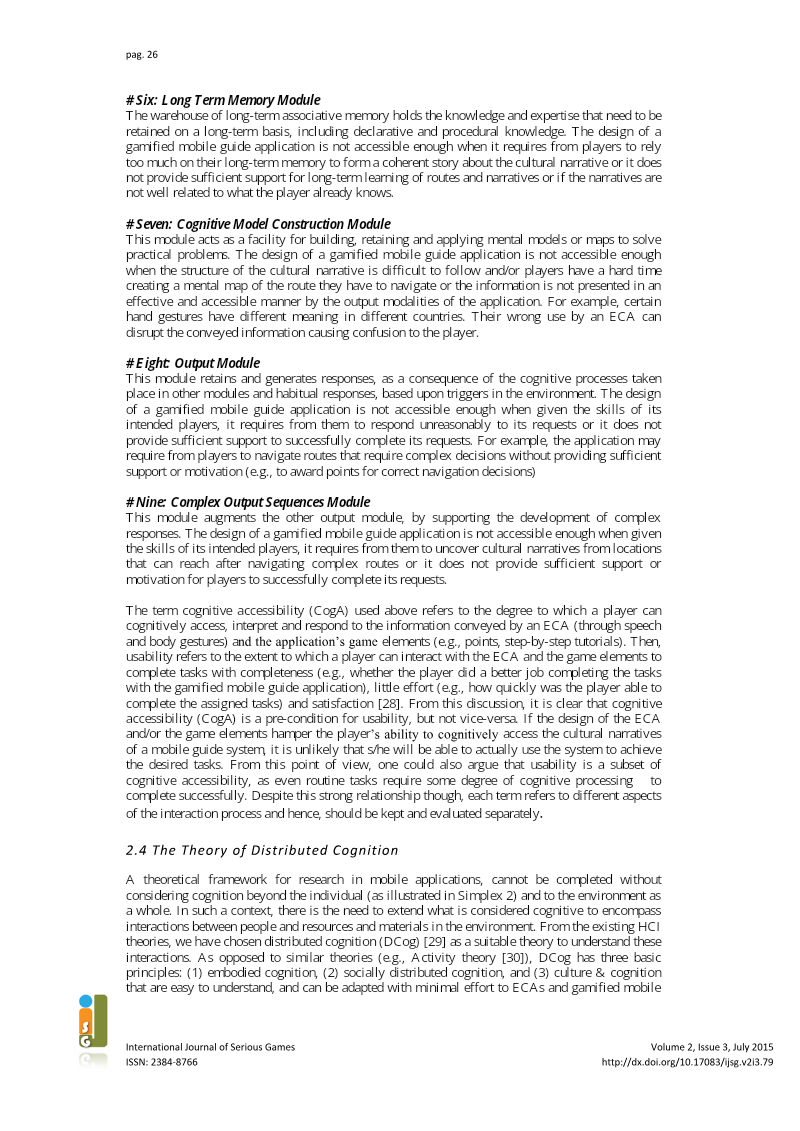
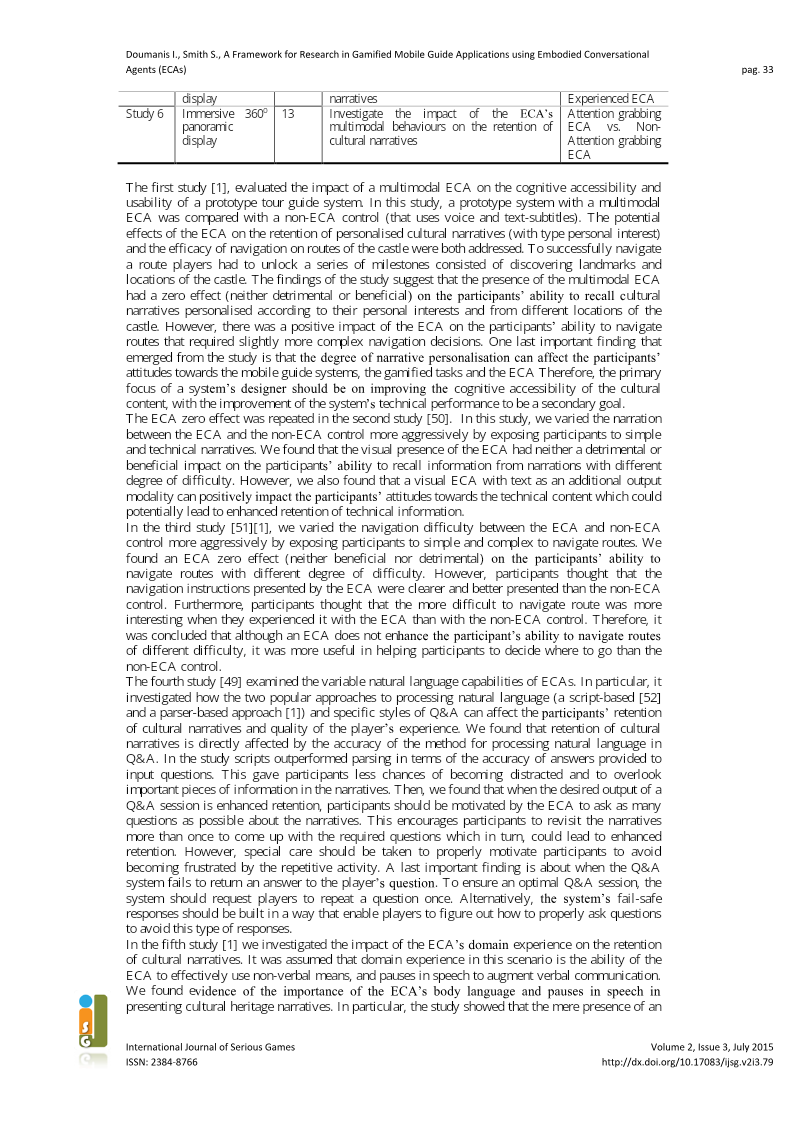
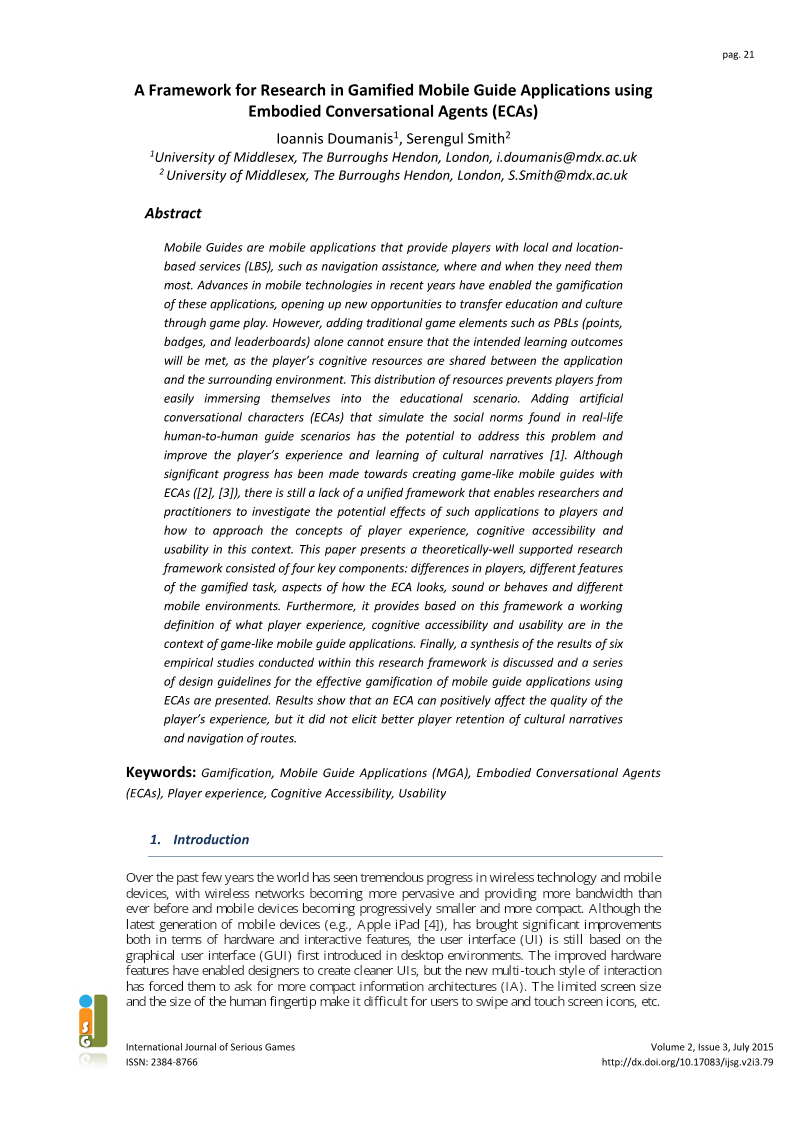
A Framework for Research in Gamified Mobile Guide Applications Using Embodied Conversational Agents
The integration of Embodied Conversational Agents (ECAs) into gamified mobile guide applications serves as a primary strategy for enhancing user immersion and educational engagement.
- Embodied Conversational Agents (ECAs) improve navigation assistance and user attitudes toward technical content, but they do not inherently ensure the retention of cultural narratives.
- The player journey should be structured into four distinct phases—Discovery, Onboarding, Scaffolding, and Endgame—to effectively manage cognitive load and emotional engagement.
- Empirical research involving 97 participants across six laboratory studies indicates that ECA effectiveness relies on the precise synchronization of verbal and non-verbal behaviors and the avoidance of excessive stimuli.


Modding Board Games into Serious Games: The Case of Climate Policy
Board games function as highly effective, transparent platforms for modeling complex, non-linear systems such as global climate policy.
- Modding existing commercial board games provides a low-barrier, tactile framework for simulating complex, non-linear systems like global climate policy.
- The adaptation of the board game CO2 demonstrates that recalibrating victory conditions to balance corporate profit against environmental thresholds effectively models real-world economic and regulatory tensions.
- Integrating specific policy variables such as carbon taxes, emission permits, research grants, and lobbying loopholes allows players to navigate the risks of reaching a catastrophic 500 PPM CO2 level.
Validation of Games for Behavioral Change: Connecting the Playful and Serious
Serious games intended for behavioral change often face a disconnect between anecdotal success and inconclusive quantitative results.
- Serious games require a shift from traditional randomized controlled trials to dynamic, iterative evaluation models that account for the non-linear nature of human interaction.
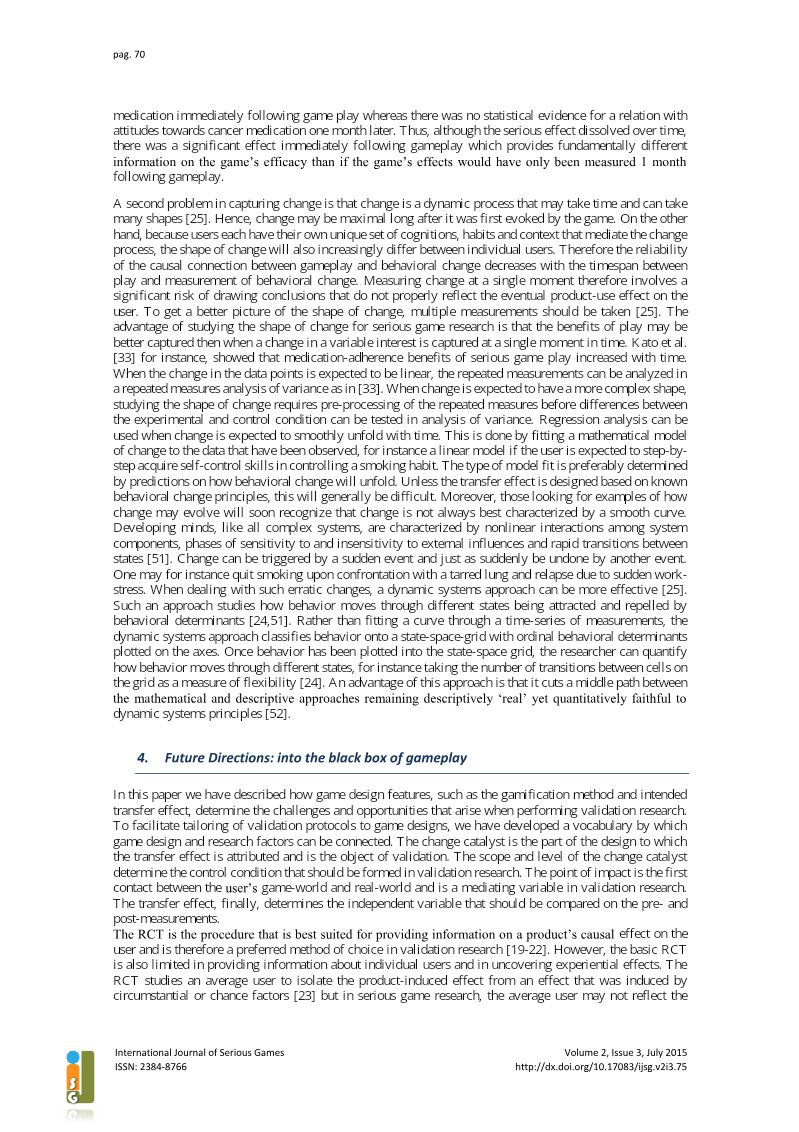
- Validation must move beyond generic benchmarks by utilizing modular control conditions and placebo games specifically designed to isolate individual catalysts for behavioral change.
- Effective assessment requires a dual-focus strategy that captures immediate, fine-grained data during gameplay while simultaneously tracking long-term transfer effects in real-world settings.
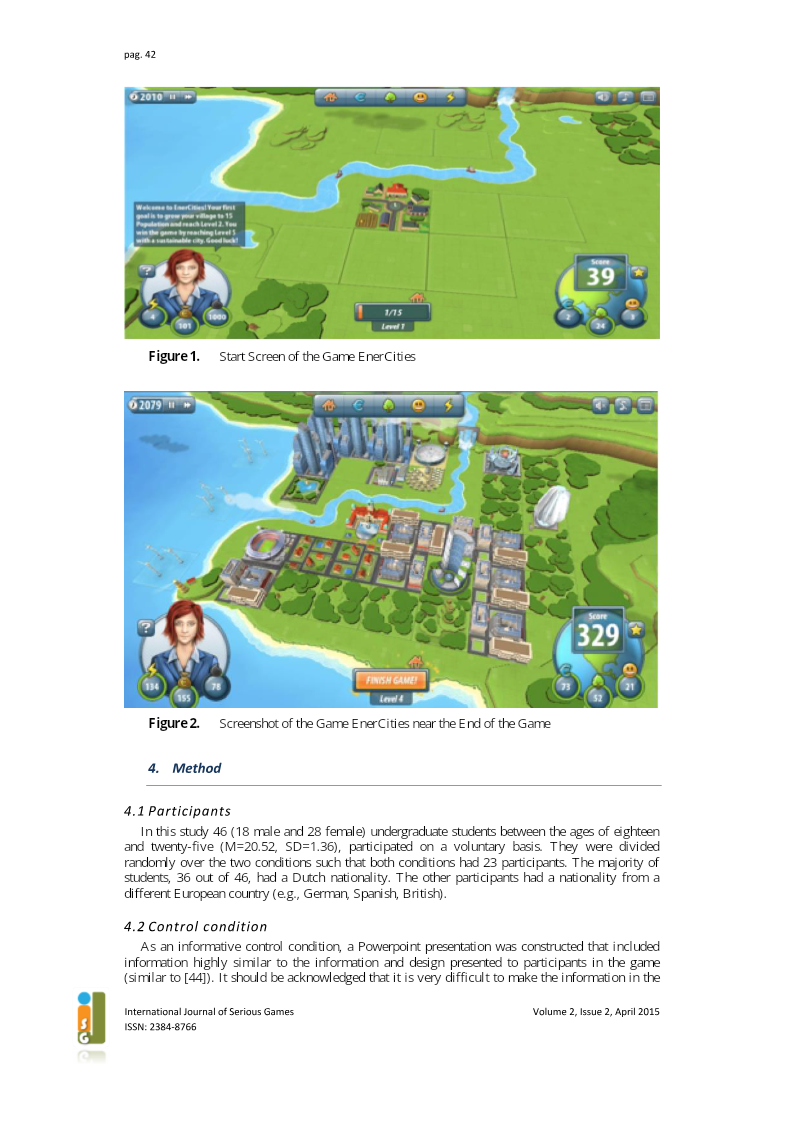
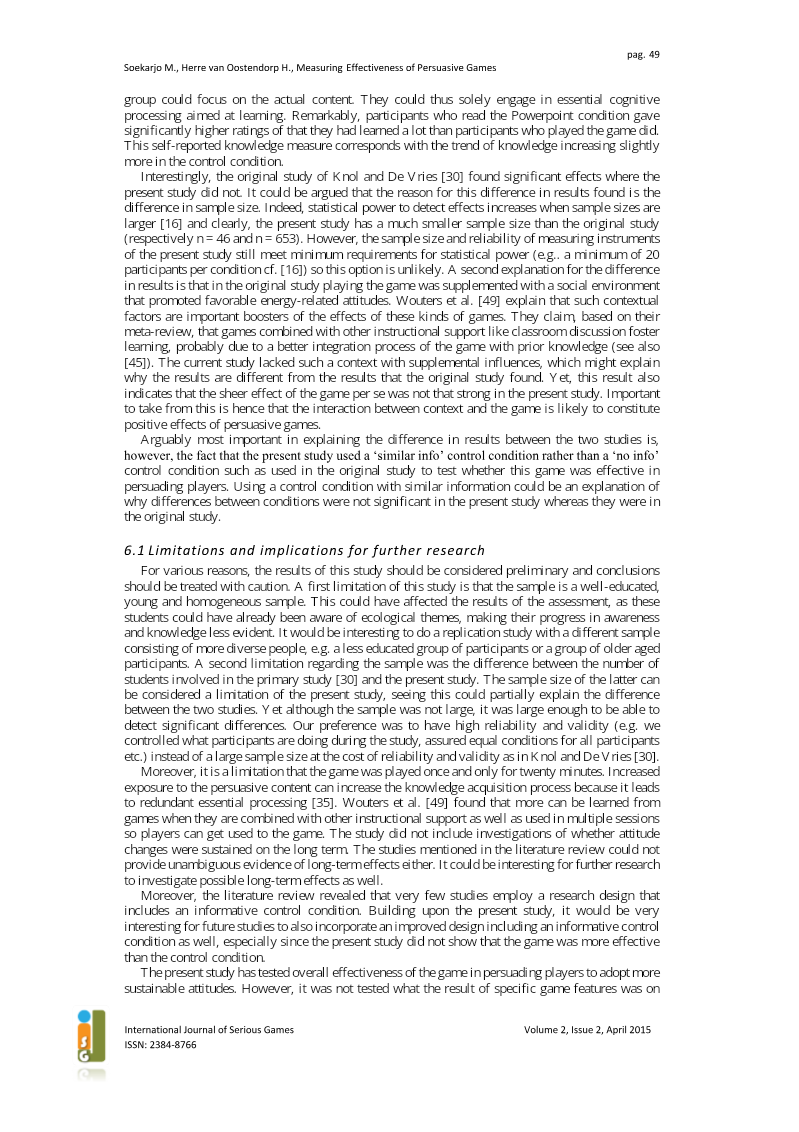
Measuring Effectiveness of Persuasive Games Using an Informative Control Condition
Persuasive games are frequently promoted as superior tools for fostering attitude change and knowledge acquisition, yet empirical evidence often fails to substantiate these claims when compared to traditional media.
- A study of 46 university students comparing the game EnerCities to a PowerPoint presentation found no statistically significant difference in knowledge gain or attitude shifts between the two formats.
- Participants reported higher levels of credibility and learning outcomes when using traditional presentation materials compared to the interactive game.
- Interactive game features may introduce extraneous cognitive processing that distracts users from core educational content, negating the assumed persuasive advantage of the medium.
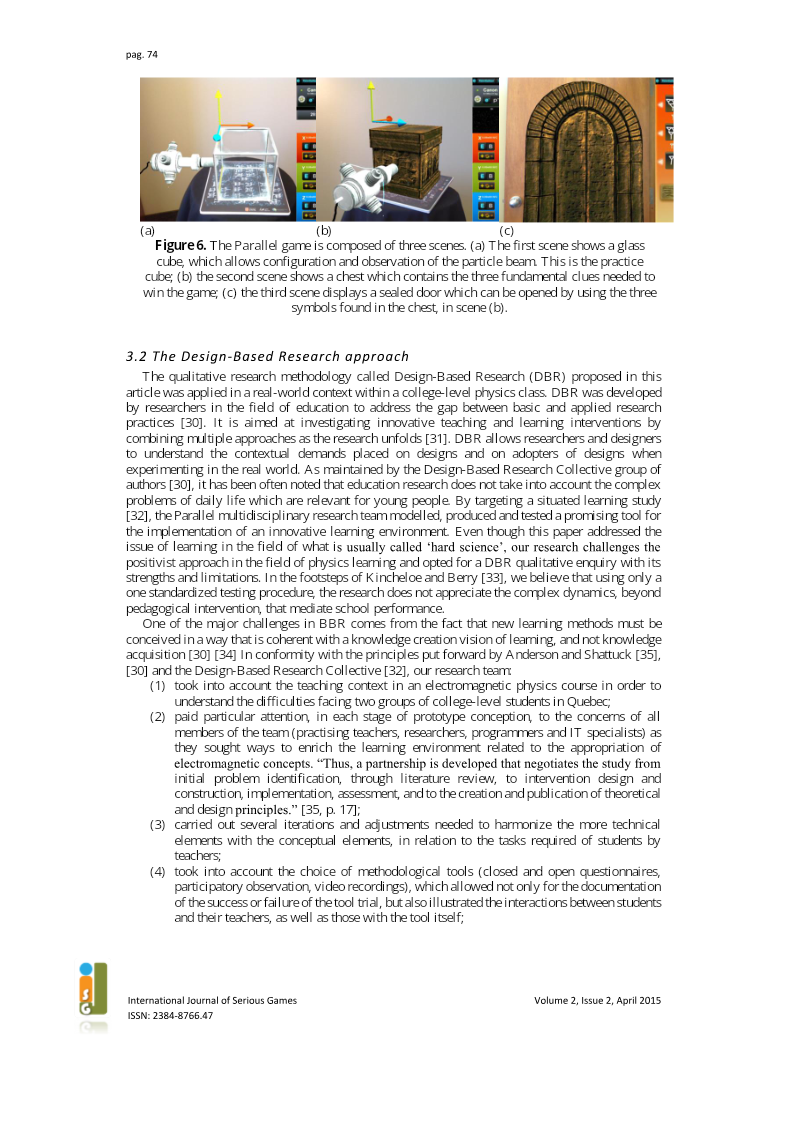

Observation and Analysis of a Classroom Teaching and Learning Practice Based on Augmented Reality and Serious Games on Mobile Platforms
The integration of mobile augmented reality and serious games into higher education serves as a transformative pedagogical tool for teaching complex, abstract subjects such as electromagnetism.
- Mobile-based serious games significantly outperform traditional lecture-based instruction in improving conceptual understanding of complex subjects like electromagnetism.
- The mobile game 'Parallel' demonstrated a clear academic advantage, with users showing significantly higher average improvements on conceptual assessments compared to control groups.
- The core pedagogical value of augmented reality in education is its ability to render invisible, abstract phenomena into observable, three-dimensional models.
Games Are Motivating, Aren't They? Disputing the Arguments for Digital Game-Based Learning
Digital game-based learning is frequently promoted as a transformative educational panacea, yet these claims often lack the rigorous empirical foundation necessary to support such widespread adoption.
- Digital game-based learning currently lacks a rigorous empirical foundation, relying heavily on anecdotal evidence and speculative hypotheses rather than verifiable scientific data.
- The assumption that high player engagement inherently leads to effective learning is flawed, as game design often prioritizes rapid performance and immersion over the deep, metacognitive reflection required for knowledge acquisition.
- Game mechanics frequently lack the necessary instructional scaffolding, meaning that the freedom of movement in digital environments can hinder rather than facilitate learning.
Teaching Pre-Service Teachers to Integrate Serious Games in the Primary Education Curriculum
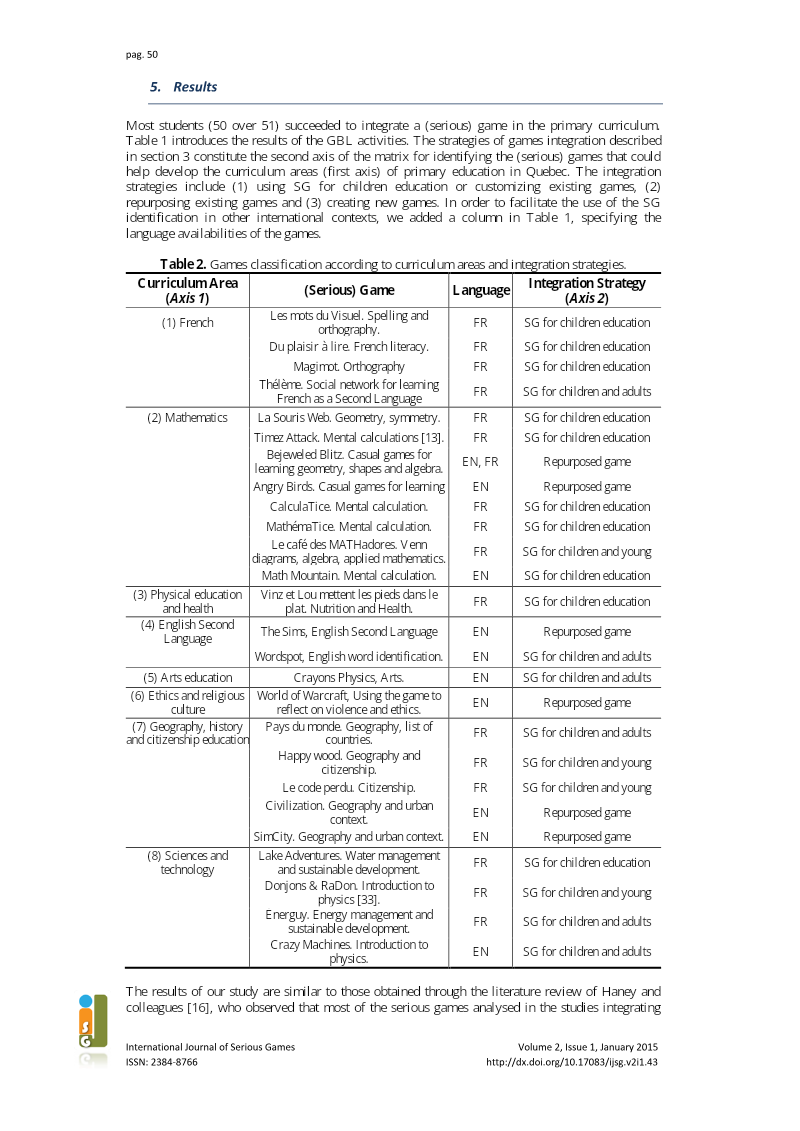
Integrating serious games into primary education curricula serves as a vital pedagogical strategy for enhancing student engagement, particularly within mathematics, science, and history.
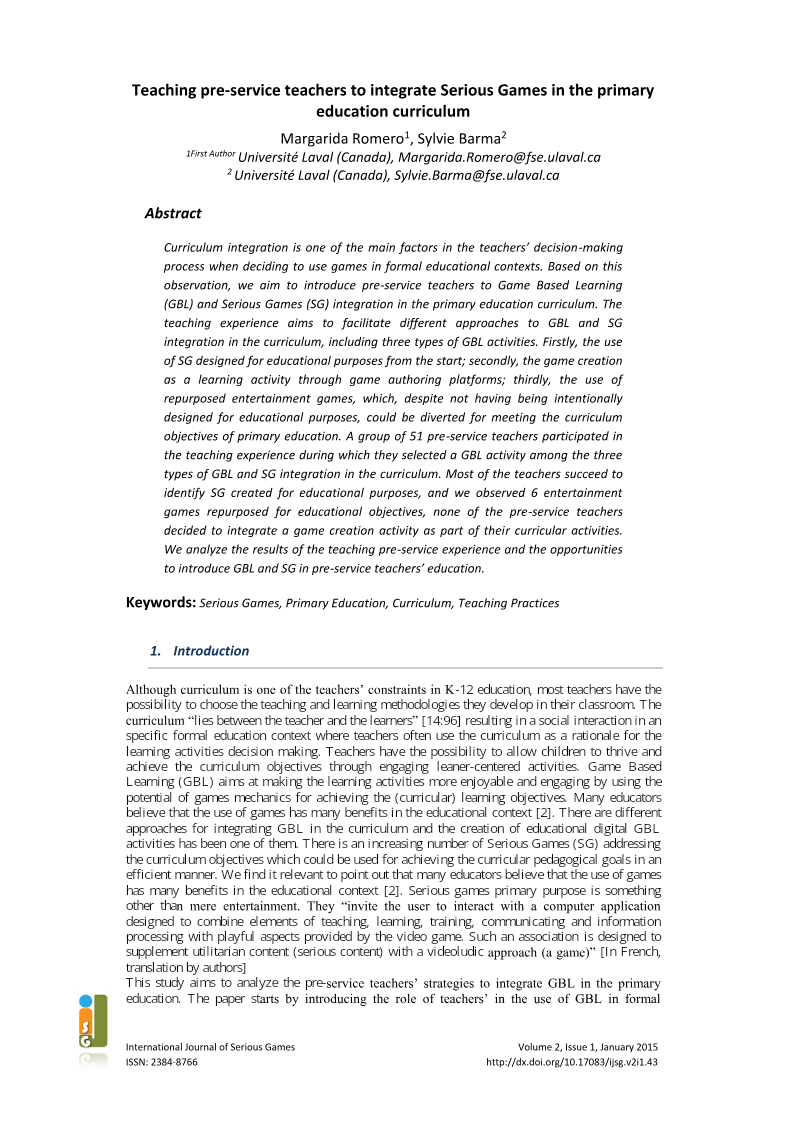
- Successful integration of serious games in primary education relies on teachers acting as facilitators in a community of learners rather than as developers of original content.
- A study of 51 pre-service teachers in Quebec confirms that technical proficiency and time constraints are the primary barriers to creating bespoke educational games.
- Educators prefer repurposing existing entertainment titles or utilizing established serious games over developing original software due to the high preparation time required.
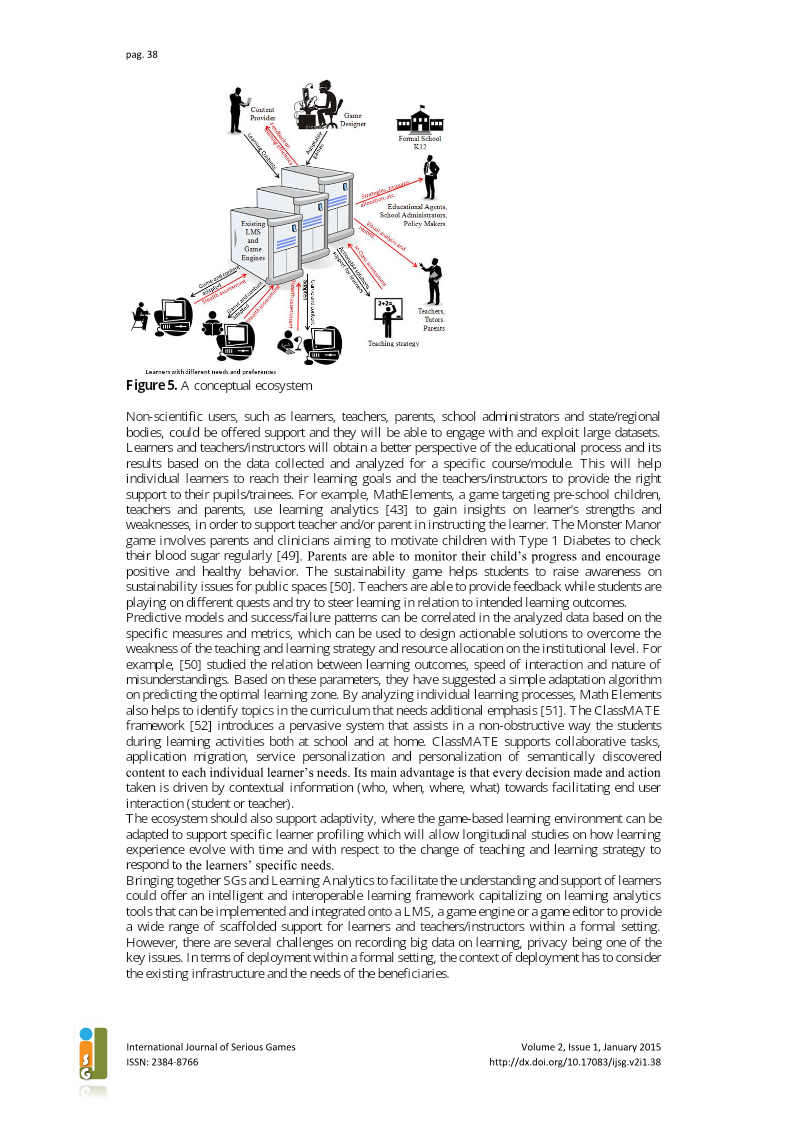
Learning Analytics Architecture to Scaffold Learning Experience through Technology-based Methods
Integrating learning analytics into serious games offers a transformative approach to personalized education by bridging the gap between immersive digital engagement and formal pedagogical assessment.
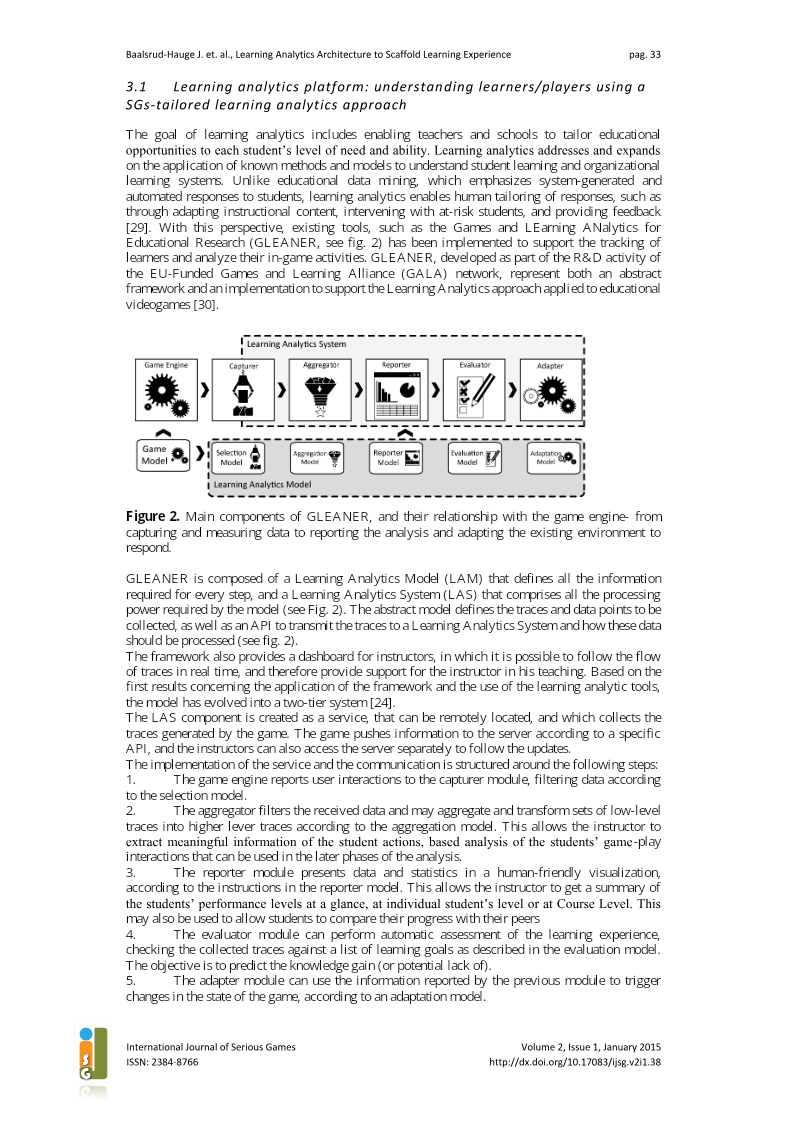
- The GLEANER framework provides a multi-tier architecture that maps in-game mechanics to specific learning objectives, enabling real-time, adaptive scaffolding for students.
- Integrating stealth assessment and automated data collection allows educators to shift from static instruction to responsive, personalized learning environments.
- Centralized dashboards aggregate both generic and game-specific data traces to provide instructors with actionable insights at individual, classroom, and regional levels.

Special Issue on Digital Games for Learning Mathematics
Mathematical proficiency serves as a critical foundation for individual career success and broader societal economic stability.
- A significant gap exists between the volume of available mathematics software and the application of theoretically sound, pedagogically effective design principles.
- The initiative aims to establish a rigorous, empirical evidence base for mathematics learning games to move beyond superficial engagement.
- Key research areas include the integration of learning analytics, mapping mathematical concepts to core game mechanics, embodied cognition, and adaptive difficulty.