
International Journal of Serious Games
Open-access peer-reviewed journal of the Serious Games Society on the design, use and assessment of serious games.
Documents

Business Models for Serious Games Developers: Transition from a Product Centric to a Service Centric Approach
Serious games developers, primarily small and medium-sized enterprises, face significant sustainability challenges stemming from a reliance on high-cost, one-of-a-kind product models.
- Serious games developers must transition from one-off, product-centric models to service-centric, extended product models to overcome the sustainability challenges of high development costs and limited reusability.
- Integrating data analytics into game offerings is essential for providing empirical evidence of efficacy and ROI, which is a prerequisite for securing continued funding in the health and corporate sectors.
- Developers should treat games as dynamic, interoperable platforms rather than static assets to improve scalability and reach beyond niche market constraints.



Best Practices for an Effective Design and Evaluation of Serious Games
Serious games serve as a critical tool for professional development and education, yet the industry suffers from a lack of standardized methodologies for their design and evaluation.
- Serious games must integrate pedagogical frameworks like constructivism, experiential learning, and Bloom’s taxonomy to ensure game mechanics actively support specific educational goals rather than serving as aesthetic overlays.
- Effective design requires a structured three-phase facilitation process consisting of briefing, gaming, and debriefing to reinforce complex concepts.
- To improve usability and learning outcomes, developers should prioritize meaningful context and reduce cognitive load through intuitive user interface design.

Gamification and Smart, Competence-Centered Feedback: Promising Experiences in the Classroom
The integration of gamification and adaptive feedback systems significantly enhances mathematical proficiency among primary school students.
- Individualized, competence-centered feedback is the primary driver of measurable learning progress, significantly outperforming basic visual cues or standard scoring systems.
- Gamification elements like scoring and leveling are effective for initial student engagement, but they must be paired with adaptive instruction to achieve academic mastery.
- A study of 58 primary school students demonstrated that the synergy between game-based motivation and personalized feedback creates a more robust learning environment than either approach in isolation.
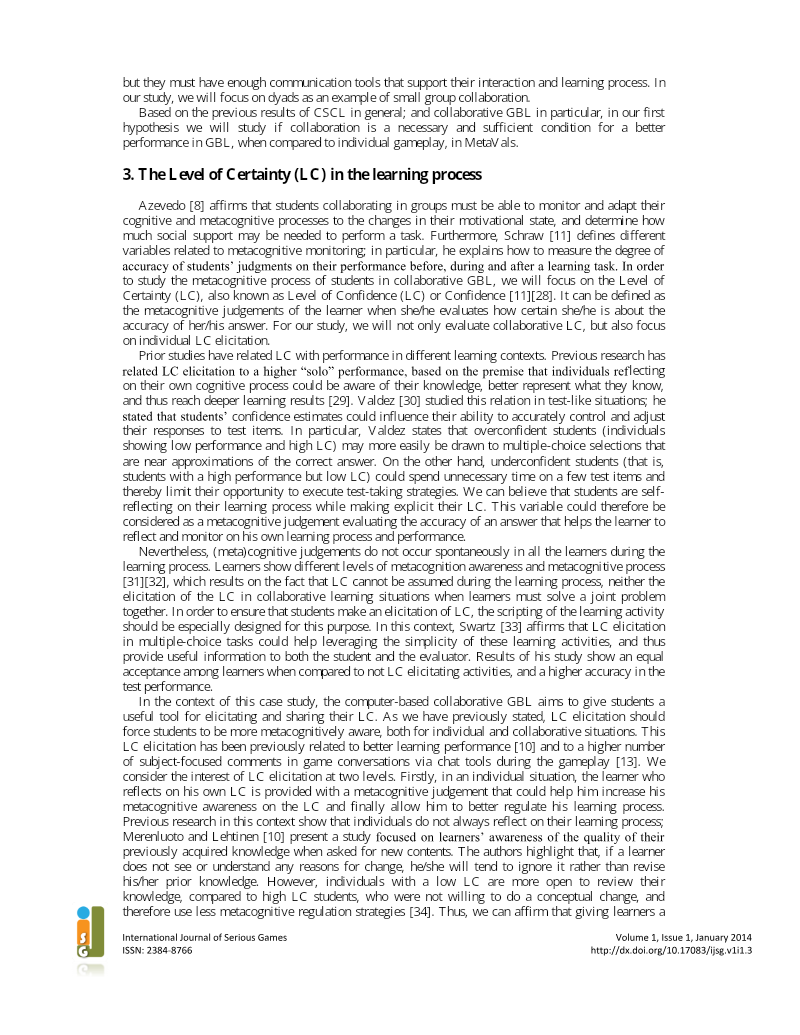
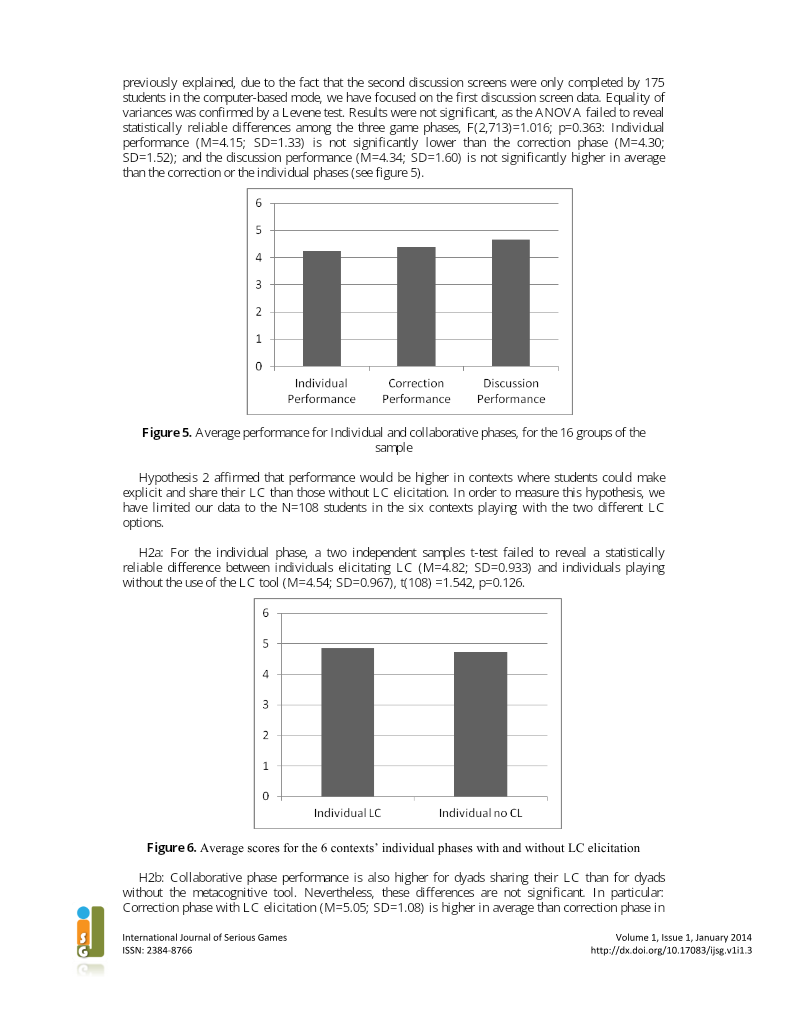
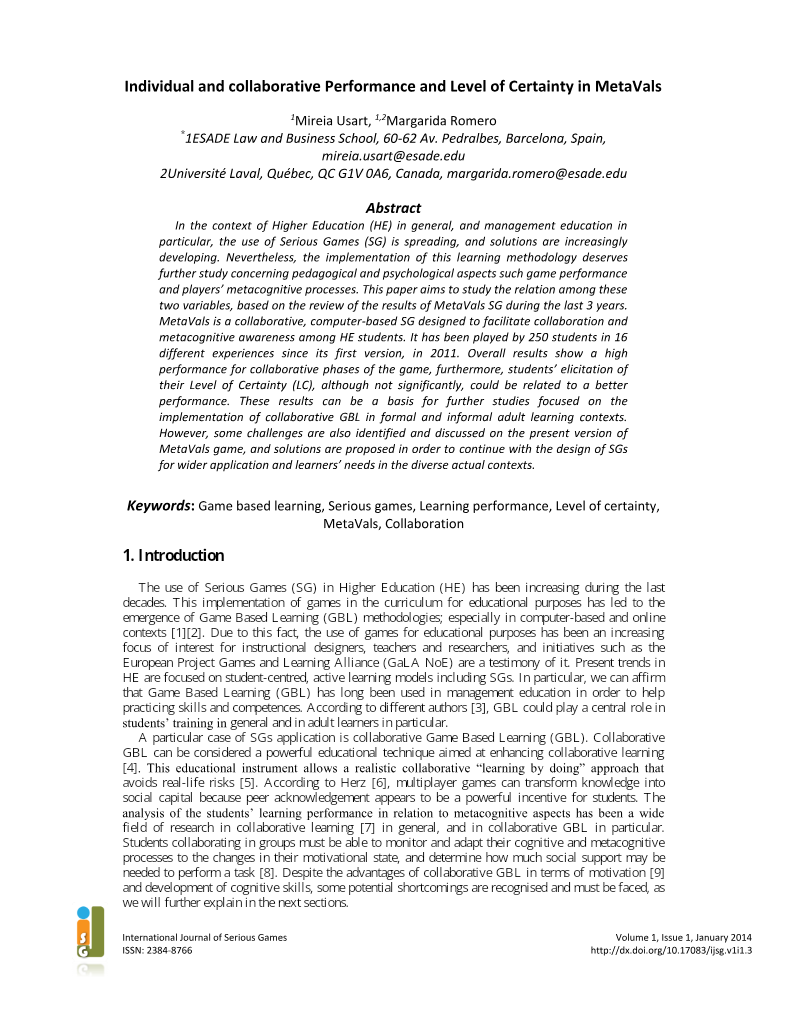
Individual and Collaborative Performance and Level of Certainty in MetaVals
The MetaVals serious game serves as a platform for evaluating the intersection of metacognitive processes and academic performance within higher education.
- A three-year study of 250 students across 16 higher education contexts found no statistically significant performance differences between individual and collaborative tasks or between groups using a Level of Certainty (LC) tool and those that did not.
- While LC elicitation showed a consistent trend toward higher overall achievement, the observed improvements failed to reach the threshold of statistical significance.
- The lack of definitive performance gains is largely attributed to the perceived low difficulty of the game items and the inherent complexities of asynchronous, online learning environments.