
GameMakers
F2P product management, game design, and monetization strategy by Joseph Kim.
Documents
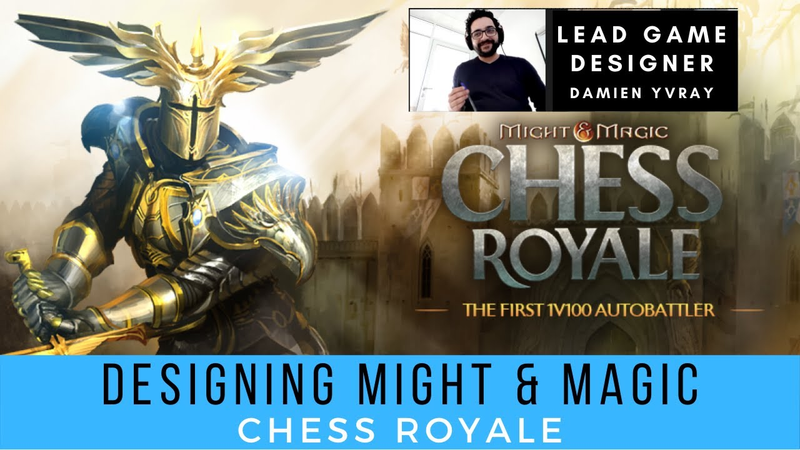
Might & Magic Chess Royale | Lead Game Designer Damien Yvray
Might & Magic Chess Royale represents a strategic effort to disrupt the competitive auto-battler market by prioritizing a mobile-first design philosophy.
- Might & Magic Chess Royale differentiates itself by condensing traditional 40-minute auto-battler matches into 10-minute sessions to prioritize mobile-first accessibility.
- The game utilizes a 100-player battle royale format to increase competitive intensity compared to standard auto-chess titles.
- Development relied on a fast-tracked internal greenlight cycle and data-driven design methodologies to mitigate production risks while entering the growing auto-battler market.

Stillfront Acquires Storm8 For $300M | Talk with COO Alexis Bonte
Stillfront Group functions as a decentralized network of over 13 semi-autonomous game studios, prioritizing the retention of original founders to preserve creative independence and entrepreneurial agility.
- Stillfront Group operates a decentralized network of over 13 semi-autonomous studios, managing a portfolio of more than 35 long-lifecycle, free-to-play titles to minimize the volatility of hit-driven gaming.
- The company acquired Storm8 for $300 million as part of a strategy to expand into new market categories by integrating established, high-performing entities rather than pivoting existing studios.
- Stillfront’s market capitalization grew from $600 million to over $1 billion within a six-month period, driven by its acquisition-led growth model.

We're in India
The primary objective of this international collaboration is to evaluate the viability of a long-term business partnership through intensive, hands-on cooperation.
- A six-week intensive residency in Pune, India, was utilized as a vetting mechanism to evaluate the viability of a long-term business partnership through hands-on collaboration.
- The team is testing organizational alignment and team dynamics by developing a mobile game prototype as a practical vehicle for assessing professional values and working styles.
- The core business thesis asserts that successful game studios are built on rigorous due diligence and a mutual commitment to both personal and organizational growth.

3 Huge Changes Coming to Unity (With Head of Tech Arvind Neelakantan)
Unity is undergoing a significant technological evolution centered on three core pillars: the Data-Oriented Technology Stack (DOTS), the Scriptable Rendering Pipeline (SRP), and a new multiplayer netcode solution.
- Unity is transitioning from object-oriented programming to the Data-Oriented Technology Stack (DOTS) to enable multi-threaded code execution that optimizes performance and battery efficiency on modern multi-core hardware.
- The new netcode architecture shifts from peer-to-peer to a dedicated server topology, allowing for the synchronization of hundreds of players and objects while improving latency and anti-cheat capabilities.
- The Scriptable Rendering Pipeline (SRP) now features a production-ready High Definition Render Pipeline (HDRP) for high-end ray tracing, alongside the Universal Render Pipeline (URP) for cross-platform visual parity.
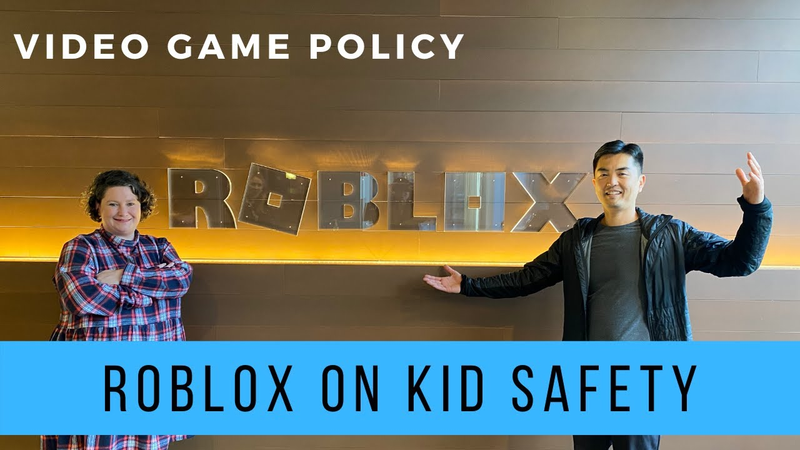
Roblox on Kids Safety (Laura Higgens Head of Digital Civility)
The primary objective of digital safety in gaming is to foster a secure, inclusive environment for younger users while balancing corporate growth with ethical responsibility.
- Safety must be integrated into the initial design phase of game development rather than retrofitted to ensure long-term platform success and parental trust.
- While 89% of parents fear online gaming risks, 88% acknowledge the platform's value in providing technical skills and career preparation for minors.
- Platforms mitigate risks through a multi-layered approach involving strict text filtering, human moderation, and parental control tools for curated experiences.

Japan Gaming Market with Serkan Toto
The Japanese gaming market, valued at approximately $13 to $15 billion, remains a distinct and highly lucrative ecosystem dominated by mobile platforms, which account for roughly 70% of total revenue.
- The Japanese gaming market is valued at $13–$15 billion, with mobile platforms accounting for approximately 70% of total revenue.
- High barriers to entry exist due to a top-heavy market structure dominated by legacy titles like Monster Strike and Puzzle & Dragons, alongside AAA mobile production costs that frequently exceed $10 million.
- International competitors from China and Korea, such as NetEase, are successfully capturing domestic market share by introducing innovative genres like Battle Royale that challenge the traditional dominance of gacha-based RPGs.

I attempt to design a game as good or better than Adventure Communist. PART 1
Success in the modern game industry requires a shift away from the pursuit of corporate wealth toward a deeply personal and authentic motivation.
- Reverse-engineering successful titles like Adventure Communist is a critical strategy for minimizing financial waste during the iterative discovery phase of game development.
- Developers should prioritize the identification of core engagement loops over abstract financial targets to ensure commercial viability within the free-to-play market.
- Professional longevity and high-level performance in the game industry are best sustained by a sincere, internal purpose rather than external financial incentives, which are often limited by lack of equity or profit-sharing.

UA Coffee: All About LTV (Life Time Value) and pROAS with Algolift
Predictive Lifetime Value and predictive Return on Ad Spend have emerged as critical metrics for mobile marketers navigating an increasingly competitive landscape defined by rising user acquisition costs.
- Mobile marketers are shifting from short-term metrics like Day 7 ROAS to long-term, user-level predictive modeling to improve bidding precision in auction-based environments.
- Machine learning-based projections for LTV and pROAS outperform traditional retention-curve models by ingesting historical data to account for temporal trends and anomalies.
- Predictive models should be utilized as directional tools for acquisition strategy rather than absolute predictors due to inherent market volatility and fluctuating costs.

Kids Explain Roblox Top Game Hits | 1 Billion+ Plays
Roblox has solidified its position as a dominant force in the digital entertainment landscape, with its top ten titles each surpassing one billion plays.
- Roblox's top ten titles, including MeepCity, Jailbreak, and Adopt Me!, have each surpassed one billion plays, establishing the platform as a dominant force in digital entertainment.
- The platform's most successful games prioritize social interaction, role-playing, and avatar customization over complex gameplay mechanics.
- Core engagement is driven by loop-based progression systems where players earn currency through mini-games to reinvest in virtual assets that enhance social status.

Optimizing UA Budgets by D7 ROAS | UA Coffee Talk
The primary thesis of this discussion is that Day 7 Return on Ad Spend (D7 ROAS) is an insufficient and potentially misleading key performance indicator (KPI) when used in isolation to optimize user acquisition (UA) budgets.
- Relying exclusively on Day 7 (D7) ROAS for UA budget optimization is a strategic error that ignores long-term retention and varying payback windows across different user sources.
- Automated bidding models on platforms like Facebook and Google prioritize short-term ROAS, which can mask declining revenue curves that emerge after 60 days.
- A single, consolidated D7 ROAS target across all traffic sources leads to suboptimal budget allocation because it fails to account for the distinct monetization profiles of different channels, geographies, and platforms.

Mobile Marketing: How to Optimize UA Creatives | UA Coffee Talk
Mobile user acquisition has undergone a fundamental transformation, shifting away from granular audience targeting toward a reliance on creative assets as the primary driver of competitive advantage.
- Creative assets have replaced granular audience targeting as the primary driver of competitive advantage in mobile user acquisition due to the shift toward broad-targeting machine learning algorithms.
- Marketing and creative teams must adopt a collaborative, hypothesis-driven strategy that uses competitive intelligence to identify which specific game mechanics and themes resonate with target audiences.
- Success requires balancing front-end engagement metrics, such as click-through rates and installs per mille, with back-end performance indicators like retention and return on ad spend.
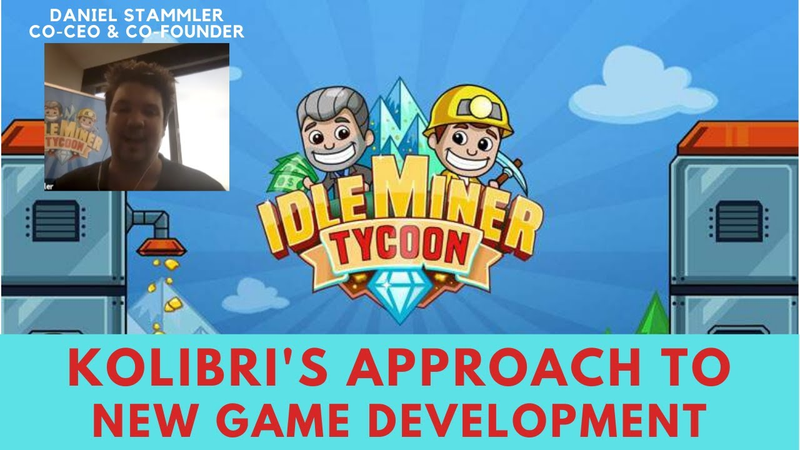
How Kolibri Made Idle Miner Tycoon | New Game Development Process
Kolibri Games, a mobile developer founded by university students, achieved significant success with its flagship titles, Idle Miner Tycoon and Idle Factory Tycoon, which have collectively amassed approximately 100 million downloads.
- Kolibri Games utilizes a lean development cycle consisting of a two-month prototyping phase followed by one month of testing to validate core mechanics before a soft launch.
- The company scales projects into live-service models only after validating key performance indicators, specifically day-one, day-seven, and day-thirty retention metrics during soft launches.
- New projects are developed by small, agile teams typically composed of one product manager, one or two developers, and one artist to minimize bureaucracy and accelerate decision-making.