1 free read left. Create a free account for unlimited reading + AI research.
Create free account
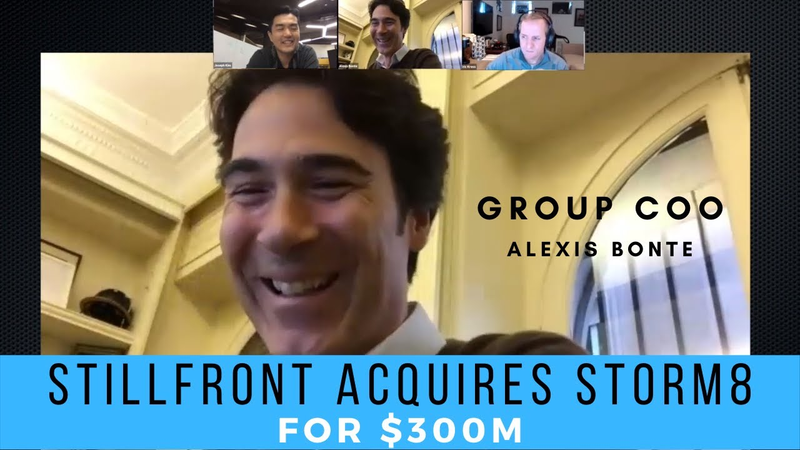
Stillfront Acquires Storm8 For $300M | Talk with COO Alexis Bonte
Key insights
6 takeaways- 01Stillfront Group operates a decentralized network of over 13 semi-autonomous studios, managing a portfolio of more than 35 long-lifecycle, free-to-play titles to minimize the volatility of hit-driven gaming.
- 02The company acquired Storm8 for $300 million as part of a strategy to expand into new market categories by integrating established, high-performing entities rather than pivoting existing studios.
- 03Stillfront’s market capitalization grew from $600 million to over $1 billion within a six-month period, driven by its acquisition-led growth model.
- 04The 'city-state' operational model allows individual studios to retain creative independence and culture while accessing a centralized pool of data, operational expertise, and cross-studio collaboration.
- 05Acquisition deals typically span four to six months and utilize a structure that combines asset valuation with performance-based earn-outs to ensure founder alignment and long-term commitment.
- 06The organization aims to triple its business scale over the next five years by balancing organic growth with targeted, team-focused acquisitions.
Ask AI about this video
Transcript
you I Lexus great to have you with us and let's get straight to the point in very exciting games industry news it was announced that still front acquired storm 8 adding to its collection of game studios such as Kixeye and good game now a lot of folks aren't super familiar with still front so maybe we can start there can you talk to us can you talk to us about first of all who is still front and what is the overall strategy behind rolling up the game studios that you have I mean very quickly I mean so probably the Alliance of what we call semi-autonomous studios so right now we have 13 studios including storm 8 which are part of still trucks and the logic what we're really doing is we basically see that there's a lot of advantages to being together basically having a
portfolio of different studios and different games that you pull together so that we can exchange information but at the same time we think that in to created in creative industries integrating companies in the corporate sense just doesn't work because then you call you kill the creativity you kill the entrepreneurial spirit you keep the ability to be you know quick on your feet and efficient about that so that's why we always try to be keep the entrepreneurs keep the founders within studios have them continue to eat the studios I would just become part of the family and we basically all shareholder prison the same public companies still pronounce that these key traits in the in the soft call my the Swedish Stock Exchange's Swedish Nasdaq and so there's a lot of information sharing but are there any kind of shared services amongst universities or do they pretty much operate as you're kind of alluding to pretty independently yeah so basically we we don't believe in a big
kind of big corporate central structure so there's no like central marketing team with the you know chief marketing officer that is going to tell you well now from now your marketing needs to happen centrally I'm gonna run that or anything like that don't think that works we think that you know know the power needs to be in the studios and the decision making is to be as close to the product as possible and especially for the free-to-play games so we don't have any of that but what we do have is we're very aware that some studios are just you know really good at certain things that some other Stooges might you know not be as good as they are and so what we do is we have what we call centers of excellence and so for example we have billion studios which is really strong you know use access marketing and so they've been providing services to some of the other sting fields like for example we have a studio called babel to basically do the user
acquisition for them or to do it together with them but it's never imposed good games is not forced to do the user acquisition for for babble and babbling is not forced to use it to use good games basically an agreement between your two fingers and then if we could talk more about the specific game studios that currently comprise still front how did you guys go about finding and evaluating those studios and then just kind of more generally speaking what are you looking for in terms of the studios that you acquire yeah so so basically still proud as a very kind of you know clear strategy to the studios that he wants to join the family so first of all we look for studios that have something that we call long life cycle free to playing games basically games that not games that people play for just a week or two weeks so not hyper casual but you know games that
people who play for many many years that traditionally at least at the beginning was easier to find in the strategy jar so kind of you know online free to play strategy memos you know games for X games that you know the build communities where people play for a very long time and additionally that's what we mostly have in the first studios that joined some fraud so you know by TRO as a few 4x games you know Dorado as a few 4x games my own studio that I started republic labs then joined also at 4x games of course do game studios which required at for at you know at online and mobile strategy game so that's kind of what we focused on at the beginning and then as we became larger we also basically were able to explain to our investors into
the market because there's an educational proponent about being a public company that it's not only strategy games that have long life cycles you can also find you know people play for years and years you know casual games such as the storm 8 games which which are you know games that people play for for a long time so that's something that we're doing so we're what we're doing now going for our expansion so that we have a kind of more diversified portfolio but always always did you of having basically this long life cycle games and then the second strong element is we believe that if you're in the games business and if you've been doing free-to-play games for many years you should be profitable if you know what you're doing you should be profitable and and the kind of studios that we like and love exactly the studios that found some success
initially you know maybe did very well and then did a few mistakes like my studio that's what happened in my studio and then you know we kind of crashed and even mena movie to unprofitable territory realize our mistakes you know maybe reset you know hit the reset button focus on our strengths and then now have much more stable Studios and also all of the humidity that goes with you know having a major failure he was I can assure you it was very very humbling in my personal case and then the old mindset change you know and then you're looking you're looking for comfort you're looking for someone to hold you come to still friend will hold you and kumbaya alright well you're back on track you're doing well you're comfortable again but you have the humility to listen and you have to meet a humility to know that eventually you're probably going to screw it up again so if you have other people other
like-minded people other entrepreneurs that you can talk to that have been through the same adventures they likelihood you making the same mistakes is lower and the chances of you correcting mistakes because of course with Sibley those mistakes faster is higher and so what we've seen is as a result if you look at all the strangers that joins to France usually the organic growth of the studios accelerates after joining and this just because you know we just have access to more information you know I if I go to before I was far as different if I go to my friends you know a supercell at being and the other studios that I tell them about my latest game and my metrics all that of course they got to share they my friends but how much can I trust the KPIs in the data they're telling me whereas in this case we're all part of the same family and I can actually go into the KPIs and check it for myself but it's been different so who's out there boiling the ocean for you like who's looking at all these opportunities for acquisition is it you
know are you out there like talking to a bunch of people or is it this woman the marina Anderson yes 20 years experience you know we touch with all of all of the boutique investment banks that specialize in engage so down as well and you know I think doing you know I started with public labs back in 2007 so I've been in industry for quite a while now and signed up a lot of people and and then think about it we've got another 12 entrepreneurs and studios we're all shareholders you all have their own contacts and so we have this huge network is huge net and in multiple locations now we've got people in Canada and now we're gonna in San Francisco in Germany in France in Jordan everywhere so would you get it yeah were you guys looking at some of the bigger ones that were happening like
Fox next and Graham and small giant those kind of bigger deals that got done I can't comment on specific once but what I can tell you is Studios cheese Louise and at any given we've only acquired 13 so it's a pretty high selection process and at any given time you know we do have quite a few Studios on the pipeline as we grow bigger obviously we get the ability to look at larger targets whereas you need to think that you know just if you look at just where we were this summer the market cap of the company was six hundred million dollars now it's about 1.1 1.2 billion dollars six months afterwards obviously is we go become bigger as our turnover grills our profits grow we we get access to having you know larger members joining the panel so you must have a lot of lists a lot of lists of companies
then that you're looking at I imagine you know it is you know it's it's it's a big industry numbers it's not so big in terms of people if you think about it and especially in terms of people who have been able to build you know profitable stable companies it's not such a big one yeah got you in Alexis can you tell us a little bit more about yourself in your role as chief operating officer at sort of this still front group level what does that mean and what are your responsibilities yeah sure so so basically my background obviously is I was I was I was heading it was a public lapse which I sold to still France about three years ago at the time you know I was the fifth studio to join Sofra I think the combined market cap was probably 20 million dollars it was a much smaller
organization and in the past three years quite frankly the first thing is you know when when when I met you know uragan you're still frog you know this idea of doing this this kind of roll up and family of studios and you know keeping those two I was like okay let's see if it's actually true so that was kind of the first thing and and I realized that's the case and basically we've been growing and growing and growing more and more acquisitions it just became unviable for basically you know all of the studios and all of the studio has to report to to yoga and then first and on top of that when I joined you so you know when Republic join so from the total team at the tilt front Edwards was two people the CEO and the CFL I actually remember going going to see
and meeting them and you know this beautiful now now we've tremendously grown to 14 people out of 750 people headquarters but basically so my role is pretty simple is I basically provide support and governance to to a large part of the studios that are part of still fronts so I can basically lighten the load there for uragan our CEO and then I'm also quite active in the initial parts of M&A because you know being a studio founder I have a lot of friends industry a lot of people I've known for a long time so I usually work very closely with marina in their early M&A processes and then the final part is the thing that you touch on and basically I try to really help with studio synergies or collaborations is basically it's really connecting the
dots you know it's kind of like you know I speak verbally with all of the studio heads and some of their teams and I say tell me about the problems they're facing and I tell them hey maybe you should talk with that artist because they came across the same problem of destitution they had and then some and also then from these things sometimes what we were recalling centers of excellence emerged so you know one studio is really good for example are doing you know 3d 3d videos for advertising it was very efficient they're producing them to do them very quickly another studio as you know there's a big fight into the new agency that being able to have a lot of creatives on a very regular basis they were not able to do it and recruit enough talent where they were but that was an obvious kind of you know possible to sense if you'd build a center of excellence there so it's a lot of fun so it's a it's a lot of fun a lot of connecting the dots got it okay yeah I mean you kind of touched on this a little bit but you know how is that how is really still front conceived is kind
of the question I want to ask it looks like to some degree it's a lot of kind of investment types that are created a holding company was the goal always to basically create a team to consolidate in the gaming space that's specifically or was it more of a you know more of a broader you know look at opportunities for consolidation yeah well I'm not sure I would consider myself an investment type since when I was 16 years old I was I'm sorry I I know I know you were hired because pacifically for the gaming stuff but Jorgen marina the CFO the PR person like they're they're they don't seem to be having the background so I think that's that's that's the reason that's reasoning work there's a balance between what you're calling kind of the entrepreneur with a more like financial background because you know what you're running it out company you know you need to you need to know you know how to talk
to you know public company investors need to know how to do things like you know structure a bomb for an acquisition you know you you know I loans that you issue shares and all that it's it's it's really something that you need to have experienced it so it's really a mix between you know the kind of as you're saying you know with a more financial background which would be as you say you know although Jurgen has been a games entrepreneur before I sold the company to a few years ago and then and then basically the game founders which you know were benefit if I had to define still from I would say it's actually probably 70 80 % game founders and 20 30 % investment types so that would be the balance correct and and again the goal was to create a consolidator in the gaming space like that was yeah the opportunity from the beginning was to do it in the game space because I mean
you're been spotted that a nobody was doing it in a kind of you know systematic way and he spotted that and they'd had many friends who have IPL too soon because we're we've started this you know one year the games company you know if you have two or three games you always gonna run with the rough patch no matter how well you do I mean if supercell was a public company right now supercell is a great company it's an amazing company nothing has changed you know they will do with our amazing game but right now there will be punished okay I've made this point many times in the podcast much to the chagrin of everybody in Europe it seems but yes yeah supercell was really struggling even though they're not right it's a great company but there are a lot of a lot of trouble yeah so the approach of you know of - of thinking you know instead of just having one studio with
three or four games or even many cases wants to do with one game or two games that goes public if you have 13 14 maybe tomorrow 20 Studios which hits have you know you know two or three four games so right now you know 13 studios with something like you know 35 large games a lot more smaller games you have something is a lot more stable or more predictable and when one of yours and you know one of your Studios is in kind of like in-between two games modes the likelihood of all 14 studios being at the same time in that situation is quite low so yeah much more stable returns and you have something that for the first time investors understand because you guys know you know games that have been having a super bad rap from investors and I've got a VC investment background as well DC's you know don't understand games for most of them and public investors haven't understood game yeah I mean they're just gun shy of hit driven businesses right where where there's too
many peaks and valleys there's no sustainability and consistence they got it well moving to storm eight quickly so storm eight has been an asset that's been around forever I mean they were absolutely beloved in the initial like moved to mobile in particular but they kind of felt fallen off over the last you know a few years as we made common eight it in our podcasts and I guess it fits your Pope it fits the profile that you described almost perfectly right where they were like beloved then they fell off a bit but you know likely or and I as far as I understand it they are very profitable and certainly from your your consolidated P&L it looks like they were super profitable but was stormy there was the attractiveness of storm eight the big games that have come out recently as I kind of said in the podcast like home design and property design or is it the collection of all the smaller games that that is interesting from a I don't know from a distribution perspective not clearly from a from a strategic perspective what this interesting Fras is his own design
makeover and propertybrothers I mean this is clearly that we see we see the long tail games as having value obviously you know distribution value and they're right they've got revenue and they're hostile but you know we expect those to define over time we think of I'm a property brothers still have you know you know I have at great potential but really what was key for us are on that is exactly what you described the team that's you know as concrete I made a few mistakes you know you learn from those mistakes and comes back much you know stronger again because they're actually doing swimming while now with property brothers on a mosaic over I mean first of all widows I meet Korver and then it's also you know the methodology you how they got to not reproduce a game like unless I make over how they did are they doing this the quality of the team they have and all that that's me the key things this now we all know this you
know a a game company it's about how strong if the team isn't strong and doesn't stick together then you got nothing right and and you've mentioned this earlier and something that I've always said on this podcast and just in general is that you you are truly focused on the city-state model right you're you're basically going to allow them to do their own thing as an independent entity and and and choose not to go to more of a centralized management structure right so so you're going to keep their independence I imagine because yeah I mean that's key to our DNA I mean our DNA is a decentralized DNA one of the key reasons you know I did through all I am is because I know exactly what is to do had or studio founder was here and what he doesn't want to hear and how to protect that sort of that sort of autonomy and independence of the sea because we're a public company does it governance obligation so it's not just you know
supporting and you do whatever you want for obvious reasons but I can tell you it feels more independent than when I had VCS all my cat people and and the costs do you guys have a lot of studios in the Bay Area at all I didn't so in the Bay Area for mates and actually Kixeye the team Victoria Canada okay got you so the cost associated with running the studio and in San Mateo or wherever they are in the Bay Area didn't scare you off well you know it's first of all what you need to understand the store mate is a very very efficient organization they have a very small team I think there are 17 people working there and you know this is games is a tough market where it's about how good your team is so if you have the right 68 people the matter is you've got the wrong ones and no no no no country or way countries gonna save you yeah and
what are the rules of the founders are they gonna stick around or are all of them sticking around or only a few of them or can you even comment on that the founders there it's they're all sticking around awesome that's that's kind of that's kind of the goal and the objective again really what we're doing is uh you know they're gonna be joint shareholders in still France I'm a I'm a Schroeder and still from you know most of all of the other studio heads are surrounds it's their frog this is something that we're building together we're just getting you know better and smarter people to join us awesome great we could now shift over to talking about the deal itself and that we could start by having you walk us through this story behind the acquisition like how did you guys get introduced was this like a process or did you reach out to them did they reach out to you how did that actually happen yeah I mean you're not going to too much details for obvious reasons I think there was a there was the first meeting
you know what are the conference's as it usually happens about a year before the transaction closed at the time quite honestly storm eight was a little too big for us so we stayed in touch but we did we move we made a slightly smaller acquisition instead which was Kixeye which they did in the summer of last year and that basically has we that that acquisition allows us allowed us to scale again allowed us to basically reconnect with the guys at store mate and then you know it's it's really fast because it's such a KPI driven industry and we've got so much they tunnel that and we've been doing this for a long time that it was just you know I'd say 95% of the interactions are there are other related conferences an email and obviously that you know you do a site visit they came to see as we came to see
them but it was just really really quick and we and there was a there was an investment advice and then for our audience who not be aware of what the you know due diligence process looks like for you guys and I'm sure it's a little bit different for every acquirer but what does that look like in this case like how long did it take what were some of the key things that you guys wanted to sort of kick the tires on before kind of pulling the trigger yeah I mean it's not very different in terms of you know time it takes and documentation and all that it's not very different from you know raising funds from a VC if any any of them already done it you know so you need to have a data rule or basically you keep all of your information and all that then we know we've seen you we send you a list of questions and then there's there's three they know there's there's a there's obviously a basic tech due diligence there's a you know game and get the eyes and team due diligence with
usually I'm fighting faulted and you know the boring part is illegal due diligence my recommendation if you if you get a good lawyer that and that you set a fixed fee so you make sure you make sure they don't event problems to try and get the prize but try and get yeah good luck with that yeah fix be fair lawyer and then when you feel like they're pushing it a little bit too much to say hey Alexis can I just call you and then you can or that you called me and we say and we say sidebar sidebar from the wait words you know that there's non-binding normally when we send you another why we ask for readers of exclusivity because that's
what we going to get it to you know actually investing a lot of resources and money to start and from that LOI you know within you know within about two months you know you should have a Sales and Purchase Agreement and then between the salesperson agreement that the actual closed because we're out companies are things need to get together now you know it might be between a month and two months maximum so the whole process let's say from the moment you've pretty much decided that we should do this together to actually you know you're being part of a family he's between four and six months okay great in it was kind of surprising to me because in contrast to a lot of deals that we hear about in the industry there seem to be a surprising amount of transparency behind you know the deal in the deal structure and so could you actually walk us through how you thought about this and so for our audience to be great if you could just kind of walk us through the thinking in terms of how you guys came
up with the structure around you know cat's neck woody earn-out some of the structural design but yeah please please walk us through that that'd be fantastic here yeah of course I think I think and just to start on the transparency side so so you know we're Swedish company so one of the core values of Swedish companies other than humidity you know Sweden is almost I think for American standards is almost like um in this country or this associative country you know everybody's equal there are a lot of humidity and a lot of transparency which by the way works very well when you're doing in the alliance of studios you know there's no superstar CEO or CEO oh I thought that a lot about dialogue and discussion and you know so being a public company in Sweden we actually have to be transparent so that's why you get so many details about what the other side and then in terms of the thinking and the selfridges to the head I can take you to my own deal and how he worked so you know had a nice business
that I've been building for 10 years that was profitable that was growing that was doing well but I knew it was not gonna be the next supercell by itself no we've been trying for 10 years and we just didn't have the DNA to do that we're not able to to attract the type of top talent that will take this to the next level so I needed to find a solution right but at the same time I've got a profitable company that's growing you know and of course like every game maker I'm absolutely confident that my next game is going to be the one that just now take this to the next level to the stratosphere and look at those KPIs aren't they beautiful forgetting see golden court so whenever you go and see in our studio did you know they all kind of tell you well this is how much I'm worth now I understand that but look at what's coming up you know we're going to be worth a lot more
so you should you should be done right and so what we do is we say listen what we'll do is we'll give a very fair value on what you worth today so we'll give you a multiple of a beat down or whatever on what you're worth today okay and then we'll give you a very transparent burn now that's not based on bizarre you know targets that we can manipulate it's basically based on the image you deliver so that you can capture the upside of basically this incredible game that you that is going to change your role but you're launching tomorrow so that's kind of how we structure it so that so that's we're not limiting people's up psychics quite honestly if that game actually performs as well as you expect it to perform will we all gain we're all happy so that's kind of how we restructure the deals usually and we always try whenever possible to make it funny part cash or
chairs and the reason it's very important for us to have shares is that one of your questions I think was from Eric was are the founder sneaking around are this thing around and one of the key ways of the founders staying around is then knowing not just feeling knowing that there's still owners this is still their business they just have a smaller share of a much bigger pie I've actually considered joining groups to do exactly what you were doing over the years and because I do think that there's a huge opportunity out there I think it is a struggle and a challenge to find the right studios as you kind of alluded to that fit this profile so I guess my the general question I have for you is like are you guys looking I mean I know you guys have some PC stuff and and but but it seems primarily your strategy is mobile are you guys looking to go out side of mobile and go after some fortnight money you know and start looking at just late development for PC and console yeah I mean I think it's
fair to say although we do have one studio premium games you know the cold would provide an object on the rathole and rival to which you know re-engage our main focus is free-to-play okay that's where we believe that there is the biggest opportunity we do focus primarily on mobile because we think that's the biggest market the worse the there's the most growth but we have a significant business that it's a browser yeah we do have a growing business that's PCE on Steam and we do think that free-to-play going forward is becoming more and more platform agnostic so we're open to that let's say that I would say that the real focus is free-to-play long life cycle life cycle games got it and and you as the master of all things on your studio front and what are you most
excited about from your SKU plan perspective like things that have been announced that are coming out in the next you know twelve months or something is there anything that you are excited about yes so we say that we're excited about all the potential future releases and all the potential future acquisitions you going to corporates me let's yeah let's skate around the election you love all your children equally is that what you're trying to say all right all right we'll move on so anyway so uh I think you guys you pretty much answered this and I and it actually was something that I was uh it seemed from what acquisitions you've done in the past is that you were focused on core and you're kind of going a little bit more casual now and obviously you're
more about stable long-term revenue and and and you know and dedicated user pay but again like in terms of a mix between core and and more mass-market casual is there I don't know some kind of like thought process around that like is it something that you would go after a puzzle game or would you stick with four go after a Forex game even like what how your thinking is around that type of thing and I really do love your commentary on hyper casual by the way so I don't agree with you on that one basically what we do there is although hyper casual just to go back on that they are doing interesting things in terms of you a so it's interesting when those Studios who are doing you a such a crazy rate and way with their epic hyper casual games when they start moving towards casual and slightly more long lifecycle games if they're able to do good enough casual games and implement their kind of their UA expertise to that
they might be some damage potentially we'll see but anyway going going back to you going back to your question it's very simple and that we kind of look at it from a holistic point of view in terms of the markets you know we look at how big is the market puzzle within capital you know how big is the gay is the market for RPGs growing is it not growing is there a strong player in there and all that and really the our idea is you know we were overweight in terms of strategy for i'ts games in our portfolio and this is something that we started correcting with store mates and our idea is to basically continue to do that and basically slowly but surely enter into all of the categories whenever there's a good potential family member to basically go in there because the one thing I don't believe in and I'm sure you know this and you'll agree with this
is a strategy studio you know tomorrow you know deciding you know puzzle games or oh right whatever it just doesn't work it's just doesn't work well yeah you could talk to everyone a king right now you know I mean how many games have they made outside a puzzle that were successful zero okay what is the end game for the group like I know the investment banking types are more about bill bill build than sell right I mean are you guys just trying to keep building and building a building and become the B myth or is that ultimately you're gonna sell out to $0.10 or some other Chinese company that wants to get into mobile in the West well you know we're not trying to sell public already so it's kind of like we're calling company you know so but that's that's double-dipping you go public and make all that cash and then you get sold out and you make all that cash that's like that's like my ultimate goal the goal
for the next you know I'd say for the next five years is we've actually announced we've got to the market that's a triple this business for the next five years I think that can be achieved to a MIG so if you know nice solid organic performance and the right acquisitions the right family members joining us and quite honestly you know that's what we're focusing on and that's what we want to do it's a lot of fun to do because you know you get to work with great people meet great people then you know you know game companies games that you love and you know they joined the family you get to know those games better those things better so for someone who's in the games industry it's just a dream come true so I just want to continue with a dream and make you last and grow as much as I can very nice great and on that note I think those are all the questions we have but I want to thank you so much for your time Alexis
and do you have any message for our audience Annie or maybe you can talk to us about any specific type of company that you're looking for to join your family we're so fortunate we're so lucky to be in this industry you know it's it's an industry that if you think about it has become huge but is as I was saying before it's quite still quite small in terms of people actually understand it and get it and and I just think it's an incredible industry to be participating in and working in work with some really you know nice people in it and I just loved working units and my only message is I know that it's hard right now for assertive people to start studios from scratch it's probably harder than before in certain respects but it's still doable it's still doable and and if you're in that situation
where you know you actually have a strong studio that's profitable doing well but you feel like you're missing something and that you could go to the next level come and talk to me and get and anyone doesn't want to contact you is is there a good way to do that or can you mention any conference that you're going to be attending and then in San Francisco and very easy to reach it's Alexis that's still front calm so that's al e.x is that's the front that's easy to awesome again thank you very much any luck there more about still friend yeah a lot of us weren't still familiar with you but now we know a lot more so thank you very much thank you for the opportunity guys thank you so much
Summary
Stillfront Group functions as a decentralized network of over 13 semi-autonomous game studios, prioritizing the retention of original founders to preserve creative independence and entrepreneurial agility. By operating under a city-state model, the company mitigates the inherent volatility of the hit-driven gaming industry. This structure allows individual studios to maintain their unique cultures while benefiting from a centralized pool of operational expertise, data sharing, and cross-studio collaboration. The primary objective is to cultivate a diversified portfolio of over 35 long-lifecycle, free-to-play titles, providing investors with predictable, stable returns rather than relying on the success of a single project.
The acquisition strategy centers on identifying profitable, team-focused studios, such as the $300 million purchase of Storm8, to facilitate expansion into new market categories. These transactions typically span four to six months and utilize transparent deal structures that combine asset valuation with performance-based earn-outs. This alignment ensures that founders remain incentivized as joint shareholders, fostering long-term commitment to the group’s collective success. By avoiding the disruption of pivoting existing studios into unfamiliar genres, Stillfront instead scales by integrating established, high-performing entities into its ecosystem.
This strategic approach has driven significant financial growth, with the company’s market capitalization increasing from $600 million to over $1 billion within a six-month period. Looking forward, the organization aims to triple its business scale over the next five years. By balancing organic growth with targeted acquisitions, the company continues to leverage its collective network to accelerate development cycles and optimize performance across its global portfolio, solidifying its position as a major consolidator within the international gaming market.