
Game Developers Conference
Game Developers Conference (GDC, now the GDC Festival of Gaming) is the professional event for the games industry. It publishes recorded talks and interviews, annual industry survey reports such as the State of the Game Industry, and news articles.
Documents
This is a Talk About Tutorials, Press A to Skip
The primary objective of this analysis is to define effective tutorial design in video games, arguing that the most successful instructional phases are those that are seamlessly integrated into the gameplay experience.
- Effective tutorial design prioritizes seamless integration into gameplay, replacing intrusive elements like pop-up windows and walls of text with organic, experience-based learning.
- Developers should leverage universal game literacy, such as color-coding for danger and established control schemes, to guide players intuitively without explicit instruction.
- Games like Half-Life 2 and the Super Mario series serve as benchmarks for success by introducing mechanics within safe, experimental environments that encourage organic discovery.
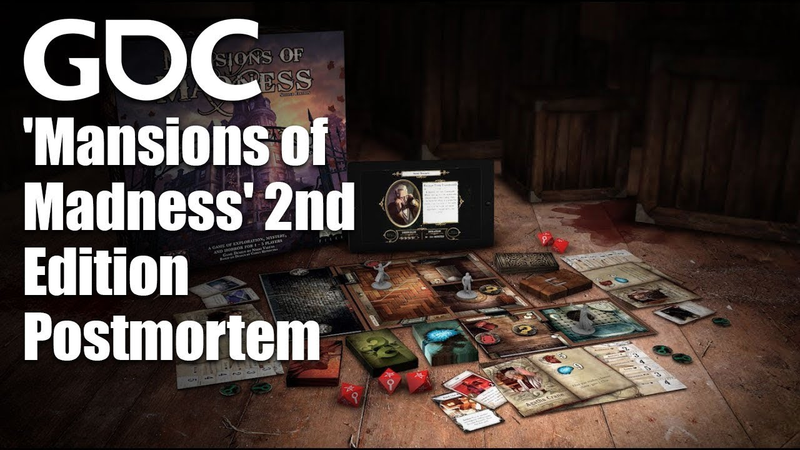
Mansions of Madness 2nd Edition: Postmortem of an App-Integrated Board Game
Mansions of Madness Second Edition serves as a foundational case study for the successful integration of digital applications into tabletop gaming.
- Integrating an app into Mansions of Madness 2nd Edition reduced the game's complexity rating on BoardGameGeek from 3.24 to 2.65, a decrease of over 20%, while simultaneously increasing the content volume by more than 12 times.
- To enable non-programmers on the tabletop design team to build complex game logic, the studio used Playmaker, a visual scripting plugin for Unity that allowed for the creation of encapsulated state machines.
- The development team struggled with significant technical debt and stability issues at launch, with unofficial user polls indicating that certain scenarios crashed on specific platforms up to one-third of the time.

Real Time Rendering for Feature Film: Rogue One
The integration of real-time rendering into the production of Rogue One: A Star Wars Story represents a pivotal shift in visual effects workflows, proving that high-fidelity game engine technology can meet the rigorous aesthetic standards of feature film production.
- The Advanced Development Group successfully integrated Unreal Engine into the production of 'Rogue One' to render the character K-2SO, proving game engine technology can meet high-end feature film aesthetic standards.
- The workflow utilized open standards like Alembic and Material X to import complex ILM assets into a real-time environment without requiring custom rebuilding.
- By employing custom solutions for geometry caching and temporal super-sampling, the team achieved film-quality beauty renders at 9K resolution.
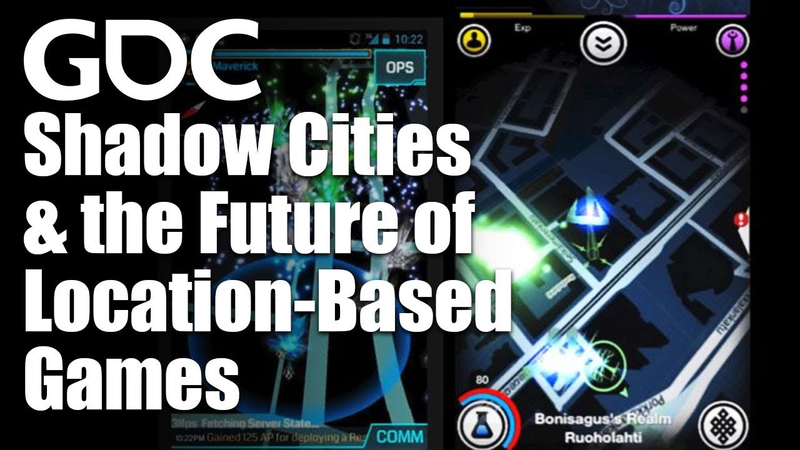
Shadow Cities and the Future of Location-Based Games
Location-based gaming represents a complex intersection of digital persistence and physical reality, where the primary objective is to overlay faction-driven conflict onto the real world.
- Despite the genre's focus on exploration, 74 percent of location-based gameplay occurs from stationary locations like homes or offices.
- Developers must pivot from simple check-in mechanics to deep, long-term engagement models that prioritize high lifetime value over broad, casual reach.
- To maintain fair multiplayer environments, designers must use technical workarounds like map distance abstraction and instancing to overcome geographic disparities and GPS inconsistencies.
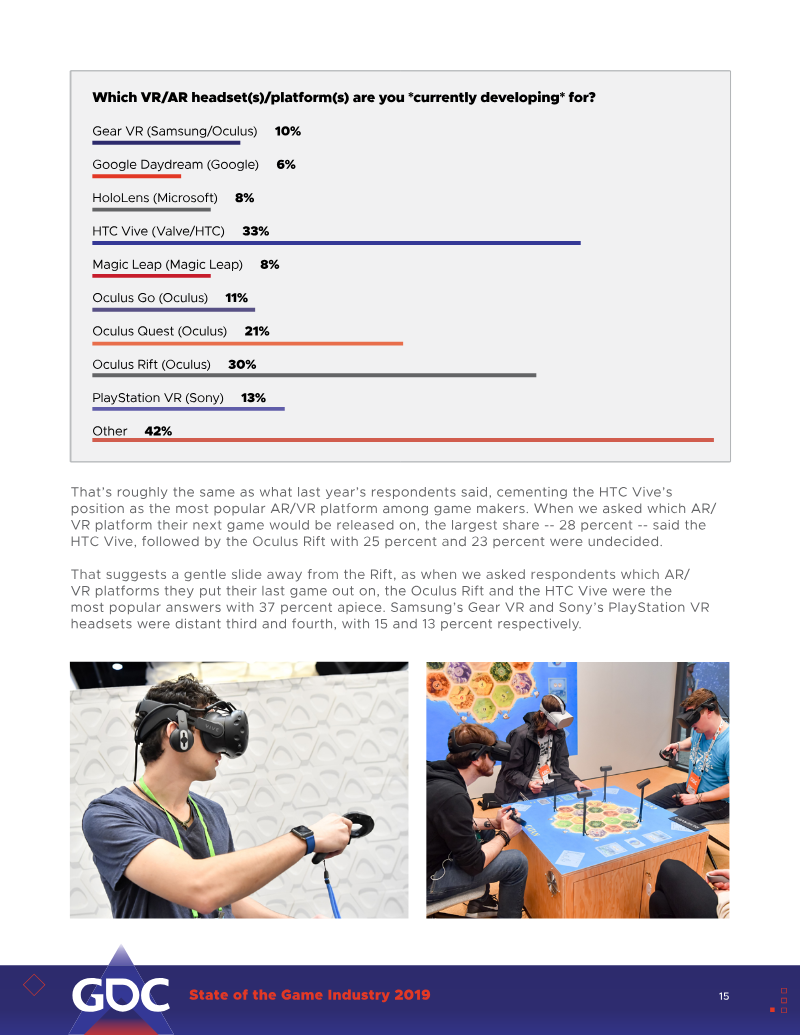
State of the Game Industry 2019
The global game development landscape in 2019 reflects a period of significant structural and cultural transition.
- Developers are increasingly challenging the industry-standard 30 percent revenue share model on Steam, viewing it as an unjustifiable financial burden.
- The industry is shifting toward self-funding and self-publishing models as interest in traditional monetization strategies like loot boxes and crowdfunding declines.
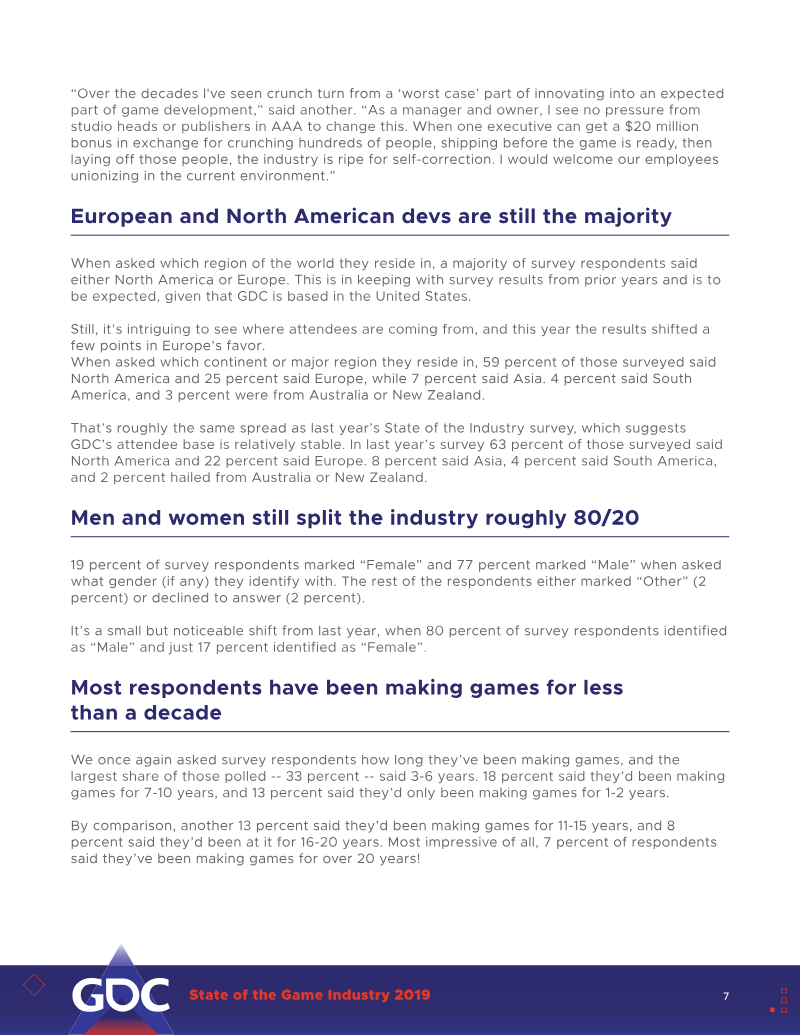
- Labor instability is driving a growing movement toward unionization to address systemic issues, including widespread overtime and a workforce demographic primarily composed of male professionals with under ten years of experience.
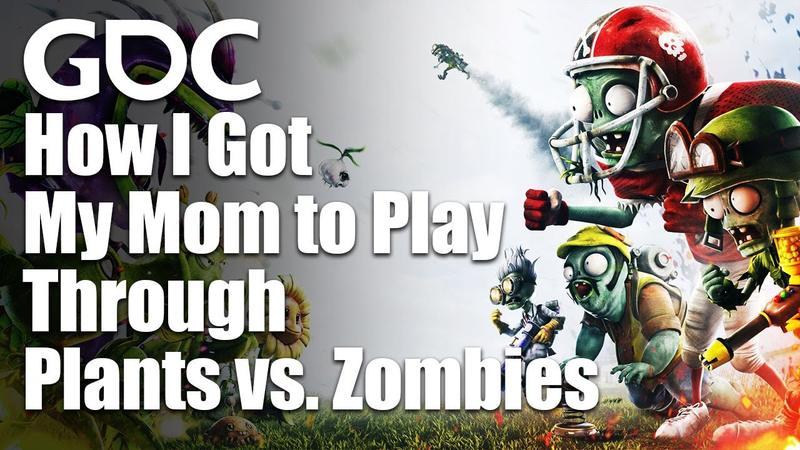
How I Got My Mom to Play Through Plants vs. Zombies
Effective game design prioritizes intuitive, seamless onboarding by integrating instructional elements directly into the core gameplay loop.
- Integrate instructional elements directly into the core gameplay loop to replace text-heavy tutorials, which disrupt immersion and feel like work.
- Use staggered pacing to introduce new mechanics only when they are immediately relevant to the player's progress.
- Leverage real-world analogies, such as plants as defensive towers, to reduce cognitive load by allowing players to apply existing knowledge to new mechanics.
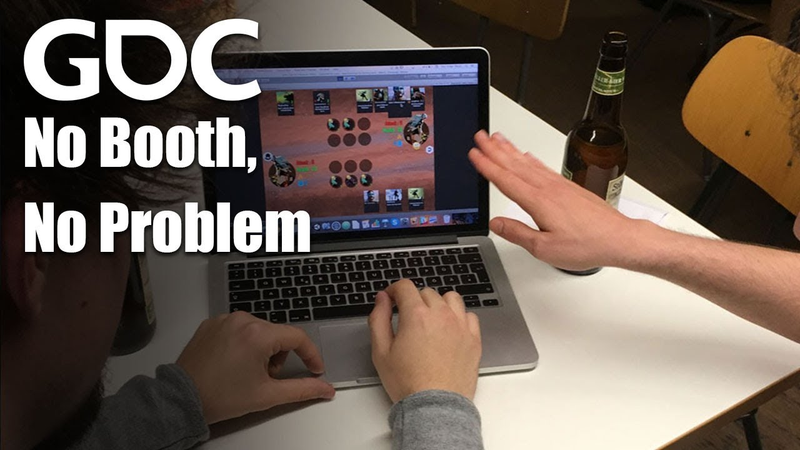
No Booth, No Problem: Showcasing Your Game on the Go
Independent developers can achieve significant marketing and networking objectives at industry conferences without the prohibitive costs and logistical burdens of maintaining a physical booth.
- Independent developers can achieve marketing and networking goals at conferences without the high costs of a physical booth by utilizing a mobile, active engagement strategy.
- Success requires a specialized conference build optimized for a concise, high-quality play experience lasting between five and ten minutes.
- Developers should prioritize direct, proactive networking by engaging with attendees in lines or approaching press and influencers at other booths.
HITMAN Season 1: From Executive Producer to Showrunner
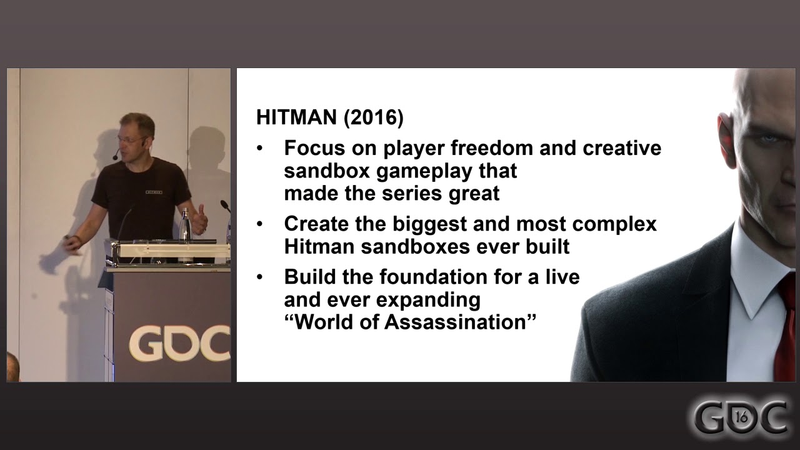
The transition of the Hitman franchise to an episodic, live-service model represents a strategic shift from static, retail-dependent releases toward a continuous World of Assassination.
- Transitioning to an episodic release model allows developers to react to player feedback in real-time, overcoming the long development cycles that previously separated titles like Blood Money and Absolution by six years.
- Data-driven development requires balancing 'hard facts' (in-game telemetry like feature usage and play duration) with 'soft facts' (community sentiment from Reddit, Twitter, and Facebook) to inform production decisions.
- The shift to a live-service model necessitates a 'war room' approach where international publishing and marketing teams meet weekly to align on global territory requirements, pricing, and communication strategies.
Mind Games: Brain Training for Game Developers
Game developers can significantly enhance their professional performance and long-term cognitive health by actively leveraging the principles of neuroplasticity.
- The REACH framework—Repetition, Effort, Attention, Complexity, and Health—serves as the core strategy for cognitive optimization and neuroplastic development.
- Neural growth requires pushing the brain beyond effortless tasks, necessitating engagement in complex, challenging activities that demand sustained, intense focus.
- Multitasking acts as a primary performance inhibitor by functioning as inefficient task-switching, whereas protecting flow states and practicing mindfulness strengthens the prefrontal cortex.
Life is Strange: The Blue Age of Storytelling
The emergence of the Blue Age of storytelling in video games represents a fundamental shift toward prioritizing emotional resonance, character-driven narratives, and lo-fi, painterly aesthetics over the industry’s traditional pursuit of photorealistic, high-budget spectacle.
- The 'Blue Age' of game design prioritizes emotional resonance and character-driven narratives over photorealistic, high-budget spectacle.
- Developers are increasingly utilizing interactive narrative branching and naturalistic dialogue to explore complex social themes like mental health and moral ambiguity.
- Effective storytelling in this model relies on avoiding stereotypical archetypes and using stylized, regional-specific writing to ground characters in objective humanity.
Board Game Design Day: Race for the Galaxy: Digital Design Gems
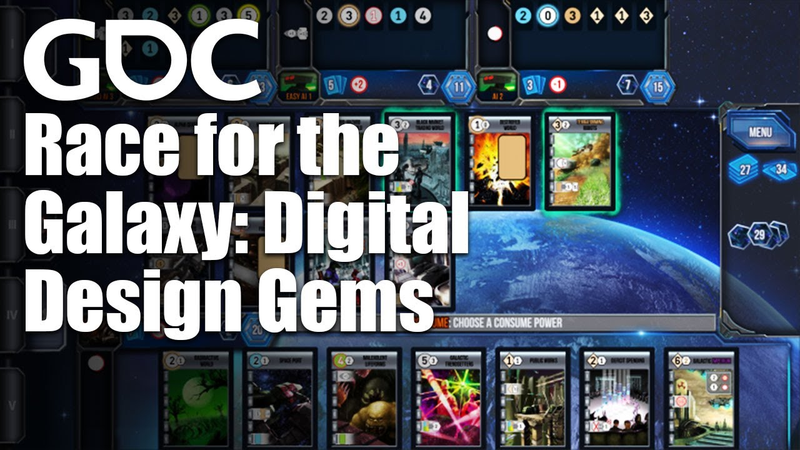
The successful transition of tabletop experiences into digital environments relies on selecting titles with structured, phase-based mechanics that favor strategic decision-making over physical tactility or social negotiation.
- Digital board game adaptations should prioritize asynchronous gameplay features, such as contextual prompts and automated rule execution, to reduce analysis paralysis and allow players to manage multiple games simultaneously.
- To maintain a vibrant community, developers should display both active and inactive multiplayer games in the lobby to broadcast a high level of activity, even if some games are not joinable.
- Developers should implement a system of 'attention tokens' to triage game events, ensuring that critical moments (like a major move) lock the screen while secondary events (like drawing cards) proceed in the background to maintain both speed and legibility.
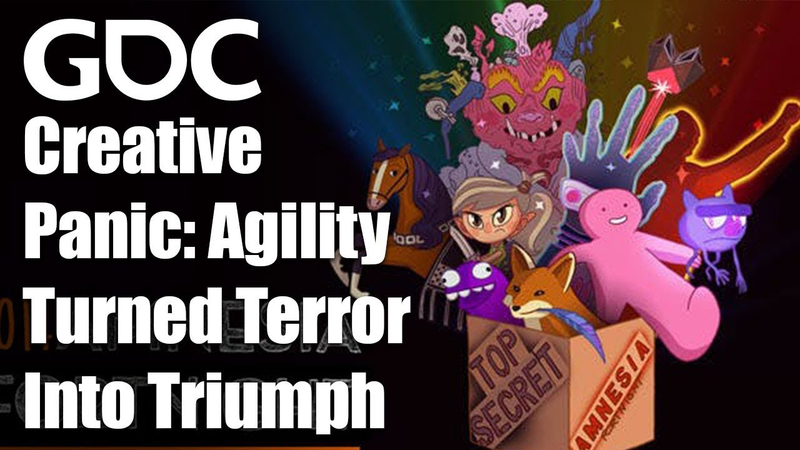
Creative Panic: How Agility Turned Terror Into Triumph
Double Fine successfully navigated a period of significant financial instability and project cancellation by adopting an agile, multi-team organizational structure.
- Double Fine transitioned from a single-project model to a flexible, multi-project organization by adopting an agile structure that empowered small, autonomous teams to lead their own concepts.
- The studio implemented 'Amnesia Fortnight,' a recurring two-week internal game jam, to serve as both a professional development pipeline and a source for new intellectual property.
- Operational efficiency was maintained through an 'economy of design' strategy, which prioritized core mechanics and the strategic reuse of existing assets to maximize output under tight constraints.