
Game Developers Conference
Game Developers Conference (GDC, now the GDC Festival of Gaming) is the professional event for the games industry. It publishes recorded talks and interviews, annual industry survey reports such as the State of the Game Industry, and news articles.
Documents
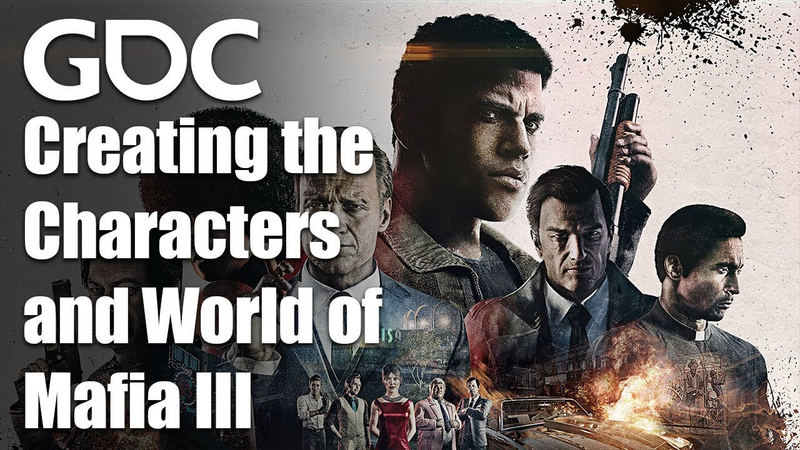
Creating the Characters and World of Mafia III
Mafia III centers on the narrative of Lincoln Clay, a Vietnam veteran navigating the volatile landscape of 1968 New Orleans.
- The narrative of Mafia III is set in 1968 New Orleans, utilizing a documentary-style presentation with archival footage to ground its fictional revenge story in the historical reality of the era's racial and social tensions.
- Developers utilized extensive research from literature, documentaries, and firsthand accounts to ensure historical accuracy in character motivations and systemic world-building.
- The game features a sophisticated police AI that dynamically adjusts response times based on the socioeconomic status of different city districts to mirror systemic disparities of the late 1960s.
Successful Freelancing in Game Audio
Building a sustainable career in game audio requires transitioning from a creative mindset to a disciplined business framework.
- Transition from a creative mindset to a disciplined business framework by implementing systematic, reproducible habits rather than relying on sporadic effort.
- Prioritize face-to-face networking at industry events and game jams, as personal trust is a more effective acquisition tool than a polished portfolio or website.
- Enforce a strict 24-hour follow-up policy after every initial contact to ensure memory retention and build professional rapport.
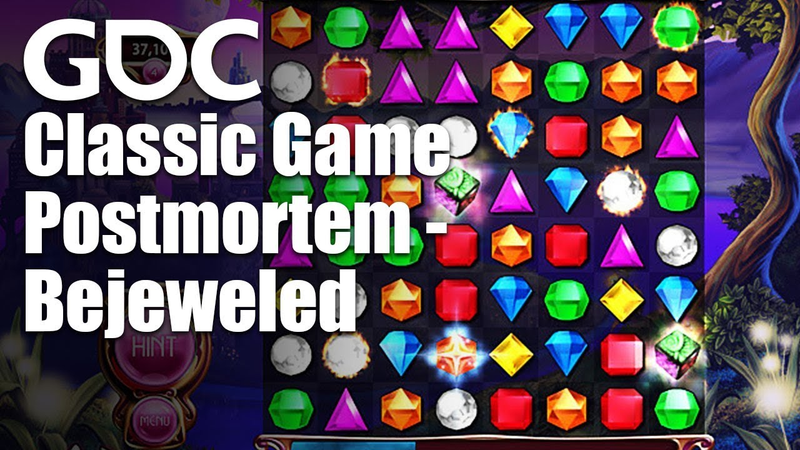
Classic Game Postmortem - Bejeweled
Bejeweled stands as a foundational pillar of the casual gaming industry, having evolved from a modest web-based experiment into a global phenomenon with over 500 million players and 7 billion hours of engagement.
- The original Bejeweled, initially titled Diamond Mine, was developed in under a month and was one of the last games small enough (1.4 MB) to be distributed on floppy disks.
- The game's most iconic feature, the untimed mode, was an accidental discovery; developers added a timer to make it a 'real' arcade game but included an untimed tutorial level that players preferred and played exclusively.
- PopCap initially failed to sell the game to publishers for a flat fee, eventually leasing it to Microsoft for $1,500 per month, which led to the name change from Diamond Mine to Bejeweled.
Keep it Together: Encouraging Cooperative Behavior During Co-op Play
Effective cooperative play relies on the principle of shared intentionality, where players transform individual motives into collective goals through negotiation and social cohesion.
- Designers should support 'collective agency' by creating systems that encourage players to negotiate actions and cooperate to achieve goals, rather than focusing solely on individual player agency.
- Cooperative mechanics exist on a continuum of coerciveness, ranging from highly prescriptive constraints that force interdependence to voluntary systems where players choose to collaborate for better efficiency.
- Players are more likely to cooperate when they realize that working together—such as coordinating tactics to manage AI detection models—significantly increases their chances of success compared to playing solo.

Making Your Games Better with Psychology and Playtesting, the Uncharted Way
Game design should shift its primary focus from the nebulous concept of immersion to the more precise psychological framework of attentional management.
- Designers should shift their focus from the abstract concept of immersion to the management of player attention, treating it as the primary currency of game design.
- To prevent cognitive exhaustion and vigilance fatigue, gameplay must be structured to alternate between high-focus, intense moments and low-stress periods of exploration.
- Developers can subtly guide player focus by leveraging biological principles such as foveal vision and saccadic eye movements through strategic use of lighting and visual composition.

Pushing Boundaries: Animating Expansion Packs for The Witcher 3 Wild Hunt
The development of expansion packs for The Witcher 3: Wild Hunt required a significant overhaul of animation workflows to overcome severe time constraints.
- CD Projekt Red produced more animation content for The Witcher 3 expansion packs in one year than they did for the base game, despite having only half the development time available.
- The animation team improved efficiency by implementing a 'strike team' structure, where individual animators were assigned as owners of specific monsters or NPCs and acted as co-directors during motion capture sessions.
- To accelerate production, the team formalized communication pipelines using templates that required story and design departments to align on character motivations before animation began.
Meditation for Devs: Maintaining Your Sanity for Crunch and Beyond
Game development environments characterized by high-pressure crunch periods necessitate proactive mental and physical health strategies to sustain long-term productivity and professional longevity.
- Proactive mental and physical health strategies are essential for mitigating the cognitive and physiological toll of high-pressure crunch periods and preventing long-term burnout.
- Developers can shift from reactive, stress-induced states to resilient mindsets by practicing mindfulness techniques such as body scanning, breathwork, and non-judgmental thought redirection.
- Restorative practices like Yoga Nidra and guided visualizations are effective tools for lowering cortisol levels and clearing the cognitive fatigue associated with demanding production cycles.
The CVAA and Gaming: Your Legal Responsibilities
The 21st Century Communications and Video Accessibility Act mandates that all video games incorporating real-time communication services must be accessible to individuals with disabilities.
- Since the industry-wide waiver expired on January 1, 2019, the 21st Century Communications and Video Accessibility Act (CVAA) legally mandates that all games with real-time communication features must be accessible to users with disabilities.
- Compliance requires developers to prioritize accessibility during the initial design phase rather than treating it as an afterthought.
- The Federal Communications Commission (FCC) does not mandate specific technical formats but requires companies to provide evidence of proactive engagement with the disability community.
Player-Driven Stories: How Do We Get There?
The modern game industry frequently prioritizes high-fidelity, linear storytelling, yet this reliance on scripted cutscenes often diminishes player agency and undermines the unique potential of the interactive medium.
- Developers should shift from linear, scripted cutscenes to unified agency, where player actions trigger systemic consequences rather than pre-designed narrative branches.
- Design frameworks should be grounded in Self-Determination Theory, specifically prioritizing autonomy, competence, and relatedness to foster meaningful player interaction.
- Narrative delivery should be integrated directly into core gameplay verbs—such as exploration, hacking, or conversation—rather than treating mechanics as isolated reactive toys.

Physics Animation in Uncharted 4: A Thief's End
Uncharted 4: A Thief's End achieves high-fidelity character movement by integrating physics-driven animation with traditional key-framed techniques.
- Uncharted 4 utilizes a hybrid animation system that blends traditional key-framed techniques with physics-driven movement to maintain artistic control while ensuring environmental responsiveness.
- The development team integrated the Havoc physics engine to manage rigid bodies, constraints, and motors, preventing the 'floaty' movement typically associated with purely procedural systems.
- A script-based ragdoll profile system allows animators to independently manage mass, friction, and inertia, enabling nuanced character reactions like independent torso movement during high-speed sequences.
Halo Wars 2: A UX Postmortem
The development of Halo Wars 2 required a complex user experience (UX) strategy to bridge the gap between a legacy console-based real-time strategy (RTS) franchise and the demands of a modern, cross-platform audience.
- The development of Halo Wars 2 required a collaborative partnership between 343 Industries and Creative Assembly to adapt the legacy RTS franchise for a modern, cross-platform audience.
- To lower the barrier to entry, the team introduced Blitz mode, which successfully integrated card-based strategy with RTS mechanics.
- Iterative design testing for Blitz mode revealed that initial interfaces were too cluttered for console play, leading the team to adopt a simplified 12-card deck system with a streamlined horizontal interface.

Biofeedback in Gameplay: How Valve Measures Physiology to Enhance Gaming Experience
Biofeedback serves as a transformative tool for quantifying player sentiment and enhancing the interactivity of digital environments.
- Valve utilizes real-time biometric data, including heart rate, skin conductance, and eye tracking, to replace estimated intensity levels in dynamic systems like the Left 4 Dead Director.
- Integrating physiological measurements allows developers to calibrate game difficulty and pacing with precision by incorporating a player's internal emotional state directly into the feedback loop.
- Research indicates that while players are highly responsive to in-game avatars that mirror their physiological states, direct visualization of these metrics can inadvertently increase player frustration.