
Game Developers Conference
Game Developers Conference (GDC, now the GDC Festival of Gaming) is the professional event for the games industry. It publishes recorded talks and interviews, annual industry survey reports such as the State of the Game Industry, and news articles.
Documents
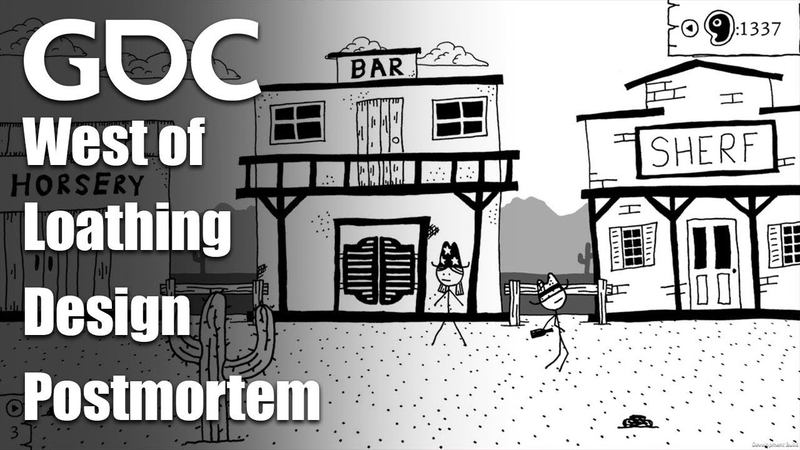
West of Loathing Design Postmortem
The development of West of Loathing centered on a high-velocity, content-first philosophy that prioritized environmental humor and side quests over a rigid, linear narrative.
- The development team utilized a custom, web-based toolset and a MySQL database to decouple game logic from the Unity engine, enabling rapid content iteration and a high-velocity production cycle.
- Prioritizing a content-first philosophy centered on environmental humor and side quests allowed for a sprawling world, though it ultimately led to narrative inconsistencies and production hurdles near completion.
- The team adopted an 80s-style development model that bypassed standard version control to increase speed, which facilitated live updates but created siloed workflows that hindered internal skill development.
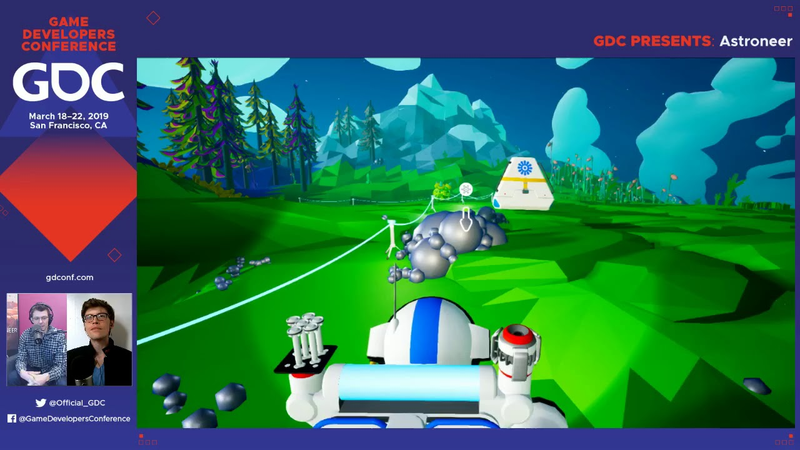
GDC plays Astroneer with System Era's Brendan Wilson
The development of Astroneer serves as a case study in the complexities of managing a long-term Early Access project.
- System Era scaled its development team from an initial cap of 10 people to 21 employees to meet the technical and support demands of the game's 1.0 release.
- The game utilizes a voxel-based terrain system powered by the marching cubes algorithm, which allows for real-time deformation by modifying density data within specific chunks rather than rebuilding the entire planet's mesh.
- Managing an Early Access title requires the same rigorous certification, store presence, and publishing infrastructure as a fully released game, while simultaneously balancing community expectations for features.
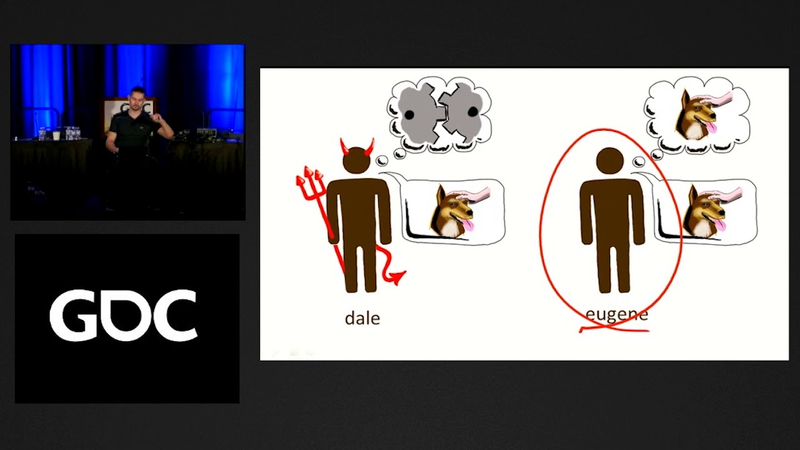
Concrete Practices to Be a Better Leader: Framing & Intention
Effective leadership is fundamentally a practice of intentional framing, where the context applied to communication dictates team dynamics and organizational outcomes.
- Leadership is an exercise in intentional framing, where the context a leader applies to communication directly dictates team dynamics and organizational outcomes.
- To resolve conflict, leaders should consciously frame team members as collaborative partners rather than adversaries, shifting the focus toward shared constraints instead of interpersonal friction.
- Professional relationships operate on a grid of closeness-distance and equality-hierarchy; leaders must actively steer interactions toward a peer-based dynamic to prevent conflict caused by misaligned perceptions.

Inviting Player Creativity Through Game Mechanics
Integrating player creativity into game design shifts the user experience from passive consumption to active participation, significantly increasing long-term investment and satisfaction.
- Designers should replace total creative freedom with structured frameworks to prevent player intimidation and the 'blank canvas' effect.
- Implementing artificial constraints and specific tasks simplifies decision-making, which reduces performance anxiety and encourages experimentation.
- Integrating collaborative or competitive social mechanics shifts the focus from individual performance quality to the process of creation.
Originality Factor in Fallout Music
Achieving originality in game music necessitates a strategic balance between accessible, familiar structures and experimental, unconventional textures.
- Composers should balance accessibility with experimentation by dedicating approximately 20% of the sonic palette to unique, avant-garde elements to maintain player engagement.
- The Fallout soundtrack achieves its distinct atmosphere by treating the game world as a parallel reality that diverged from the 1950s, prioritizing raw, primitive textures over complex music theory.
- Effective game scoring integrates environmental sound design by using custom-built libraries and non-traditional objects, such as oil jugs or foghorns, to make the music function as an extension of the physical space.
Shadow Tactics Postmortem: Commandos with Ninja
The real-time tactics genre experienced a significant decline due to a shift toward cinematic, scripted gameplay that abandoned the player-driven complexity of classic titles like Commandos and Desperados.
- Shadow Tactics utilizes a 'Shadow Mode' mechanic that allows players to queue one action per character, enabling complex team-based maneuvers while maintaining the game's core challenge by limiting the number of simultaneous actions.
- The game design intentionally restricts gunplay by providing limited ammunition and high-noise profiles, positioning firearms as a 'joker' or emergency tool rather than a primary combat mechanic.
- Level design was optimized for a 'trial-and-error' player behavior, where guards are placed in close proximity to prevent long, tedious patrol loops that could disrupt the player's tactical setup process.
Leave Enough Room: Design that Supports Player Expression
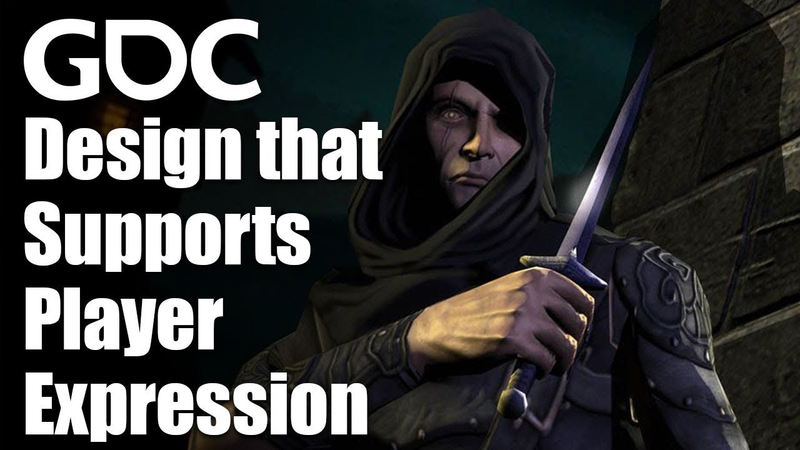
Player expression serves as a critical design pillar that transforms games from passive experiences into participatory art forms.
- Design systems should prioritize player expression by providing tools that allow for multiple, non-prescriptive solutions rather than forcing players through rigid, bottlenecked paths.
- Effective game design relies on a three-part loop: avoiding prescriptive instructions, empowering players to generate unique gameplay data, and creating systems that dynamically respond to that data.
- Designers should utilize agnostic unit design, where game elements function as versatile tools or hazards that adapt to the player's specific context and goals.

Mirror's Edge Catalyst: Evolving and Creating a Style
Mirror’s Edge Catalyst establishes a distinct visual identity by balancing minimalist artistic expression with the functional requirements of an open-world traversal system.
- DICE established a '70/30' design rule for Mirror's Edge Catalyst, where 70% of the environment is based on real-world precedents and 30% is stylized to maintain a distinct, futuristic aesthetic.
- The team utilized a 'less is more' philosophy to create an elegant, minimalist world, intentionally removing visual noise, dirt, and clutter to emphasize clean, pristine shapes.
- To ensure visual consistency, the team defined strong keywords and used mood boards to align the entire development team on the game's core tone and aesthetic goals.
Players Are People Too
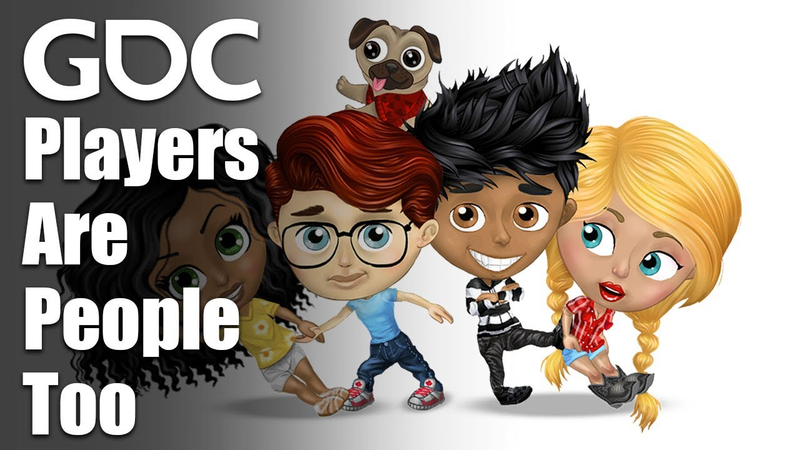
Long-term success in the gaming industry depends on shifting the developer-player dynamic from a transactional relationship to a partnership.
- Studios can achieve long-term success by shifting from transactional player relationships to a partnership model that treats users as human beings rather than data points.
- The turnaround of the legacy title YoWorld demonstrates that prioritizing user-generated content and community feedback can effectively reverse product decline.
- Development priorities should be determined by synthesizing subjective community feedback with objective metrics like sales figures and participation rates to avoid relying on biased assumptions.

Epic Sync: Wrangling the Work of Highly Interdependent Dev Teams at Bungie
To scale the development of Destiny 2, Bungie transitioned from a traditional, discipline-siloed waterfall model to a structure comprising over 40 semi-autonomous, cross-disciplinary agile teams.
- Bungie scaled Destiny 2 development by transitioning from a siloed waterfall model to a structure of over 40 semi-autonomous, cross-disciplinary agile teams.
- The studio manages interdependencies through a quarterly Planning Day that brings approximately 300 developers together to align on 12 weeks of work.
- Physical artifacts, including dependency and risk boards, are used alongside digital tools like JIRA and TFS to visualize bottlenecks and secure formal commitments.
Looking Back and Moving Forward with Pillars of Eternity
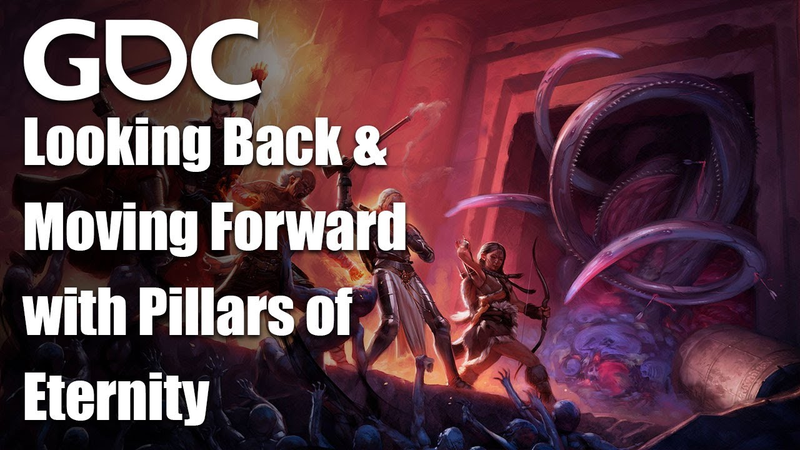
Reviving the isometric role-playing game genre requires a delicate balance between honoring the legacy of titles like Baldur’s Gate and integrating modern quality-of-life expectations.
- Reviving isometric RPGs requires balancing classic atmospheric design with modern quality-of-life standards, specifically prioritizing high-fidelity character detail, dynamic environments, and intuitive user interfaces.
- User interface design should prioritize usability and robust modding support over rigid aesthetic adherence, utilizing accessible file formats to foster long-term community engagement.
- Systemic features like stronghold systems fail to resonate unless they are supported by meaningful, quest-driven content rather than just mechanical depth.

Level Design Saga: Creating Levels for Casual Games
The Saga model serves as the foundational framework for modern casual mobile game design, prioritizing linear progression, frequent content updates, and social integration to maximize long-term player retention.
- The Saga model optimizes long-term retention by utilizing a modular, linear progression framework that supports frequent content updates and social integration.
- Designers employ the ki-sho-ten-ketsu framework—introduce, train, twist, and conclude—to structure a difficulty rhythm that balances tutorials with increasing player-driven complexity.
- Effective level design requires a synthesis of creative intuition and quantitative analysis, using metrics like drop-off rates and average attempts per level to refine difficulty curves.