
Game Developers Conference
Game Developers Conference (GDC, now the GDC Festival of Gaming) is the professional event for the games industry. It publishes recorded talks and interviews, annual industry survey reports such as the State of the Game Industry, and news articles.
Documents
How to Get a Job Writing for Games
Securing a position as a game writer requires a strategic approach that balances creative proficiency with technical versatility.
- Prioritize a concise portfolio featuring focused, high-quality samples like ten-page screenplays rather than exhaustive long-form documents to allow for quick assessment by hiring managers.
- Demonstrate technical versatility by acquiring basic skills in coding, scripting, or project management to effectively integrate narrative elements into game systems.
- Tailor all application materials to reflect the specific culture and style of the target studio to demonstrate alignment with their production environment.
How to Run a Studio Without a Surprise Hit
Small game studios can achieve long-term stability and growth by moving away from the high-risk pursuit of a singular runaway hit.
- Achieve long-term financial stability by balancing internal intellectual property development with consistent work-for-hire contracts to diversify revenue streams.
- Maintain at least one year of operational runway and master precise project estimation to insulate the studio from market volatility.
- Position the studio as a full-service partner for clients slightly larger than the firm itself to secure more reliable, long-term income.
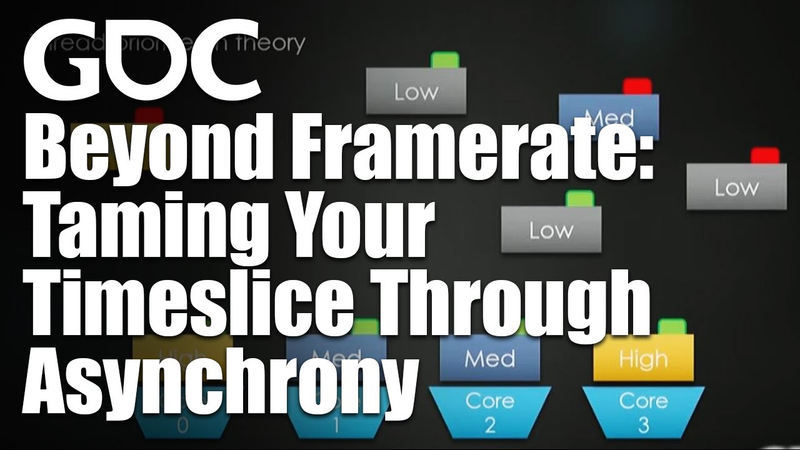
Beyond Framerate: Taming Your Timeslice Through Asynchrony
Real-time game artificial intelligence frequently encounters computational bottlenecks when constrained by standard frame-based processing.
- Transitioning AI processing from standard frame-based execution to amortized, multi-frame task distribution prevents computational bottlenecks and ensures consistent performance.
- Implementing a custom scheduler within a thread pool is superior to traditional background threading, as it avoids common issues like thread contention, priority inversion, and unpredictable latency.
- Tasks should voluntarily yield execution by using the CPU’s timestamp counter to monitor duration, ensuring they pause before exceeding a strictly defined time slice.
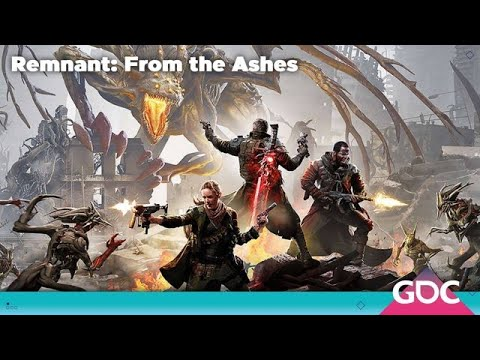
GDC plays Remnant: From the Ashes with design director John Pearl
Remnant: From the Ashes establishes a unique niche in the action-RPG landscape by synthesizing the high-stakes, deliberate combat of the Souls-borne genre with the tactical depth of a third-person shooter.
- Gunfire Games utilized procedural generation to create replayability, allowing developers to drop new content into existing worlds that players encounter upon re-rolling campaigns or adventure modes.
- The game's level design relies on large, hand-crafted 'tiles' rather than purely random generation, ensuring that combat encounters maintain tactical depth and environmental storytelling similar to Souls-like titles.
- To maintain player agency, the team prioritized frame-perfect responsiveness in character movement and weapon handling, ensuring that player deaths feel like a result of personal error rather than system latency.

GDC plays Knights And Bikes with Rex Crowle
Knights and Bikes, developed by the independent studio Foam Sword, captures the essence of childhood independence and the coming-of-age spirit through a cooperative action-adventure experience.
- Rex Crowle and Moo Yu founded Foam Sword Games to develop Knights and Bikes, with Crowle handling art, animation, and lighting while Yu manages the technical and business operations.
- The game's art style is designed to reflect the perspective of children, utilizing painterly textures and materials like chalk and pastels to mimic the tools a child might use to document their own adventures.
- The developers moved away from turn-based combat early in production, opting for a more active, exploration-focused gameplay loop that better suits the mischievous and curious nature of the child protagonists.
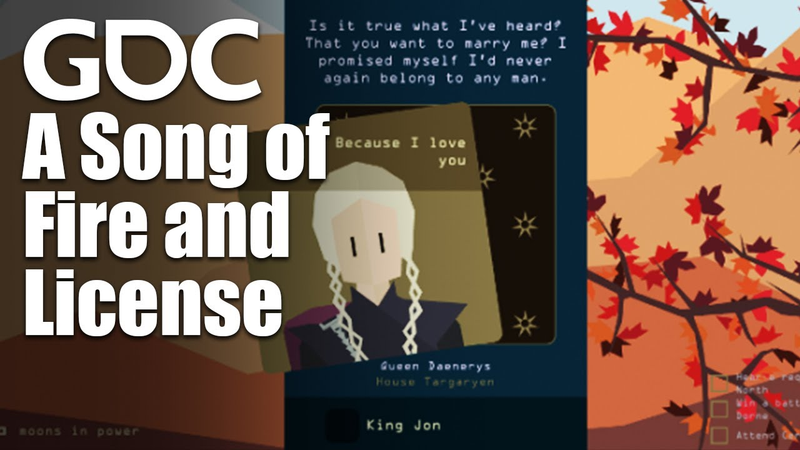
Reigns: Game of Thrones: A Song of Fire and License
The collaboration between Devolver Digital, Nerial, and HBO to produce Reigns: Game of Thrones serves as a strategic model for how independent developers can successfully integrate global intellectual property into niche gaming experiences.
- Success in licensed gaming requires positioning the product as an additive narrative extension rather than generic merchandise to avoid brand dilution.
- The development of Reigns: Game of Thrones involved managing over 1,600 narrative cards through a highly iterative process to ensure strict adherence to the source material's canon.
- Navigating the partnership with HBO required a year-long negotiation process that included rigorous legal requirements, such as actor likeness approvals and narrative consistency checks.

A Deep Dive into the 12 Motivations: Findings from 400,000+ Gamers
The gaming industry frequently relies on a flawed binary model that mischaracterizes players with low motivation scores as casual or disengaged.
- Player motivations follow a normal distribution rather than a binary scale, meaning low-motivation scores indicate a preference for curated experiences rather than a lack of engagement.
- Data from over 400,000 gamers confirms that motivations are relative constructs shaped by population norms rather than fixed biological traits.
- Cross-cultural analysis shows that gaming motivations are heavily influenced by environmental and market-specific contexts, with competition and completion driving engagement differently across regions like the United States and China.
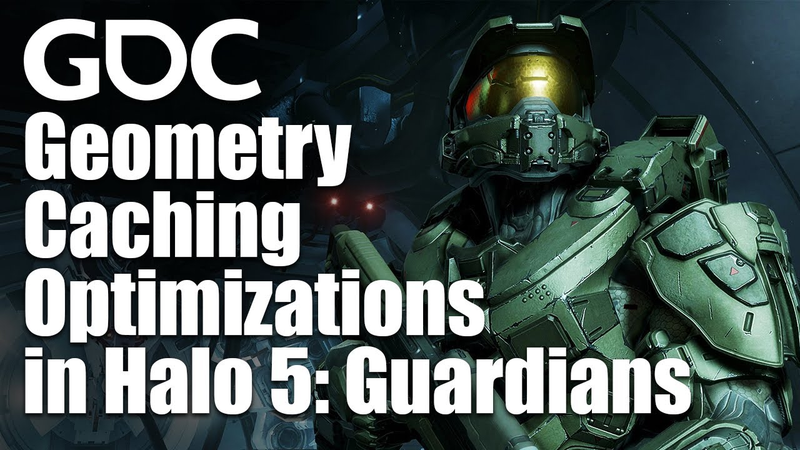
Geometry Caching Optimizations in Halo 5: Guardians
Achieving high-fidelity destruction and complex kinematic motion in Halo 5: Guardians requires a robust geometry caching pipeline capable of managing over a million GPU transforms at a consistent 60 frames per second.
- The Halo 5 geometry caching system manages over one million GPU transforms at 60 FPS by categorizing assets into static, rigid, soft, and skinned types.
- Prioritizing rigid geometry as 'clouds of transforms' allows 90% of assets to be processed with a baseline performance cost of under two microseconds.
- Asset import times were reduced from 45 minutes to 30 seconds by moving away from temporal coherence algorithms to an Alembic-based pipeline that utilizes exported attribute data.
Level Design Workshop: Level Flow for a Video Game Mixtape
The video game mixtape functions as a deliberate, curated collection of vignette-style experiences that prioritize thematic cohesion over the traditional structure of long-form development.
- The game mixtape format prioritizes thematic cohesion over long-form development by curating a series of vignette-style experiences.
- Modular design allows developers to manage player pacing by transitioning between distinct mechanics before repetition or difficulty fatigue sets in.
- This approach functions as a rapid, iterative experimentation framework that enables creators to test novel gameplay concepts without the burden of sustained mechanical complexity.
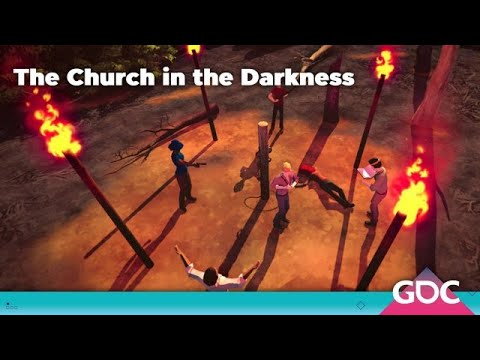
GDC Plays The Church in the Darkness with Richard Rouse III
The Church in the Darkness functions as a top-down infiltration game centered on the rescue of a relative from a 1970s religious cult.
- The Church in the Darkness features a procedural design where the cult's dogma remains consistent, but the leaders' level of danger and the game's narrative state vary across playthroughs.
- The game is designed for high replayability, with the developer suggesting that players experience the core content by completing four or five distinct endings.
- To maintain a realistic tone, the game avoids traditional shooter mechanics, instead utilizing stealth systems where the consequences of being captured depend on the player's previous violent actions.

Conquering the Creative Challenges in Marvel's Spider-Man
The development of Marvel’s Spider-Man centered on the ambition to craft a definitive superhero experience that balanced high-stakes action with the grounded, human struggles of Peter Parker.
- Marvel’s Spider-Man achieved record-breaking commercial success as the fastest-selling PlayStation title at launch, moving 3.3 million units within its first three days.
- The development team prioritized the core character tension between Peter Parker’s personal life and his superhero responsibilities to ensure emotional resonance and narrative depth.
- The studio moved away from traditional superhero tropes by reimagining the protagonist as a 23-year-old, focusing on situational humor and authentic character development rather than forced quips.
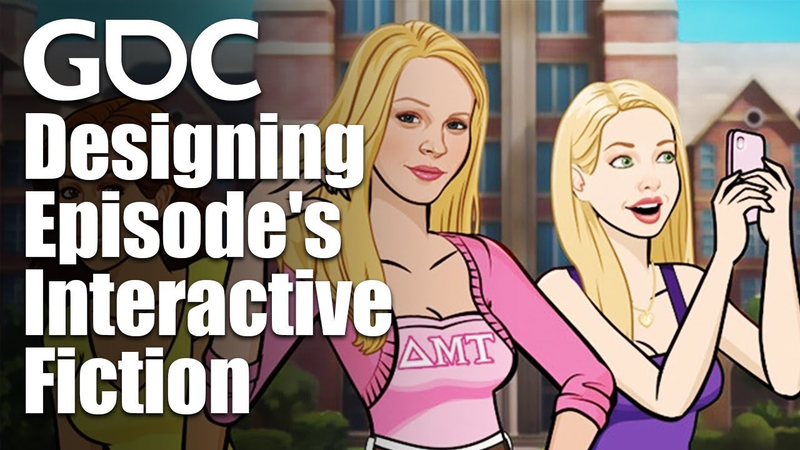
Designing Episode's Interactive Fiction in Three Phases
Successful interactive fiction on mobile platforms requires a synthesis of cinematic storytelling techniques and rigorous, data-driven design.
- Interactive fiction design must integrate player agency directly into the initial writing process, ensuring branching paths are fundamental to the narrative rather than aesthetic additions.
- Development success is measured through a continuous feedback loop tracking story starts, retention rates, and the depth of choice engagement.
- Mobile-first design requires prioritizing portrait-mode visuals and bite-sized narrative segments to align with the specific constraints of mobile consumption.