
Game Developers Conference
Game Developers Conference (GDC, now the GDC Festival of Gaming) is the professional event for the games industry. It publishes recorded talks and interviews, annual industry survey reports such as the State of the Game Industry, and news articles.
Documents
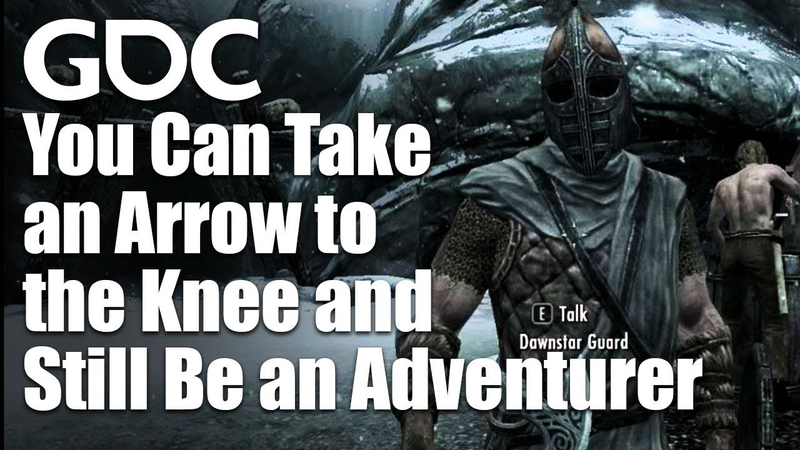
You Can Take an Arrow to the Knee and Still Be an Adventurer
The game industry currently faces a significant disconnect between its player base and its character design, as individuals with disabilities represent 25 to 30 percent of the gaming population but account for less than one percent of on-screen characters.
- While individuals with disabilities comprise 25 to 30 percent of the gaming population, they are represented by less than one percent of on-screen characters.
- Game developers must move away from using disability as a narrative trope for horror, villainy, or tragedy, which currently reinforces social stigmas and alienates a significant portion of the player base.
- Authentic representation requires normalizing disability as a standard human experience rather than a plot device or a condition that must be cured.

Shoot for the Sky: The Ambitious HDR Time-Lapse Skies of Forza Horizon 3
The development of Forza Horizon 3 marked a significant shift in open-world environmental rendering by replacing traditional procedural sky simulations with high-fidelity, HDR time-lapse photography captured on location in Australia.
- Forza Horizon 3 replaced procedural sky simulations with 25 distinct HDR time-lapse sequences captured on location in Australia to achieve superior lighting realism and physical accuracy.
- The development team engineered a custom three-camera rig to record 24-hour sequences, resulting in 1.2 terabytes of raw data per shoot.
- To optimize performance, the team used motion vectors to interpolate between two-minute capture intervals, reducing the final data footprint from over a terabyte to under 2 gigabytes.
Math for Game Programmers: The Math of Deep Learning
Deep learning functions as a specialized form of differentiable computing, where developers construct large, complex computational graphs to approximate functions that map inputs to outputs.
- Deep learning functions as differentiable computing, utilizing massive computational graphs with billions of parameters to approximate complex functions that map inputs to outputs.
- The primary utility of deep learning is its ability to process high-dimensional data, such as audio, video, and images, to identify complex decision surfaces that traditional rule-based systems cannot.
- Training relies on gradient-based optimization and backpropagation, which use the chain rule to iteratively adjust weights despite the non-convex nature of the problem.
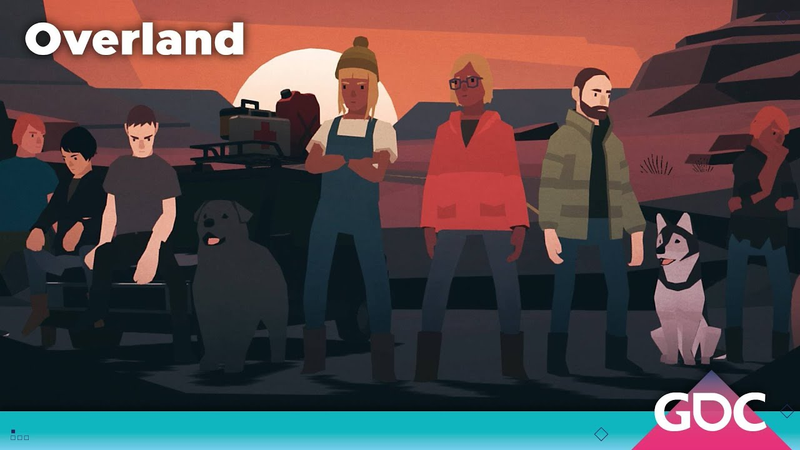
GDC Plays Overland with Finji co-founder Adam Saltsman
Overland serves as a case study in minimalist, turn-based strategy design, prioritizing emotional stakes and tactical vulnerability over the traditional power-fantasy tropes common in the post-apocalyptic genre.
- Overland was designed to evoke player vulnerability and fear rather than the traditional power-fantasy loop found in many post-apocalyptic strategy games.
- The development team prioritized 'proportional warning' for random events, ensuring that players receive a multi-turn heads-up before reinforcements or threats appear on the map.
- Procedural generation in the game utilizes a system of placement masks and 'wild card' modifiers, which act as cascading overrides to determine level layout and resource distribution.
Technical Direction: Communication, ROI and Triage
Effective technical direction centers on the strategic alignment of team autonomy, rigorous project triage, and a disciplined focus on return on investment.
- Prioritize projects using a minimum 5-to-1 return on investment benchmark to ensure resources are allocated to high-impact initiatives rather than low-value legacy refactoring.
- Utilize the 80/50 rule for realistic project assessments to establish clear, value-based expectations and improve the accuracy of technical planning.
- Shift technical leadership focus from granular schedule management to the five core pillars of confidence, cost, commitment, conflict, and cooperation.

Killer Portfolio or Portfolio Killer 2019: Advice from Industry Artists
A successful portfolio in the modern game industry serves as a testament to an artist’s unique creative vision, technical problem-solving abilities, and professional maturity.
- Prioritize real-time, in-engine assets over static illustrations or cinematic-only reels to demonstrate your ability to function within a professional production pipeline.
- Demonstrate professional maturity by showcasing an iterative design process, including thumbnailing, silhouette studies, and technical breakdowns, rather than just final results.
- Specialize your portfolio for specific roles, as generalist positions are typically reserved for seasoned professionals rather than entry-level candidates.

Game Discoverability Day: Crowdfunding Your Video Game in 2019
Crowdfunding serves as a specialized but enduring financial mechanism for independent game development, maintaining a steady cadence of approximately one successful project per day on Kickstarter.
- Success on Kickstarter is driven by a pre-existing community rather than platform organic reach, with the platform maintaining a steady rate of approximately one successful project per day.
- Achieving 20% of a total funding goal within the first 48 hours is a critical milestone required to maintain the momentum necessary for a successful campaign.
- While total annual funding has declined from 2015 peaks to roughly $15 million, the platform remains viable for projects ranging from small indie titles to those seeking over $500,000.
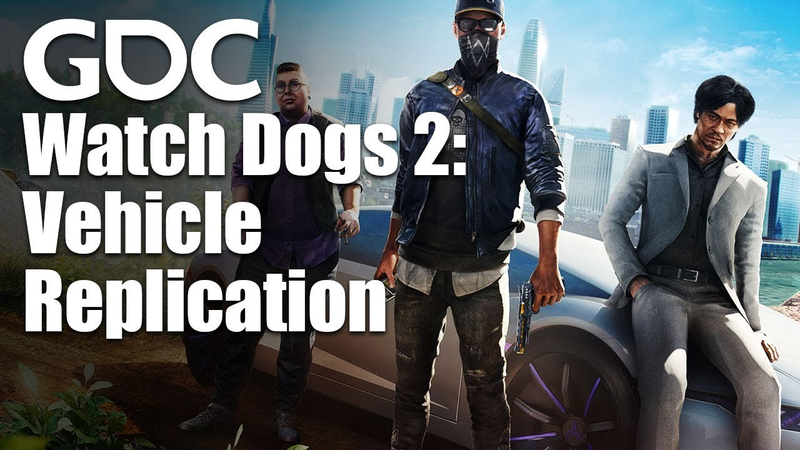
Replicating Chaos: Vehicle Replication in Watch Dogs 2
Achieving seamless vehicle replication in a peer-to-peer multiplayer environment requires a sophisticated balance between network latency management and physics fidelity.
- Watch Dogs 2 utilized a peer-to-peer architecture for its four-player bounty mode, which necessitated distributed authority over entities and created significant challenges for synchronizing high-speed vehicle collisions.
- Vehicle replication relies on projective velocity blending for dead reckoning, which interpolates between local velocity and predicted master snapshots to minimize the spatial gap caused by network latency.
- To mitigate collision discrepancies in a peer-to-peer environment, the team implemented a hybrid approach that allows local physics to simulate impacts for a short duration before blending back into the dead-reckoned trajectory.
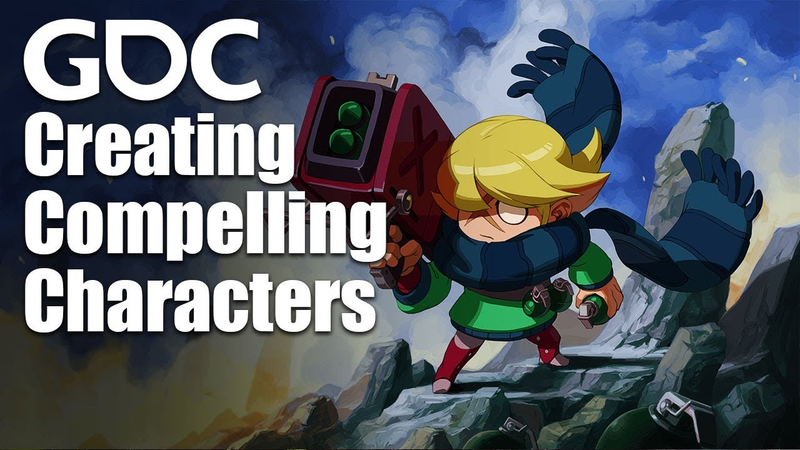
Creating Compelling Characters: Insights from a Panel of Character Concept Artists
Character design in modern game development functions as a narrative-driven process that prioritizes contextual integration over static, isolated illustrations.
- Character design should prioritize narrative-driven contextual integration, using cinematic storyboards or vignettes rather than static, isolated lineups to better communicate personality and emotional intent.
- Effective designs must balance aesthetic appeal with functional requirements and narrative logic, grounding costumes in research that reflects the character's specific situation and environment.
- Technical constraints should be treated as creative opportunities to convey character progression or personality, while maintaining visual consistency through deliberate shape language, color blocking, and a clear center of mass.
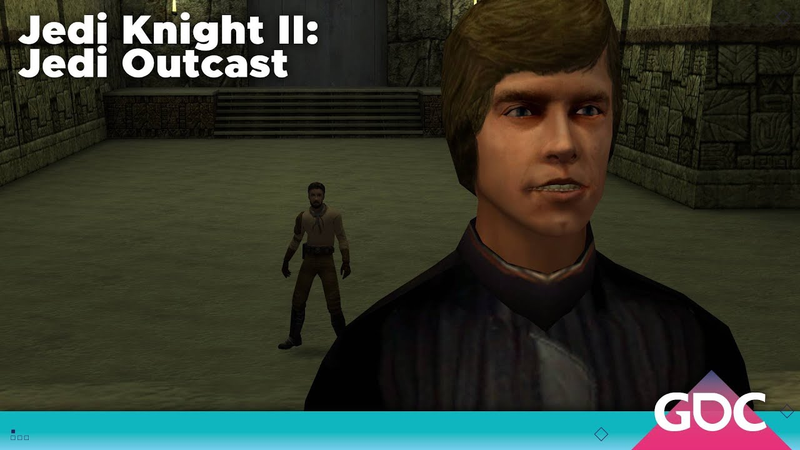
GDC Plays Jedi Knight II: Jedi Outcast with Raven Software
The development of Jedi Knight II: Jedi Outcast represents a pivotal moment in early 2000s action gaming, characterized by a transition from traditional first-person shooters to hybrid combat experiences.
- Raven Software developed Jedi Knight II: Jedi Outcast by hybridizing first-person shooter mechanics with third-person combat systems inspired by Heretic II and Bushido Blade.
- The development team utilized the technical foundation of Star Trek: Voyager – Elite Force to build the game, leveraging proprietary tools like GTK Radiant to manage hardware limitations.
- To ensure performance on early 2000s hardware, the team implemented rigorous asset optimization, level segmentation, and memory-efficient solutions like procedural facial animations driven by audio volume.
In the Long Run
Professional longevity in the game industry depends less on rigid adherence to formal job descriptions and more on the cultivation of versatile, transferable skill sets.
- Sustain long-term career stability by prioritizing the development of versatile, transferable skill sets over rigid adherence to formal job descriptions.
- Navigate industry volatility and cyclical layoffs by viewing professional identity as a malleable collection of experiences rather than a fixed title.
- Prioritize personal well-being and the identification of supportive peer groups to build resilience against the industry's inherent instability.

Celebrating Introverts in the Workplace
This analysis explores the professional challenges and inherent strengths of introverts within the game development industry.
- Introversion is a biological trait driven by acetylcholine-based internal rewards, rather than a social deficiency or a preference for external dopamine-driven stimulation.
- Corporate environments often prioritize extroverted communication styles, which can lead to the marginalization of the deep, analytical, and thoroughly vetted solutions typically produced by introverts.
- To improve meeting inclusivity, leadership should distribute agendas in advance and implement silent brainstorming sessions to ensure contributions are not limited to the loudest voices.