
Game Developers Conference
Game Developers Conference (GDC, now the GDC Festival of Gaming) is the professional event for the games industry. It publishes recorded talks and interviews, annual industry survey reports such as the State of the Game Industry, and news articles.
Documents
Game Narrative Summit: Conflict, Mystery, and Connection in Casual, Free to Play Puzzle Games
Casual, free-to-play puzzle games increasingly rely on sophisticated narrative frameworks to drive player engagement and long-term retention.
- Casual free-to-play puzzle games leverage narrative to drive engagement, with successful titles like 'Merge Mansion' generating $11 million in monthly revenue and others reaching $80 million in total earnings as of 2019.
- Effective game narrative relies on the 'CMC' framework: Conflict (bad things happening to create stakes), Mystery (unfolding secrets to maintain interest), and Connection (emotional bonds between players and characters).
- Narrative elements should be integrated directly into gameplay mechanics rather than relegated to dry tutorials, such as using story-driven tasks to guide players through mansion restoration or character interactions.
Clash of Clans: Bigger, Better, Battle Pass
Clash of Clans achieved a significant resurgence by systematically addressing long-standing progression bottlenecks and economic stagnation that had hindered player retention.
- The introduction of a five-dollar monthly Gold Pass served as the primary catalyst for a 30 percent year-over-year revenue increase and quadrupled the unique payer base.
- The Gold Pass model achieved high sustainability, maintaining a 70 percent monthly retention rate among its subscribers.
- Developers revitalized the game by spending two years refining foundational systems, specifically reducing upgrade costs and times while introducing magic items to eliminate progression bottlenecks.
Don't Ship a Product, Ship Value: Start Your Minimum Viable Product With a Solution
Minimum Viable Products (MVPs) serve as a strategic framework for game developers to deliver value while minimizing resource expenditure.
- An MVP must be a deliberate, iterative solution designed to solve a specific user problem rather than a generic prototype used to gauge general interest.
- Developers must maintain a firm product vision to filter feedback, exercising the discipline to reject feature requests that do not align with the core purpose of the product.
- The failure of the 'Cartridge' PC platform demonstrates that high-quality design cannot compensate for a lack of a clear, unique value proposition or the failure to address negative user feedback.
Machine Learning for Optimal Matchmaking
TrueMatch represents a fundamental shift in competitive gaming infrastructure by replacing static, manually tuned matchmaking rules with a dynamic, machine learning-driven framework.
- TrueMatch replaces static, manually tuned matchmaking rules with a machine learning framework that dynamically optimizes parameters every fifteen minutes.
- The system achieved a 72% reduction in player wait times compared to traditional, static matchmaking configurations.
- By utilizing a weighted utility function, the system allows developers to explicitly quantify and balance the trade-offs between match fairness and latency.
Scaling to 10 Concurrent Users: Online Infrastructure as an Indie
Building robust online infrastructure for independent games requires a strategic balance between technical capability and resource constraints.
- Prioritize core game mechanics over complex infrastructure, as the time and capital required for sophisticated backends often yield diminishing returns for small studios.
- Avoid microservices architectures, which introduce excessive deployment overhead and multi-hop asynchronous management challenges that can overwhelm indie teams.
- Use WebSockets or gRPC instead of standard HTTP protocols to ensure the bi-directional communication necessary for real-time lobby management and game state synchronization.
Game Server Performance on Tom Clancy's The Division 2
The Division 2 relies on an authoritative server architecture designed to manage massive instances containing up to 1,000 players and 20,000 non-player characters.
- The Division 2 utilizes an authoritative server architecture capable of managing massive instances with up to 1,000 players and 20,000 non-player characters.
- The simulation runs at 20 to 30 frames per second by distributing workloads across 36 dedicated threads on 40-core hardware using a parallelized task framework.
- Engineers mitigated CPU thread starvation and memory contention by replacing global mutexes with a lock-free heap and commit cache to reduce lock contention.
Bringing Replays to World of Tanks: Mercenaries
The implementation of a server-side replay system for World of Tanks: Mercenaries centers on a sophisticated architectural strategy that treats recorded match data as a live network stream.
- The replay system utilizes a 'fake server' architecture that treats recorded match data as a live network stream, allowing the game to leverage existing network code for playback and camera functionality.
- To ensure playback stability and performance, the system decouples gameplay logic from UI timers and employs a tiered message-processing system that discards non-essential packets during time-jumps.
- The architecture uses world-state checkpointing to enable rapid seeking through long matches, preventing the frame spikes typically associated with jumping to different points in a recording.
Beyond Games as a Service with Live Ops
The transition from viewing video games as discrete, one-time products to the Games as a Service model has fundamentally altered industry priorities, often at the expense of player experience.
- LiveOps should be viewed as an additive, iterative process rather than a sequential development phase, requiring game architecture that supports frequent, small-scale updates rather than just large, pre-planned DLC.
- Designers must identify and support the game's intrinsic motivators—such as social relatedness—rather than focusing solely on optimizing easily measurable KPIs like combat loops or microtransaction funnels.
- LiveOps maturity progresses through three stages: basic iterative updates based on player feedback, optimization through A/B testing and personalization, and finally mastering engagement by extending the game experience beyond the client.
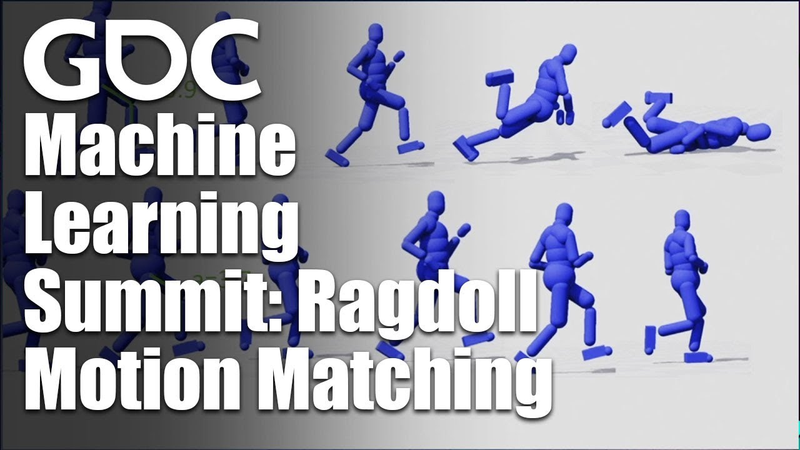
Machine Learning Summit: Ragdoll Motion Matching
Modern character animation is undergoing a significant evolution through the integration of physical ragdoll simulation with data-driven motion matching.
- Modern character animation is shifting from rigid playback to physical ragdoll simulation combined with data-driven motion matching for real-time environmental responsiveness.
- The system utilizes reinforcement learning, specifically actor-critic methods and policy gradient techniques, to map continuous state inputs to physical actions.
- Neural network policies treat actions as Gaussian distributions, iteratively optimizing the mean and standard deviation to improve movement stability and minimize falls.
The Kine Postmortem
The development of the narrative puzzle game Kine serves as a case study in the challenges of solo game production, emphasizing the necessity of aligning mechanical design with storytelling.
- The $420,000 project required an Epic Games exclusivity deal to fund essential art and UI refinements, demonstrating the necessity of external funding for solo-developed titles.
- Attempting a simultaneous multi-platform launch on PC, Xbox, PS4, and Stadia was a strategic error that created an unsustainable logistical burden and resulted in negligible console sales.
- Integrating narrative with mechanics—such as designing puzzles to reflect specific character actions like dancing or combat—created a more cohesive experience than puzzles based on mechanical complexity alone.
Is Your Game Cross-Platform Ready?
Cross-platform development has emerged as a critical strategy for modern game studios, shifting the industry focus from platform-specific silos toward a player-centric model.
- Cross-platform development requires a unified identity system that links disparate platform accounts (e.g., Xbox Live, Steam, PlayStation) to a single, developer-owned account ID to enable seamless cross-play and social features.
- Developers should implement dedicated or relay servers rather than peer-to-peer networking to avoid NAT restriction issues when connecting PC and console players.
- To maintain a consistent experience, unify commerce by using virtual currencies (like V-Bucks or Minecoins) and managing entitlements through a secure, centralized service that validates purchases across different platform storefronts.
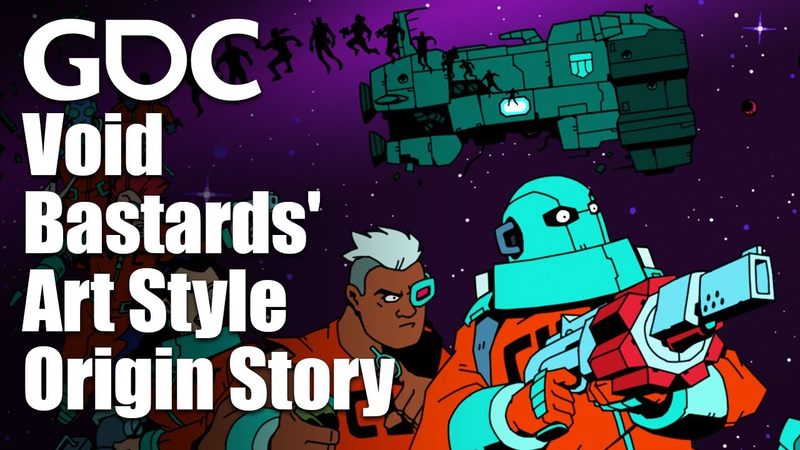
Void Bastards' Art Style Origin Story
The development of the art style for the 2019 game Void Bastards was a multi-year iterative process driven by a commitment to a cohesive comic book aesthetic.
- The development team for Void Bastards was geographically distributed across the UK, Canberra, Canada, and Scotland, necessitating early conceptual tools like a three-page comic to align the team on the game's tone and world-building.
- The game's core loop shifted from a single protagonist who accumulated genetic errors upon reincarnation to a system featuring a series of disposable prisoner characters.
- To manage production scope, the team opted for hand-designed spaceship layouts with procedural interior elements rather than fully procedural ship generation.