
Game Developers Conference
Game Developers Conference (GDC, now the GDC Festival of Gaming) is the professional event for the games industry. It publishes recorded talks and interviews, annual industry survey reports such as the State of the Game Industry, and news articles.
Documents
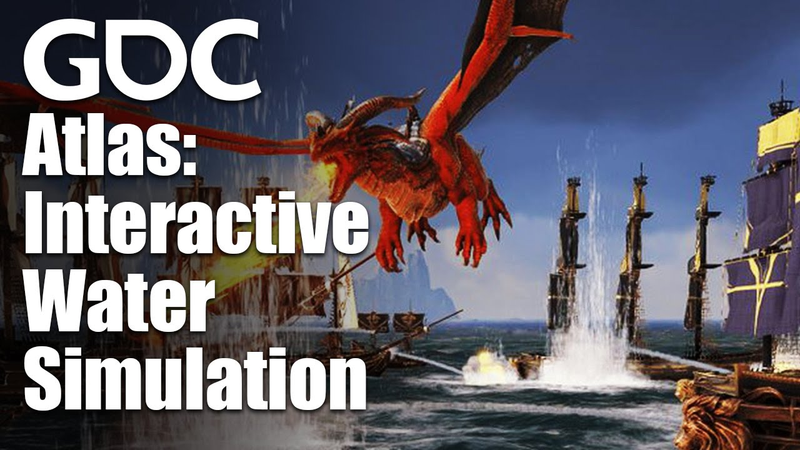
Wakes, Explosions and Lighting: Interactive Water Simulation in Atlas
The development of the ocean simulation for the massively multiplayer online game Atlas centers on balancing high-fidelity visual realism with the rigorous performance constraints required for a seamless, multi-server environment.
- To simulate vast ocean surfaces for Atlas, Grapeshot Games replaced the standard Phillips spectrum with JONSWAP and JONSWAP-variant spectra to avoid unrealistic wave heights in non-oceanic environments.
- The team optimized FFT-based ocean simulation by using larger waves to distort smaller frequency bands, effectively masking tiling repeats without sacrificing performance.
- Buoyancy for rigid bodies is calculated by taking discrete displacement samples along a boat's hull and using an iterative Newton's approximation method to determine height at specific world locations.

Nature vs. Nurture: Unpacking Player Spending in F2P Games
Free-to-play monetization relies on a consistent industry reality where only one to five percent of the total player base generates revenue.
- Only one to five percent of a free-to-play player base generates revenue, making these individuals a distinct behavioral segment with a high propensity to spend across multiple titles.
- Developers should shift from vanity metrics to correlation analysis to identify specific KPIs that directly impact average revenue per user (ARPU) and lifetime value (LTV).
- Pricing entry points should typically range between five and twenty-five dollars, as setting prices too low conditions players to expect lower costs and limits long-term revenue potential.
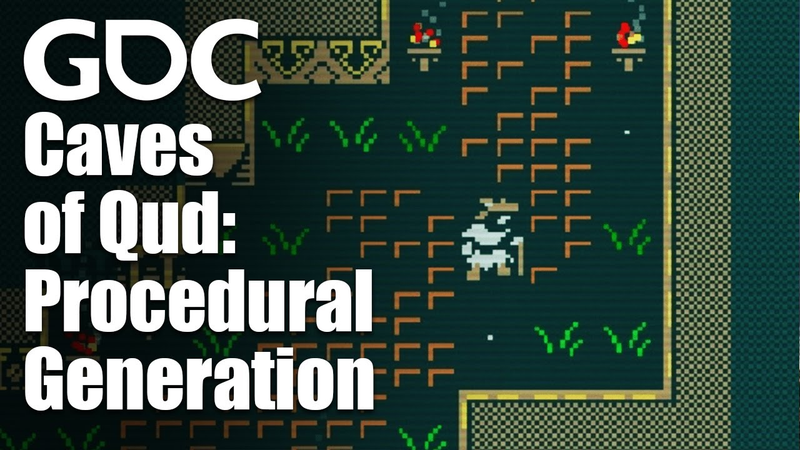
End-to-End Procedural Generation in Caves of Qud
The procedural generation architecture of Caves of Qud functions as a multi-tiered pipeline designed to bridge the gap between abstract historical simulation and concrete environmental manifestation.
- Caves of Qud utilizes a multi-tiered procedural pipeline that translates abstract historical data—such as factional history and religious practices—into concrete game objects like NPCs and architecture.
- The generation process follows a five-step pipeline that converts abstract key-value pairs into specific game states only upon player entry into a map, ensuring memory efficiency and narrative coherence.
- The system integrates advanced algorithms, including Dijkstra maps for pathfinding and Wave Function Collapse for context-aware layout generation, to bridge the gap between cultural blueprints and physical environments.
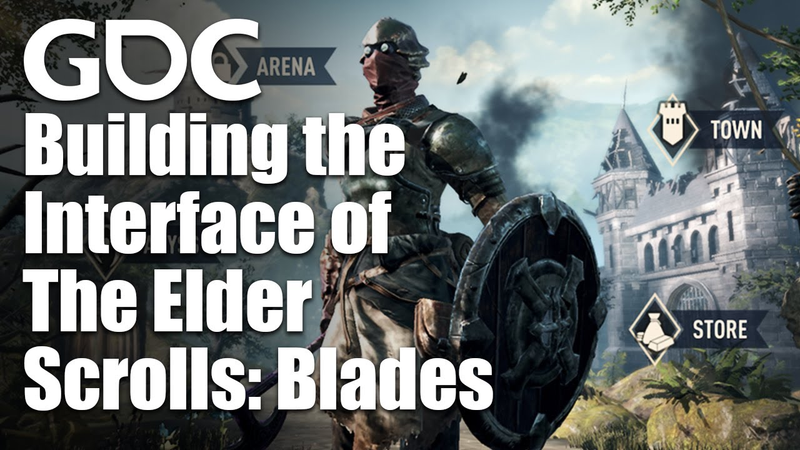
Building the Interface of The Elder Scrolls: Blades in Landscape and Portrait
The development of The Elder Scrolls: Blades for mobile devices necessitated a strategic decision regarding screen orientation, ultimately resulting in the implementation of both portrait and landscape modes.
- Supporting dual orientation in mobile game UI adds 20% to 60% to the total UI conception time, as every mock-up and wireframe must be produced for both landscape and portrait layouts.
- Portrait mode is a critical accessibility feature for mobile gaming, as it enables one-handed play for users in contexts where they cannot use both hands, such as during commutes or meetings.
- Designing for dual orientation forces UI simplification; for example, Bethesda distilled complex crafting information into simple visual indicators (red X or green check marks) to fit the narrower portrait screen, which improved user confidence during testing.
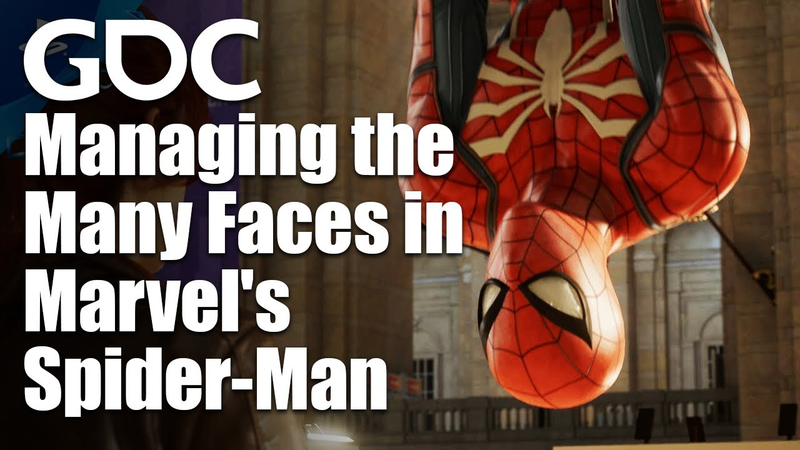
(Super)Humans of New York: Managing the Many Faces in Marvel's Spider-Man
The production of Marvel’s Spider-Man required a sophisticated, scalable pipeline to manage approximately 150 unique facial rigs.
- Insomniac Games managed approximately 150 facial rigs for Marvel's Spider-Man by establishing a five-tier quality system, ranging from high-fidelity digital doubles of specific actors to procedurally derived background characters.
- To handle the high volume of assets, the team developed a custom batch-processing tool in Maya 2016 that automated repetitive tasks like controller setup, texture repathing, and naming convention alignment to match internal engine requirements.
- The team implemented a robust 'extra meshes' export system that allowed artists to save and re-import custom assets like hair, jewelry, and beards without manually re-weighting or re-integrating geometry during iterative rig deliveries.
Collaborative Approaches to Getting Great VO Performances
Achieving superior voice-over performances in game development requires shifting from a transactional model to a collaborative partnership.
- Shift from a transactional model to a collaborative partnership by treating voice actors as creative contributors to foster shared ownership of the final product.
- Provide comprehensive context during auditions—including character visuals, narrative goals, and emotional arcs—to enable actors to achieve the neural synchrony necessary for authentic performances.
- Balance narrative secrecy with the actor's need for information by providing non-spoiler parallel details that maintain intellectual property security while ensuring performance depth.
The Level Design of God of War
The transition of the God of War franchise from a fixed-camera action series to an immersive, modern experience is anchored by three core pillars: combat, narrative, and exploration.
- The game’s design is built on three core pillars—combat, narrative, and exploration—which serve as a consistent lens to ensure environmental cohesion and seamless transitions between gameplay and cinematic storytelling.
- Development teams utilized standardized architectural metrics based on specific unit values for movement and spacing to ensure technical consistency and creative flexibility across the entire game world.
- To maintain pacing and prevent repetition, the design team introduced new mechanics as thematic anchors every 90 to 120 minutes.
Player Interactions Visualized
Visual effects serve as a fundamental pillar of player immersion, transforming static game environments into responsive, living worlds.
- Environmental interaction systems should prioritize a few high-quality, refined mechanics over a high volume of less-polished features to ensure meaningful player engagement.
- Developers should implement interactions using efficient shader-based methods, such as vertex manipulation or shader remapping, rather than relying on complex per-object logic.
- Tracking player movement and proximity is best achieved through the use of top-down buffers and render targets, which allow for scalable performance in expansive game worlds.
Defying Expectations: 7 Lessons from The Sims FreePlay
The Sims FreePlay demonstrates that long-term viability in the mobile gaming market relies on transitioning from static, premium development models to iterative, live-service frameworks.
- Long-term mobile game viability requires a transition from static, premium models to iterative, live-service frameworks centered on time-limited, quest-based engagement.
- Operational efficiency is achieved by providing designers with internal tools that enable content creation without constant engineering intervention, ensuring a consistent update cadence.
- Integrating user-generated content, such as player-designed housing, effectively removes development bottlenecks while simultaneously deepening community investment.
What They Don't Teach You in Art School: Lessons for First Time Leads
Transitioning from an individual contributor to a team lead in the game industry requires a fundamental shift in focus from personal artistic output to the cultivation of team health and project stability.
- Transitioning to a lead role requires shifting focus from personal artistic output to service-oriented management, prioritizing team health and project stability over individual technical tasks.
- Operational efficiency is maintained by using rigorous data collection for scheduling, detailed asset checklists for cross-departmental handoffs, and strict time limits on brainstorming sessions.
- An optimal team size is approximately five members, which facilitates more personalized management and clearer communication channels.

Data Informed Decisions with the Champions of League of Legends
Riot Games employs a sophisticated, data-informed strategy to manage the character roster of League of Legends, balancing quantitative engagement metrics with qualitative sentiment research.
- Riot Games utilizes a 'breadth versus depth' framework to measure champion engagement, where breadth tracks the number of unique players and depth tracks the frequency of play per user.
- Champion updates, such as the rework of Akali, create significant spikes in play rate driven by both existing players and new users attracted by updated visuals and gameplay kits.
- Mass champion surveys are used to collect sentiment data on non-gameplay attributes like personality, voice, and visuals, allowing developers to understand player affinity beyond raw telemetry.
Marvel's Spider-Man: Procedural Lighting Tools
The development of Marvel’s Spider-Man relied on sophisticated procedural workflows to manage the immense scale of a digital Manhattan while maintaining high visual fidelity.
- Insomniac Games utilized procedural workflows to manage the open-world environment of Marvel's Spider-Man, which is divided into 726 individual tile regions defined by JSON zone files.
- To optimize lighting, the team procedurally placed street lamps based on sidewalk normals and fixed curb distances, while using signed distance functions to ensure light probes were positioned outside of building volumes.
- The studio implemented an 'imposter' system to replace high-resolution building geometry with single-mesh models and texture atlases, significantly reducing memory overhead by storing albedo at full resolution and spec/gloss/emission at half resolution.