
Game Developers Conference
Game Developers Conference (GDC, now the GDC Festival of Gaming) is the professional event for the games industry. It publishes recorded talks and interviews, annual industry survey reports such as the State of the Game Industry, and news articles.
Documents
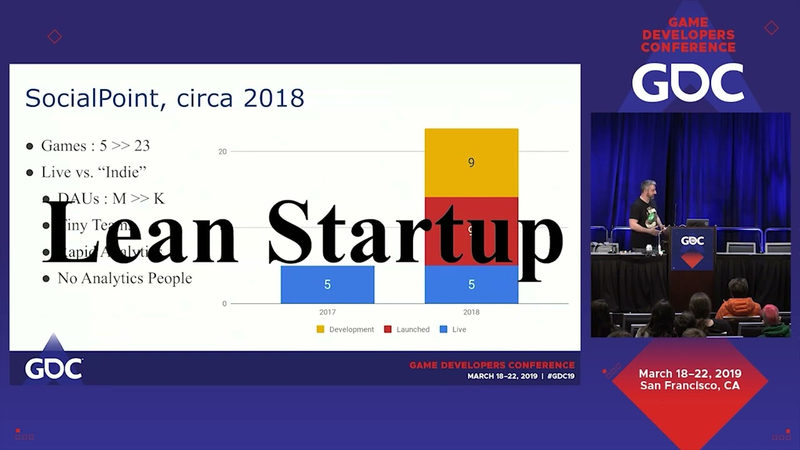
Using Lean Analytics to Make Better Games
Adopting a lean analytics framework allows game studios to manage high-volume development pipelines by prioritizing rapid iteration and the minimization of failure costs.
- Transition from dedicated per-game analysts to a centralized, agile consulting model to allow for rapid resource reallocation away from underperforming titles.
- Prioritize a select group of 'super KPIs'—specifically retention, conversion, and lifetime value—to avoid the operational inefficiency of data saturation.
- Utilize Bayesian statistical methods to achieve faster testing results with smaller sample sizes, increasing development velocity.
What Can Game Designers Learn from Competitive Reality Shows
Competitive reality television serves as a sophisticated laboratory for game design, offering critical insights into the intersection of rigid rule sets and unpredictable human behavior.
- Game design success depends on balancing rigid mechanics with the unpredictable social dynamics and emergent narratives created by player interaction.
- Player agency often outweighs initial design intentions, as participants frequently identify and exploit dominant strategies that can stagnate a game's meta.
- To maintain long-term engagement, designers must proactively disrupt optimal paths to victory through periodic mechanical adjustments or rule-set twists.
Playtesting 'God of War'
The development of God of War (2018) serves as a case study for integrating rigorous user research into the creative process to overcome significant design uncertainty.
- Establish a consistent playtesting schedule and stick to it, as frequent cancellations create instability and undermine team confidence in the process.
- Categorize playtests into two distinct types: usability tests to validate mechanical function and unguided playthroughs to validate the intended emotional fantasy or player experience.
- Use a combination of undirected feedback (interviews and observations) and directed feedback (explicit questions) to extract actionable data, ensuring the team considers the entire player perspective rather than isolated comments.
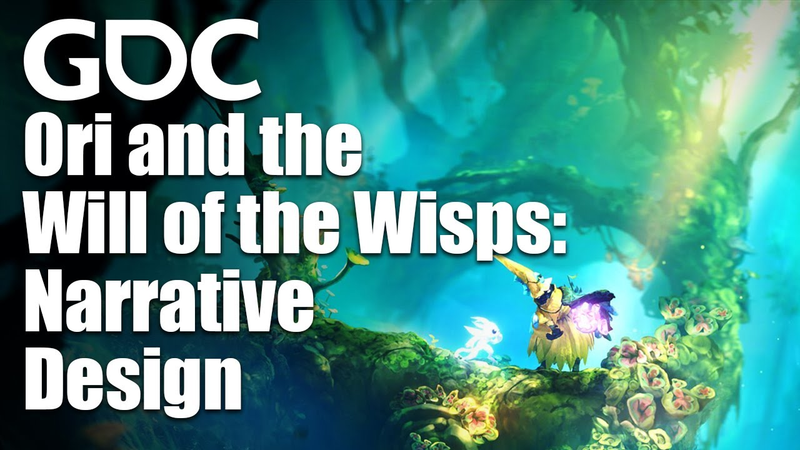
'Ori and the Will of the Wisps': Narrative Design and Visual Storytelling
The development of Ori and the Will of the Wisps demonstrates a sophisticated approach to narrative design, prioritizing visual storytelling and environmental cues over traditional dialogue to convey character growth and thematic depth.
- Moon Studios used the passage of seasons in 'Ori and the Will of the Wisps' to balance nostalgia for the first game with fresh environmental aesthetics, allowing players to revisit familiar spaces through a new lens.
- The team utilized 'environmental state as emotional state' as a core design device, such as tying the visual progression of flight sequences to the character's growing confidence and mastery.
- Collaborative narrative design led to significant creative pivots, such as the decision to have the character Shriek kill Ku to create a major emotional mid-game beat, despite initial concerns about player motivation.
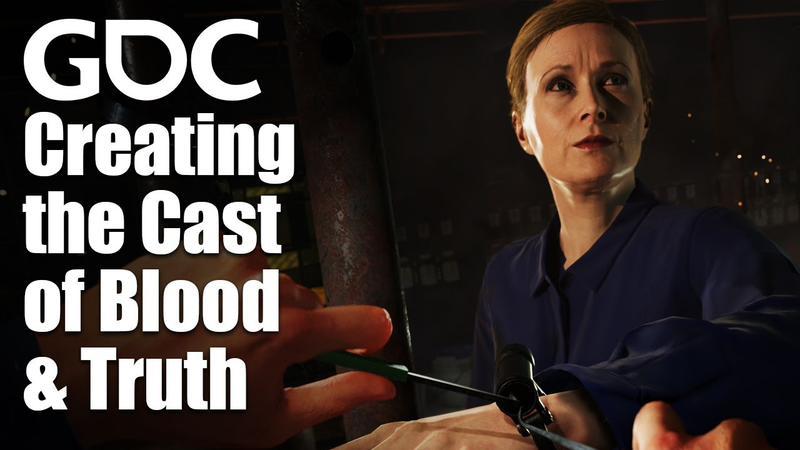
Characters to Get Immersed In: Creating the Cast of 'Blood & Truth'
The development of characters for the PlayStation VR action shooter Blood & Truth focused on overcoming the limitations of virtual reality immersion by prioritizing realistic character interactions and player agency.
- Sony London Studio developed 'Blood & Truth' by prioritizing character interaction and immersion, building on data from 'The London Heist' which showed that direct, physical interactions with NPCs were twice as popular as other VR experiences.
- To maintain high frame rates in VR while achieving realism, the team implemented a two-tier character system: Tier 1 (key characters) featured exact digital doubles with 40,000–50,000 polygons, while Tier 2 (NPCs) used modular, interchangeable parts at 30,000–40,000 polygons.
- The studio utilized photogrammetry and 3D scanning to create digital doubles of actors, partnering with 3Lateral for high-fidelity head scans and specialized facial rigging to meet quality requirements.
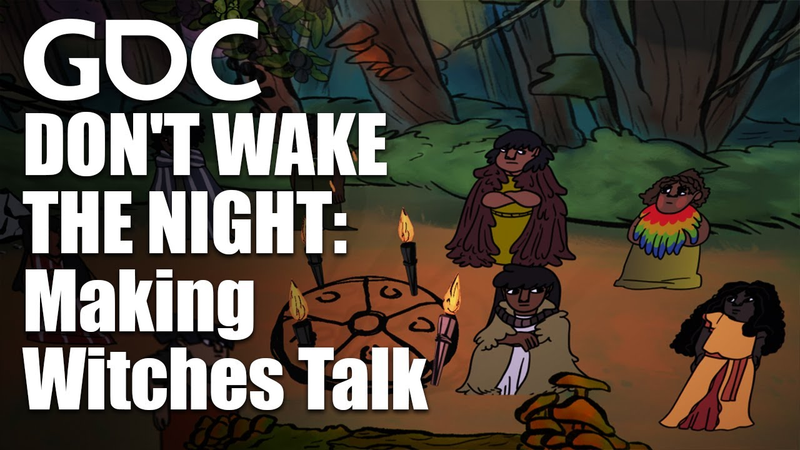
Making Witches Talk in 'DON'T WAKE THE NIGHT'
The development of the 2019 title Don’t Wake the Night serves as a case study for integrating non-linear storytelling with minimalist, evocative game mechanics.
- In 'DON'T WAKE THE NIGHT' (2019), the player acts as an omnipresent bystander with no influence over character dialogue, meaning the only agency provided is the ability to choose the order in which conversations are viewed.
- To ensure narrative balance, the development team audited dialogue across spreadsheets and documents to prevent any single character from receiving disproportionate focus or bias.
- The game utilizes a dual-view system, switching between a bird's-eye environment view for interaction and a visual-novel-inspired interface for character dialogue.

Extreme Makeover Game School Edition: Do It With or Without a Grant
Academic institutions seeking to bolster their game development programs can achieve significant growth by prioritizing community engagement and strategic internal partnerships over a singular reliance on external funding.
- Academic game programs should prioritize internal partnerships and community engagement over a singular reliance on external grants to ensure long-term institutional viability.
- State-funded matching grants, such as those utilized by NYU, RPI, and RIT, should be treated as supplementary resources rather than foundational requirements due to their rigid spending constraints and administrative burdens.
- Sustainability is best achieved by collaborating with internal departments like governmental affairs and sponsored projects to build a resilient, self-sustaining ecosystem.
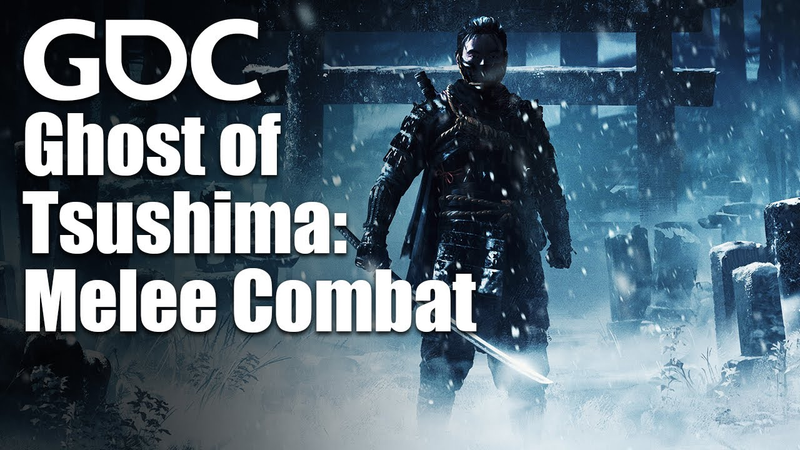
Master of the Katana: Melee Combat in 'Ghost of Tsushima'
The development of Ghost of Tsushima centers on the realization of a precise, skill-based samurai fantasy that prioritizes player discipline and fluid combat.
- Ensure the most effective way to play the game is also the most enjoyable, as players will resent being forced into either ineffective fun or effective drudgery.
- Front-load the best ideas and mechanics in the first 15 to 60 minutes of the game, because if the initial experience is not compelling, players will not reach the end.
- Use 'carrots' instead of 'sticks' to encourage variety; rather than nerfing overused abilities, incentivize the use of underused ones to improve player engagement and satisfaction scores.

Super Powering Technical Artists Using Deep Learning
Generative machine learning models are fundamentally transforming the role of technical artists by serving as high-speed prototyping engines.
- Deep learning models are currently functioning as high-speed prototyping engines, enabling rapid iteration on visual concepts, facial attributes, and environmental assets through techniques like style transfer and image-to-image translation.
- Reinforcement learning is replacing labor-intensive manual keyframing by allowing animation models to derive realistic movement and environmental reactions directly from motion capture data.
- Core development efficiencies are being realized through ESRGAN for texture remastering and the use of machine learning approximations to replace computationally expensive traditional physics simulations.
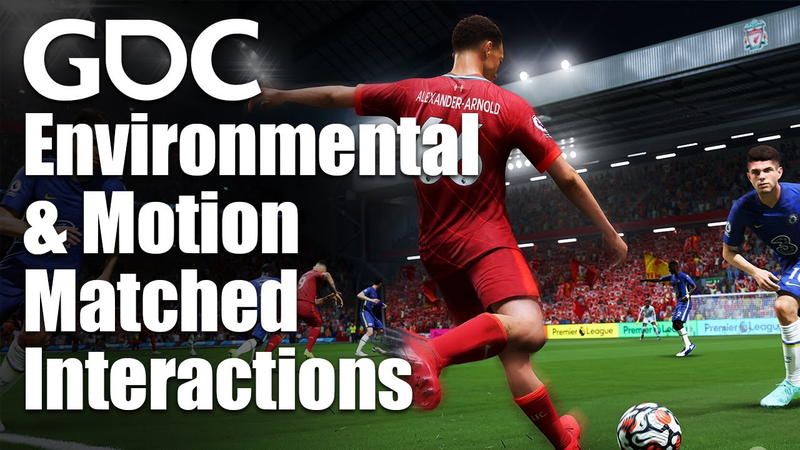
Environmental and Motion Matched Interactions; 'Madden', 'FIFA' and Beyond
The integration of advanced animation systems within sports titles like Madden and FIFA represents a significant shift toward fluid, physically grounded character interactions.
- EA's multi-character interaction system (Interact) was extended to support environment and object interactions by using 'locators'—abstract points in the world—instead of relying solely on character-to-character matching.
- By using locators to represent predicted future positions of objects, such as a football in Madden, the system enables complex multi-character catches and interactions that anticipate movement.
- Integrating motion matching with the interaction system allows characters to navigate toward ideal interaction points, significantly reducing the need for visual warping or alignment during gameplay.

User Story Mapping: Developing a Shared Understanding
Traditional, static design documentation frequently fails to align development teams, often resulting in fragmented interpretations and the inefficient "broken telephone" effect.
- User story mapping replaces static documentation with a chronological narrative, shifting the focus from exhaustive feature lists to a shared, unified vision of the product.
- Teams should organize user activities into a logical backbone to prioritize tasks based on urgency and resource constraints, which facilitates the identification of minimum viable releases.
- Limiting core planning groups to 10–12 participants is recommended to maintain clarity and ensure consistent focus despite potential staff turnover.
Press Y to Cry: Generating Emotions in Videogame Narrative
The historical divide between emergent gameplay and authored narrative remains a primary obstacle to achieving deep emotional resonance in interactive media.
- To effectively generate emotion, designers must choose between simulation (matching player and game emotion), representation (indirect emotional triggers requiring interpretation), or abstraction (using symbolic elements to evoke feelings).
- Ludo-narrative dissonance occurs when the game's emotional content conflicts with the player's experience, often because developers fail to provide the necessary context for the player's actions.
- Designers should structure narrative around 'emotional boxes,' where each segment contains a specific emotion, a thematic question, and the necessary context for the player to interpret the situation.