
Game Developers Conference
Game Developers Conference (GDC, now the GDC Festival of Gaming) is the professional event for the games industry. It publishes recorded talks and interviews, annual industry survey reports such as the State of the Game Industry, and news articles.
Documents
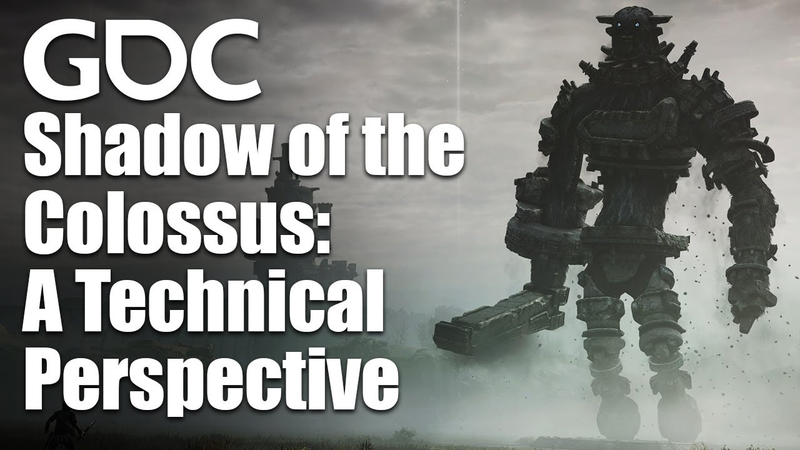
Beyond the Remake of 'Shadow of the Colossus': A Technical Perspective
Modern game remakes require a delicate balance between preserving the original design intent and leveraging contemporary hardware capabilities.
- Successful remakes require migrating legacy game logic into a unified, proprietary engine architecture to decouple the project from outdated pipelines and enable high-fidelity upgrades.
- Developers should implement a component-based task scheduler that treats original game logic as a thread-safe process to improve CPU saturation and eliminate traditional game loop stalling.
- Transitioning legacy titles to 64-bit environments is best achieved using manual address conversion and dynamic, auto-calibrating texture streaming budgets rather than restrictive third-party libraries.

The Impossible Quest: Getting a Job in Games
Securing a position within the competitive game industry requires a strategic blend of technical preparation, professional adaptability, and intentional networking.
- Prioritize the creation of a role-specific portfolio that clearly delineates your individual contributions to collaborative projects.
- Approach networking as a long-term strategy by building genuine relationships with peers and support staff rather than focusing exclusively on senior leadership.
- Maintain a proactive career management system by utilizing industry-specific resources like GameDevMap and keeping an organized log of all job applications.
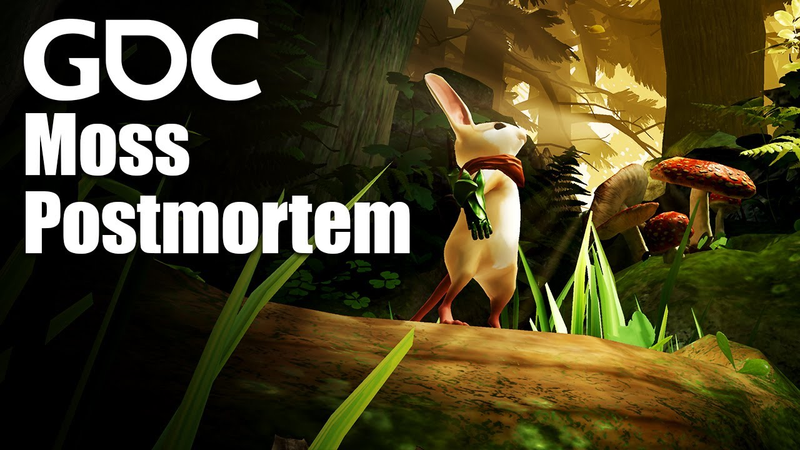
Engaging VR Storytelling: A 'Moss' Postmortem
The development of the virtual reality title Moss demonstrates that successful immersive storytelling relies on prioritizing medium-specific strengths and iterative, data-driven design.
- Polyarc discovered through playtesting that VR players naturally form emotional bonds with characters, leading to a fourth development pillar focused on player-character interaction, such as high-fiving or petting the protagonist.
- To ensure player engagement with narrative sequences, the team implemented gaze detection to trigger animations only when the player is looking at the intended area, solving the issue of players missing content while exploring the environment.
- The team utilized a 'DEAR' framework (Data, Experience, Assets, Research) to make objective, fact-based development decisions rather than relying on subjective intuition in the new VR medium.
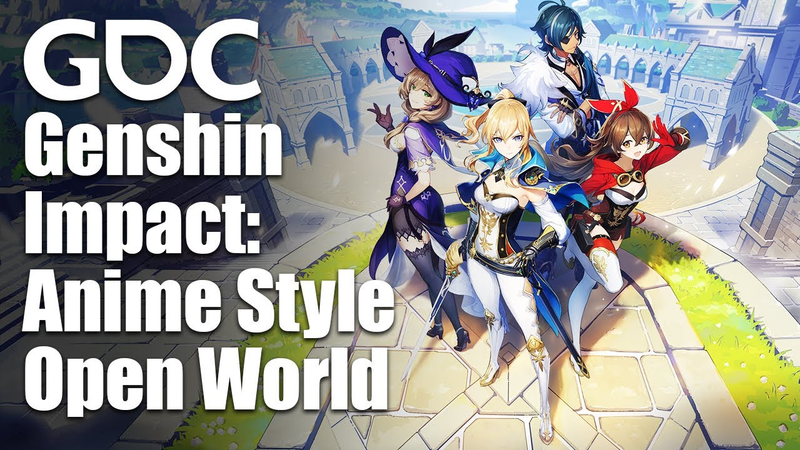
'Genshin Impact': Crafting an Anime-Style Open World
Genshin Impact represents a strategic evolution in open-world game design, focusing on the creation of an immersive, anime-styled universe that prioritizes cultural diversity and character-driven narratives.
- Genshin Impact utilizes a character-centric design philosophy where the world and storytelling revolve around its 33 playable characters, a model inherited from Japanese card games that proved successful across both Eastern and Western markets.
- To maintain a consistent anime aesthetic, the game employs two independent rendering pipelines: a deferred rendering pipeline for environments that supports dynamic weather and 24-hour lighting cycles, and a specialized shading pipeline for characters.
- The development team uses dynamic light maps for character faces, allowing artists to manually control shadow shapes regardless of the light source direction to ensure characters remain visually appealing from any angle.

Studio Design: Building a Foundation for Success and Avoiding Business Disaster
Building a sustainable game studio requires shifting the focus from purely creative output to intentional business architecture.
- A sustainable studio requires a balanced leadership team of three co-founders representing the distinct pillars of creative vision, technical execution, and business strategy.
- Founders must integrate market viability, audience analysis, and branding into the development process from the outset rather than treating them as secondary concerns.
- Long-term studio viability depends on formalizing corporate and legal structures early to ensure operational readiness and increase attractiveness to investors.

The Ever Increasing Impact of Voice Chat in Games
The integration of voice chat in online multiplayer games has fundamentally transformed the industry, evolving from a functional tool for competitive coordination into a primary social platform.
- Nearly 30% of players abandon games due to toxic experiences, directly impacting player retention and long-term revenue.
- Approximately 68% of players encounter toxic behavior in online games, with nearly 50% of those incidents occurring specifically through voice chat.
- In a hypothetical game with 50 million players, failing to moderate voice chat can result in roughly 4.5 million users having a negative experience, leading to significant churn.
Beyond NPCs: AI for Game Operations
Artificial intelligence serves as a critical driver of operational efficiency within the mobile gaming sector, moving beyond traditional non-player character development to optimize core business functions.
- AI implementation in game operations should focus on tasks that are assistive to humans, superior to human performance, or faster than human execution to drive operational efficiency.
- Zynga manages a portfolio of over 50 live mobile games, utilizing centralized AI and machine learning teams to optimize complex revenue-generating systems like mobile advertising waterfalls.
- Automating mobile ad waterfall management—the process of setting reserve prices across multiple ad networks—is a high-value optimization problem where even a 1% revenue lift translates into millions of dollars.
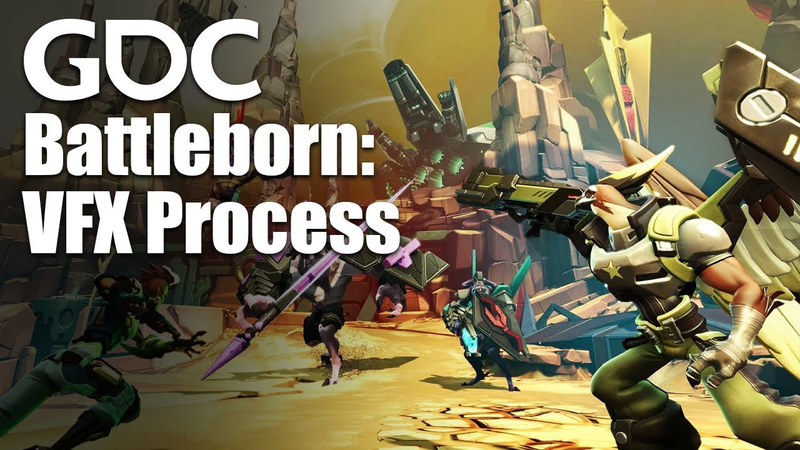
The VFX Process Behind 'Battleborn'
The visual effects strategy for the first-person shooter Battleborn focused on integrating hand-drawn, 2D-style animation into a 3D environment to create a unique, cohesive, and highly stylized aesthetic.
- The development team produced over 30,000 frames of hand-drawn animation and 3,600 individual particle effects to establish a unique, stylized aesthetic that distinguishes the game from realistic competitors.
- Artists applied traditional animation principles—such as anticipation, exaggeration, and secondary action—to 2D assets, which were mapped onto 3D meshes to provide volume and prevent a flat, billboard-like appearance.
- To manage visual coherence across 30 characters and five distinct factions, the team enforced a strict style guide that utilized limited color palettes and gray-packing techniques to optimize texture space.
The Defining Themes of the Modern Console Market
The modern console market has successfully transitioned from a static, transactional model to a dynamic ecosystem defined by long-tail digital engagement and hybrid monetization strategies.
- The console market has shifted from a transactional hardware-sales model to a service-led ecosystem focused on long-tail digital engagement and hybrid monetization.
- Manufacturers are mitigating the plateau of physical hardware sales by prioritizing subscription-based service models and deep content libraries to drive recurring revenue.
- Cross-generational compatibility and the integration of back catalogs serve as strategic barriers to entry, preventing user churn during hardware transitions.
Lessons Learned in the Trenches: Developing Games as a Service
Games as a Service development demands a fundamental shift from viewing software as a finite product to treating it as a continuous, evolving utility.
- A successful Games-as-a-Service (GaaS) launch is a singular event; failing to capture the audience at 'opening night' results in a permanent loss of potential that cannot be recovered later.
- Development teams must prioritize a disciplined 'heartbeat' for content updates, utilizing a cadence of weekly bug fixes, monthly feature additions, and quarterly seasonal content drops that take no longer than 6 to 8 months to produce.
- Pre-production is critical; teams should avoid rushing foundations and instead focus on perfecting core gameplay loops before expanding into meta-systems or broad content.
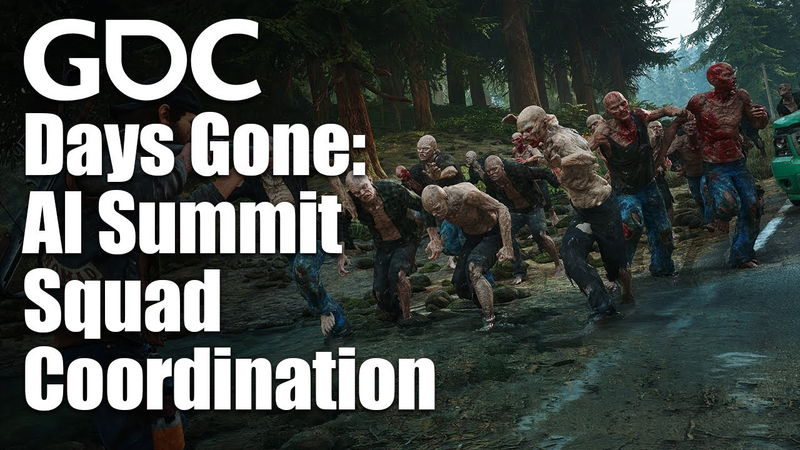
Squad Coordination in 'Days Gone'
Combat believability in Days Gone is achieved through a systemic, squad-based artificial intelligence model that replaces traditional scripted encounters with dynamic, role-based coordination.
- Sony Bend Studio implemented a 'frontline' system in Days Gone that defines the spatial relationship between a squad and its enemies, using a sliding window average to stabilize combat movement and ensure squad members maintain clear lines of fire.
- The AI uses a behavior hierarchy where high-priority reactive tasks, such as avoiding grenades, override assigned combat roles, while low-priority behaviors are suppressed when a valid role is active.
- Squad members are assigned to specific lanes along the frontline to minimize movement, prevent collision, and ensure optimal positioning relative to both the enemy and fellow squad members.

'Root': A Usability Postmortem
The design of Root demonstrates that usability in complex, asymmetric board games hinges on the precise alignment of visual iconography, physical feedback, and instructional architecture.
- Usability testing is critical because players interpret design elements based on context; for example, players misidentified a mouse icon as a teapot or ghost, and assumed a storage box size was a functional limit rather than an aesthetic choice.
- Visual design elements must be distinguishable at all scales; the 'Root' mouse icon failed because its most identifying feature—the whiskers—were too small to be legible when the icon was scaled down on the game board.
- Context-dependent information can be misinterpreted if it mimics other game systems; players confused a victory point reminder for a prompt because all other board elements were active prompts, necessitating a move of that information to a separate overview card.