
Game Developers Conference
Game Developers Conference (GDC, now the GDC Festival of Gaming) is the professional event for the games industry. It publishes recorded talks and interviews, annual industry survey reports such as the State of the Game Industry, and news articles.
Documents
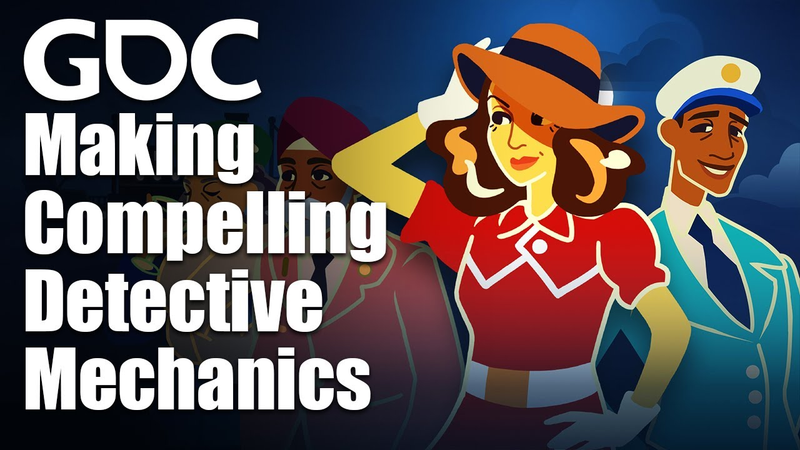
The Burden of Proof: Narrative Deduction Mechanics for Detective Games
Detective games function most effectively when they move beyond rigid, linear narratives to embrace systems where players actively synthesize clues to progress.
- Traditional detective game design often relies on a 'combination lock' mechanic where players match two clues to unlock a new fact, a system that frequently results in cluttered interfaces and repetitive, unengaging gameplay.
- In the game 'Overboard!', inkle moved away from rigid, abstract deduction systems by splitting the experience into a high-agency, low-impact investigation phase followed by a low-agency, high-impact accusation phase.
- To create a more natural detective experience, developers should aim to simulate an 'AI Hercule Poirot' that synthesizes player-gathered evidence into a logical, dramatic conclusion rather than forcing the player to act as a master detective who already knows the answer.

Simulating Tropical Weather in 'Far Cry 6'
The simulation of dynamic tropical weather in Far Cry 6 relies on a centralized Weather Manager that orchestrates transitions, lighting, and atmospheric effects through artist-designed presets and regional curves.
- The Far Cry 6 weather system utilizes a centralized 'weather manager' backend and a 'weather database' frontend, allowing developers to drive visuals, audio, and gameplay through unified parameters like wetness and rain factors.
- To implement wetness across diverse assets without disrupting artist pipelines, the team used a unified porosity-based formula that generated maps for existing PBR shaders, ensuring consistent material behavior without requiring manual asset updates.
- The team managed global illumination by fading out indirect lighting during high cloud coverage, while using a voxel-based system that packs 13 frames of data—11 for time-of-day increments, one for local lights, and one for sky occlusion.

Don't Make My Job Easy: Effectively Pitching to Publishers
Securing a publishing partnership requires developers to treat the pitch process as a high-stakes sales funnel where initial impressions dictate long-term viability.
- Publishers evaluate pitches using two modes: the 'thinky brain' (analytical/logical) and the 'feely brain' (emotional/instinctual), with the latter being the primary driver for initial interest and excitement.
- Pitching is a marketing exercise where the goal is to trigger an immediate emotional response, as many publishers decide whether to pass on a game before even opening the pitch deck or playing the demo.
- Avoid front-loading technical or financial data; instead, lead with the game's core identity, such as a high-quality GIF or a 60-second trailer that immediately conveys the game's unique aesthetic and 'vibe'.
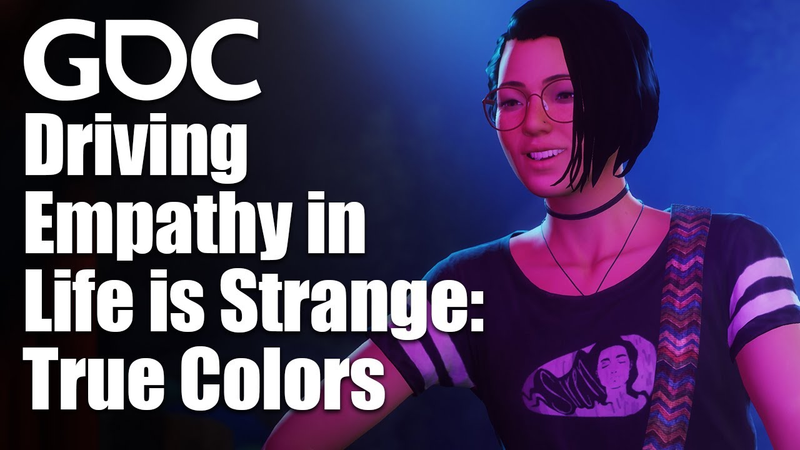
Ghost in the Empathy Machine: Exploring Player-Character Connection in Life is Strange: True Colors
Narrative storytelling has evolved from ancient oral traditions into a sophisticated medium for exploring human interiority, with modern video games serving as the latest frontier for fostering deep emotional resonance.
- The narrative arc of interactive media is shifting toward interiority and empathy, moving from passive observation to active participation in a character's emotional state.
- In 'Life is Strange: True Colors,' developers maintained player connection to the protagonist, Alex, by capping NPC empathy insights with a brief, reflexive thought from Alex to realign the player's perspective.
- The 'junkyard smash' scene in 'Life is Strange: Before the Storm' demonstrated that player-character alignment does not always require lockstep control; allowing the character to act out of character can deepen the player's connection to their internal struggle.

Build Your Career in Games Like It's an RPG
Career development within the gaming industry functions most effectively when viewed as a non-linear role-playing game rather than a rigid, traditional ladder.
- View career growth as a non-linear RPG skill tree rather than a traditional ladder to prioritize versatile, multi-faceted skill acquisition over rigid role progression.
- Conduct honest self-assessments of your current 'character sheet' to identify core strengths and strategically pivot toward roles that align with your evolving creative passions.
- Prioritize the cultivation of authentic, long-term relationships over transactional networking to build a supportive 'guild' of peers capable of navigating the industry's complex landscape.
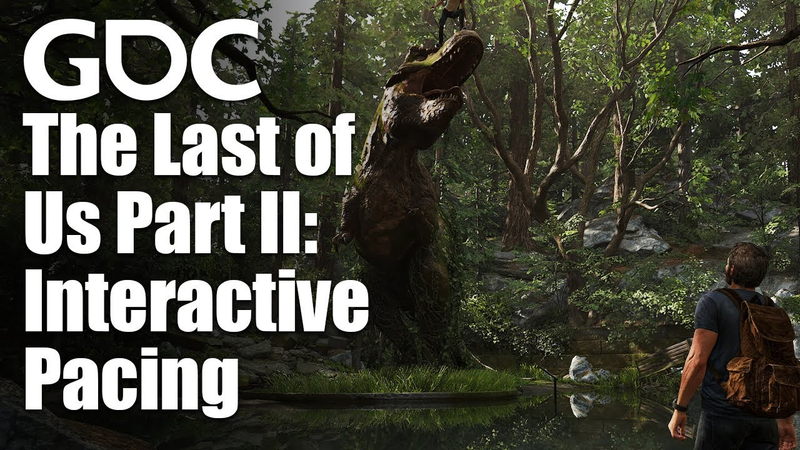
Interactive Pacing from the Museum Flashback in 'The Last of Us Part II'
The Museum Flashback in The Last of Us Part II serves as a masterclass in interactive narrative pacing, prioritizing player agency over rigid, developer-dictated tempo.
- Interactive pacing allows players to set their own tempo by choosing whether to rush through linear narrative beats or linger to engage with optional environmental content.
- The 'Museum Flashback' level in The Last of Us Part II utilizes a three-tiered hierarchy of interactions: focal points (mandatory story beats), prospects (optional, repeatable interactions like quips), and secrets (unexpected, high-effort 'mold-breaking' moments).
- To teach players they can interact with the environment without tutorials, the design introduces two simple, isolated exhibits early on, establishing that interaction is both optional and consistent in scale.

How Web3 Games Work (and Sadly Don't)
The current landscape of Web3 gaming is characterized by a fundamental misalignment between speculative financial incentives and sustainable entertainment.
- Web3 games often function as loss leaders for unregulated financial services, where the primary goal is to capture the lifetime value of players through banking, lending, and trading fees rather than game revenue.
- Many play-to-earn models, such as Axie Infinity, operate as pyramid schemes where the sustainability of the economy relies on a constant influx of new players to fund the earnings of existing ones.
- Blockchain integration in gaming is often technically inefficient compared to centralized databases, offering little value to major publishers unless the intent is to facilitate financialization or bypass traditional regulatory barriers.

'Unpacking': The Fun Behind the Foley
The production of Unpacking necessitated a sophisticated approach to foley design, driven by the requirement for hyper-realistic audio feedback across thousands of interactive objects.
- The development of Unpacking required the creation of 14,000 individual audio files to achieve hyper-realistic foley feedback across thousands of interactive objects.
- The team utilized Reaper for a high-efficiency workflow, employing custom scripting and dynamic splitting to process over 13,000 files rapidly.
- A centralized database managed via Google Sheets integrated directly with Unity and Wwise to enable real-time asset validation and global processing, such as resonance smoothing.
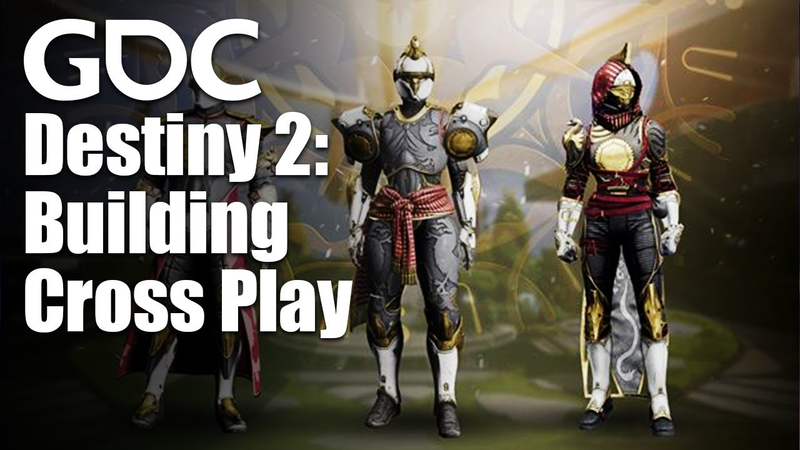
Bringing Players Together: Building Cross Play for 'Destiny 2'
The implementation of cross-play for Destiny 2 represents a strategic shift toward unifying a fragmented player base across seven distinct hardware platforms.
- Bungie transitioned from platform-specific social systems to a unified 'Bungie Name' identity system to ensure players remained recognizable when moving between seven different platforms.
- The development of Cross Play for Destiny 2 took approximately one year, moving from initial planning in summer 2020 to a full public release in August 2021 during the 'Season of the Lost'.
- To maintain competitive integrity, Bungie implemented two distinct matchmaking pools: a console pool (Xbox, PlayStation, Stadia) and a PC pool (Steam, Microsoft PC Store), preventing PC players from entering the console-only matchmaking environment.

Hair Art in Games: Aesthetics Difference between Eastern and Western
The evolution of hair art in video games reflects a sophisticated intersection of hardware capability and cultural philosophy.
- Western game design prioritizes anatomical accuracy, physical realism, and lighting fidelity to ground characters in tangible environments.
- Eastern game design emphasizes artistic silhouettes, rhythmic line quality, and emotional expression, often drawing inspiration from traditional ink painting rather than strict physics.
- Hairstyles function as critical narrative tools that signal historical setting, character temperament, and identity through specific cultural markers.

Ambisonics and the Great Outdoors
Ambisonics offers a robust framework for enhancing spatial audio in modern video games, providing a scalable solution for capturing and simulating 3D sound environments.
- Ambisonics provides a scalable 3D audio framework that ranges from first-order (4 sampling points) to fifth-order (36 sampling points) to achieve high-fidelity spatial resolution.
- The technology ensures consistent immersive audio across diverse playback hardware by decoupling the sound environment from specific speaker configurations.
- Integrating ambisonics with binauralization—which simulates human head-related transfer functions (HRTF)—is essential for virtualizing sound positioning, though individual HRTF personalization remains a technical challenge.
Narrative Breadcrumbs: Guiding the Player Experience with Live Events
The integration of narrative into live-service mobile games serves as a powerful tool for increasing player engagement, retention, and monetization.
- Integrate narrative as a core structural component rather than superficial flavor text to increase player engagement, retention, and monetization in live-service mobile games.
- Utilize a 'breadcrumb' narrative strategy to guide players through an ongoing, evolving journey instead of a static story with a definitive conclusion.
- Apply the 'context, characters, and conflict' framework to embed narrative directly into gameplay mechanics and event structures.