
Game Developers Conference
Game Developers Conference (GDC, now the GDC Festival of Gaming) is the professional event for the games industry. It publishes recorded talks and interviews, annual industry survey reports such as the State of the Game Industry, and news articles.
Documents
Designing for Inclusivity in 'The Sims'
The development of The Sims franchise serves as a case study for integrating inclusivity into game design and studio culture.
- Maxis integrates diverse employee lived experiences into game development by actively consulting internal staff from various cultural and educational backgrounds to inform content, such as the 'Discover University' expansion pack.
- The studio maintains a 'people-first' culture by utilizing four core values—create collaboratively, challenge ourselves, champion inclusivity, and be authentic—which were defined by internal staff interviews rather than external agencies.
- To minimize hiring bias, recruitment panels are specifically trained to identify implicit bias and utilize standardized interview questions designed to prioritize inclusive perspectives.
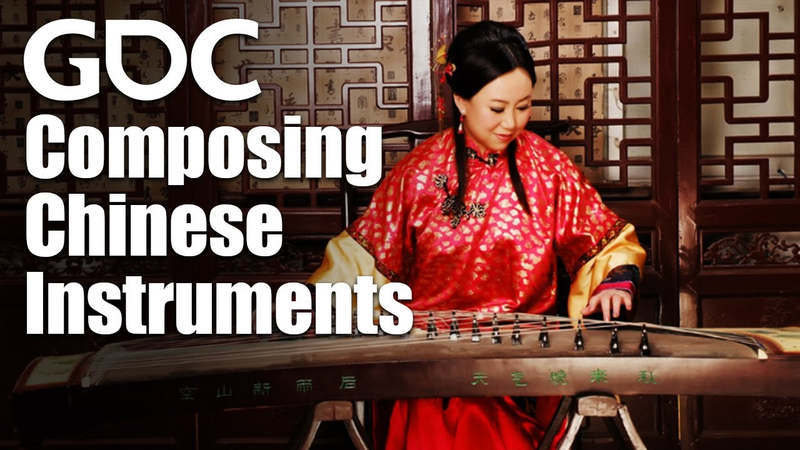
Composing for Chinese Instruments
This presentation provides a practical guide for composers looking to integrate traditional Chinese instruments into Western symphonic arrangements.
- Authentic integration of Chinese instruments requires hiring specialized performers rather than relying on standard orchestral musicians to capture nuanced, idiomatic articulations.
- Chinese instruments function differently than Western counterparts, necessitating specific orchestration strategies rather than treating them as direct substitutes for standard string or woodwind sections.
- Composers should transcribe scores into jianpu, a numerical notation system, when working with traditional musicians to ensure accuracy and facilitate the inclusion of authentic ornaments.
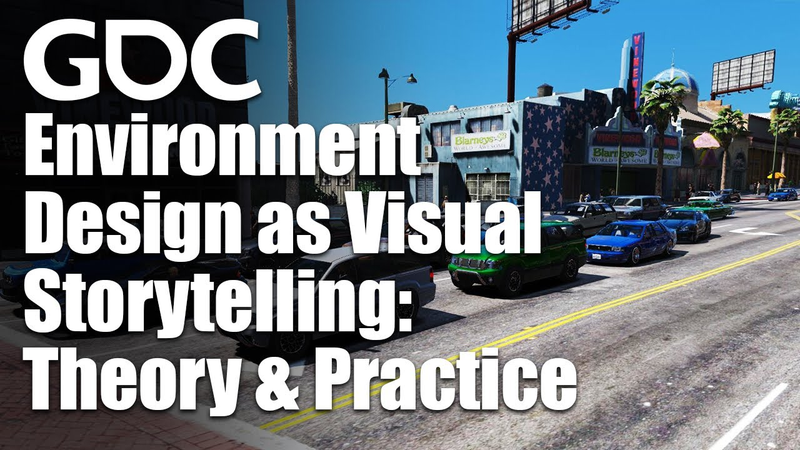
Environment Design as Visual Storytelling: Theory and Practice
Environment design serves as a sophisticated form of visual storytelling where creators act as silent narrators, shaping player experience through the strategic arrangement of space.
- Environment design utilizes 'peak shift'—a psychological principle where the brain prefers exaggerated stimuli over realistic ones—to make visual storytelling and character design more intuitive and readable for players.
- Spatial metaphors allow designers to map social relationships onto physical environments, as the human brain uses the same neural infrastructure to navigate both physical space and social hierarchies.
- Mimesis in environment design relies on 'behavioral traces' and 'affordances,' where the placement of objects like drugs, money, or furniture acts as an index signifier to communicate the history and actions of characters to the player.
Four Day Workweek: We Did It! What Now?
Independent game studios are increasingly adopting a four-day, 32-hour workweek to combat systemic burnout and enhance recruitment competitiveness.
- Independent game studios are adopting a 32-hour, four-day workweek to combat systemic burnout and improve talent retention.
- Productivity remains stable or increases under the four-day model as teams optimize workflows, prioritize high-impact tasks, and utilize asynchronous communication.
- Successful implementation requires rigorous production planning, flexible scheduling, and a fundamental shift in organizational culture.

Maintaining Sledgehammer Games' Studio Culture During Rapid Team Growth
Sledgehammer Games successfully navigated a period of extreme organizational expansion by scaling its Melbourne studio from seven to over 130 employees within 18 months.
- Sledgehammer Games scaled its Melbourne studio from seven to over 130 employees within an 18-month period, necessitating a highly structured approach to cultural preservation.
- Organizational health during hyper-growth is treated as an intentional, ongoing process requiring public leadership commitment and strict alignment between executive actions and stated values.
- The studio mitigated the challenges of remote work by formalizing support structures, including buddy systems for new hires and the elevation of IT and operations staff as core contributors.
Creating Narrative Context for Store Cosmetics
The integration of narrative design into the development of in-game cosmetics serves as a critical strategy for enhancing player engagement and driving store performance.
- In-game cosmetics with strong, resonant narrative themes consistently outperform items that lack a defined player fantasy, regardless of visual quality.
- Development data from the multiplayer action game Spellbreak demonstrates a direct correlation between narrative clarity and the commercial success of store items.
- Studios should integrate narrative designers into the early concept phase to provide thematic prompts and personality traits before visual production begins.
Challenging Supercell's Sacred Cows: The Importance of Evolving Company Culture as You Grow
Supercell maintains a decentralized organizational structure that empowers independent game teams to make autonomous decisions, positioning leadership as a support system rather than a directive authority.
- Supercell maintains a decentralized structure by positioning leadership as a support system rather than a directive authority to ensure autonomous decision-making within game teams.
- The company treats culture as a living practice by conducting employee-driven assessments to evolve core values from static slogans into actionable frameworks.
- Strategic shifts have moved the organizational focus from individual brilliance toward high-performing, collaborative teams that prioritize mental health, inclusion, and continuous improvement.
Sparking Curiosity-Driven Exploration Through Narrative in 'Outer Wilds'
Outer Wilds functions as a masterclass in curiosity-driven game design, prioritizing player-led discovery over traditional linear progression.
- Outer Wilds uses a non-linear narrative structure to support its core design goal of curiosity-driven exploration, ensuring that no game content is permanently gated and players can freely investigate the world at their own pace.
- The game utilizes a 22-minute time loop to encourage experimentation and failure as a form of progression, allowing players to revisit information infinitely without the pressure of needing to memorize every detail.
- To make the long-dead Nomai alien species relatable, the narrative team iterated extensively on their voice and personality, creating distinct character arcs that provide emotional stakes for the player.
The Art of Not Reinventing the Wheel in 'Wild Rift' Asset Pipeline
Managing the complex asset pipeline for League of Legends: Wild Rift requires a sophisticated approach to oversight as the project scales from a prototype to a global live service.
- To manage the complexity of hundreds of champion skins and their associated animations, effects, and sound assets in 'Wild Rift,' Riot Games developed a custom asset analysis tool to establish a single source of truth for asset dependencies.
- The asset analysis tool was built using Python and designed to be standalone, requiring no Unity installation or project-specific dependencies, which significantly reduced iteration times and increased development flexibility.
- The tool functions by scraping the entire game project and ingesting JSON-based game logic files, utilizing Unity's native prefab and meta file systems to track character configurations and unique asset IDs.
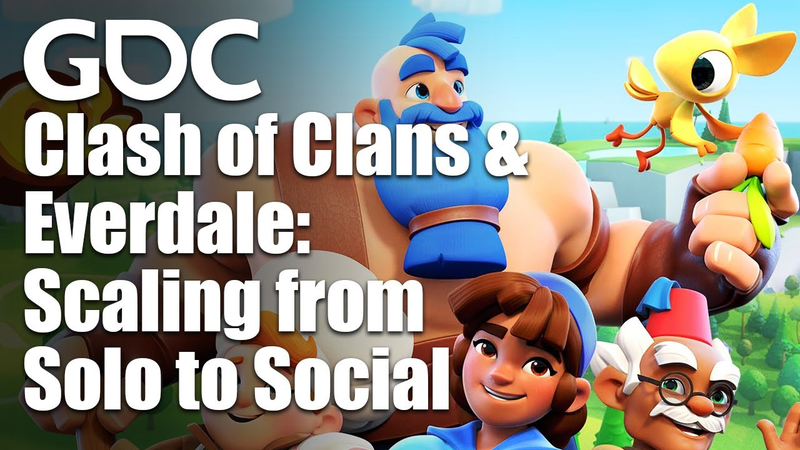
From Clash of Clans to Everdale: Scaling from Solo to Social
The evolution of mobile village-building games necessitates a fundamental shift from solitary, combat-oriented loops toward inherently collaborative, social ecosystems.
- Supercell transitioned from the single-player architecture of Clash of Clans to the social, multi-village model of Everdale by implementing a shared logic state that allowed multiple players to interact with a single, synchronized valley.
- To handle complex social interactions, the team moved away from hard-coded singletons toward a well-defined action object system that encapsulates player actions, validation checks, and rollback logic.
- By allowing objects to declare 'max fast forward ticks' and enabling systems to skip updates for hundreds of ticks, the team reduced server load by 80% to 90% compared to previous architectures.
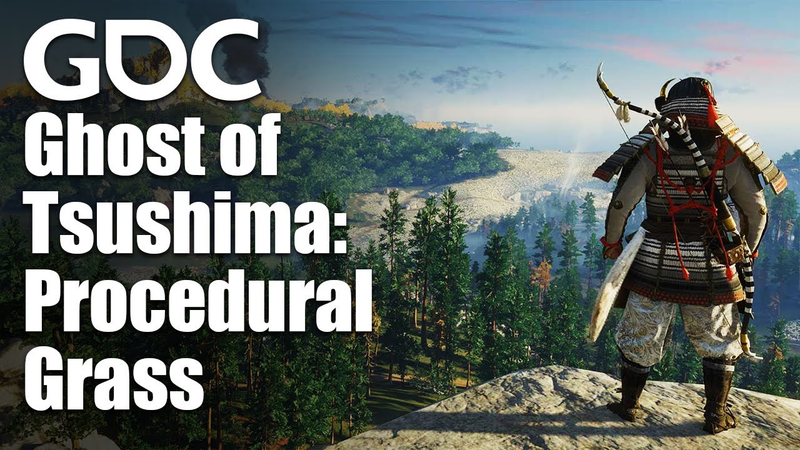
Procedural Grass in 'Ghost of Tsushima'
The procedural grass system developed for Ghost of Tsushima was designed to achieve a specific artistic vision: vast, painterly fields of foliage that maintain high visual fidelity while adhering to strict memory and performance constraints.
- Sucker Punch Productions achieved high-density foliage in 'Ghost of Tsushima' by rendering approximately 83,000 individual grass blades per frame, processed in roughly 2.5 milliseconds using a compute-shader-driven pipeline.
- To avoid the limitations of traditional grass cards, the team used a compute shader to generate instance data for tiles, which are then rendered via indirect draw calls to maintain performance while allowing for per-blade wind animation and artist-configurable parameters.
- The system utilizes a clumping algorithm that groups blades based on artist-authored parameters, preventing the uniform, artificial look of standard procedural grass and creating the appearance of a natural, varied field.

Leveraging Games in the Fight to Protect Local Cultures
The intersection of digital entertainment and cultural preservation serves as a powerful mechanism for combating the illicit trade and destruction of historical artifacts.
- The Cultural Antiquities Task Force, established in 2004, partners with federal law enforcement and international agencies to combat the illegal trafficking of cultural heritage, which is often exploited by organized crime syndicates and terrorist groups.
- Games are being utilized as a medium to raise awareness about cultural heritage protection by allowing players to experience the emotional impact of looting and the loss of identity that occurs when artifacts are removed from their communities.
- The Global Game Jam, which hosted 49,000 participants across 118 countries and 935 sites in 2020, serves as a primary vehicle for fostering collaborative, educational game development that highlights diverse cultural perspectives.