
Game Developers Conference
Game Developers Conference (GDC, now the GDC Festival of Gaming) is the professional event for the games industry. It publishes recorded talks and interviews, annual industry survey reports such as the State of the Game Industry, and news articles.
Documents

Classic Game Postmortem: Fallout
The development of Fallout between 1994 and 1997 represents a pivotal shift in role-playing game design, transitioning from rigid, linear structures to a sandbox-style experience defined by player agency.
- The development of Fallout (1994–1997) shifted RPG design from linear structures to a sandbox model by prioritizing player agency and non-linear quest solutions.
- The loss of the GURPS licensing agreement forced the team to overhaul the entire combat and skill system in just two weeks, leading to the creation of the proprietary SPECIAL system.
- Technical innovation was driven by the transition to Super VGA graphics and the development of cross-platform libraries to ensure compatibility across DOS, Windows, and Mac.
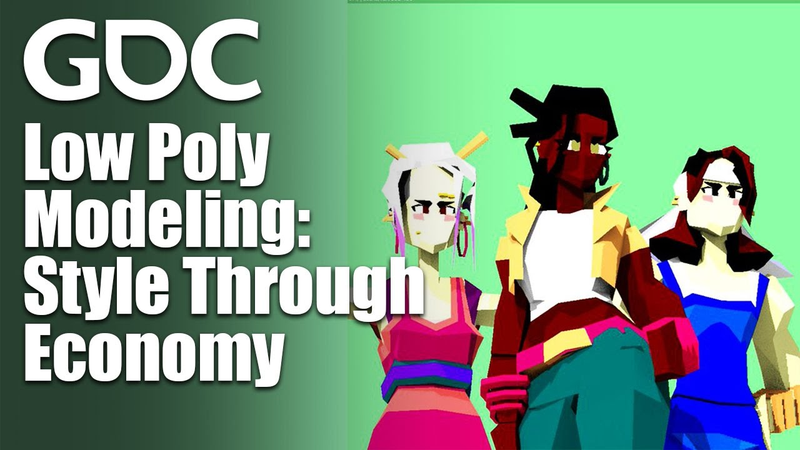
Low Poly Modeling: Style Through Economy
Low-poly modeling functions as a deliberate design philosophy centered on surface economy, prioritizing stylistic efficiency and the clear communication of visual ideas over the pursuit of high-fidelity realism.
- Adopting a low-poly first workflow increases productivity and iteration speed by eliminating the need for manual decimation or retroactive optimization.
- Low-poly modeling prioritizes surface economy and silhouette legibility, allowing developers to maintain consistent visual quality while managing limited resources.
- Low-poly geometry functions as an efficient control cage for subdivision surfaces, enabling rapid structural adjustments before final detailing and sculpting.

Early Access Lessons from Raw Data
Raw Data established a significant milestone in the virtual reality industry by becoming the first title to surpass $1 million in revenue within its initial 30 days.
- Raw Data achieved the first $1 million revenue milestone for a VR title within its initial 30 days of release.
- The game’s success was driven by a design philosophy prioritizing high-fidelity, active physical engagement and intuitive weapon handling over rigid realism.
- Cooperative, social gameplay served as the primary engine for long-term player retention and organic market growth.

Lessons from Escape Rooms: Designing for the Real World and VR
The design of immersive experiences, whether in physical escape rooms or virtual reality, centers on the fundamental human desire for agency, storytelling, and social connection.
- Immersive design relies on puzzles as pacing tools that direct player attention and drive narrative progression through a cycle of observation, organization, and pattern recognition.
- Designers must balance complex mechanics with human limitations by mitigating physical fatigue and managing cognitive load to prevent player exhaustion.
- Environmental design should prioritize accessibility and safety, as deep immersion often causes players to lose awareness of their physical surroundings.
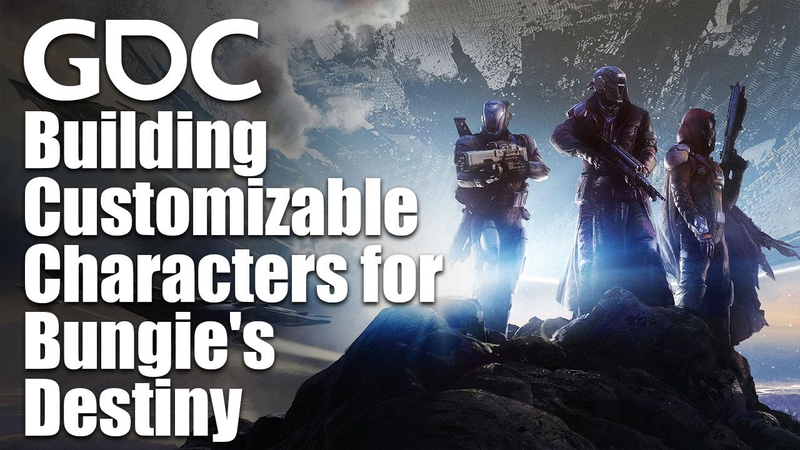
Building Customizable Characters for Bungie's Destiny
The transition from the singular hero archetype of the Halo franchise to the player-centric design of Destiny necessitated a fundamental shift in character development.
- Bungie developed a modular character customization system for Destiny that broke character designs into base elements called 'bits,' allowing artists to swap gear pieces without needing to re-skin or re-animate models.
- The system enabled artists to create complex new character assets, such as a helmet, in approximately 20 minutes by assembling pre-defined modular bits.
- To maintain performance across four platforms, the toolset provided real-time memory profiling for both textures and geometry, allowing artists to adjust resolution or swap bits to stay within strict hardware budgets.
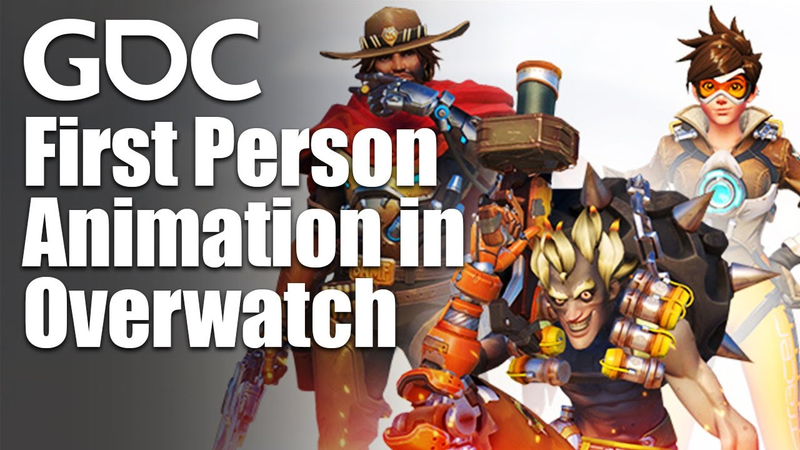
Animation Bootcamp: The First Person Animation of Overwatch
The animation philosophy behind Overwatch centers on the synthesis of distinct character personality and high-performance gameplay responsiveness.
- Overwatch animators utilize separate field-of-view (FOV) settings for the world and the player view model, allowing players to adjust their FOV up to 120 degrees without distorting the carefully crafted first-person weapon and character poses.
- To prevent weapon desync during reloads, the team uses parent spaces within the rig, which allows the right-hand IK to follow weapon bones and switch back to default without manually toggling constraints.
- First-person animations are designed to communicate gameplay status, such as moving the weapon away from the reticle during reloads to signal that the player cannot currently fire.
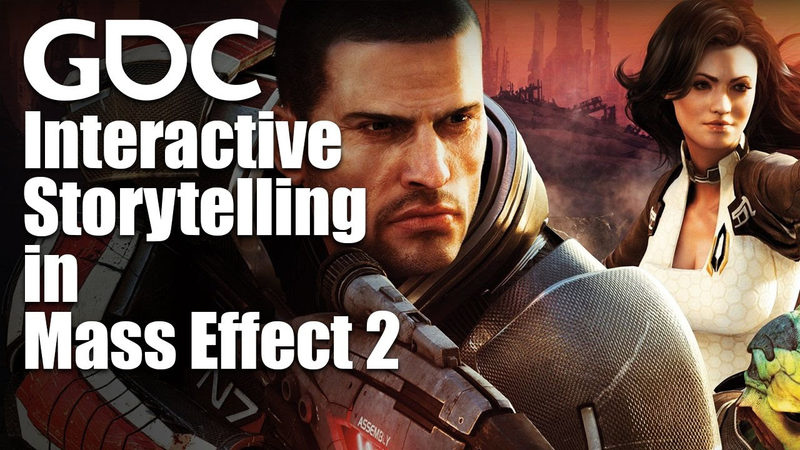
Interactive Storytelling in Mass Effect 2
Interactive storytelling in Mass Effect 2 centers on the successful integration of cinematic design with player agency, shifting the traditional role-playing paradigm from a purely subjective avatar experience to an objective character-driven model.
- BioWare treats game design and narrative as symbiotic, refusing to differentiate between the two by starting with story and building gameplay around it.
- The 'conversation wheel' interface uses 32-character paraphrases to provide players with a condensed, predictable preview of dialogue options, ensuring they understand the intent behind their choices.
- Mass Effect 2 shifted from a purely subjective role-playing model to an objective one, where the player controls a pre-defined character (Shepard) rather than a blank-slate avatar.
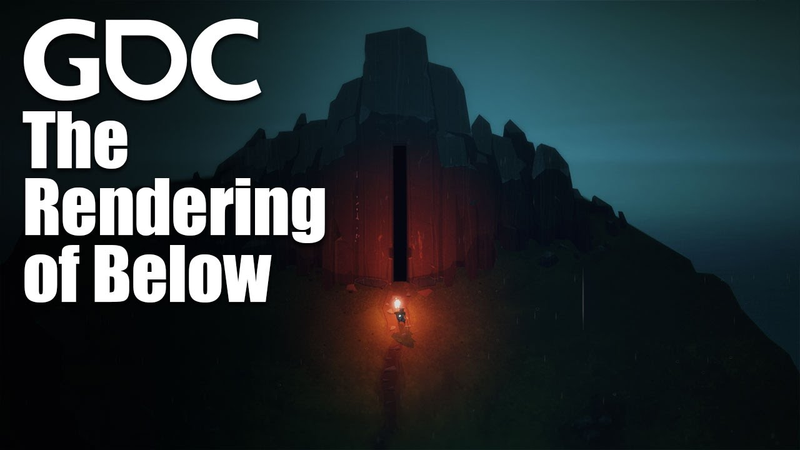
The Rendering of Below
The development of the rogue-like action-adventure game Below required a specialized rendering pipeline to balance high-density visual detail with a moody, intentionally dark aesthetic.
- The development team implemented a tiled forward lighting system using compute shaders to overcome the performance inefficiencies of standard deferred lighting on Xbox hardware.
- A gamma-correct pipeline was utilized to perform all lighting, post-processing, and color grading in linear space, effectively mitigating color banding and visual artifacts.
- The engine leveraged binary arithmetic and bit-masking to manage numerous light sources simultaneously, enabling complex light-based gameplay mechanics while maintaining compatibility with multi-sample anti-aliasing (MSAA).
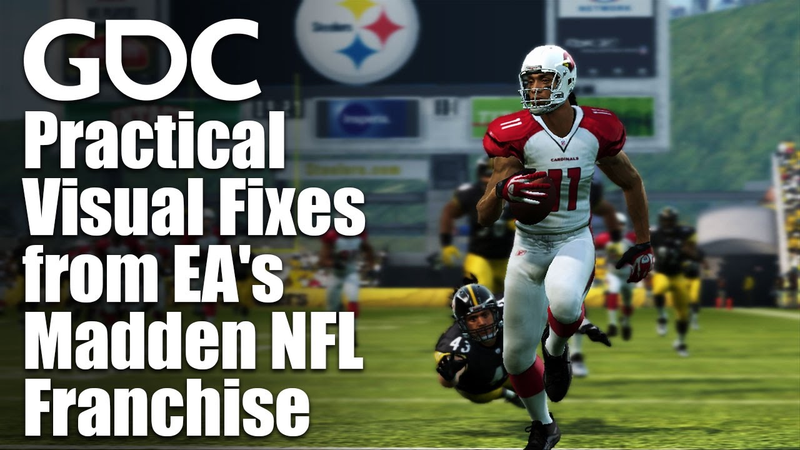
Game Accessibility: Practical Visual Fixes from EA's Madden NFL Franchise
The integration of accessibility features into the Madden NFL franchise demonstrates that significant improvements for players with visual impairments can be achieved through cost-effective, software-based solutions.
- Accessibility features can be integrated into AAA titles with minimal resources, as demonstrated by a single developer implementing these changes for Madden NFL 17 within a one-month timeframe.
- High-impact visual improvements for low-vision players include enlarging pass icons, standardizing UI placement, and providing user-adjustable brightness and contrast controls.
- Modified color-shifting algorithms are superior to standard color-blind filters, which often compress color ranges and negatively impact gameplay clarity.

Localization Shenanigans in the Chinese Speaking World
High-quality localization is a fundamental requirement for successfully entering the Chinese-speaking gaming market, which stands as a massive and rapidly expanding segment of the global industry.
- Localization must be integrated into the core development process rather than treated as a secondary task to prevent narrative degradation and cultural alienation in the Chinese market.
- Automated conversion between simplified and traditional Chinese is unreliable due to many-to-many character mappings, necessitating the use of professional, dedicated translators for each specific regional variant.
- Developers must navigate a complex regulatory landscape by securing local partnerships to manage mandatory approvals for game titles, music, and credits.
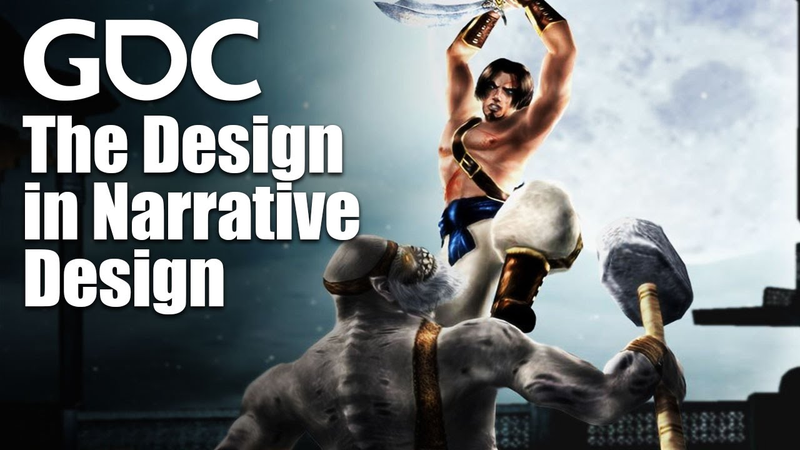
The Design in Narrative Design
The core thesis of this analysis is that game design consists of two inseparable, interdependent dimensions: the mechanical (rules) and the fictional (the world and its justification).
- Game design is defined by the inseparable interdependence of mechanical rules and fictional context, where every game element—even in non-narrative titles—possesses a fictional dimension that requires design attention.
- Achieving diegesis requires that game mechanics are justified within the internal logic of the world, such as Half-Life’s diegetic UI or Ico’s use of environmental cues instead of traditional hit points.
- The design process should function as an iterative dialogue where mechanical requirements inspire fictional justifications, which in turn unlock new mechanical possibilities.

Character Balance in Skylanders: More than the Numbers
Character balance in the Skylanders franchise prioritizes the subjective player experience and accessibility for a demographic aged six to ten over traditional competitive metrics.
- Character balance is driven by player perception rather than raw numerical data; if a player perceives a move as powerful due to visual effects or sound design, it functions as powerful regardless of its underlying math.
- In Skylanders: Swap Force, developers managed difficulty by scaling enemy damage output rather than hit points, implementing a 'fair fight' mechanic that grants players a one-second window of immunity after taking lethal damage to prevent frustration.
- The development team prioritized creating characters that players either loved or hated over those that were merely 'okay,' as strong emotional reactions drive engagement and playground discussion among the target demographic.