
Game Developers Conference
Game Developers Conference (GDC, now the GDC Festival of Gaming) is the professional event for the games industry. It publishes recorded talks and interviews, annual industry survey reports such as the State of the Game Industry, and news articles.
Documents
Evolve: An Adventure in Accessibility Retrofitting
Retrofitting accessibility into existing game titles requires a systematic evaluation process that prioritizes features based on their reach, impact, and implementation effort.
- Retrofitting accessibility is most cost-effective when integrated during pre-production, but when applied to existing titles, success requires a systematic scorecard approach to prioritize features based on reach, impact, and implementation effort.
- Accessibility features provide universal benefits that raise the skill floor for all players without negatively impacting the experience for high-skill users.
- Key technical strategies for retrofitting include implementing customizable control schemes, centralizing accessibility settings into dedicated menus, and replacing subtle UI cues with prominent, icon-based notifications.
Building Worlds in No Man's Sky Using Math(s)
Procedural generation serves as the foundational architecture for No Man’s Sky, enabling the creation of a vast, diverse universe within a remarkably compact 300MB footprint.
- No Man’s Sky achieves a vast, diverse universe within a 300MB footprint by utilizing a custom engine driven by mathematical functions rather than pre-baked assets.
- The engine employs 'Uber noise'—a synthesis of layered 2D and 3D noise—to generate organic, non-repeating terrain features like erosion and overhangs without needing context from neighboring voxels.
- The procedural framework successfully handled a launch load of 500,000 concurrent players while maintaining a stable 1% crash rate.
The Benefits and Challenges of Supporting Third-Party Developers in Eve Online
CCP Games maintains a highly successful third-party developer ecosystem for Eve Online by providing open access to static data, image servers, and web APIs.
- CCP Games offloads the development of niche, complex utilities—such as financial tracking and asset management—to the player base to preserve internal resources for core game development.
- The studio maintains control over the third-party ecosystem by retaining the authority to modify or revoke APIs that threaten game balance or facilitate market automation.
- Community-built tools like killboards serve as critical intelligence and marketing assets, often acting as prototypes for future official client features.
Small Teams, Big Dreams: How to Build a Small Team to Do Great Things
Building a high-performance game development studio requires a strategic balance between a stable core team and a flexible network of specialized contractors.
- Build a high-performance studio by combining a stable core team with a flexible network of specialized contractors to maintain agility.
- Implement a T-shaped personnel model to balance deep individual expertise with the cross-disciplinary empathy required for effective collaboration.
- Prioritize early prototyping and iterative user testing to identify design flaws before committing resources to full-scale production.
Making Night in the Woods Better with Open Source
The integration of open-source tools into game development serves as a powerful mechanism for managing complex narrative structures while simultaneously offloading technical maintenance to a broader community.
- Open-source narrative tools like Yarn Spinner allow studios to manage massive dialogue requirements, such as the 139,000 words and 130 characters featured in Night in the Woods.
- Releasing proprietary tools under permissive licenses like MIT or Apache 2 offloads technical maintenance and bug fixing to the broader developer community.
- Successful community management requires lowering barriers to entry by breaking development tasks into small, manageable issues and automating routine administrative workflows.
Balancing League of Legends for Every Player, from Bronze to Bengi
Balancing a competitive title like League of Legends necessitates navigating a massive skill gap that often exceeds 1,000% between casual participants and professional competitors.
- Riot Games balances League of Legends by targeting the 'sweet spot' of High Platinum to Low Diamond skill tiers, as this range provides the best intersection between the high volume of players and the sensitivity to balance changes.
- Designers must interpret raw data with nuance, such as accounting for 'experience bias' where a champion's high win rate may reflect the player's mastery of that specific character rather than the champion being objectively overpowered.
- Balance changes should be iterative and systemic; when simple tuning fails to resolve an outlier, developers should pivot to broader structural updates, such as the preseason overhaul of assassin items and stealth mechanics.
Building Non-Linear Narratives in Horizon: Zero Dawn
The development of Horizon: Zero Dawn centered on establishing a robust quest architecture capable of supporting a vast open-world environment without sacrificing narrative coherence.
- Horizon: Zero Dawn utilized a graph-based narrative framework that treated quest progression as a probability space rather than a fixed sequence to balance player agency with structural integrity.
- The system relied on nodes representing plot points connected by cause-and-effect relationships, using a defined set of core verbs to dynamically manage the locking and unlocking of narrative beats.
- This architecture successfully supported the production of nearly 150 distinct quests and enabled automated features such as the player job system.
Storytelling is a Team Sport
Effective game development requires treating storytelling as a collaborative team sport rather than a siloed task.
- Treat storytelling as a collaborative, cross-disciplinary effort rather than a siloed task to prevent fragmented project vision.
- Appoint designated 'gatekeepers' to defend the core narrative vision while facilitating communication between art, sound, and engineering departments.
- Utilize concise, searchable documentation featuring visual aids and bullet points to ensure narrative guidelines remain functional and accessible to all staff.
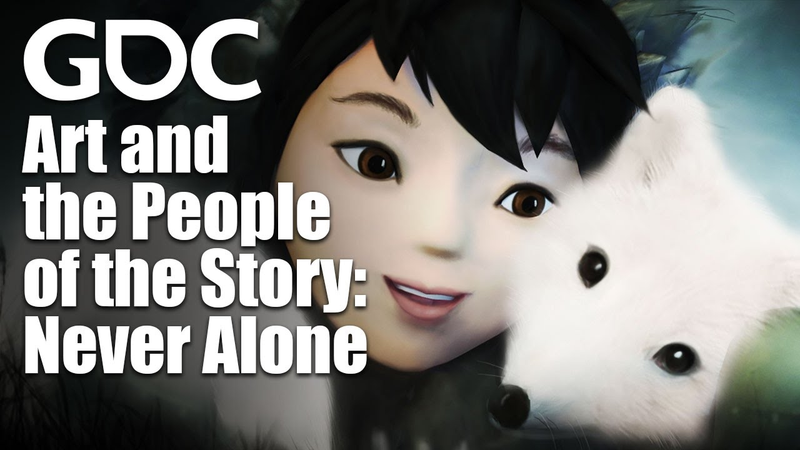
Never Alone: The Art and the People of the Story
The development of Never Alone represents a pioneering effort to integrate indigenous storytelling into interactive media through a collaborative partnership between E-Line Media, Upper One Games, and the Cook Inlet Tribal Council.
- The development of Never Alone was a collaborative partnership between E-Line Media, Upper One Games, and the Cook Inlet Tribal Council to integrate indigenous storytelling into interactive media.
- The project team engaged over 40 Alaska Native elders, artists, and storytellers to ensure the authentic preservation of the Iñupiat worldview and the legend of Kanak Sayaka.
- Developers replaced conventional combat mechanics with gameplay systems centered on the indigenous value of interdependence between humans, animals, and the environment.
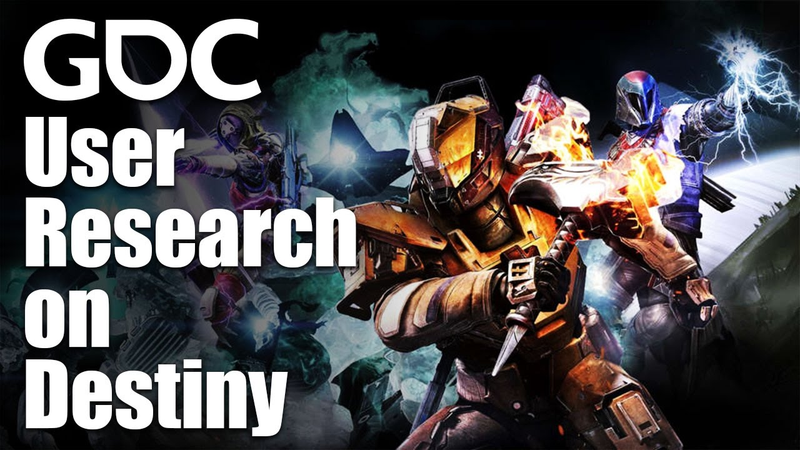
User Research on Destiny
The development of Destiny necessitated a fundamental shift in user research methodology, moving away from traditional testing frameworks toward a highly integrated, automated system.
- Bungie implemented strict security measures—including metal detectors and locked-down testing platforms—to allow for playtesting six months earlier than would have been possible otherwise.
- To ensure data accuracy, Bungie used post-stratification weighting to align their lab sample with the general player population, confirming that internal playtest data yielded the same directional results as external agency-recruited participants.
- The development team utilized a 'frustration button' feature during playtests, allowing players to log specific moments of difficulty that were then mapped against XYZ coordinates and video footage to identify pain points and highlight 'awesome moments.'

The Future of Art Production in Games
The future of game art production is defined by a shift from labor-intensive technical execution toward a focus on artistic intent and storytelling.
- Art production is shifting from manual, labor-intensive technical execution toward a focus on artistic intent and storytelling as automation replaces reductive tasks like UV unwrapping and collision mesh creation.
- The integration of photogrammetry, procedural generation, and simulation allows studios to treat virtual environments as sets to be dressed and lit, significantly increasing production efficiency and visual fidelity.
- Deep learning and neural networks are poised to automate animation and asset creation, enabling software to execute artistic intent with minimal manual intervention.
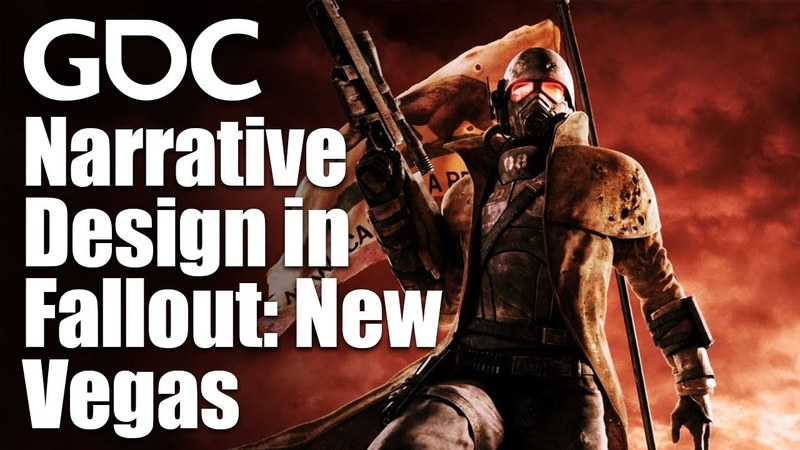
Choice Architecture, Player Expression, and Narrative Design in Fallout: New Vegas
Modern role-playing game design often struggles to reconcile linear cinematic storytelling with the need for authentic player agency.
- Modern RPG design suffers from 'choice conflict,' where gameplay mechanics force players into roles that contradict their intended character expression, undermining narrative weight.
- Narrative architecture should move away from binary moral extremes and high-stakes dilemmas in favor of tactical dialogue systems that offer clear forecasting and validated consequences.
- Developers should define specific, supported character archetypes to ensure that player choices are balanced with meaningful trade-offs rather than arbitrary win-loss outcomes.