
Game Developers Conference
Game Developers Conference (GDC, now the GDC Festival of Gaming) is the professional event for the games industry. It publishes recorded talks and interviews, annual industry survey reports such as the State of the Game Industry, and news articles.
Documents
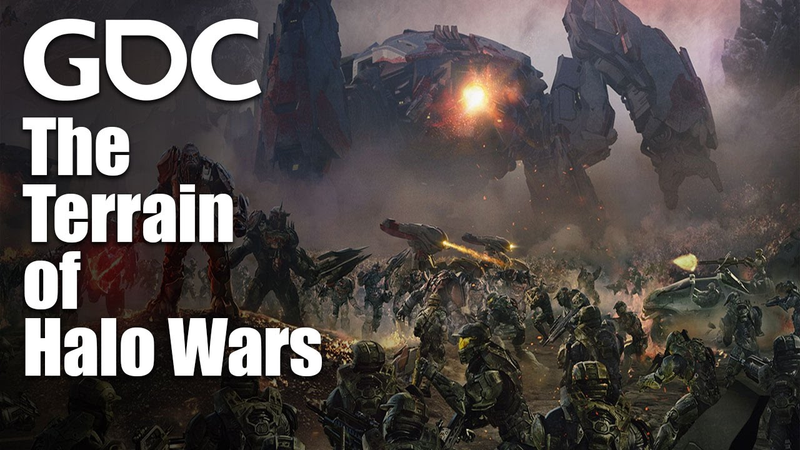
The Terrain of Halo Wars
The development of Halo Wars marked a significant technical evolution in real-time strategy design, driven by the need to transition from legacy engine architectures to a custom environment capable of running on Xbox 360 hardware.
- The development team utilized Vector Field Terrain to enable per-vertex displacement across three axes, allowing for complex organic structures like overhangs and bridges that traditional height-field systems could not support.
- To maintain performance on Xbox 360 hardware, the engine decoupled high-fidelity visual terrain from a low-resolution, CPU-optimized height field to ensure efficient physics calculations and ray casting.
- Memory usage was restricted to a 14MB footprint by leveraging DXT compression and a custom GPU-based virtual texturing cache.
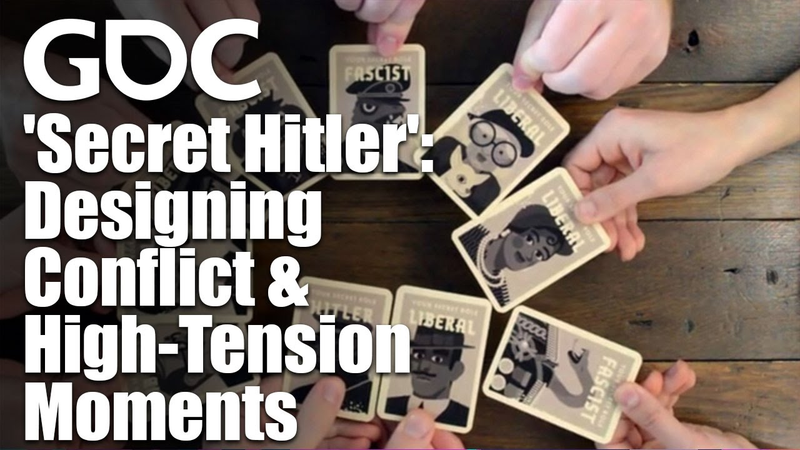
Secret Hitler: Designing Conflict & High-Tension Moments
Secret Hitler functions as a masterclass in social deduction design, prioritizing high-tension interpersonal drama and narrative-driven gameplay over rigid mechanical balance.
- The core design philosophy of Secret Hitler focused on maintaining high-tension, personal conflict and a sense of a 'knife's edge' throughout the entire session, rather than prioritizing perfect game balance or deterministic outcomes.
- The game utilizes a 'rising action' structure where fascist policy enactment increases the intensity of suspicion and social interaction, ensuring the game remains engaging until the final moments.
- To prevent the 'snowball effect' where one team dominates, the developers implemented mechanics like term limits and presidential succession to force players to interact with new, potentially untrusted partners rather than relying on a fixed group of allies.

The Sound and Music of Hyper Light Drifter
The audio development of Hyper Light Drifter centers on the creation of a unique, immersive sonic identity through experimental recording techniques and a highly iterative collaborative process.
- The audio team utilized unconventional field recording techniques, such as using a stethoscope modified with a garden hose spigot to record internal body sounds like blood flow, which were then processed and distorted to create ambient textures for boss battles.
- To achieve a unique, 'nightmarish' aesthetic, the developers used a 1950s wire recorder—purchased for $250—to capture and manipulate raw, historical audio, creating distorted textures that predated modern digital recording artifacts.
- The sound design process relied heavily on extreme processing of organic sounds, such as recording the creator's own voice squealing like a pig or using wolf vocalizations, which were then pitch-shifted and layered to create distinct, terrifying creature audio.

The Jetpack Joyride Postmortem
Jetpack Joyride represents a strategic masterclass in mobile game design, originating from a focused four-week development cycle by a three-person team at Halfbrick Studios.
- Halfbrick Studios developed Jetpack Joyride in a four-week cycle with a three-person team, proving that focused development can produce highly successful mobile titles.
- The game’s core retention strategy relied on a layered mission system that replaced static goals with progressive challenges to foster long-term player engagement.
- By intentionally incorporating randomized, occasionally unfair obstacles, the design mitigated player frustration and encouraged immediate re-engagement with the core gameplay loop.
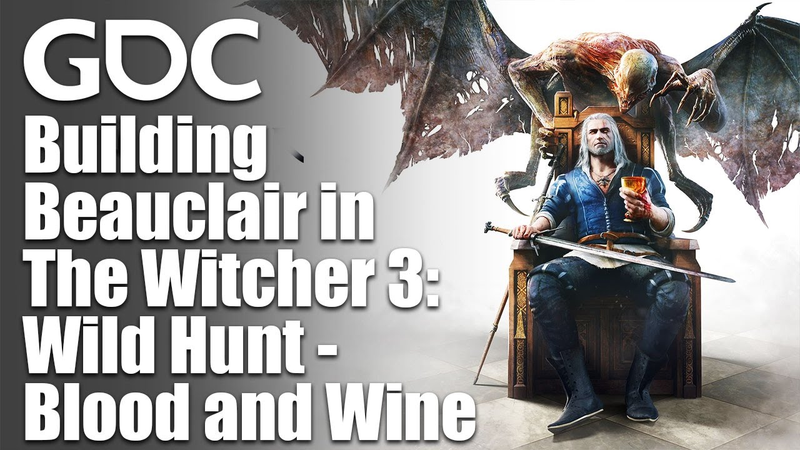
Building Beauclair in The Witcher 3: Wild Hunt - Blood and Wine
The development of Beauclair for The Witcher 3: Blood and Wine centered on creating a dense, vacation-inspired urban environment that balanced high visual fidelity with rigorous technical performance constraints.
- To manage performance in the dense city of Beauclair, the team used Umbra to optimize rendering by limiting the number of visible meshes based on the player's line of sight, significantly reducing triangle counts for complex structures.
- The development team implemented a custom blend shader that used monochromatic textures combined with color tints and pattern overlays to create unique visual variations for assets while minimizing memory usage.
- Designers controlled player navigation and visibility by bending streets and using landmarks like the Gorgon Mountain and the palace to break lines of sight, which helped hide asset popping and streaming latency.

Dark Patterns: How Good UX Can Be Bad UX
Dark patterns in game design represent a critical intersection where effective user experience (UX) techniques are repurposed to manipulate player behavior for short-term monetary gain.
- Dark patterns prioritize short-term revenue through deceptive UX, but they ultimately damage brand reputation and increase long-term player churn.
- Common manipulative tactics include bait-and-switch advertising, UI designs that trigger accidental purchases, and notifications using guilt-tripping language.
- Exploitative design relies on psychological pressure, such as leveraging social peer pressure or low-probability rewards, to force player compliance.
Best Practices for Procedural Narrative Generation
Procedural narrative generation serves as a bridge between structured, authored storytelling and emergent, simulation-based gameplay.
- Procedural narrative generation bridges the gap between authored storytelling and emergent gameplay by using logical modeling to represent characters, relationships, and world states as formal data.
- The simulation-centric approach, exemplified by Dwarf Fortress, prioritizes spontaneity by defining character personalities and interaction rules that drive behavior within a simulated environment.
- The plot-centric approach, utilized in games like Façade, employs a story mediator to monitor player actions and enforce specific narrative beats to maintain a designer's intended dramatic structure.
Still Logged In: What AR and VR Can Learn from MMOs
The development of virtual and augmented reality platforms represents a fundamental shift from hardware-centric design to the creation of complex, persistent social societies.
- AR and VR platforms must transition from hardware-centric development to prioritizing server-side social infrastructure and behavioral systems to ensure long-term viability.
- Developers should treat every game mechanic as a potential vector for abuse, requiring the implementation of granular permission controls, persistent identity systems, and administrative logging.
- Fostering personal investment through established digital identities is a primary strategy for discouraging griefing and promoting positive social interaction within virtual environments.
Classic Game Postmortem: Seaman
The development of the Dreamcast title Seaman represents a deliberate departure from industry conventions, prioritizing high-risk innovation over the safety of established genres or licensed properties.
- Seaman achieved commercial success by prioritizing high-risk innovation and emotional provocation over established genre conventions, successfully targeting both core gamers and non-gaming demographics.
- The development team utilized a 'hate-to-like' engagement theory, intentionally designing the creature to elicit discomfort or curiosity to ensure the player was never indifferent.
- Market demand was driven by a strategy of mystery and artificial scarcity, which included keeping the lead voice actor anonymous while leveraging Leonard Nimoy for institutional credibility.
Idle Games: The Mechanics and Monetization of Self-Playing Games
Idle games have established themselves as a distinct and highly lucrative genre defined by the core principle of progress without constant interaction.
- Idle games achieve high buyer conversion rates ranging from 3% to 8% by integrating monetization directly into the core progression loop.
- The genre's success is driven by the elimination of traditional lose conditions and the use of positive feedback loops, which foster exceptional player retention.
- Monetization strategies rely on acceleration mechanics such as time warps, permanent multipliers, and gacha-style draws to drive lifetime average revenue per paying user.

Illustrating Fantasy in League of Legends
The visual identity of League of Legends champions has evolved from rigid, action-oriented box art toward a narrative-driven philosophy that prioritizes emotional resonance and thematic storytelling.
- Riot Games shifted its illustration philosophy from creating 'aspirational' hero shots to focusing on the 'true fantasy' of a character, which exists in the player's imagination rather than the game's low-poly models.
- The illustration team discovered that breaking arbitrary rules—such as forcing a character to stand or showing their primary gameplay hook—often leads to higher player resonance, as seen in the successful redesign of Elise.
- Splash art is treated as a narrative tool to convey a champion's core personality and story, prioritizing the 'feeling' of a character over a literal representation of their in-game abilities or appearance.
Deformable Snow Rendering in Batman: Arkham Origins
The development of the snow rendering system for Batman: Arkham Origins focused on creating a high-performance, low-memory solution for organic, deformable surfaces.
- The deformable snow system uses a runtime-generated displacement height map technique that avoids expensive raycasting or physics-heavy calculations, making it performant for previous-gen consoles like the PS3 and Xbox 360.
- To manage memory efficiently, the system uses a pre-allocated memory pool and only tracks 'active' surfaces—those within a specific distance of characters—releasing memory for distant surfaces to maintain a strict 2MB budget.
- The technique renders character interactions into a height map, which is then processed via a four-tap bilinear Poisson disc blur to create smooth, organic gradients for footprints, sliding, and fighting movements.