
Game Developers Conference
Game Developers Conference (GDC, now the GDC Festival of Gaming) is the professional event for the games industry. It publishes recorded talks and interviews, annual industry survey reports such as the State of the Game Industry, and news articles.
Documents
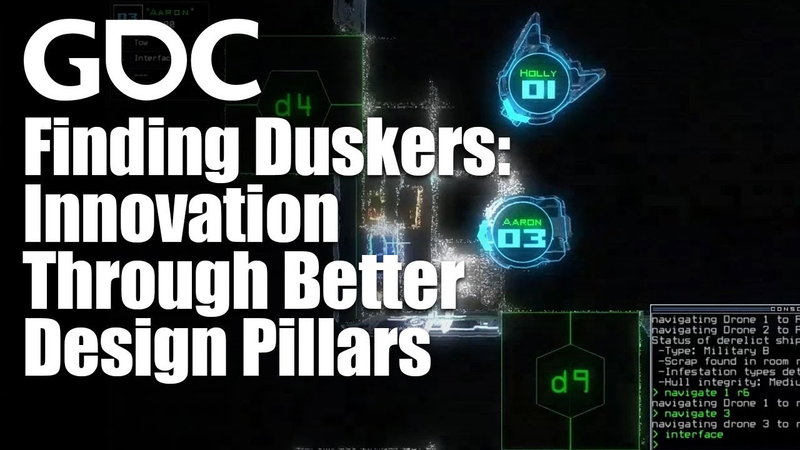
Finding Duskers: Innovation Through Better Design Pillars
Successful game development relies on prioritizing emotional resonance over rigid, feature-based planning.
- Prioritize emotional resonance over feature-based planning by anchoring all development decisions in a singular core player fantasy.
- Use iterative experimentation to allow UI, sound design, and atmosphere to evolve organically, ensuring every technical choice reinforces the intended emotional state.
- Maintain design integrity by resisting popular but discordant mechanics, such as traditional combat or tower defense, that conflict with the game's core premise.
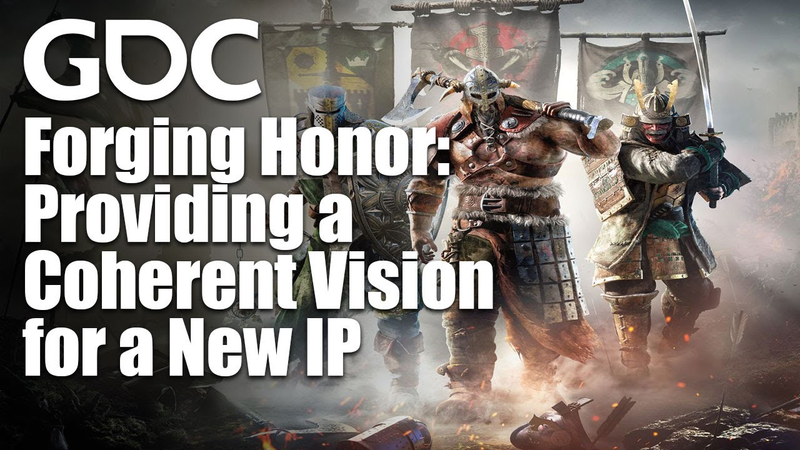
Forging Honor: Providing a Coherent Vision for a New IP
Establishing a coherent vision for a new intellectual property requires shifting the focus of leadership from a singular, initial sales presentation to a continuous, iterative process of communication.
- Pitching is not a request for funding, but a method to signal core values and earn the confidence of collaborators regarding the project's success and meaningfulness.
- To maintain a coherent vision for a new IP, teams should prioritize rapid iteration by building hundreds of prototypes early in development, as seen in the 18-month prototyping phase for For Honor.
- Teams should validate progress through regular, high-stakes internal tournaments every three months using stable builds, which forces developers to prove the game's viability and stability consistently.
Modular, Reusable Social Behavior In Video Game AI
This analysis examines a procedural artificial intelligence framework designed to create modular, reusable, and symmetric social behaviors for non-player characters (NPCs) in real-time, first-person interactive environments.
- The architecture decouples social interactions from specific characters and environments by using modular 'social games' that represent domains like authority or alliance, moving away from rigid, scenario-specific scripting.
- By integrating symbolic reasoning with utility-based 'soft' rules, the system achieves complex, reactive social dynamics while avoiding the brittleness typically associated with traditional symbolic AI.
- The framework ensures symmetry by processing player input—captured via whole-body sensors—through the same social state expectations as NPCs, allowing players to participate in the same social affordances as the AI.

Believable Humans (In Video Game Animation)
The pursuit of believable digital humans in video games has shifted from a focus on raw technical fidelity to the cultivation of emotional resonance and character empathy.
- The industry is shifting from raw technical fidelity to emotional resonance, using high-quality performance capture to bridge the gap between interactive gaming and cinematic storytelling as seen in titles like The Last of Us and Uncharted.
- Modern facial animation rigs now utilize over 1,000 blend shapes to achieve photorealistic micro-expressions and visual realism.
- A critical industry bottleneck has emerged due to a scarcity of specialized experts capable of managing complex, high-fidelity animation systems.
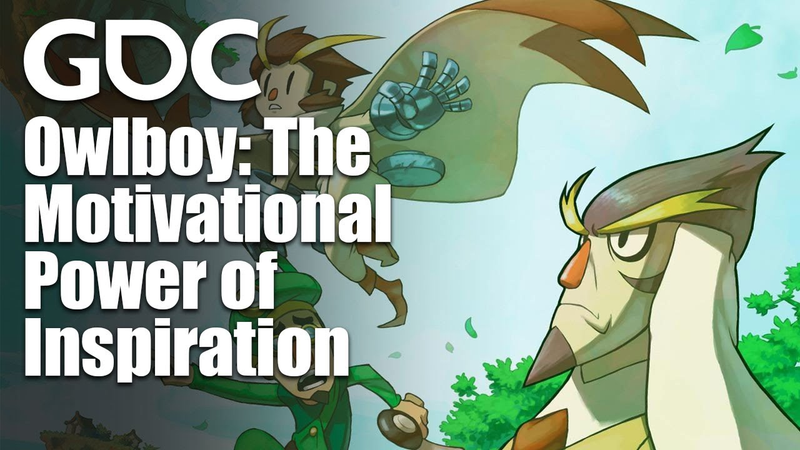
Owlboy: The Motivational Power of Inspiration
The nine-year development cycle of the indie title Owlboy serves as a case study for the critical role of sustained creative inspiration in long-term game production.
- Maintaining long-term motivation over a 9-year development cycle requires a team-wide commitment to a core vision, even when faced with significant financial hurdles and the need for secondary employment.
- Design inspiration can be sourced by internalizing experiences from other media, such as architectural elements observed during travel, and by allowing the mind to wander during periods of boredom.
- Iterative design is more effective when moving from small, rough sketches to pixel art sprites, which helps developers focus on essential shapes and silhouettes rather than getting stuck on minute details.
The Salt and Sanctuary Postmortem
Salt and Sanctuary, developed by the two-person team at Ska Studios, represents a 2D action RPG heavily inspired by the Dark Souls series.
- Prioritize building robust, custom development tools early in the production cycle, as the quality of these tools directly dictates the quality and efficiency of the content creation process.
- Implement a 'task-switching' workflow where developers focus on a single discipline—such as music, coding, or animation—for at least 2–3 days at a time to minimize the mental overhead of context switching.
- Avoid launching with incomplete localization; the developers found that players notice and react negatively to 'faked' or missing language support, whereas professional localization significantly boosts engagement and sales.
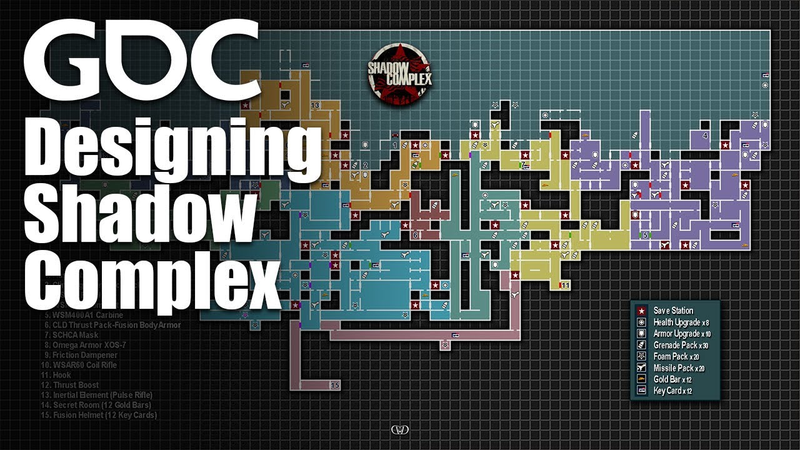
Designing Shadow Complex
Small-scale game development thrives when teams embrace inherent constraints by prioritizing high-quality, focused gameplay over the expansive, resource-heavy scope of traditional retail titles.
- Prioritize unique gameplay experiences over technical development by leveraging existing engines like Unreal, allowing small teams to focus resources on original design rather than building foundational technology.
- Maintain a lean development process by using short, concise design documents—such as the five-page document used for Shadow Complex—to facilitate rapid team alignment and iteration.
- Define a clear core gameplay loop early in development, such as the exploration-combat balance in Shadow Complex, and ensure every feature and asset directly supports that loop to avoid unnecessary bloat.
A Thousand Tiny Tales: Emergent Storytelling in Slime Rancher
Emergent storytelling functions as a core design philosophy in Slime Rancher, prioritizing the creation of unpredictable, player-driven narratives over rigid, scripted sequences.
- Emergent storytelling is generated by creating simple, robust AI behaviors that interact with game systems, rather than scripting long-form narratives.
- Designers should limit the number of 'needs' (e.g., hunger, health) to keep systems manageable, while providing a wide variety of 'wants' to drive unpredictable player interactions.
- Emergent behavior often arises from happy accidents in physics simulations, such as Slime Rancher's stacking mechanic, which players interpreted as intelligent escape attempts.
ARK: Survival Evolved: Lessons from the Trenches of Early Access
The development of ARK: Survival Evolved demonstrates the efficacy of an emergent development strategy, which prioritizes iterative growth and high-level guiding principles over rigid, pre-defined design documentation.
- Success in Early Access relies on an emergent development strategy that prioritizes iterative growth and high-level guiding principles over rigid, pre-defined design documentation.
- The development team utilizes a structured feature scorecard system to objectively evaluate updates based on development feasibility, team passion, and long-term meta-game health.
- Concurrent user counts serve as the primary metric for project success, functioning as a more reliable indicator of engagement than Steam reviews.
The Importance of Everything: Analytics of Map Design
Analytics serves as a vital methodology for iterative game design, functioning not as a definitive formula for success but as a tool to test hypotheses and refine player experiences.
- Analytics should be used as a tool for testing design hypotheses and refining player experiences rather than as a definitive formula for game success.
- Designers must distinguish between raw metrics, which merely record past events, and true analytics, which function as a social science to inform future decision-making.
- Effective map design requires moving beyond the 'where' of player behavior to uncover the 'why' behind specific actions.
Controlling Carnage: Effective Side-Scroller Controls on Mobile
The development of control schemes for mobile action games requires moving beyond traditional console-based paradigms to address the unique constraints of touchscreens, specifically the lack of tactile feedback and the physical limitations of thumb reach.
- To mitigate 'thumb drift' and the lack of tactile feedback on touchscreens, developers should implement large, invisible hit pads that leverage muscle memory rather than relying solely on visible buttons.
- Mapping actions to distinct thumb positions—vertically extended, horizontally extended, and tucked—allows players to execute complex inputs like jumping, melee, and ranged attacks without needing to visually monitor the control area.
- Control schemes must be dynamically scaled based on device screen size, with smaller devices requiring more compact layouts to ensure both visibility and ergonomic usability.

We Failed at Publishing Competitive Games so You Don't Have to
The pursuit of a competitive gaming publishing label serves as a cautionary tale regarding the disconnect between development expertise and market realities.
- Financial success in competitive gaming requires aligning development costs with market reality, as even respectable sales of 200,000 units—such as those achieved by Divekick—can fail to recoup investments if the budget and strategy are misaligned.
- Publishers must avoid the cognitive bias of attributing past successes to internal expertise rather than the inherent appeal of the product, which often leads to the repeated failure of marketing strategies for subsequent titles like Capsule Force and Gun Sport.
- A shift in strategy is required from front-loaded content models to sustainable post-release update cycles, as the former fails to maintain the long-term engagement necessary for competitive titles.