
Game Developers Conference
Game Developers Conference (GDC, now the GDC Festival of Gaming) is the professional event for the games industry. It publishes recorded talks and interviews, annual industry survey reports such as the State of the Game Industry, and news articles.
Documents

Throwing Out the Dopamine Shots: Reward Psychology Without the Neurotrash
The game industry must pivot away from the pervasive reliance on oversimplified neuroscience, particularly the misuse of dopamine as a catch-all explanation for player motivation.
- Designers should replace oversimplified neuro-metaphors like 'dopamine' with proven behavioral psychology frameworks, specifically operant conditioning and structured feedback loops.
- Engagement is best sustained by balancing reward schedules, utilizing a mix of fixed and variable intervals to maintain player interest over time.
- Developers must prioritize player agency and the 'illusion of control' to prevent users from feeling manipulated, which is essential for long-term retention.
Smash Sisters: Fostering Camaraderie from the Ground Up
Smash Sisters functions as a grassroots initiative within the Super Smash Bros. community, specifically designed to increase female participation and retention through team-based crew battles.
- Smash Sisters increases female participation and retention in the Super Smash Bros. community by replacing high-stakes individual brackets with team-based crew battles.
- The initiative utilizes a decentralized, feedback-driven model that empowers local leaders to manage events while maintaining consistent branding and safety standards.
- By prioritizing social integration over competitive prize pools, the program lowers barriers to entry and serves as a welcoming supplement to the broader co-ed tournament scene.
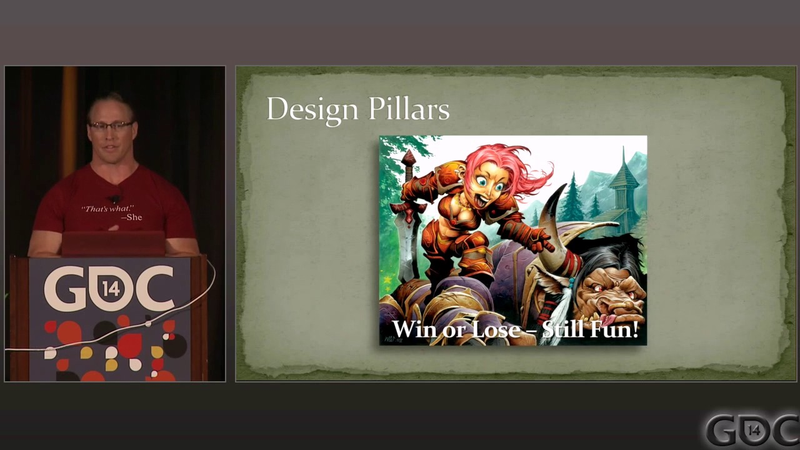
Designers Are from Saturn, Programmers Are from Uranus
The fundamental friction between game designers and programmers arises from divergent professional priorities, where designers focus on creative iteration and player experience while programmers emphasize system scalability, performance, and code maintainability.
- The core friction between design and engineering stems from conflicting priorities, where designers focus on creative iteration while programmers prioritize system scalability and code maintainability.
- Integrating technical designers into the development process provides a necessary conduit to translate creative requirements into feasible technical implementations.
- Teams should replace lengthy, rigid manuals with concise, two-page design documents to facilitate ongoing dialogue and ensure documentation remains a living tool for decision-making.
Peggle Blast: Big Concepts, Small Project
The development of Peggle Blast for mobile platforms necessitated a radical departure from traditional audio production methods due to a stringent 5MB memory constraint, a stark reduction from the 783MB utilized in previous console iterations.
- The development of Peggle Blast reduced audio memory usage from 783MB in console versions to a 5MB limit for mobile, necessitating a shift from pre-recorded wave files to a MIDI-based architecture.
- By utilizing procedural audio synthesis and real-time digital signal processing, the team generated dynamic soundscapes while avoiding the high CPU overhead associated with compressed formats like MP3 or Ogg.
- The team implemented a multi-tiered quality manager that dynamically adjusted voice limits and sample complexity to ensure consistent performance across diverse mobile hardware.
Building Game Mechanics to Elevate Narrative in Oxenfree
The development of Oxenfree centers on the philosophy that narrative should function as the primary driver of gameplay rather than a secondary element siloed from mechanical systems.
- Night School Studio treated dialogue as a core gameplay mechanic by requiring players to initiate every conversation, ensuring that Alex only speaks when the player chooses to trigger an interaction.
- To maintain narrative flow without traditional cutscenes, the developers implemented a system where NPCs can dynamically resume interrupted conversations or acknowledge when a player cuts them off, utilizing hundreds of specific lines to bridge dialogue gaps.
- The design team prioritized a 'Leanback' experience by positioning dialogue bubbles directly over characters, allowing players to focus on the action without moving their eyes to read subtitles at the screen edges.
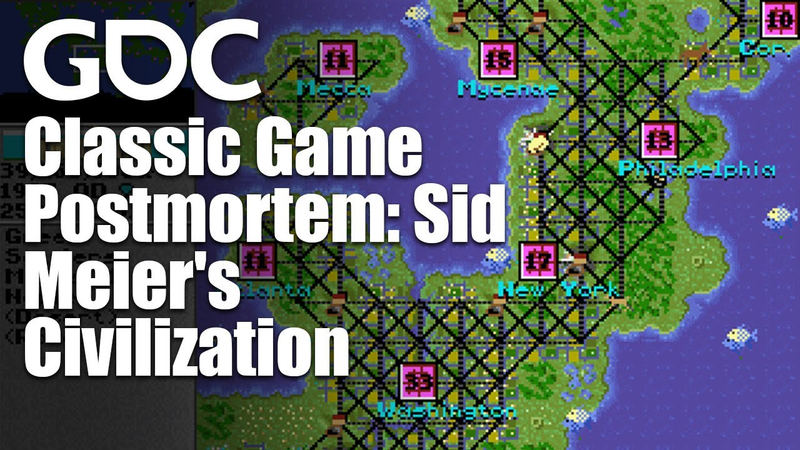
Classic Game Postmortem: Sid Meier's Civilization
The development of Civilization represents a pivotal shift in strategy gaming, moving away from rigid historical simulation toward a sandbox experience that prioritizes player agency and long-term strategic planning.
- Sid Meier and Bruce Shelley developed the original Civilization in under one year, beginning in early 1990 and shipping the title in 1991.
- The game's design was heavily influenced by existing titles like Empire, SimCity, and Railroad Tycoon, as well as Francis Tresham’s board game, Civilization.
- The 'tech tree' mechanic was a core innovation that provided players with a sense of progression and long-term strategic goals, such as unlocking railroads to improve unit mobility.
Level Design Workshop: A Narrative Approach to Level Design
A narrative-driven approach to level design prioritizes the story as the primary vision for gameplay, treating game events as story beats and vice versa.
- A narrative-driven design approach treats game events as story beats, ensuring that mechanics, pacing, and tone are directly derived from the project's core theme.
- Designers should categorize narrative elements into constants (immutable core) and variables (mechanics, pacing, and tone) to ensure gameplay systems serve the story rather than existing in isolation.
- The design process is structured around six fundamental questions: why (theme), who (characters), where (setting), what (plot), when (pacing), and how (presentation).
Managing Conflict on Small Teams
Effective conflict management within small game development teams relies on shifting the focus from individual ego to the objective needs of the project.
- Resolve interpersonal conflict by shifting focus from individual ego to objective, evidence-based decision-making.
- Require team members to support proposed design solutions with prototypes and transparent evaluations of potential downsides before implementation.
- Empower designated leads to make final decisions when consensus cannot be reached, ensuring choices remain aligned with the project's budget and vision.
How to Choose the Best Typographic System for Your Global Game
Effective typographic design in video games serves as a critical bridge between visual aesthetics and user experience, functioning as both a narrative tool and a functional interface element.
- Localization requirements for writing systems like Cyrillic, Greek, and Asian scripts must be planned early to accommodate unique glyph structures, accents, and vertical spacing needs.
- Typography should function as an integrated narrative and functional design element that mirrors the game's thematic world rather than serving as an aesthetic afterthought.
- Designers must prioritize legibility and clear visual hierarchy to ensure readability across diverse screen sizes and varying player viewing distances.
Signal Processing For Sound Design
Signal processing serves as a foundational creative pillar in game audio, enabling designers to convert raw recordings into immersive, narrative-driven assets.
- Signal processing is the primary tool for transforming raw recordings into immersive game assets, requiring a balance between technical mastery and creative restraint.
- Designers must manage frequency spectrums and dynamic ranges using multiband compression, transient shaping, and tape saturation to prevent audio clutter in dense, multi-layered environments.
- Complex signal chains involving granular synthesis and morphing are essential for converting mundane source material into expressive, evolving textures for steady-state assets like engine hums.
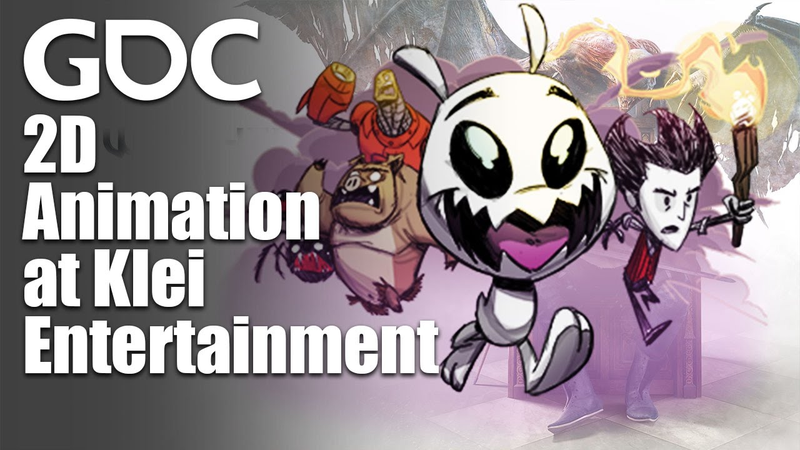
2D Animation at Klei Entertainment
Klei Entertainment utilizes a hybrid 2D animation pipeline that combines traditional hand-drawn techniques with digital symbol-based animation to achieve high-quality visuals while maintaining efficient production cycles.
- Klei Entertainment reduced character memory usage from 40 megabytes to 12 megabytes by replacing full sprite sheets with a segmented, symbol-based animation system.
- The studio uses Adobe Flash as a production tool to create a library of character symbols, which are then manipulated on a timeline rather than exported as traditional high-definition sprite sheets.
- This hybrid pipeline enables runtime interpolation, allowing 30-frame-per-second animations to appear smooth at 60 frames per second within the game engine.
The Casual (but Regal) Swipe: Creating Game Mechanics in Reigns
The design philosophy behind Reigns centers on the concept of efficient laziness, utilizing a minimalist swipe-based interface to bridge the gap between casual player input and the profound, often fatal consequences of ruling a kingdom.
- Reigns utilizes a minimalist, swipe-based interface to translate simple casual input into high-stakes narrative consequences, prioritizing player-driven storytelling over complex numerical optimization.
- The game employs a probabilistic-driven narrative engine that dynamically selects cards based on the kingdom's current state, ensuring a fluid and infinite gameplay loop.
- Development relies on a flexible, spreadsheet-based architecture that balances linear narrative elements with randomized outcomes to allow for emergent mechanics and unique death conditions.