
European Conference on Games Based Learning (ECGBL)
Annual European conference on game-based learning and serious games; its proceedings are published open access (CC BY) by Academic Conferences International.
Documents
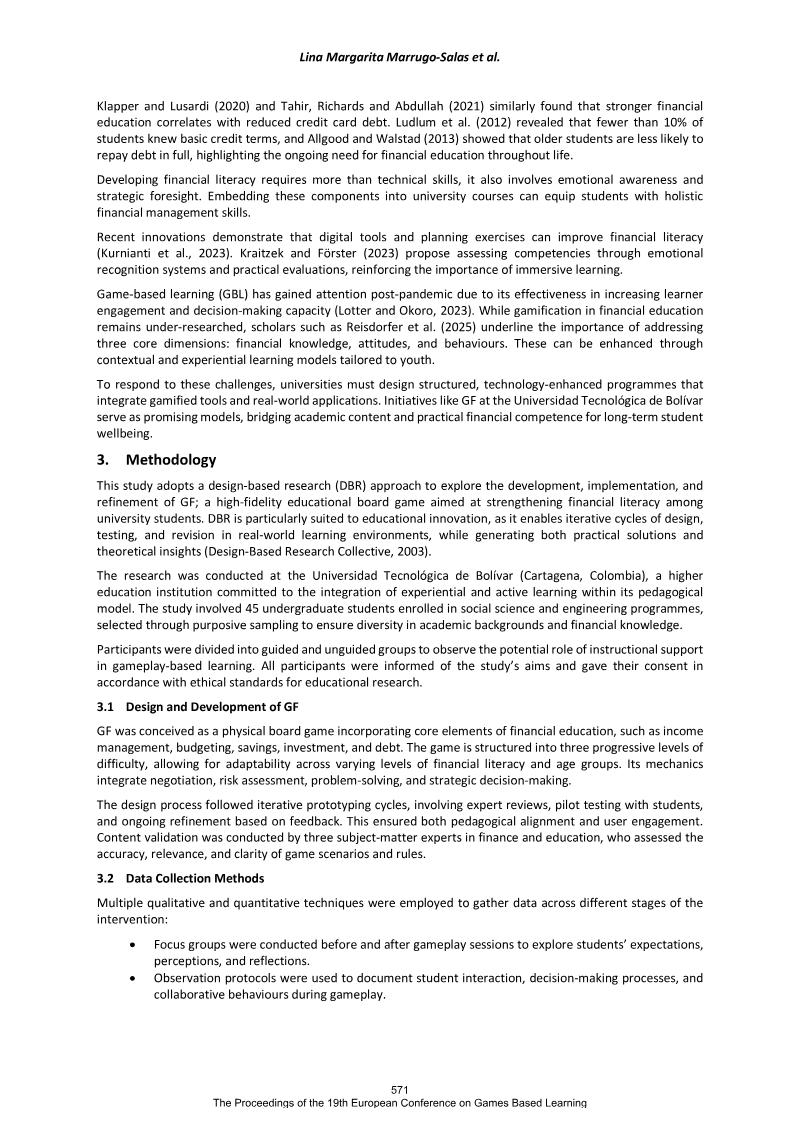
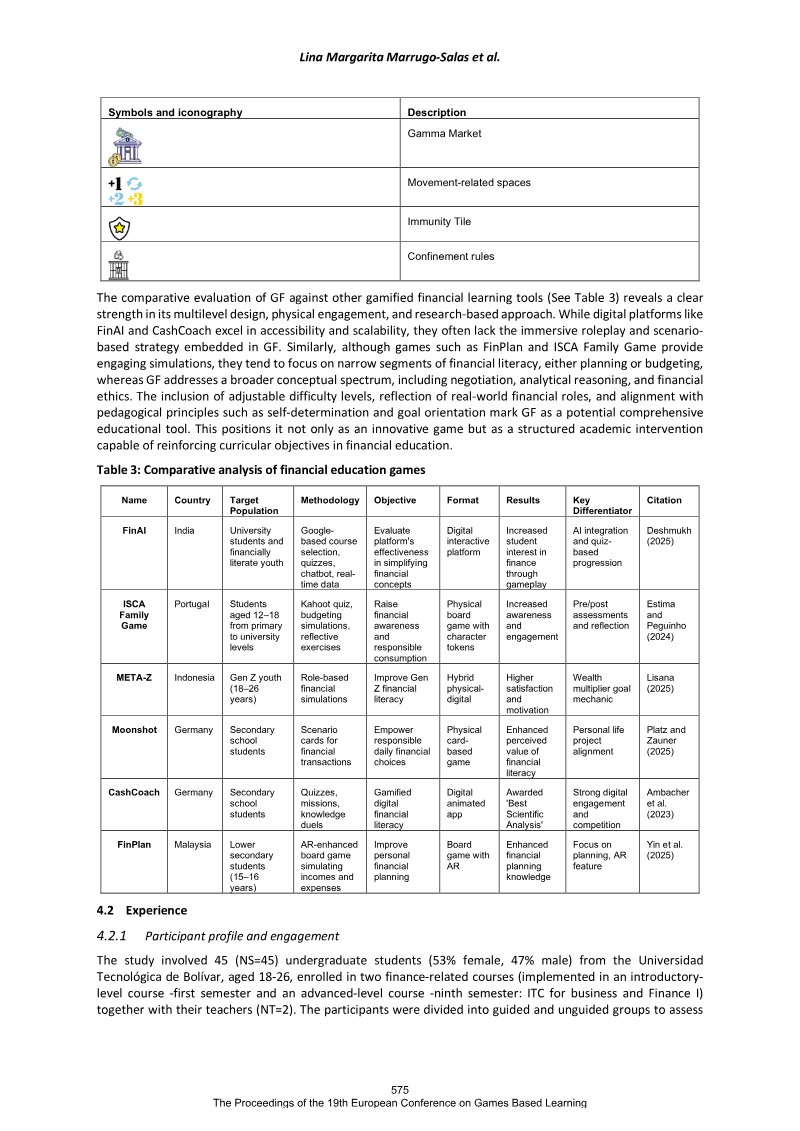
Testing the Game: Gamma Finance as a Design-Based Prototype for Financial Literacy in Higher Education
Gamma Finance is a physical, high-fidelity board game developed as a design-based research prototype to explore whether gamification can support financial literacy among university students.
- Gamma Finance is a physical, high-fidelity board game built as a design-based research prototype to test whether gamification can support financial literacy among university students.
- The pilot involved 45 undergraduates at Universidad Tecnológica de Bolívar in Colombia, 53% of whom were female, and the authors frame it as an exploratory, formative proof of concept rather than a definitive evaluation.
- Ninety-one percent of participants expressed interest in learning finance through the game, the average satisfaction score was 8.78 out of 10, and 72% reported changing their strategies during play.

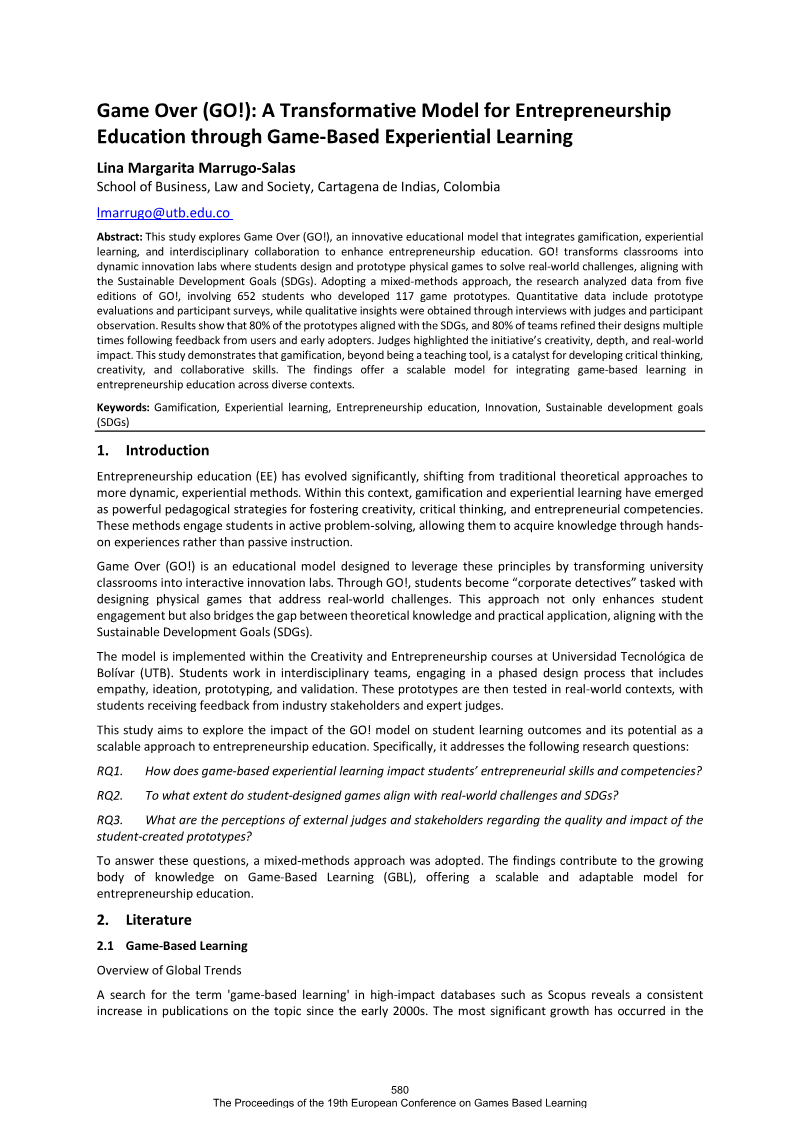
Game Over (GO!): A Transformative Model for Entrepreneurship Education through Game-Based Experiential Learning
The Game Over (GO!) model is an entrepreneurship education approach developed at a Colombian higher education institution that uses gamification and experiential learning to have students design physical games addressing real-world and Sustainable Development Goal (SDG)-aligned challenges.
- The Game Over (GO!) model, developed at a Colombian higher education institution, uses gamification and experiential learning so students design physical games addressing real-world and SDG-aligned challenges, pairing prototyping with wildcard challenges, real entrepreneur case studies, and iterative user feedback.
- Across five course editions held between 2023 and 2025, 652 students produced 117 prototypes, with roughly 80% aligning with one or more SDGs, most often SDG 4 (Quality Education), SDG 3 (Good Health and Well-being), and SDG 12 (Responsible Consumption and Production).
- About 80% of student teams revised their designs after receiving user feedback, which the authors present as evidence of iterative thinking.
A Structured Approach for Designing Effective Serious Games for Learning: Analyzing Requirements to Derive Key Components
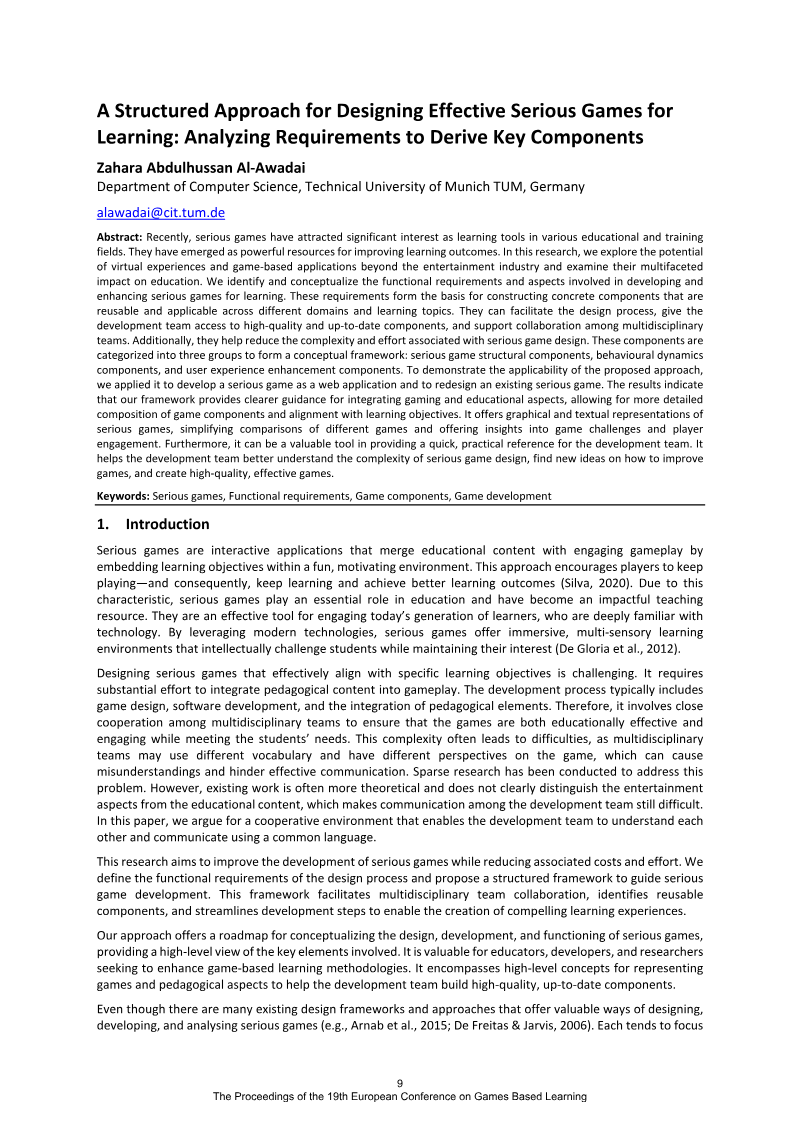
This document proposes a structured framework for designing serious games for learning, addressing a gap in existing approaches that do not clearly specify how concrete game components should be organized to balance educational effectiveness with entertainment.
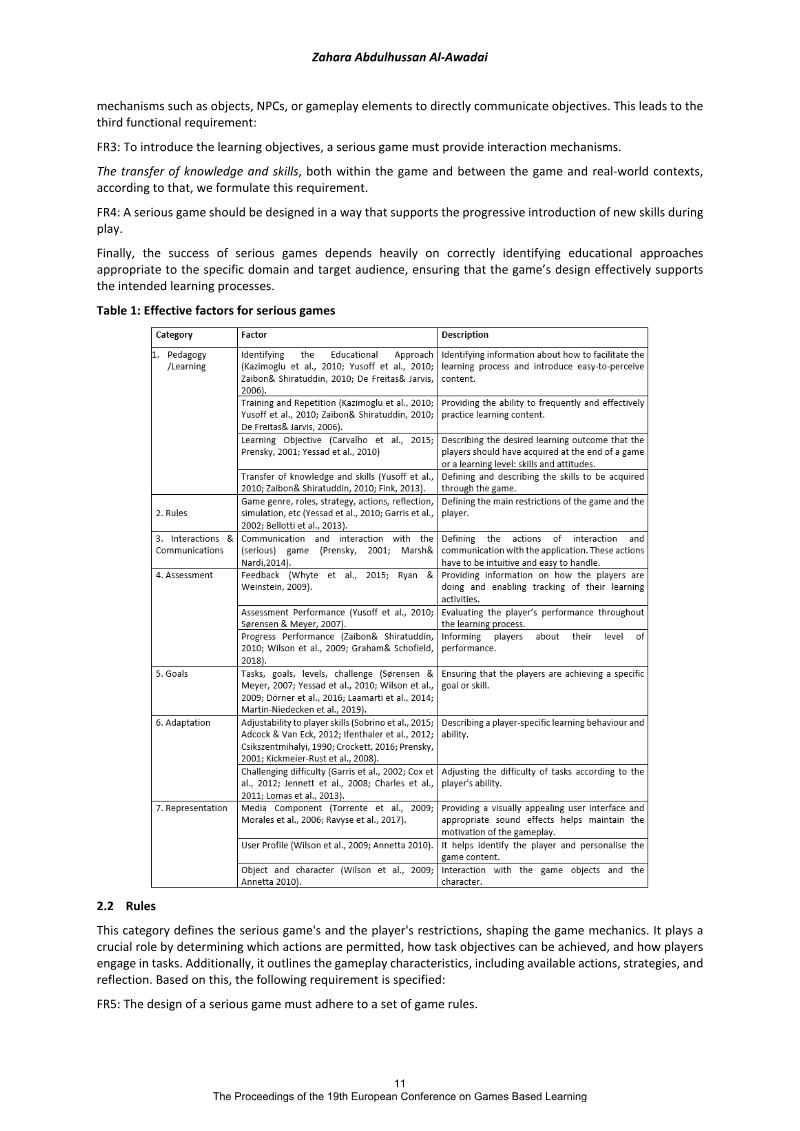
- The paper proposes a structured framework for serious games that derives 16 functional requirements (FR1–FR16), clustered into seven categories (pedagogy, rules, interaction and communication, assessment, goals, adaptation, and representation), and maps them to concrete design components.
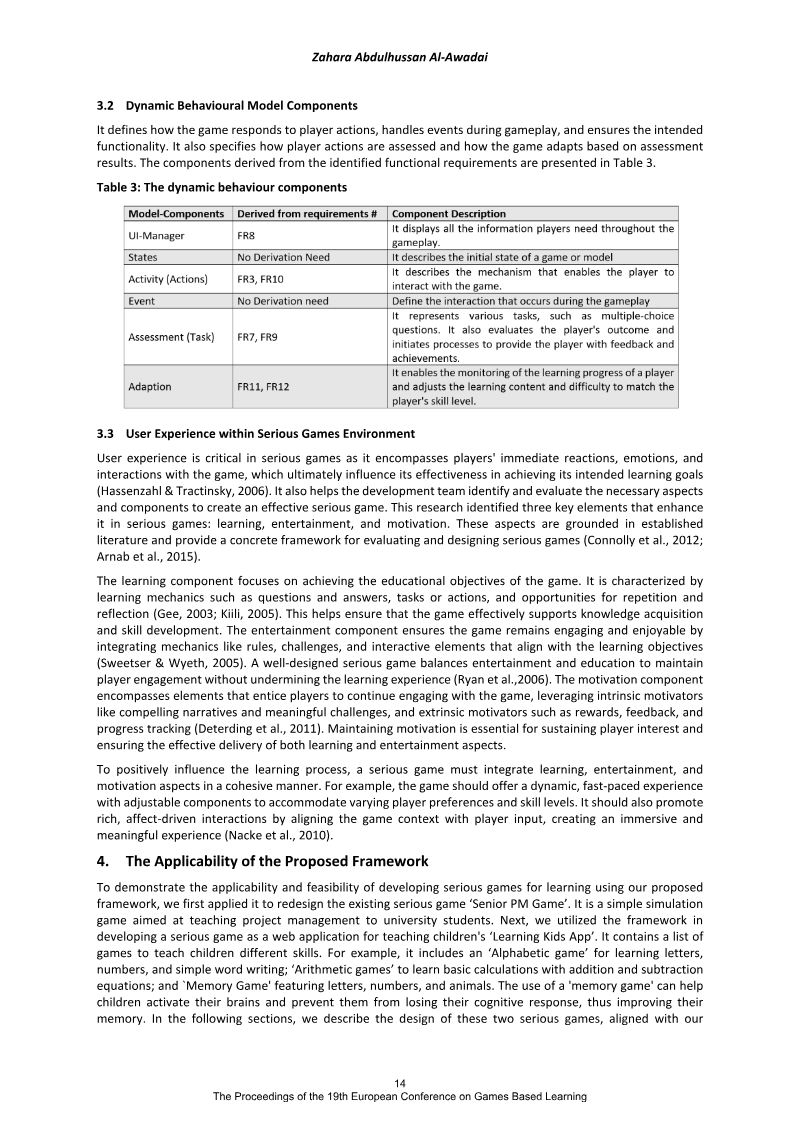
- Assessment and adaptation are treated as core modules of the framework because of their central role in educational outcomes and their applicability across game genres.
- The framework distinguishes structural components (game mechanics, challenges, player profiles, adaptation mechanisms) from dynamic behavioural components (assessment, adaptation, event handling) to help multidisciplinary teams align pedagogical goals with technical implementation.
Managing Resources and Reducing Greenhouse Gas Emissions Through Game-Based Learning to Achieve Zero Emission Farms
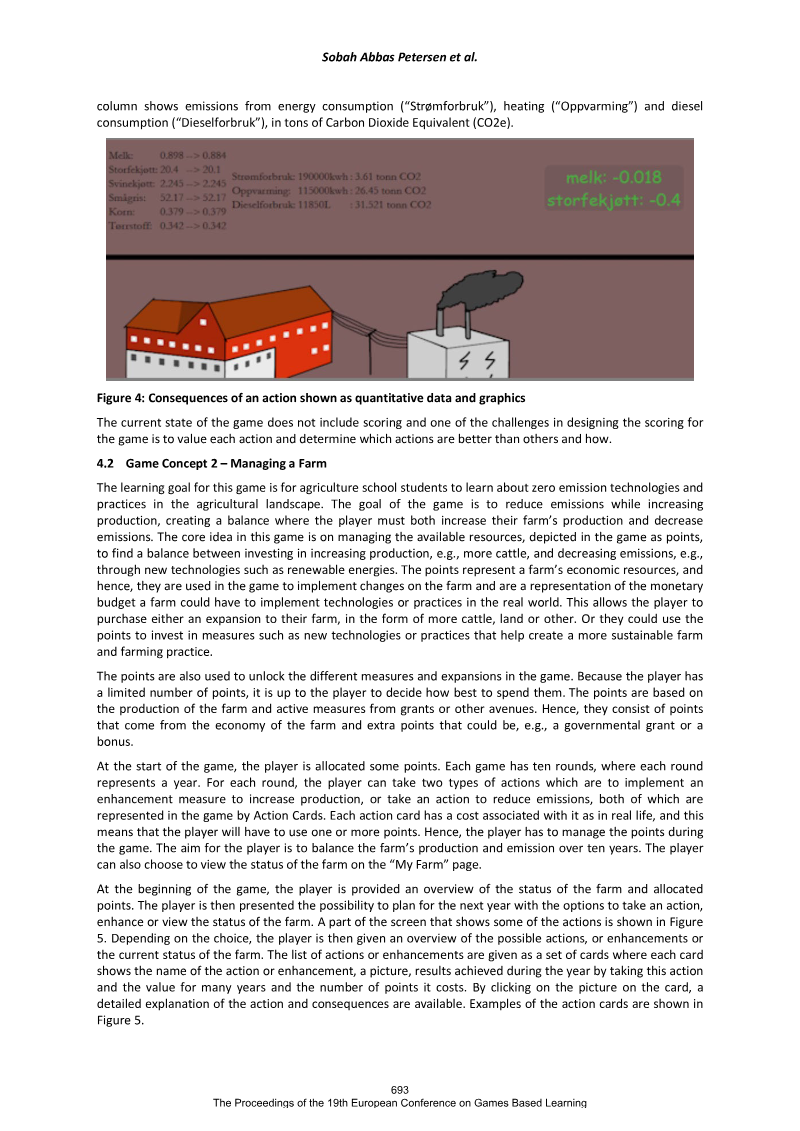
This paper presents two digital game concepts designed to help agriculture students understand greenhouse gas (GHG) emissions and manage farm resources toward zero-emission farming.
- Agriculture accounts for roughly 11% of global greenhouse gas emissions, and real-world farm mitigation measures take a long time to show consequences, which makes them hard for students to grasp.
- The paper presents two digital card-based games for agriculture students: one teaches the effects of individual and combined emissions-reducing actions over up to ten rounds, and the other balances farm production against emissions over a ten-year span.
- Both games are built on a climate calculator used by a Norwegian agriculture school, with emissions and productivity effects calculated and displayed instantly after each round.
Game-Based Learning: A Scoping Review of Research in Higher Education
This scoping review maps the research landscape of game-based learning (GBL) and learner motivation in higher education, drawing on 166 peer-reviewed articles published between 2020 and 2025.
- Publication output on game-based learning and learner motivation in higher education peaked at 43 articles in 2021 and declined to 29 by 2024, based on 166 peer-reviewed articles from 2020–2025.
- Research is widely dispersed across 99 journals, with Education Sciences contributing the largest share at 19 articles.
- Curricular settings account for 66.3 percent of studies, and undergraduate programs are the most common focus, appearing in 115 articles.

Teacher Positions and Play Qualities in Esports at Specially Planned Youth Education Programmes
This study examines how teachers' positioning shapes the emotional and sensory dynamics of esports activities in Denmark's Specially Planned Youth Education (STU) institutions, which serve young people with special needs.
- Teacher presence is presented as helping students in Denmark's Specially Planned Youth Education (STU) institutions regulate emotions, sustain engagement, and build social connection during esports activities.
- The study identifies four teacher positions (observer, instructor, playing coach, and adult co-player) and finds that moving between them shapes the group's play mood.
- Shifting from observer to instructor can calm a frantic match toward a progression-focused mood, while stepping in as a playing coach can turn joyful but destructive play into a tense, performative atmosphere.
Divergent Design: Disrupting Systems Through Game Experiences
This interdisciplinary paper examines how divergent design choices in video games can prompt player reflection on, and potentially challenge, patriarchal social systems.
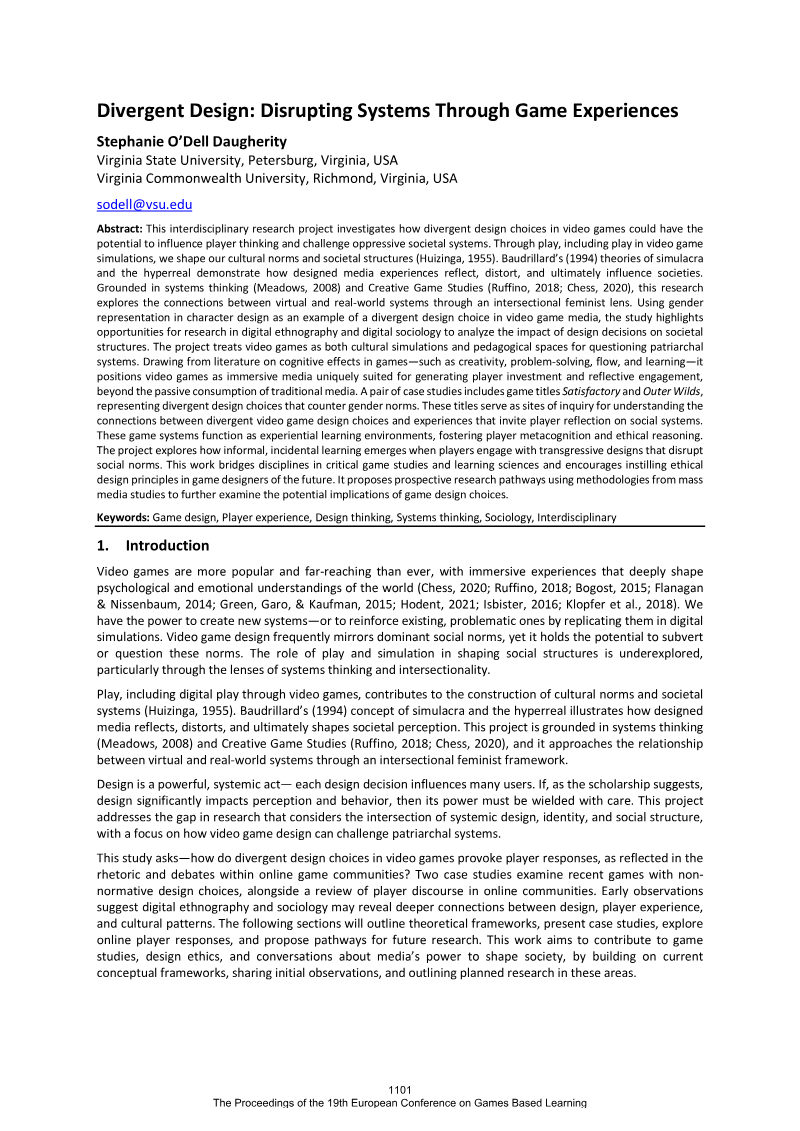
- The paper argues that game design both mirrors dominant social norms and can subvert them, so designers bear a responsibility to handle gender representation, especially in character design, with care.
- Its two case studies contrast Satisfactory, whose player character is a woman engineer with no gender customization, and Outer Wilds, whose protagonist is genderless and uses they/them pronouns.
- Preliminary observations of the r/SatisfactoryGame subreddit suggest the female protagonist provoked some hostile reactions, while Outer Wilds discussions showed less misogynistic rhetoric and more introspection about why players notice gender at all.
Future Teachers' Perceptions of Different Educational Escape Room Designs
This qualitative case study examines how pre-service mathematics, physics, and informatics teachers at Comenius University in Bratislava, Slovakia, perceive four educational escape room formats: story-based digital rooms built in Google Forms, interactive adventure digital rooms built with Room Escape Maker, a fully immersive…
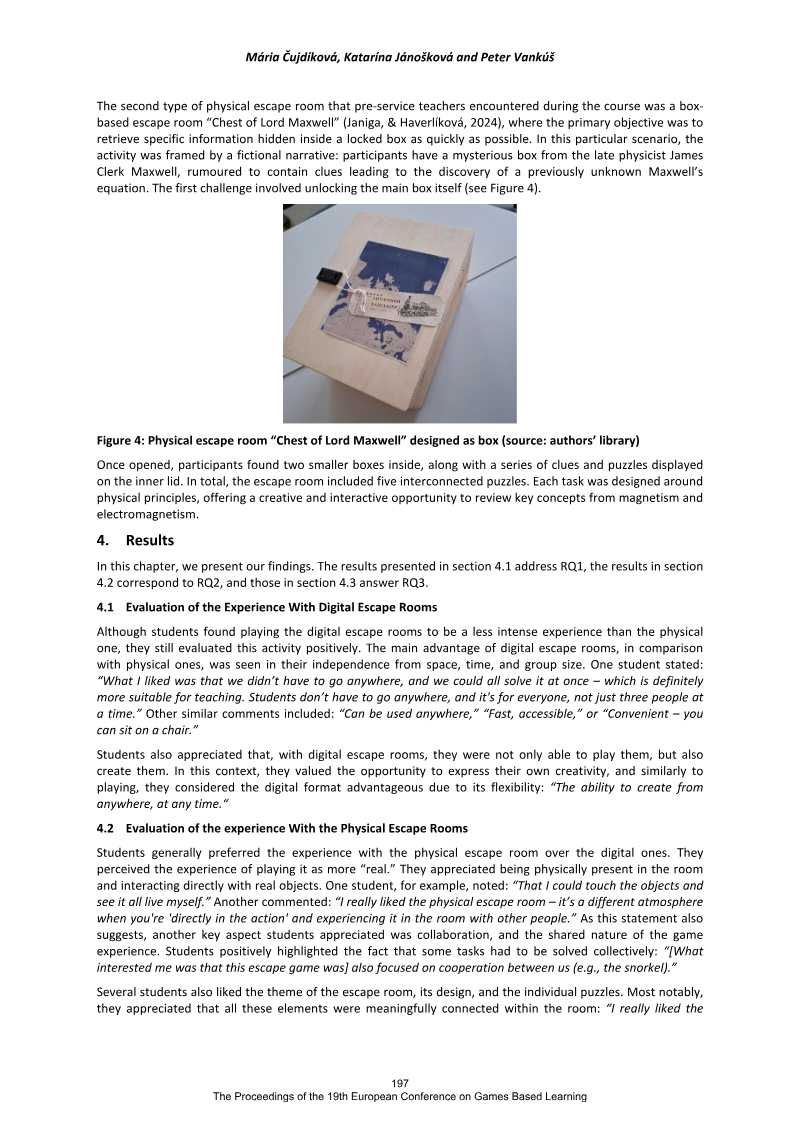
- Future teachers at Comenius University in Bratislava compared four educational escape room formats: story-based digital rooms in Google Forms, interactive adventure digital rooms built with Room Escape Maker, a fully immersive physical room, and a box-based physical room.
- Participants personally preferred physical escape rooms for their realism, hands-on interaction with real objects, collaborative demands, and cohesive themes and puzzles.
- When asked which format suited classroom use, most participants chose digital escape rooms because they carry a lower logistical burden with large classes, though many said physical formats would be ideal if implementation were easier.
Co-Designing Visual Novels in Literary Education Classes: Instruments for Measuring Learner Engagement
This study develops and validates instruments for measuring secondary school students' engagement when co-designing educational Visual Novels, a story-driven genre of video game, within Literary Education.
- The study builds two pre/post questionnaires and a class observation grid to measure secondary students' engagement when co-designing educational Visual Novels in Literary Education, filling a gap in subject-specific tools for the affective side of digital game-based learning in the Humanities.
- The instruments draw on established scales (Four-Dimensional Scale of Student Engagement at School, Flow State Scale, EGameFlow) and are organised around cognitive, affective, behavioural, and agentive dimensions of engagement.
- Four experts in Literary Education, Educational Psychology, and Educational Technology reviewed the instruments qualitatively, and their suggestions were incorporated before pretesting.
Modeling Language Acquisition in Commercial Off-the-Shelf Games: A Multiple Case Study
This paper examines how two commercial games, Heaven's Vault (2019) and Chants of Sennaar (2023), use artificial language learning as their core mechanic, and what educational game designers can learn from them.
- Heaven's Vault (2019) and Chants of Sennaar (2023) use artificial language learning as their core mechanic, and the study uses them to derive design lessons for educational language games.
- The author argues that many language-learning serious games lack commercial-grade immersion, engagement, and player-tailored feedback, which commercial titles handle well.
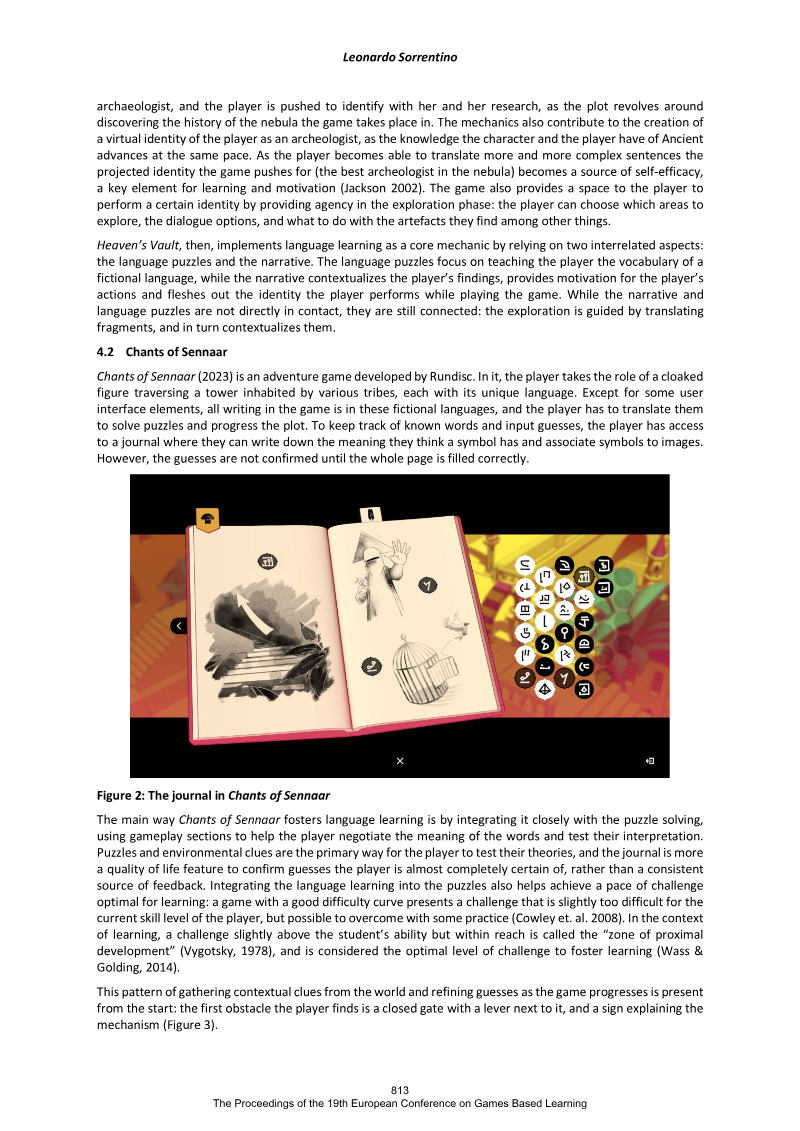
- Heaven's Vault supports vocabulary acquisition through puzzles requiring negotiation of meaning, aided by consistent grammar and a 'related words' feature that enables retrieval, with narrative contextualizing learning.
Understanding Systems Engineering Decision-Making Through Game-Based Simulation: Insights from Industry
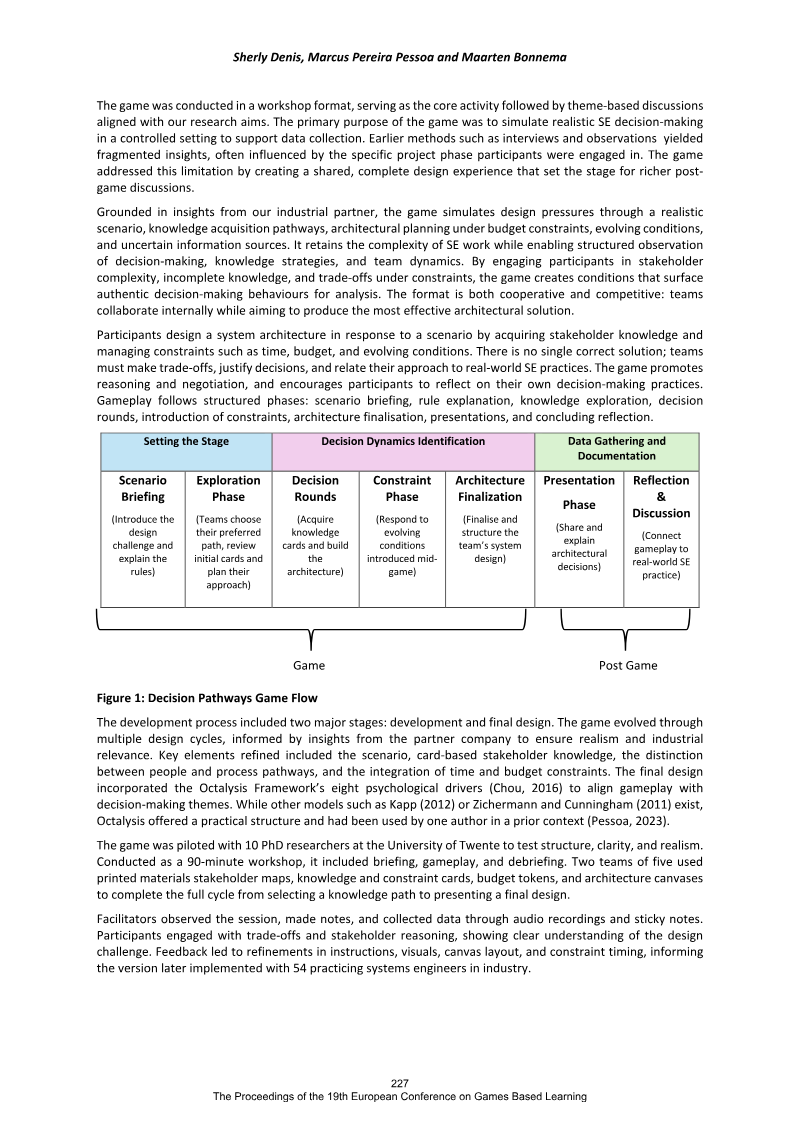
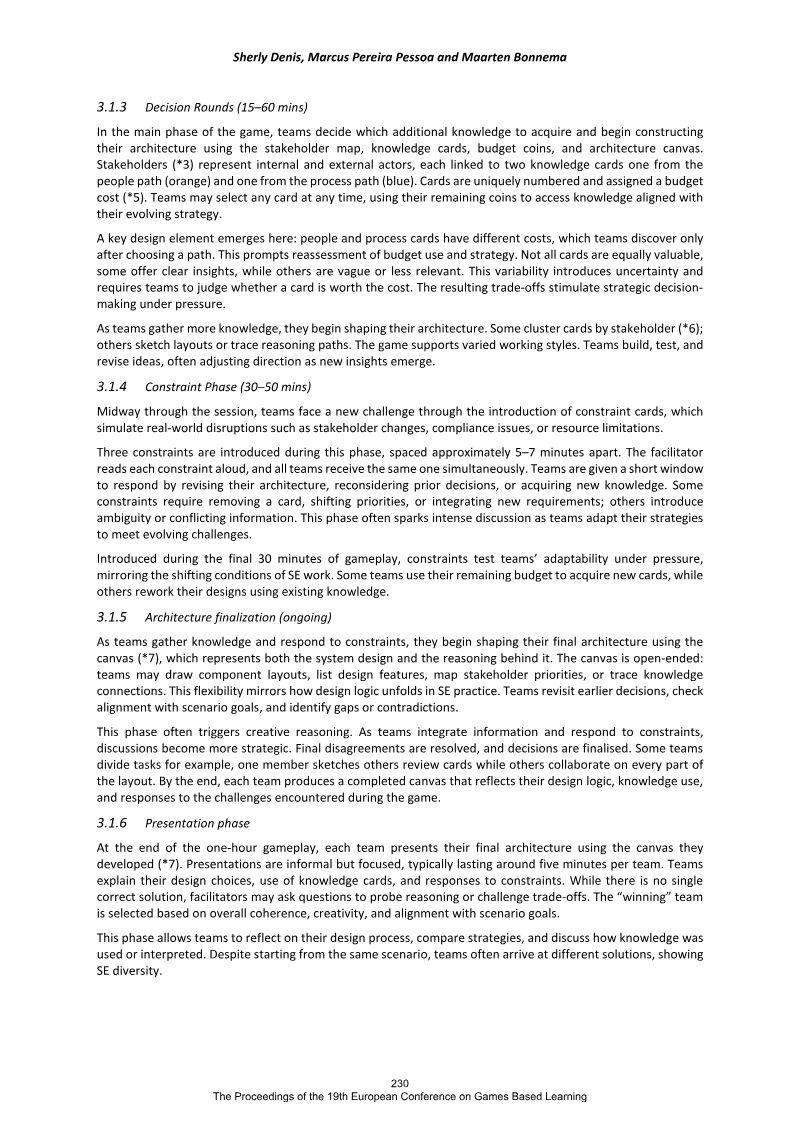
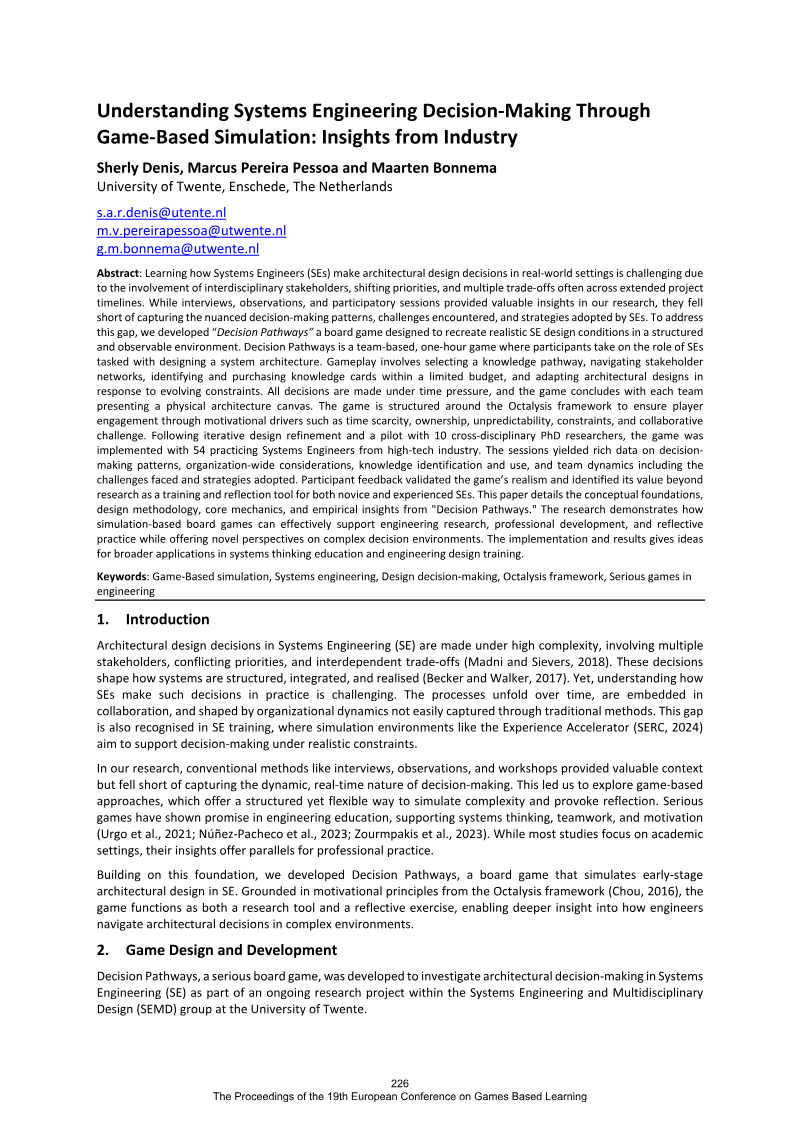
Decision Pathways is a one-hour, team-based board game developed at the University of Twente to simulate architectural decision-making in Systems Engineering.
- A physical board game called Decision Pathways, built on the Octalysis motivational framework, simulates architectural decision-making in Systems Engineering by asking teams to choose between people-based and process-based knowledge pathways under a 20-coin budget and a 60-minute limit.
- The game's core aim is to make the tacit trade-offs of systems engineering practice visible and discussable rather than leaving them implicit in everyday work.
- The game was piloted with 10 PhD researchers, then run with 54 practicing high-tech systems engineers between December 2024 and March 2025 across seven phases, with data drawn from facilitator observations, architecture canvases, sticky notes, and audio recordings.
Impact of Ashiyan Board Game on Iranian Students' Understanding of Native Vertebrates
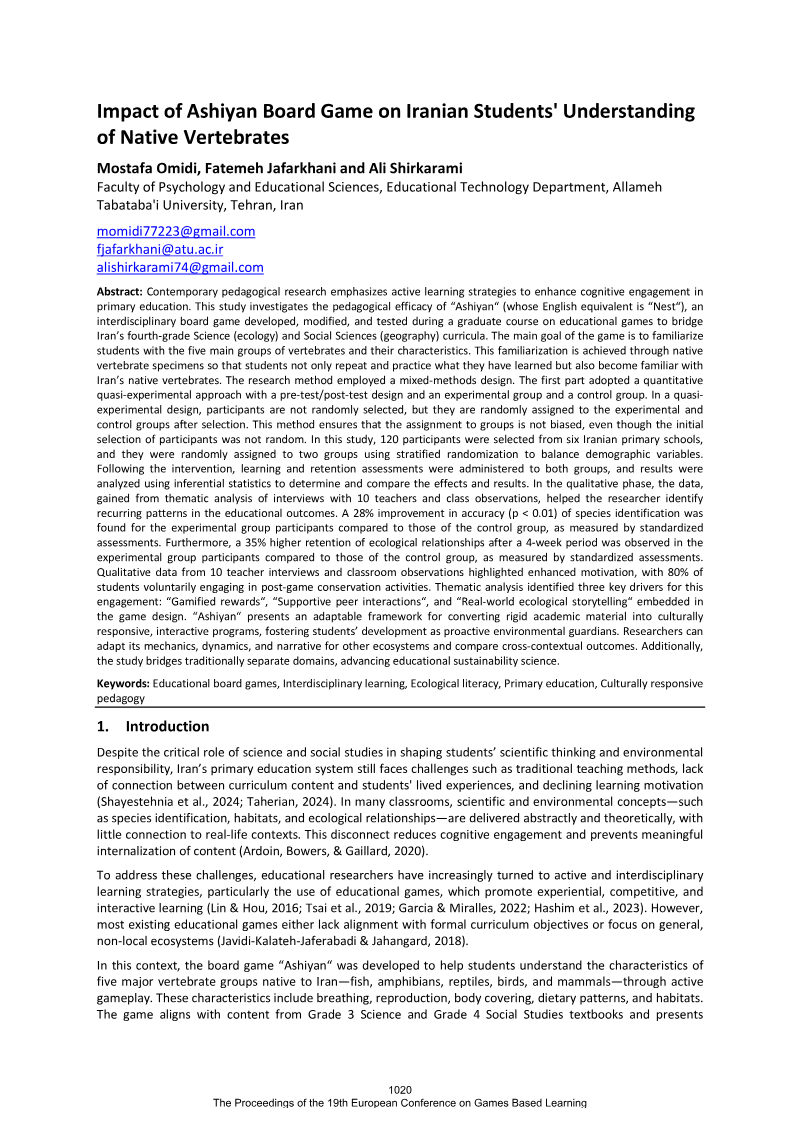
A quasi-experimental study conducted in Iran examined whether "Ashiyan," an interdisciplinary board game developed to bridge fourth-grade science and social studies curricula, could improve primary students' understanding of the five major vertebrate groups native to Iran: fish, amphibians, reptiles, birds, and mammals.
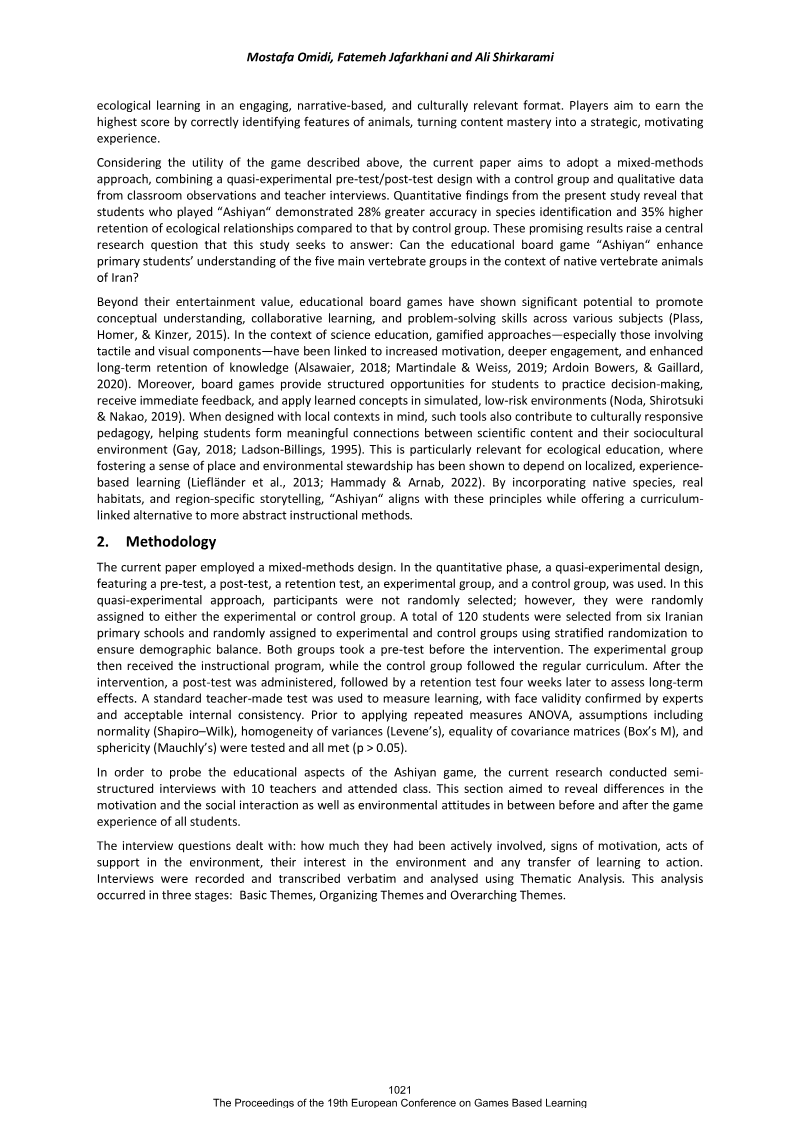
- The Ashiyan board game, designed to integrate fourth-grade science and social studies, was tested in a quasi-experimental study of 120 Iranian primary students across six schools on the five native vertebrate groups: fish, amphibians, reptiles, birds, and mammals.
- The experimental group achieved 28% greater accuracy in species identification on the post-test and 35% higher retention of ecological relationships, both reported as statistically significant at p < 0.01.
- Pre-test scores were comparable between experimental and control groups, and the authors reported that repeated measures ANOVA assumptions were satisfied, supporting the attribution of gains to the intervention.