
Discord
Chat and voice platform that grew out of gaming communities. It publishes safety transparency reports, including a report on child protection under Brazil's ECA Digital law.
Documents
No published documents yet
Reports about Discord
418 documents by other writers name Discord in the title or summary.

Games Lift: tool1 Build on Their Community
Hamburg studio tool1 is profiled in this October 2021 Games Lift Incubator log as a small team building its studio around a community-first strategy.
- Hamburg-based studio tool1 is developing its debut looter-shooter, The Invitation, by prioritizing community-driven development and transparent communication to compete with AAA titles.
- The studio utilizes the Games Lift Incubator to access professional mentorship and networking, supporting their goal of building a sustainable, community-integrated business model.
- Although their initial Kickstarter campaign failed to reach its financial target, it successfully converted hundreds of backers into an active testing group for early game builds.
Panel: UA & Retention: How to Pick the Ideal Tactic for Your Target Demographic
Effective user acquisition and retention in the mobile gaming sector require a strategic alignment between monetization models and specific payback windows.
- Developers must align monetization models with specific payback windows, prioritizing rapid returns for hyper-casual titles and long-term lifetime value for midcore games.
- Success in user acquisition relies on a formalized, iterative approach to creative testing to identify and scale concepts that resonate with target demographics.
- Machine learning and AI are essential for automating bidding and hitting return on ad spend targets, though they require human oversight to manage channel volatility and performance tracking.
Games Lift 2021: New and Improved
Gamecity Hamburg's September 2021 incubator log explains how the second edition of its Games Lift Incubator was refined after a successful 2020 debut.
- The Games Lift Incubator provides a 15-month support structure consisting of a three-month intensive workshop phase followed by twelve months of individual work.
- The 2021 program iteration introduced formal individual follow-up coaching and a dedicated time budget for specialized indie game PR services.
- The incubator prioritizes long-term sustainability over short-term scaling by offering ongoing post-graduation support and alumni networking via digital platforms like Discord.
Marketing Meatball Theory: How to Use Free to Get More Followers
The Marketing Meatball Theory posits that developers can overcome consumer hesitation by offering small, free samples of their work to build trust and grow an audience.
- Use free content as a 'lead magnet' to incentivize potential players to join your mailing list or Discord, rather than giving away assets for free without a clear call to action.
- Demos are the most effective way to prove game quality and reduce consumer risk, provided they are kept under 30 minutes and include direct links to your social channels or community hubs.
- Beta access is a highly effective tool for community growth; promote upcoming betas via trailers and banners to drive sign-ups for your mailing list or Discord.
How to Run Cheap Contests
The primary objective of this guide is to provide independent game developers with cost-effective strategies for converting high-traffic, casual social media followers into dedicated community members.
- Use contests as a lead magnet to convert high-traffic social media followers into high-value email subscribers or Discord members, as social platforms actively discourage external links.
- Low-cost, high-impact prizes include early access builds, naming NPCs or in-game businesses after winners, custom character portraits in the game's art style, or adding a winner's pet to the game.
- Leverage high-visibility events like Steam festivals, trailer releases, and viral social media posts to promote contests by including clear calls-to-action that direct traffic to sign-up pages.
Development and Marketing Should Be Treated as Interconnected Tasks
The core thesis of this analysis is that game development and marketing must be treated as integrated, simultaneous processes rather than sequential tasks.
- Development and marketing should be treated as a single, interconnected process where the game's core hook serves as the foundation for all promotional messaging.
- Indie developers should aim to announce their games at least 12 months before release, but only after creating a presentable vertical slice of gameplay.
- Discord is a vital tool for community building and direct feedback, whereas platforms like Twitter often suffer from an audience composed primarily of other developers rather than potential customers.
Your Game's on Sale Too Often? Players Say That's Unlikely!
This analysis examines the impact of frequent discounting on game discovery and brand value, challenging the industry myth that regular sales "devalue" a product.
- Frequent discounting does not devalue a game's brand, as successful titles like Human: Fall Flat and My Time At Portia often run 12 or more sales annually to drive engagement and revenue.
- Deep discounts offered shortly after a full-price launch are the primary driver of negative consumer sentiment and early adopter alienation.
- Players generally perceive frequent sales as standard industry practice rather than a sign of declining product quality.
GDC 2021 Monday Wrap-up
The GDC 2021 Monday wrap-up provides a synthesis of key marketing and development insights shared during the virtual conference, focusing on community management, post-launch support, and strategic planning for independent game studios.
- Successful post-launch momentum for 'Monster Train' was maintained through a series of free updates over the first 10 months, followed by paid DLC that increased the effective price floor via bundles.
- Community engagement campaigns, such as those used by Schell Games for 'Until You Fall', should prioritize low-friction, self-reported player challenges over complex API-integrated systems to save engineering resources.
- Marketing activities should be tailored to the team's capacity; developers are advised to select a few high-impact strategies rather than attempting to execute every available marketing channel.
My Favorite Question to Ask Playtesters
The primary objective of this analysis is to provide game developers with a reliable, objective metric for evaluating player sentiment during the testing phase.
- Use the Net Promoter Score (NPS) question—'On a scale of 0 to 10, how likely are you to recommend this game to a friend?'—to obtain an honest, actionable assessment of player sentiment.
- Calculate the NPS by subtracting the percentage of detractors (scores 0–6) from the percentage of promoters (scores 9–10), while ignoring neutral respondents (scores 7–8).
- Avoid asking 'Do you like my game?' because players often provide polite, inaccurate feedback; the recommendation question specifically targets the enthusiasm required for effective word-of-mouth growth.
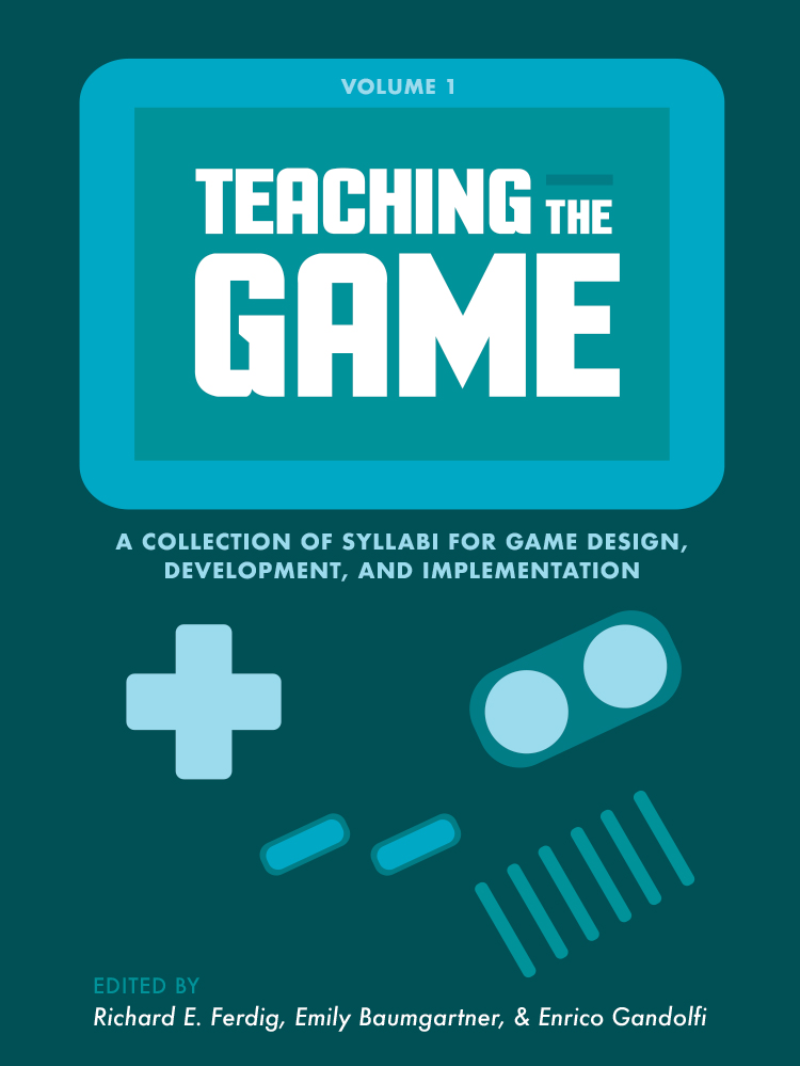
Teaching the Game: A Collection of Syllabi for Game Design, Development, and Implementation
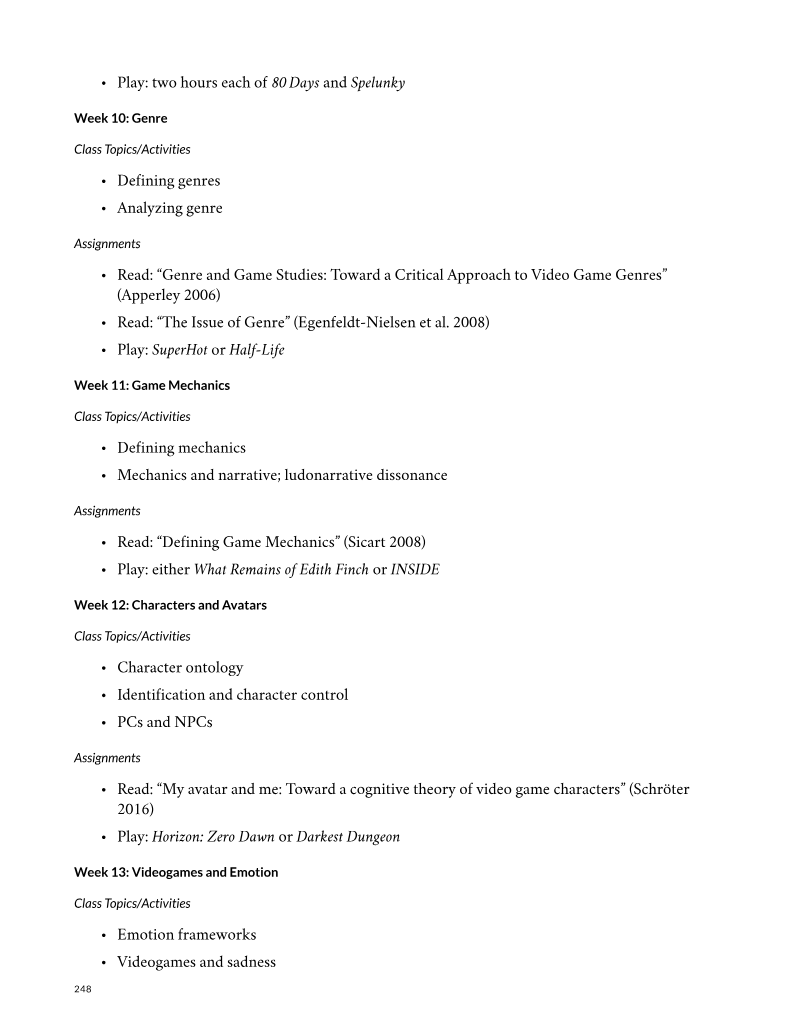
"Teaching the Game" is a collection of 21 syllabi from university game-education courses, published by Carnegie Mellon's ETC Press with the aim of giving educators concrete, comparable models for building game courses.
- The report is a collection of syllabi for teaching game design, development, and implementation, drawing on course materials from multiple universities and programs.
- Course designs emphasize understanding over production, with a stated preference for transferable heuristics rather than fixed formulas, so students can navigate unfamiliar professional discourses.
- Assessment in these courses commonly follows Bloom's pyramid, progressing from applying and analyzing concepts early on to evaluating markets and writing economic essays in later semesters, such as reflecting on monetization methods and trends.

IP, Games, & The Future of Transmedia
Transmedia storytelling represents a strategic evolution in how entertainment companies leverage intellectual property by dispersing narrative elements across multiple platforms to create a unified experience.
- Transmedia storytelling requires dispersing integral narrative elements across multiple platforms to create a unified experience, rather than simply repeating the same story across different media.
- Gaming is a critical transmedia channel because it captures significant consumer attention, with entertainment consumption increasing 12% during the pandemic and gaming specifically seeing 30% growth.
- Successful transmedia relies on the 'three C’s': characters (narrative importance), convenience (delivering content where audiences are), and community (connecting fans through social tools and platforms).
Neat Ideas for Your Game’s Demo
Effective game demos serve as a critical bridge between initial player interest and long-term commitment, functioning as a key tool for driving wishlists and community engagement during events like Steam Next Fest.
- Demos should act as a funnel that drives players toward community engagement, such as joining a Discord server, following the game, or signing up for a mailing list.
- Place clear, bold 'Wishlist' calls-to-action on both the main menu and the pause menu to maximize visibility throughout the player's experience.
- Implement an easy-to-use, in-game feedback mechanism, such as a dedicated key (e.g., F1) that allows players to submit screenshots or reports without needing to write descriptive text.