1 free read left. Create a free account for unlimited reading + AI research.
Create free accountArticle DiGRA
1 free read left. Create a free account for unlimited reading + AI research.
Create free accountArticleDiGRA
Ivan Mosca's paper "The Rules in Videogames: Between Ontology and Epistemology" argues that "game" and "rule" are epistemological rather than ontological categories. Drawing on John Searle's social ontology, the paper holds that whether a device counts as a game depends on the player's interpretation, captured by the concept of the "gameframe," a fiat boundary sustained through a suspension of belief. On this account, existing game theories are normative for designers rather than predictive epistemic theories, and several common distinctions in game studies, including game/player, game/game-device, and rule/affordance, are challenged by analogy with James Moor's critique of computer science.
A central claim is that videogames contain no prescriptive rules in the sense required by Bernard Suits' definition of games. Instead, they possess descriptive system functions enforced by hardware and software, comparable to recipes or the laws of physics. Prescriptive rules, by contrast, require a subject capable of choosing to obey them. Mosca agrees with Chris De Leon that videogames lack rules, but he rejects the inference that they are therefore not games, and he critiques Jesper Juul's view that videogames combine rules with fiction. The paper suggests that rules in videogames could be made prescriptive by embedding them in core mechanics and gameframes, with cheating, which presupposes conscious agents, emerging as a potential design resource.
The analysis extends to a typology of players and games organized around their relationship to rules: regulative, constitutive, deregulative, and deconstitutive, further refined through distinctions such as anarchic versus legalist and loser versus unable cheaters. Applying the descriptive-rules framework to serious games and adware, the paper argues that games are "cyberplaces" rather than cyberspaces, and that videogames serve as a metaphor for contemporary society because they combine material and symbolic manipulation. The work presents itself as a theory rather than a model, concluding that rules depend on the subject, that game-in-general is not defined by rules, and that the social reality of games arises from a reified gameframe. The bibliography and ludography, which range from Monopoly (1935) to America's Army (2002), support this ontological and epistemological inquiry.
Each row is a game or company this document names, each column a document, oldest first. A mark means that document names it. Select a row to see those documents.
DiGRA · 2012
DiGRA · 2012
DiGRA · 2012

DiGRA · 2012
DiGRA · 2012
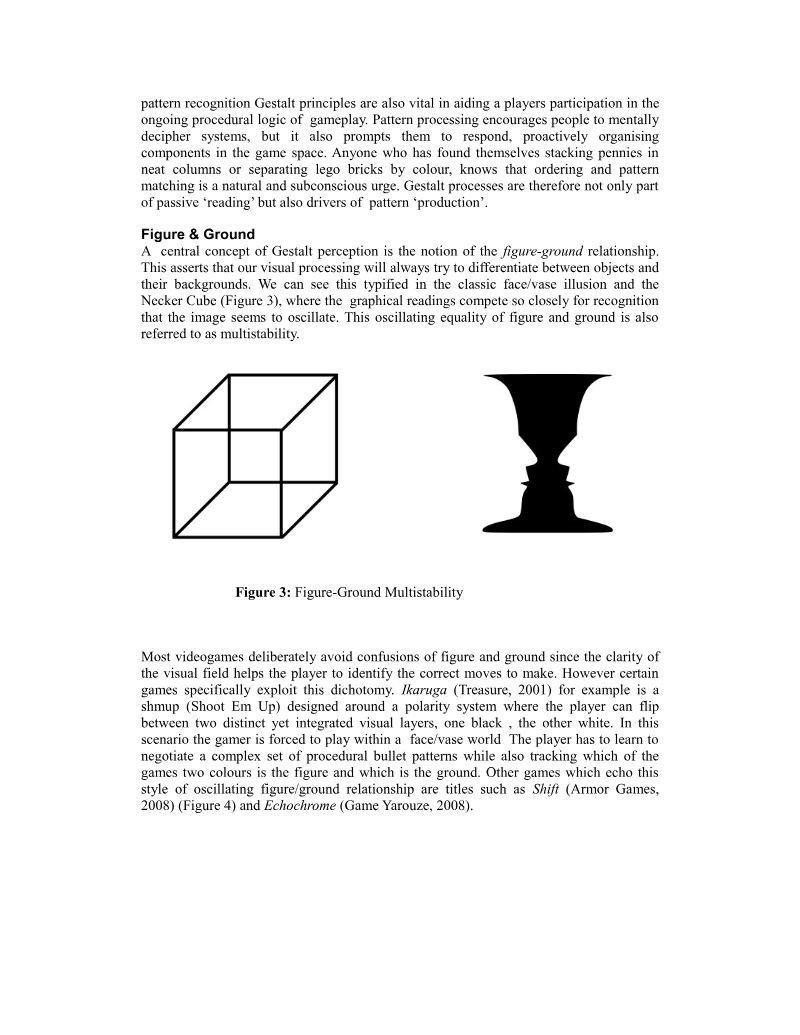
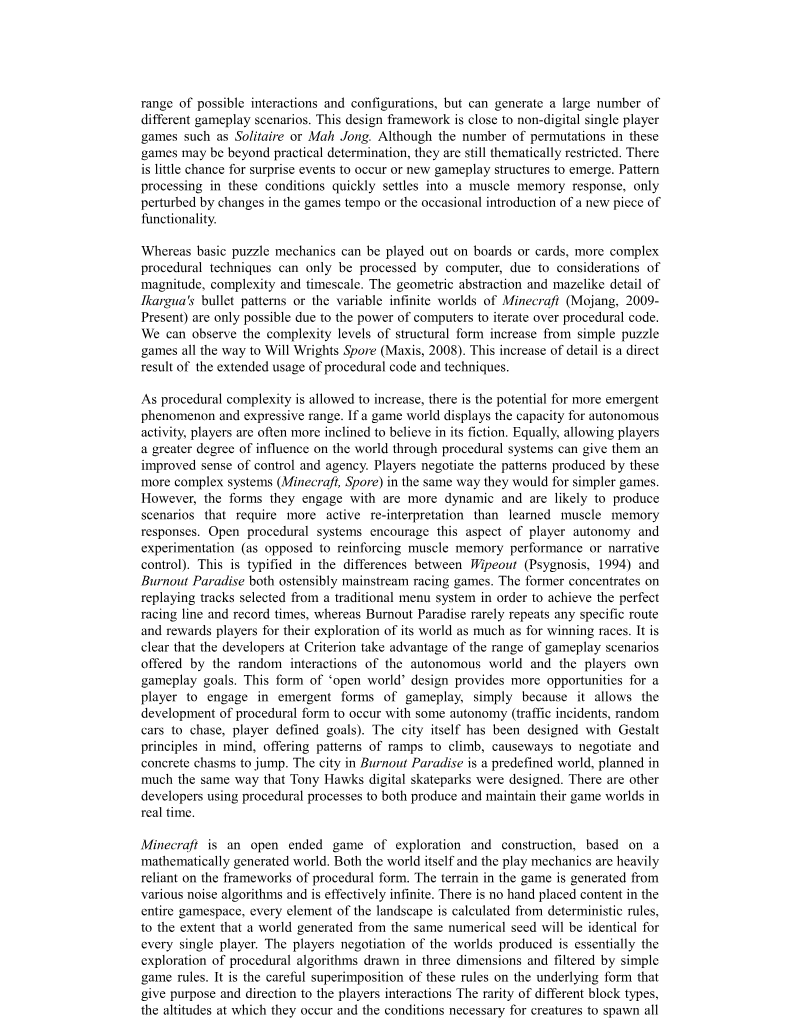
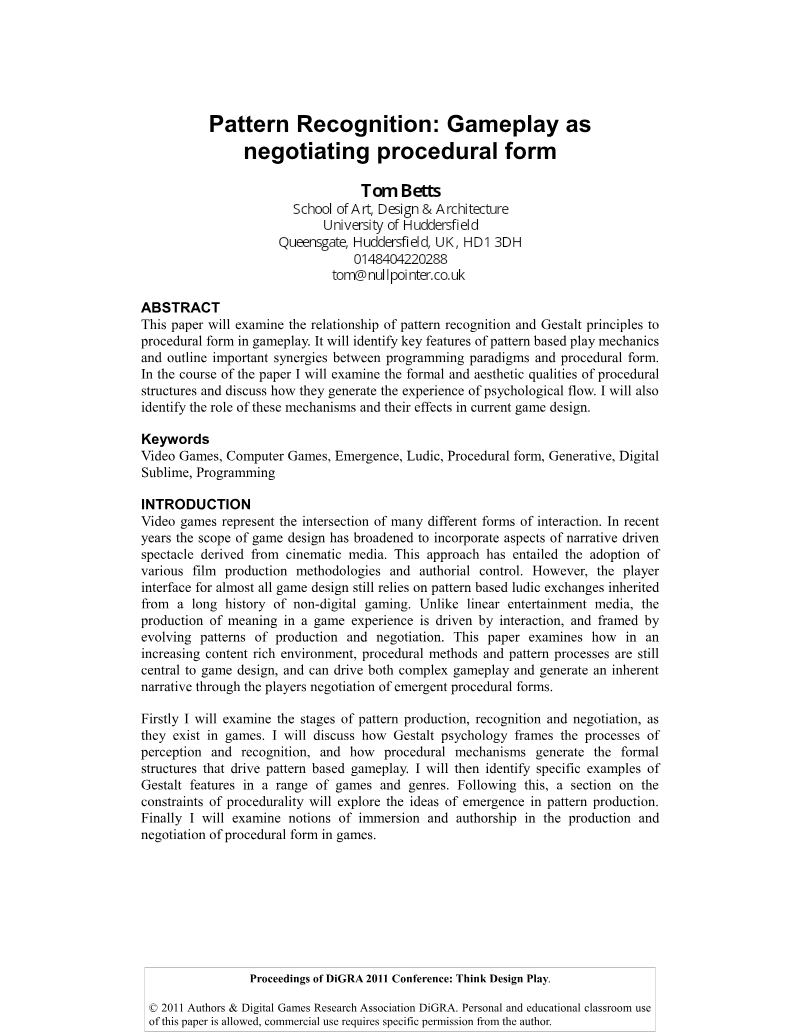
DiGRA · 2011
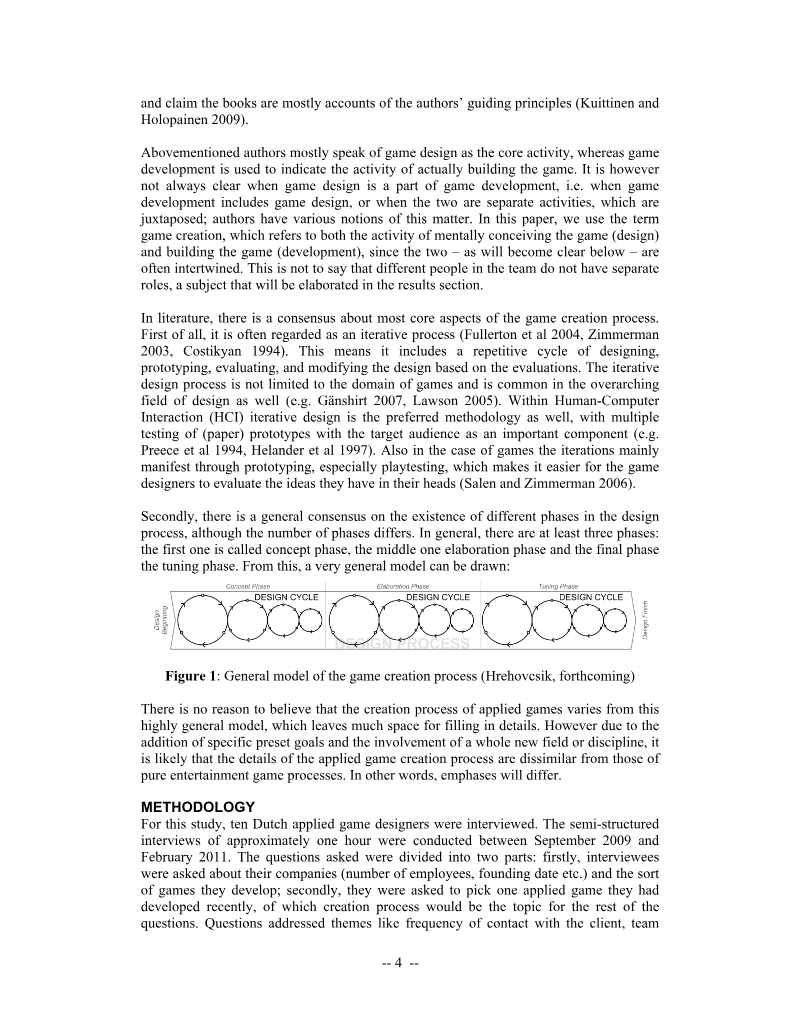
DiGRA · 2011
DiGRA · 2011
DiGRA · 2011

DiGRA · 2011
DiGRA · 2011
DiGRA · 2011











